

Two Son Goku EX starters launched together — one built on Evolve, one on Ki. Here's what each Leader actually does and which twin suits you.
Some links below are affiliate links. If you buy through them, we may earn a small commission at no extra cost to you. We only recommend products we'd genuinely point a player toward.
In March 2026, Dragon Ball Super Card Game: Fusion World released two premium starter decks side by side, each headlined by a Son Goku Leader and each built to teach one of the wave's two new mechanics. FS11 "The Phase of Evolution" centers on the Evolve skill; FS12 "The Beat of Ki" centers on the new Ki mechanic. They're twins by design — same release, same premium treatment, same character — but they play quite differently.
Both are Starter Deck EX products: premium, fully silver-foiled 51-card decks (one Leader plus 50 cards, with 18 distinct card types — 13 Commons and 4 Super Rares — double a standard starter's SR count), each including energy markers, a rule sheet, and a bonus pack. Both are playable out of the box and serve as on-ramps to the Evolve/Ki style that the Dual Evolution (FB09) booster expanded across the format.
This guide explains both mechanics, breaks down each Leader's actual card text, and helps you decide which twin to buy. We'll keep card values qualitative — these are new and prices move fast — and talk upgrades in terms of roles rather than a brittle card list. For the wider format, start at our Fusion World hub.
The Short Version
FS11 "The Phase of Evolution" is the Evolve deck — a Majin Buu Saga SS3 Son Goku Leader whose awakened skill refunds energy when you play big (20,000–30,000 power) Evolve cards, so it's about powering up into commanding finishers. FS12 "The Beat of Ki" is the Ki deck — a Frieza Saga Super Saiyan Son Goku Leader who accumulates Ki markers, awakens off them, then spends Ki to replay "Planet Namek" Battle Cards from the Drop. Both are premium silver-foil 51-card Starter Deck EX products with four Super Rares each. Pick FS11 if you like building toward explosive evolved threats; pick FS12 if you like accumulating a resource and grinding recurring value. Both teach mechanics that carry forward across the format.
→ More Fusion World Reading
- The Fusion World Strategy Hub
- Upgrading the FS03 Broly Starter
- Fusion World vs Magic: A Comparison
In This Guide
The Two Twins at a Glance
It's easy to confuse the two, since both are Son Goku EX starters from the same wave. Here's the clean split:
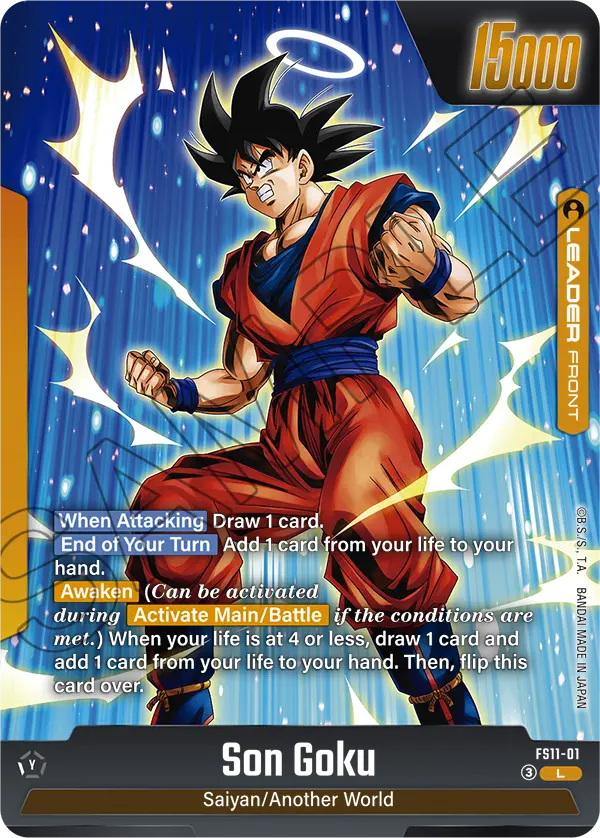
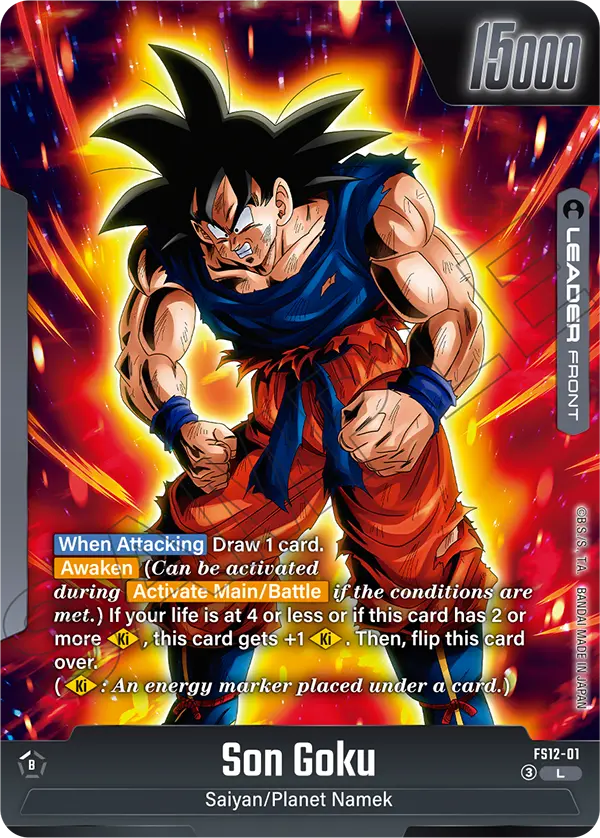
FS11 "The Phase of Evolution"
- Mechanic: Evolve
- Leader: SS3 Goku, Majin Buu Saga
- Plan: power up into big evolved finishers
- Payoff: energy refund on big Evolve plays
- Feel: build-toward-a-haymaker
FS12 "The Beat of Ki"
- Mechanic: Ki
- Leader: Super Saiyan Goku, Frieza Saga
- Plan: accumulate Ki, then spend it
- Payoff: replay "Planet Namek" cards from Drop
- Feel: build-up-then-grind value
Both Leaders are Son Goku and both reward patient play, but FS11 channels its build-up into a single explosive evolved threat, while FS12 turns its built-up Ki into a recurring stream of board presence. The mechanics, not the character, are what set them apart.
The Evolve Skill (FS11)
Evolve lets you play a card by stacking it onto a qualifying Battle Card already on your field — representing a character powering up into a stronger form. The related Fusion Evolve (from the Dual Evolution booster) goes further: you stack onto two specified equal-power Battle Cards, and the fused card enters in Active Mode, able to attack immediately. (Goku + Vegeta on the field, fuse into Gogeta, swing right away.)
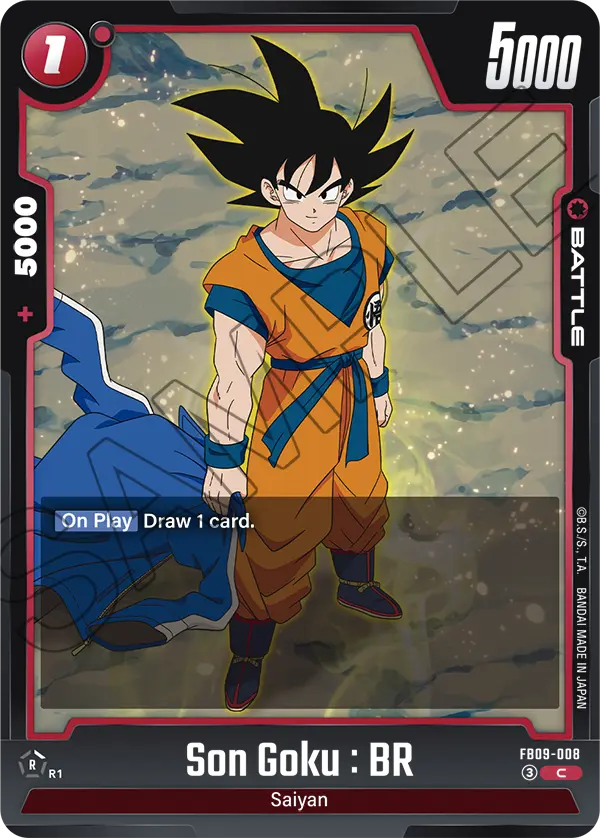
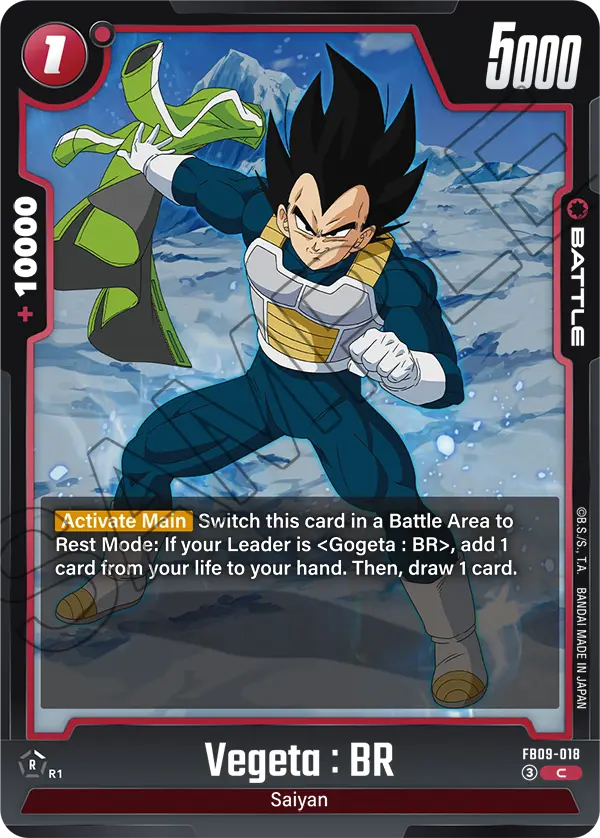
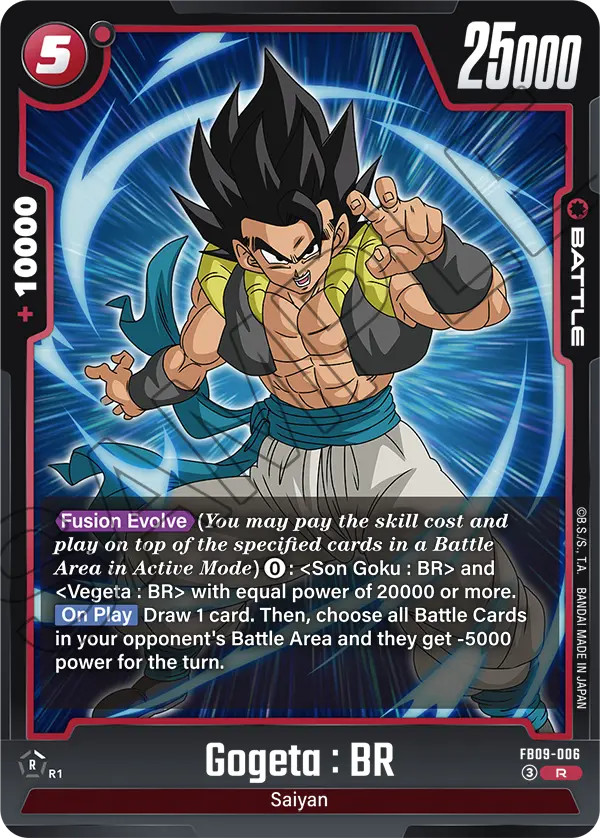
The practical effect is sudden power spikes — you grow into a big body from cards already in play rather than paying full price for it, producing explosive turns. FS11 is built to chain into that pattern, which is why its name is "The Phase of Evolution."
The Ki Mechanic (FS12)
Ki is an energy marker placed underneath a card. It's separate from the Energy you pay costs with — you accumulate it and reference it:
- Gaining Ki. A "+1 Ki" skill places one marker under the card; any markers there count as that card's Ki, with no upper limit.
- Spending Ki. A "Ki -1" or "spend 1 Ki" skill removes a marker — how you cash in the built-up resource.
- Thresholds & the catch. Many skills only switch on at a set Ki count, so the game builds up over turns. But if the card holding the Ki leaves play, all its Ki is removed — protect your Ki-holder.
Ki creates a build-up rhythm: your options expand as it accumulates, and FS12 ("The Beat of Ki") is designed around riding that escalation.
FS11's Majin-Buu-Saga Goku
FS11's Leader is a Super Saiyan 3 Son Goku styled after the Majin Buu Saga. Per the official card text, his standout skill is on the awakened side and rewards the Evolve plan directly:
Awakened: when you have 3 or more Rest Mode energy and play a card with Evolve in the 20,000–30,000 power band, switch 2 of your energy to Active Mode.
In plain terms, casting your big evolved threats partly refunds your energy, letting you do more in a single turn — deploy a haymaker and keep resources up. It's a Leader that wants you building toward those 20k–30k Evolve plays and then chaining them once awakened. The whole deck is themed around feeding that loop.
FS12's Frieza-Saga Goku
FS12's Leader is a Super Saiyan Son Goku styled after the Frieza Saga, and he's the Ki engine. From the official card text:
Building & awakening: if your life is at 4 or less, or this card has 2 or more Ki, it gains +1 Ki — and then you may flip it over to awaken. So you can awaken either by taking damage or by proactively stacking Ki.
Awakened payoff: once per turn, remove one or more Ki, and for each Ki removed, play up to one Battle Card with "Planet Namek" in its special traits from your Drop, in a combo.
The built-up Ki becomes recurring board presence — you keep replaying Namek-trait units straight out of the Drop, grinding value the opponent struggles to keep answering. Where FS11 wants one big evolved swing, FS12 wants to out-resource you over several turns.
Which Should You Buy?
Both are complete, premium, beginner-friendly decks at the same price point, so the choice is about playstyle and which mechanic you want to learn:
- Pick FS11 (Evolve) if you like building toward a decisive, explosive turn — powering up into oversized evolved threats and chaining them once you awaken. It teaches the Evolve/Fusion Evolve system that runs through the booster set too.
- Pick FS12 (Ki) if you prefer accumulating a resource and grinding recurring value — stacking Ki, awakening on your terms, and replaying threats from your Drop. It teaches the Ki sub-system that several new Leaders are built around.
- Get both if you want to learn the whole new mechanical wave, or you have a regular opponent — two contrasting Goku decks make a natural pair, and between them you'll understand most of what Dual Evolution introduced.
On Upgrading Either Deck
Both are EX starters, not tuned 50-card competitive lists — treat them as strong learning decks and bases to build from. Upgrade by role: for FS11, prioritize quality Evolve cards in the 20k–30k band and the pieces that set them up; for FS12, prioritize ways to generate and bank Ki plus "Planet Namek" targets to replay. Confirm exact card choices against a current decklist, since the best printings shift as the pool grows.
Common Mistakes
Confusing the two starters.
FS11 is the Evolve, Majin-Buu-Saga deck; FS12 is the Ki, Frieza-Saga deck. They're both Son Goku, but they want opposite kinds of cards — don't buy one expecting the other's plan.
Playing them as turn-one aggro.
Both are build-up decks — FS11 toward a big evolved swing, FS12 toward a Ki payoff. Rushing wastes their engines.
(FS12) Letting your Ki-holder get KO'd.
Ki vanishes when the card under it leaves play. Protect the card carrying your built-up Ki or you reset your own engine.
Expecting a finished competitive deck.
These are EX starters — complete and ready to play, but a base to build on, not a tournament list. Plan to add booster cards as the Evolve/Ki pool develops.
FAQ & Quick Reference
- What's the difference between FS11 and FS12? FS11 "The Phase of Evolution" is the Evolve deck with a Majin-Buu-Saga SS3 Goku; FS12 "The Beat of Ki" is the Ki deck with a Frieza-Saga Super Saiyan Goku. Same wave and character, different mechanic and game plan.
- What's in each deck? A premium, all-silver-foil 51-card Starter Deck EX — one Leader plus 50 cards (18 card types: 13 Commons, 4 Super Rares) — with energy markers, a rule sheet, and a bonus pack.
- Do I need the Dual Evolution booster too? Not to play — each starter is complete. But FB09 Dual Evolution is where the Evolve/Ki pool expands, so it's the natural next step when you want to upgrade either deck.
- Are they good for new players? Yes — both are ready-to-play and designed as accessible entry points to the new mechanics. Just treat each as a learning deck and a base to build from.
- FS11: "The Phase of Evolution" — Evolve, Majin-Buu-Saga SS3 Goku.
- FS12: "The Beat of Ki" — Ki, Frieza-Saga Super Saiyan Goku.
- Evolve: stack onto a Battle Card to power up; Fusion Evolve stacks onto two and enters Active.
- Ki: markers under a card; accumulate & spend; lost if the card leaves play.
- Both: premium silver-foil 51-card EX starters, 4 Super Rares each.
- Choose by: Evolve = explosive finishers; Ki = recurring grind.
Where to Buy
Both FS11 and FS12 are sold sealed as Starter Deck EX products. Amazon and eBay are the easy stops for sealed decks; TCGplayer and Card Kingdom are the places to look for singles once you want to build out the Evolve or Ki pool. Prices vary by retailer and move quickly on a new release, so compare before buying.
Two Gokus, Two Game Plans.
FS11 and FS12 look like the same deck and play nothing alike. FS11 "The Phase of Evolution" hands you a Majin-Buu-Saga SS3 Goku who refunds energy as you power up into big evolved threats — a build-toward-a-haymaker deck. FS12 "The Beat of Ki" gives you a Frieza-Saga Super Saiyan Goku who banks Ki and spends it to grind recurring value from the Drop. Both are premium, ready-to-play starters and clean on-ramps to the mechanics shaping Fusion World's future. Pick the rhythm you enjoy — explosive or accumulating — learn its mechanic, and you'll be ahead of the curve as the format builds on Evolve and Ki.
Keep Exploring:
- → The Fusion World Strategy Hub
- → Upgrading the FS03 Broly Starter
- → Fusion World vs Magic: A Comparison
© GEEKYDOMAIN.COM | Strategy Powered by Data