

How to Play Dragon Ball Super: Fusion World
New to Fusion World? This is the whole game in one read — the goal, the cards, a turn, battle, and Awakening. Everything you need to sit down and play your first match.
Dragon Ball Super: Fusion World is Bandai's fast, beginner-friendly Dragon Ball trading card game. Two players, each with a Leader and a deck, race to knock the other's Leader down from eight Life to zero. Strip away the Dragon Ball flash and the rules are refreshingly tight: one resource, one kind of combat, and a small handful of decisions that repeat every turn.
This guide walks through the whole game in order — what you're trying to do, what's in your deck, how to set up, how a turn flows, how battles and combos resolve, and how your Leader Awakens into a stronger form. By the end you'll know enough to play a complete match start to finish.
A note on scope: this is the rules overview. For the one mechanic that rewards a closer look — Combo, the back-and-forth that decides most battles — we point you to a dedicated guide once the basics click. Everything here follows Fusion World's official rules, and a card's own text always overrides the defaults.
The Short Version
Each player has a Leader and a deck of Battle and Extra cards matching that Leader's color. You start with eight Life cards, and you win by reducing your opponent's Life to zero (or by decking them out). Every turn you stand up your cards, draw, charge one card into your Energy Area, then play cards and attack. Energy is colorless — any card can be charged, and you rest energy equal to a card's Cost to play it. Combat is one-directional: the attacker wins on greater-than-or-equal-to power, and both players can spend cards as Combo to change the result. When your Life drops to four, most Leaders Awaken into a stronger form.
→ Master Fusion World
In This Guide
The Goal of the Game
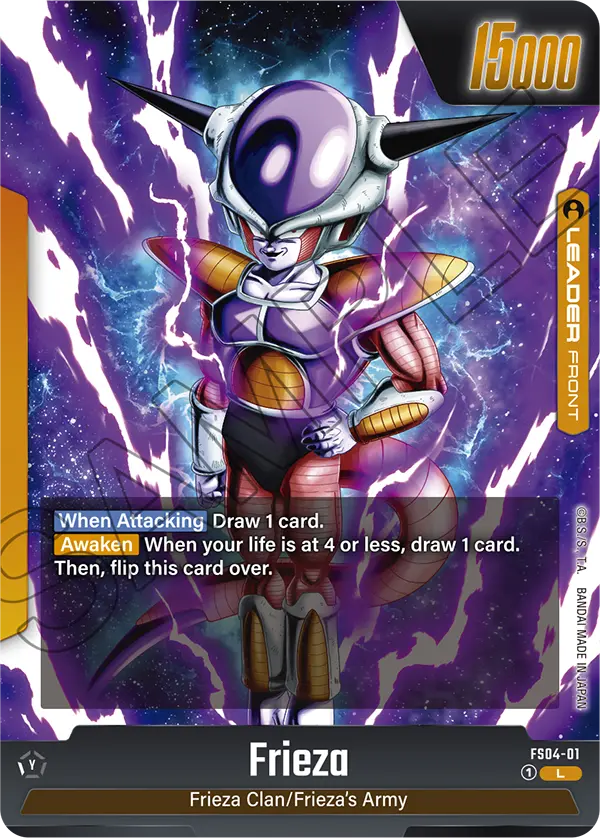
Fusion World is a race. Each player begins with eight Life, and your job is to reduce your opponent's Life to zero before they do the same to you. You chip that Life down by attacking their Leader and getting through their defenses.
There's a second, rarer way to win: if a player ever needs to draw from an empty deck, they lose. This "decking out" almost never happens by accident, but some control decks lean on it as a backup plan when they can't race.
Keep the race framing in your head as you learn the rest. Every rule below — energy, combat, combo, Awakening — is ultimately a tool for getting your opponent to zero faster than they get you there, or for surviving long enough to turn the corner.
Your Deck and the Cards
A Fusion World deck is one Leader plus a main deck of 50 to 60 Battle and Extra cards — most players run exactly 50 for consistency. Every card in your deck must share a color with your Leader, and you can include up to four copies of any single card (a few special cards, such as those with the Dragon Ball keyword, allow more).
Cards come in five colors — Red, Blue, Green, Yellow, and Black — and each color has its own personality, from aggressive Red to card-advantage Blue. Your Leader picks your color, so choosing a Leader is really choosing how your deck wants to play. (For a deeper look, see our guide to the five colors of Fusion World.)
There are just three card types to learn:
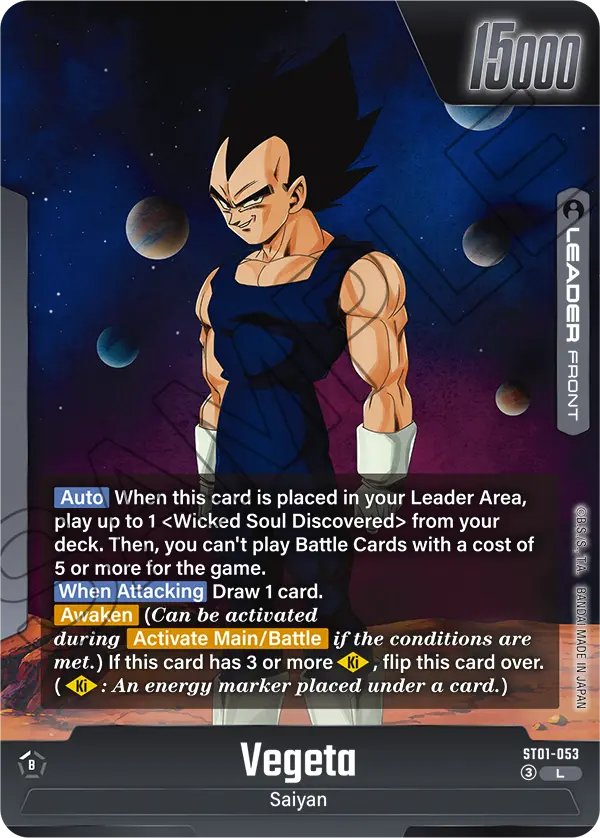
- Leader Card. Your one Leader sits in play the entire game and sets your deck's color. It has a Power and a skill, and a second — Awakened — side on its back that you flip to later in the game. Your Leader is both your main attacker and the thing your opponent is trying to defeat.
- Battle Card. Your fighters. Each has a Cost (top-left), a Power (the big number it fights with), and a Combo Power (the smaller number on the left edge). You play them to your Battle Area to attack and block — or spend them mid-battle as combo fuel.
- Extra Card. One-shot effect cards, closer to a spell. They have a Cost and a skill; you pay for them, the effect resolves, and they head to the Drop Area. Great for removal, buffs, and tempo swings.
That's the whole vocabulary. Once you can read a Battle Card's three numbers — Cost, Power, Combo Power — you can read almost any card in the game.
The Play Area
Your side of the table is divided into a few zones. You don't need to memorize them — they'll make sense the moment you play — but here's the map:
- Leader Area. Where your Leader sits all game.
- Battle Area. Where your Battle Cards (and some Extra cards) live and fight.
- Energy Area. Your resource pool. Cards you charge sit here and pay for everything you play.
- Life Area. Your eight face-down Life cards. Each hit on your Leader takes one of these into your hand.
- Combo Area. A temporary space where cards spent as combo go during a battle, before moving to the Drop.
- Drop Area. Your discard pile — plus your face-down Deck and your Hand, the two zones every card game shares.
Setting Up a Game
Setup takes about a minute:
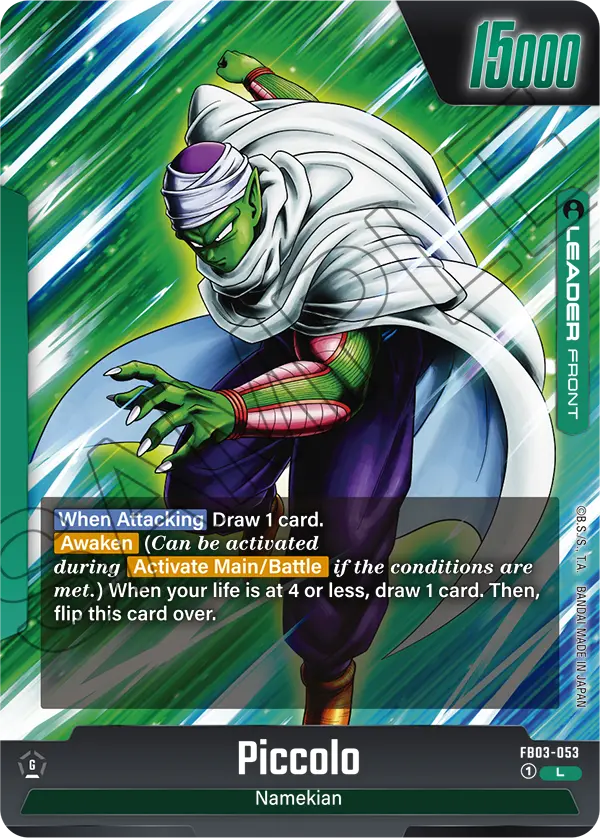
- Place your Leader. Both players put their Leader in the Leader Area, front (non-Awakened) side up.
- Draw six, mulligan once. Shuffle and draw a hand of six. If you don't like it, you may redraw once — shuffle all six back and draw six new cards. You only get one mulligan, so use it wisely.
- Set your Life. Place the top eight cards of your deck face-down in your Life Area without looking at them. Those eight cards are your Life total — and your future hand, as you'll see.
- The second player gets a marker. To offset going second, that player places one energy marker in their Energy Area. Then the first player begins.
A quick word on the mulligan: because energy is colorless and any card can be charged, you don't need a "perfect" hand — just one you can build a few turns from. We dig into keep-or-ship reads in the Fusion World mulligan guide.
How a Turn Works
A turn is split into three phases — Charge, Main, and Offense — but it's easiest to learn as a simple sequence of five things you do, top to bottom:
- 1. Stand up. Return all of your rested (sideways) cards to active (upright). Anything you tapped last turn is ready again.
- 2. Draw. Draw one card from your deck. Under the current rules, even the first player draws on their very first turn.
- 3. Charge. You may place one card from your hand face-down into your Energy Area. That's your single energy gain for the turn — any card works, and skipping it is allowed but rarely correct early on.
- 4. Main. Play Battle Cards and Extra Cards and use any Main-phase skills, in any order, for as long as you can pay their costs.
- 5. Offense. Attack with your Leader and your active Battle Cards. When you're done, your turn ends and play passes to your opponent.
That loop — stand up, draw, charge, play, attack — repeats every turn for both players. Almost everything that makes Fusion World interesting happens inside steps 4 and 5.
Paying for Cards: Energy
Energy is your only resource, and Fusion World keeps it gloriously simple. Each card you charge becomes one energy. To play a Battle or Extra Card, you rest (turn sideways) energy equal to its Cost. Your energy stands back up at the start of your next turn, ready to spend again.
Two things make this system friendly. First, energy is colorless — once a card is in your Energy Area, it pays for anything, regardless of the colors involved. Second, because you add one card per turn, your available energy climbs steadily, so your turns naturally get bigger as the game goes on.
There's a hidden lesson here: no card in your hand is ever truly dead. A card you'll never want to play is still a turn of energy, and thanks to its Combo Power, it can still defend your Leader in a pinch. That flexibility is a big part of why the game feels forgiving to new players.
Battle and Combo
To attack, rest your Leader or an active Battle Card and choose a target: your opponent's Leader, or one of their rested Battle Cards. You can't attack a Battle Card that's still active — only rested ones are vulnerable.

Then the powers are compared, and combat runs in one direction:
- The attacker wins on greater-than-or-equal-to. If the attacker's power is at least the defender's, the attack succeeds — ties go to the attacker.
- Hitting a Leader deals 1 damage. The defending player takes the top card of their Life Area into their hand — so taking damage actually hands you a fresh card.
- Hitting a Battle Card KOs it. The defeated Battle Card is knocked out to the Drop Area.
- A failed attack just fizzles. If the attacker comes up short, the battle simply ends — the attacker isn't destroyed. Swinging into a bigger number costs you nothing but the attack.
The twist that makes battles deep is Combo. Before powers are compared, either player can place Battle Cards into the Combo Area to add their Combo Power to a card in the fight — the attacker to push through, the defender to survive. Combo cards can come from your hand or by sacrificing an active Battle Card, they cost no energy, and they all go to the Drop after the battle. Whoever is willing to spend more cards usually wins the individual fight.
Because comboing burns cards while taking damage refills your hand, every block is a real decision — and that tug-of-war is the soul of the game. It's worth its own read: see The Combo System, Explained for the full economy of when to spend cards and when to take the hit.
Awakening Your Leader
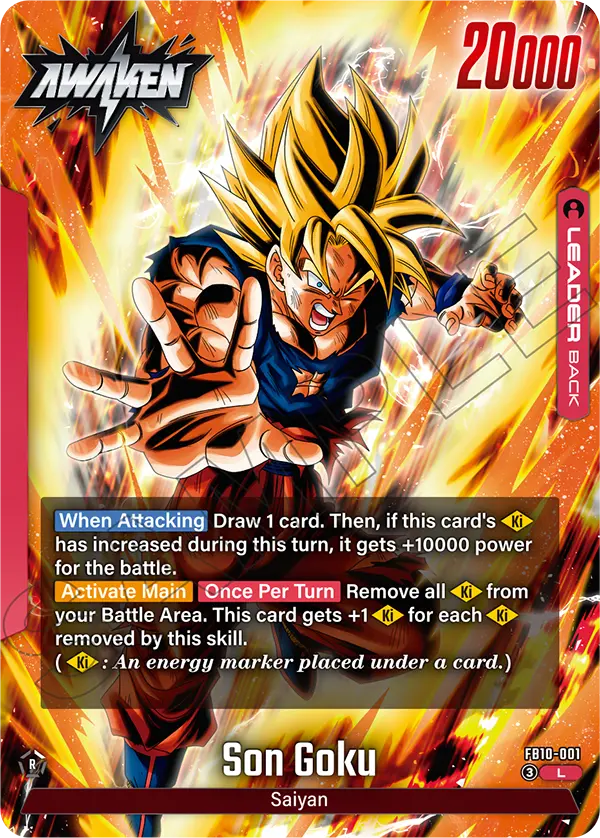
Your Leader has two sides, and the back is stronger. Most Leaders Awaken — flipping to that more powerful side, with higher Power and a new skill — once their Life drops to four, half of the starting eight. (Exact conditions can vary by Leader, so always read the card.)
This ties directly into the damage rule. Because losing Life both draws you a card and moves you toward Awakening, sometimes the right play is to let an attack through on purpose: you refill your hand and power up your Leader in the same moment. New players tend to defend their early Life too hard and never get to use this; experienced ones treat their Life total as fuel.
Which Leaders Awaken best, and how each color uses the flip, is a topic of its own — our Leader Awakening by color guide breaks it down.
Common Beginner Mistakes
- Over-defending early Life. Burning cards to save cheap early Life points leaves you empty-handed when real pressure arrives. Let some early hits land — you gain cards and march toward Awakening.
- Treating "unplayable" cards as dead. Every card is energy and combo fuel. A card you can't cast still charges your Energy Area and still defends your Leader.
- Dumping your whole board at once. Over-extending gives your opponent easy attack targets and leaves you without combo fuel. Develop with a plan, not all at once.
- Forgetting combos are one-and-done. Cards you combo go to the Drop for good — treat every combo as permanently spending that card.
Quick Reference
- The deck — 1 Leader + 50–60 cards, all matching the Leader's color; up to 4 of any card.
- The goal — reduce the opponent's Life from 8 to 0, or deck them out.
- Setup — draw 6 (mulligan once), set top 8 as Life; player going second gets 1 energy marker.
- The turn — stand up → draw → charge 1 energy → play cards → attack.
- Energy — colorless; rest energy equal to a card's Cost to play it.
- Attacking — target the Leader or a rested Battle Card; attacker wins on ties.
- Damage — a hit on your Leader sends the top Life card to your hand.
- Combo — either player spends cards (no energy) to change a battle's power; combo cards hit the Drop.
- Awaken — most Leaders flip to a stronger side at 4 Life.
You Know Enough to Play. Now Get Good.
That's a complete game of Fusion World: build around a Leader's color, charge energy each turn, attack with greater-than-or-equal power, lean on Combo to swing battles, and use your own Life as fuel toward Awakening. The rules are quick to learn — the depth is in the decisions, especially the constant choice between spending cards and taking the hit.
The fastest way to improve is to play, then read up on the parts that bit you. Here's where to go next.
© GEEKYDOMAIN.COM | Strategy Powered by Data