

Storm: The Most Notorious Combo Archetype
How one keyword ability turns a quiet setup turn into a game-ending fireworks show.
Some links below are affiliate links. If you buy through them, Geeky Domain may earn a small commission at no extra cost to you.
There's a specific kind of dread that settles over a table when a Storm player starts tapping lands, cracking rituals, and casting spell after cheap spell without seemingly doing anything. Nothing has hit the board. No creatures, no removal, nothing that looks like a threat. And then, all at once, it's over. That gap between "nothing is happening" and "the game just ended" is the entire identity of Storm, and it's why the archetype has one of the most polarizing reputations in Magic: The Gathering.
Storm is a keyword ability, but it's also a whole way of building and piloting a deck. Understanding it means understanding three separate layers: what the keyword actually does on the stack, how a "storm count" accumulates across a single turn, and the web of ritual mana, cost reduction, and cheap spells that make a big storm turn possible in the first place. This guide walks through all three, using real, verified card text so you can see exactly how the pieces fit together instead of just hearing that Storm is "scary."
We'll also cover why Storm has such a notorious reputation at kitchen tables and in competitive play, how to actually interact with a Storm player instead of just watching it happen, and the mistakes that even experienced pilots make when they try to run one of these decks themselves. For the wider strategy picture, start with our MTG Strategy Hub.
The Short Version
Storm is a keyword that makes a spell copy itself once for every spell already cast that turn, so casting it late in a turn full of cheap spells can produce a huge burst of copies. Building toward that burst is called building your storm count, and it depends on cheap, efficient support: ritual effects like Dark Ritual, Cabal Ritual, and Rite of Flame that generate bursts of mana, cost reducers like Baral, Chief of Compliance that make every spell in the chain cheaper, and cantrips that replace themselves so you don't run out of cards mid-combo. Classic payoffs include Grapeshot and Tendrils of Agony, both of which have Storm directly, while cards like Past in Flames rebuy your graveyard to extend a turn further and Aetherflux Reservoir offers a storm-adjacent win condition that rewards a high spell count without needing the keyword at all. Storm's reputation comes from how binary its turns are: either nothing visible happens, or the game ends, which makes it one of the hardest archetypes to play against reactively.
In This Guide
What Is Storm?
Storm is a keyword ability that appears on a small number of instants and sorceries. Its reminder text reads exactly: "When you cast this spell, copy it for each spell cast before it this turn. You may choose new targets for the copies." In plain terms, when you cast a spell with Storm, the game creates one copy of that spell for every other spell that was cast earlier in the same turn — and you get to choose new targets for each of those copies if you want to.
Grapeshot is one of the clearest examples of what that means in practice. Its rules text is simple: "Grapeshot deals 1 damage to any target." On its own, a spell that deals 1 damage is barely worth casting. But because Grapeshot has Storm, casting it after nine other spells in the same turn means it copies itself nine times, and now you're looking at ten instances of 1 damage all resolving at once — more than enough to end a game outright.

This is the core trick of every Storm deck: the payoff spell itself is usually weak and cheap. All of the actual work happens beforehand, in the form of every other spell you cast that turn. Storm doesn't reward big, splashy individual cards — it rewards volume, which makes an aggressively low mana curve more important here than in almost any other archetype.
How Storm Count Builds
Notice the exact phrasing in the reminder text again: "copy it for each spell cast before it this turn." It doesn't say "each spell you cast" — it says each spell cast, full stop. That distinction matters, because it means every spell cast by anyone at the table that turn, not just the Storm player, contributes to the count, even though in practice most of it comes from the Storm player's own chain of cheap spells.
"Storm count" is just the informal name players use for that running tally: the number of spells cast so far in the turn, which determines how many copies your Storm spell will make when you finally cast it. A storm count of zero means your Storm spell resolves with no copies at all — just a single Grapeshot doing 1 damage. A storm count of fifteen means fifteen extra copies. Building that count from zero to double digits in a single turn is the entire gameplan, and it's why Storm decks are built almost entirely around cheap, efficient spells rather than big individual threats.
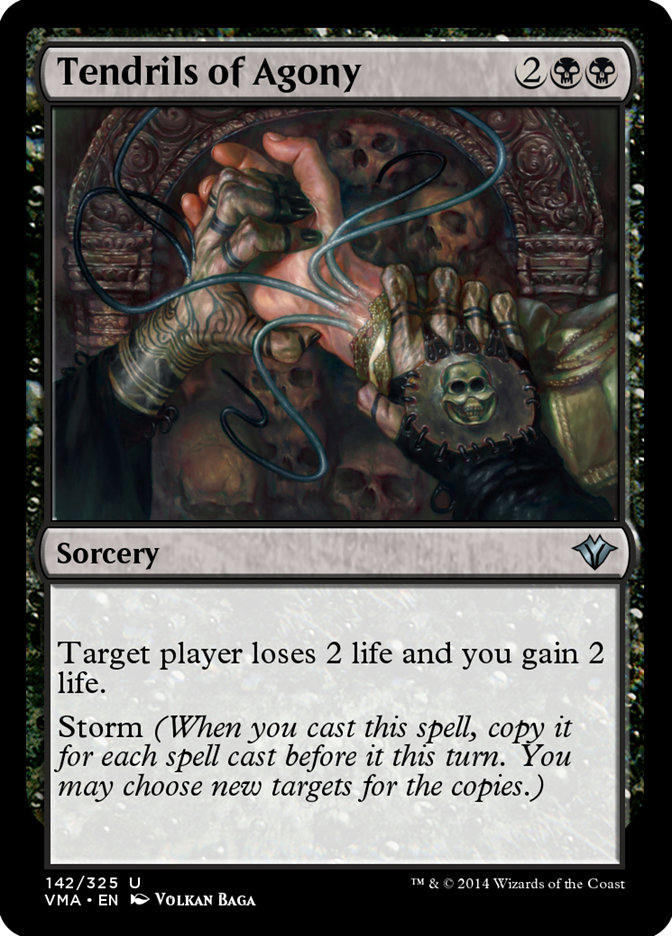
Tendrils of Agony shows how the same math works with a different kind of payoff. Its text reads: "Target player loses 2 life and you gain 2 life," and like Grapeshot, it has Storm. Instead of direct damage, a high storm count turns Tendrils of Agony into a massive life-loss-and-gain swing in a single spell — which can both close out an opponent and put the caster far out of burn range at the same time.
The Enabler Toolbox: Rituals, Cost Reduction & Cantrips
Casting ten, fifteen, or more spells in a single turn isn't something a normal mana base can support on its own. Storm decks lean on three overlapping categories of support cards to make it happen, and understanding each role is the fastest way to understand how a storm turn is actually assembled.
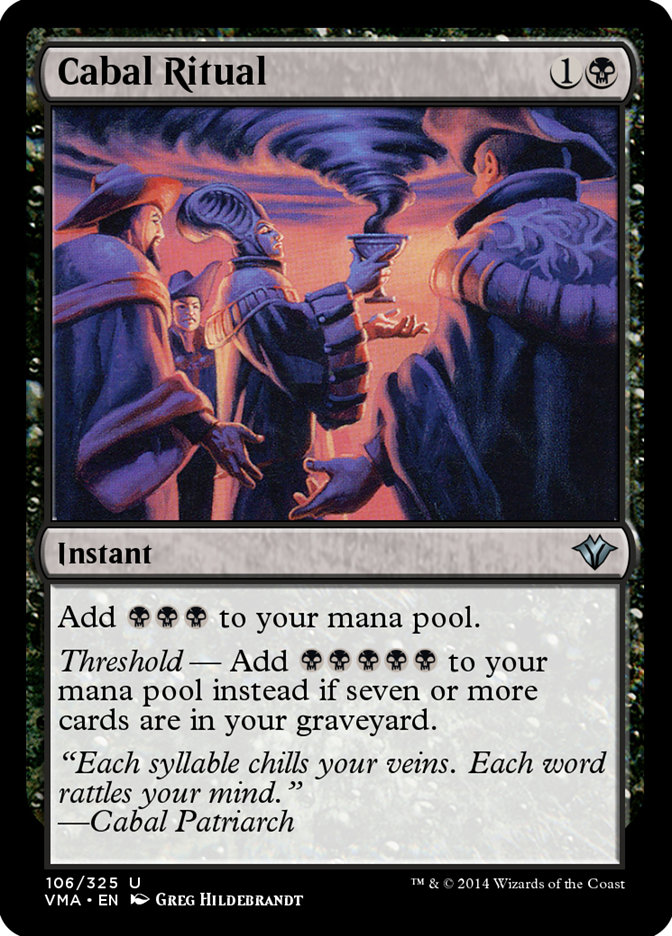
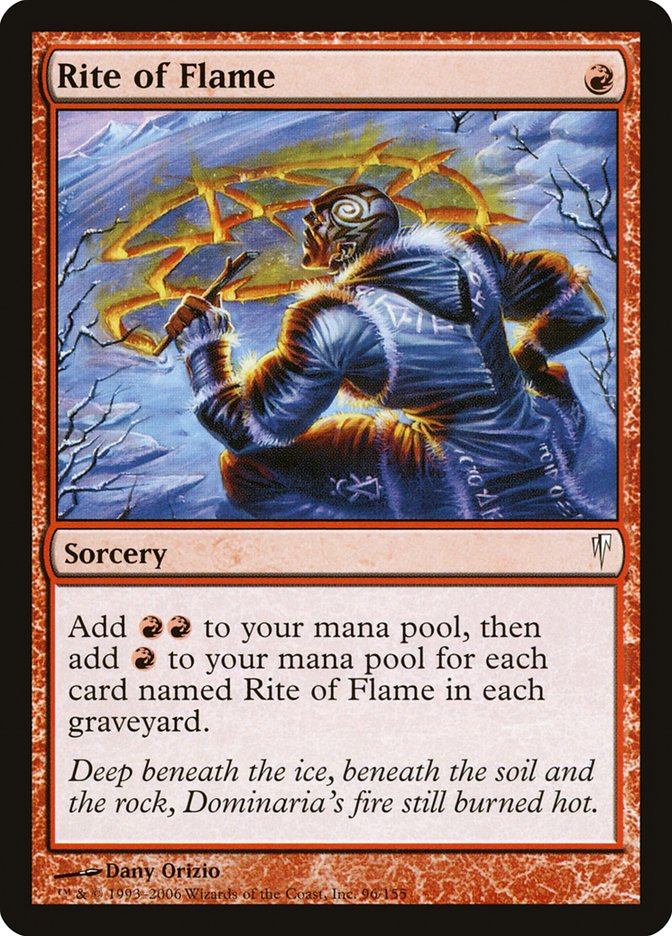
Ritual mana is the most direct enabler: a spell that, for one card and one turn, produces more mana than it costs. Dark Ritual is the classic example, reading simply "Add {B}{B}{B}." Spend one black mana casting it and you net two extra black mana for the rest of your turn. Cabal Ritual pushes that further with a threshold clause: "Add {B}{B}{B}. Threshold — Add {B}{B}{B}{B}{B} instead if there are seven or more cards in your graveyard," so a deck that's already filled its graveyard can turn one card into a huge mana burst late in a game. Rite of Flame does something similar in red, adding "{R}{R}, then add {R} for each card named Rite of Flame in each graveyard" — a smaller burst, but another cheap spell that ramps mana while adding to the storm count. Getting the rest of the deck's mana base right matters just as much as the rituals themselves.

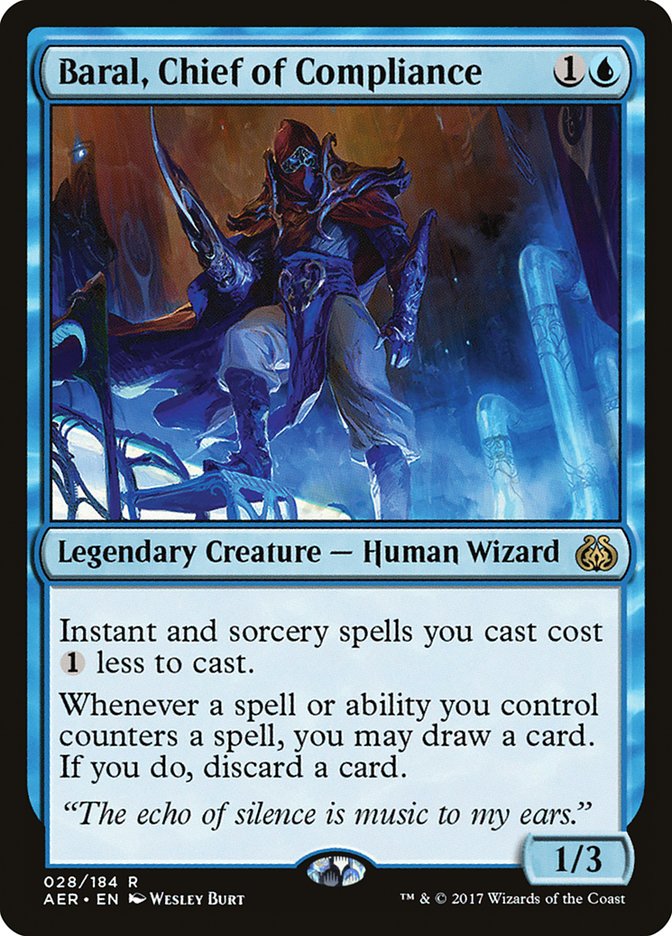
Cost reduction works differently: instead of adding mana, it lowers how much mana each spell needs in the first place, which stretches whatever mana you do have across more casts. Baral, Chief of Compliance is a clean example, reading "Instant and sorcery spells you cast cost {1} less to cast. Whenever a spell or ability you control counters a spell, you may draw a card, if you do, discard a card." That first line is the important one for Storm — every instant or sorcery in the deck effectively costs less, which means the same pool of mana from a ritual or two goes noticeably further.
Cantrips round out the toolbox. These are cheap instants and sorceries that draw a card when they resolve, effectively replacing themselves in your hand. On their own they don't advance the game much, but every cantrip cast during a storm turn does two things at once: it adds one more spell to the count, and it keeps your hand from running dry before you reach the payoff. A storm turn without cantrips runs out of gas quickly; a storm turn built around them can keep chaining almost indefinitely as long as the mana holds up. Most of these enablers are genuinely cheap to acquire — see our list of budget Commander staples under $5.
Storm pieces tend to be cheap outside of the true chase cards. Check current listings before you buy.
As an Amazon Associate, Geeky Domain earns from qualifying purchases. eBay links are affiliate links; Geeky Domain may earn a commission at no extra cost to you.
Payoffs and Historic Combo Lines
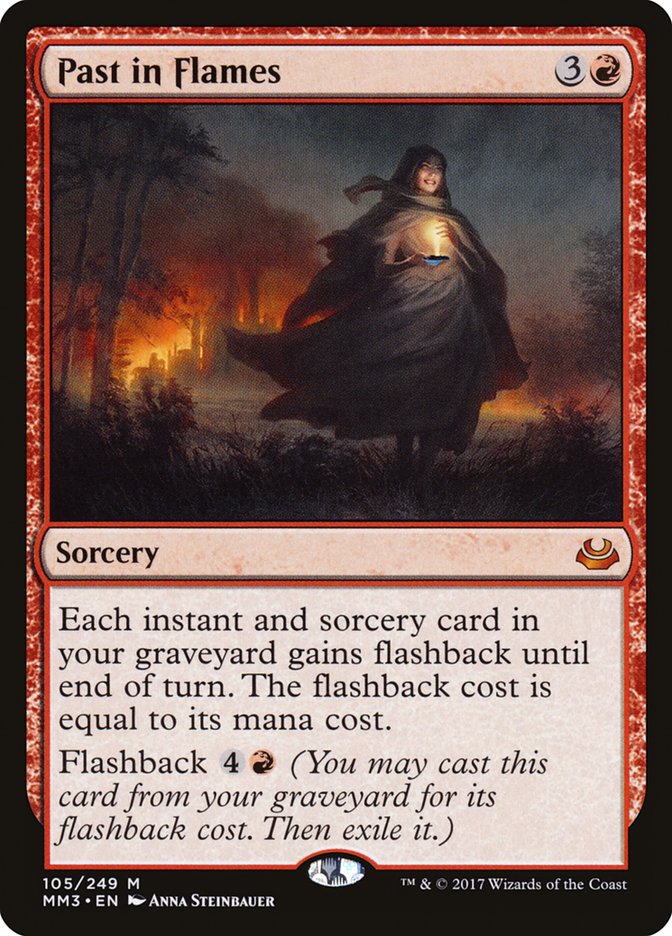
Beyond the ritual-and-cantrip engine, a handful of cards are built specifically to extend a storm turn once it's already rolling, or to offer a win condition that doesn't rely on the Storm keyword at all. Past in Flames is the classic example of the first kind. Its text reads: "Each instant and sorcery card in your graveyard gains flashback until end of turn. The flashback cost is equal to its mana cost," and it also carries its own flashback cost of {4}{R}. In practice, that means every ritual, cantrip, and even Past in Flames itself, once it's in the graveyard, can potentially be recast in the same turn — turning a graveyard full of spent cards back into fresh fuel for the storm count.
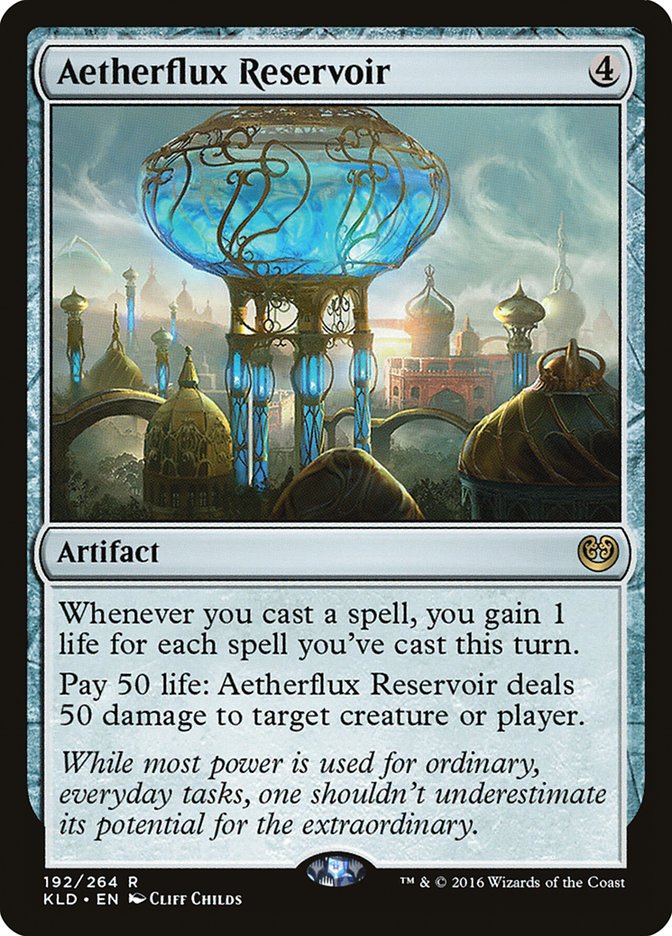
Aetherflux Reservoir takes a different route entirely. It doesn't have Storm, but it's built to reward the exact same behavior: "Whenever you cast a spell, you gain 1 life for each spell you've cast this turn. Pay 50 life: This artifact deals 50 damage to any target." Every spell cast after Aetherflux Reservoir is on the battlefield adds to a rapidly growing life total, and once that total clears fifty, the Reservoir itself becomes a game-ending payoff without needing Grapeshot or Tendrils of Agony at all. It's a reminder that "storm-style" strategies aren't limited strictly to cards with the keyword — anything that scales with spells-cast-this-turn plugs into the same shell.
Why Storm Is So Notorious
Storm's reputation isn't really about raw power — plenty of archetypes hit just as hard. It's about the shape of the turn itself. For most of the game, a Storm deck looks passive: tapping mana, casting rituals, drawing cards off cantrips, doing nothing that visibly threatens anyone's life total. Then, once the pieces are in place, the entire game can end in a single turn, often with little warning for opponents who weren't tracking how many spells had already resolved.
That binary quality — nothing, then everything — is what makes Storm feel different from a deck that wins by grinding out advantage over several turns. It rewards a pilot who can track a rapidly growing storm count and sequence a long chain of cheap spells correctly, and it punishes tables that don't hold interaction in reserve for exactly the right moment. Storm decks have also historically drawn extra scrutiny across competitive Magic, precisely because a deck that can end the game out of nowhere tends to warp how every other deck at the table has to play. That's exactly the kind of raw power the Commander bracket system was built to flag.
Storm doesn't play one good card at a time — it plays every card in a good hand, all in the same turn.
How to Play Against Storm
The single most important habit against a Storm deck is patience with your interaction. Countermagic, discard, and removal aimed at the Storm player's mana or hand are all far more valuable held for the turn they actually try to go off than spent early to stop a single ritual or cantrip. A Storm player who loses one piece of the chain early can usually just draw into another; one who gets countered mid-combo, after committing most of their hand, often can't recover at all.
It also helps to simply apply pressure. Every turn a Storm deck spends setting up mana and card advantage is a turn it isn't developing a board, so a reasonably fast clock forces the Storm player to go off earlier and with fewer resources than they'd like. Watching for the tells — an unusual run of cheap spells resolving, a ritual hitting the battlefield, a cost reducer coming down — gives you a window to react before the payoff spell is actually cast.
Common Mistakes Piloting Storm
Storm decks are unforgiving of small sequencing errors, and even experienced pilots fall into the same handful of traps. If Storm feels like too much to build around first, our $50 Commander deck blueprint covers a gentler starting point.
Going off before the storm count can actually close the game. Casting the payoff spell too early, before enough cheap spells have resolved, just wastes it — a Grapeshot with a storm count of two is a minor annoyance, not a finisher.
Misjudging available mana versus available spells. A hand full of cantrips and rituals is worthless if the sequencing doesn't leave enough mana for the payoff spell itself at the end of the chain.
Casting rituals before cost reducers are online. Playing a cost-reduction piece first, when it's available, stretches every ritual and every remaining card in hand further than casting rituals first would.
Ignoring open mana at the table. Going off into an opponent who's holding up interaction, instead of waiting a turn or forcing that mana to be used elsewhere first, is one of the most common ways an otherwise perfect storm turn gets stopped cold.
FAQ & Quick Reference
What exactly does the Storm keyword do? When you cast a spell with Storm, it copies itself once for every spell already cast earlier that turn, and you may choose new targets for each copy.
Does the storm count include spells cast by opponents? Based on the exact wording — "copy it for each spell cast before it this turn," not "each spell you cast" — any spell cast that turn contributes, not just the ones the Storm player cast themselves.
Do I need a card that literally has Storm to build a "storm-style" deck? No. Aetherflux Reservoir rewards a high spell count in a turn without having the keyword itself, functioning as an alternate payoff for the same kind of deck.
What's the difference between a ritual and a cost reducer? A ritual like Dark Ritual, Cabal Ritual, or Rite of Flame produces net extra mana for the turn. A cost reducer like Baral, Chief of Compliance instead lowers the price of your other spells, so the mana you already have goes further.
Why does Past in Flames matter so much to Storm decks? It temporarily grants flashback to every instant and sorcery in your graveyard, letting a Storm player recast rituals and cantrips already used earlier in the game — turning a spent graveyard into a second wave of spells in the same turn.
Ten Spells In, One Turn Later, Game Over.
Storm is one of the clearest examples of how Magic's rules text can turn a handful of cheap, unassuming cards into a single overwhelming turn. Understanding the keyword, the storm count, and the enablers behind it is the difference between watching that turn happen to you and knowing exactly when to step in.
© GEEKYDOMAIN.COM | Strategy Powered by Data