

The MTG Bracket System Explained (Commander 2025+)
How Wizards' five-tier power system replaced two decades of Rules Committee governance, and what Exhibition through cEDH actually mean for your deck.
Some links below are affiliate links. If you buy through them, Geeky Domain may earn a small commission at no extra cost to you.
You sit down for a "casual" Commander pod. By turn four, someone tutors up a fast-mana rock, chains a couple of extra turns, and closes with a combo nobody saw coming. Nobody lied to you, they probably thought their deck was casual too. For most of Commander's history, "casual power level" was whatever the person using the phrase believed it meant, and that gap was one of the fastest ways a pod fell apart before turn ten.
That ambiguity is what the Commander Bracket System was built to fix. Since February 2025, Wizards of the Coast and the Commander Format Panel have published an official five-tier framework, running from joke-deck-friendly Exhibition up to fully competitive cEDH, backed by a curated "Game Changer" card list and a handful of other checked restrictions. It arrived less than five months after the volunteer Rules Committee that had governed Commander for roughly twenty years dissolved itself amid intense community backlash, and it's still being actively refined today.
This guide covers how we got here, what each bracket means in practice, how the Game Changers list and its companion restrictions (mass land denial, two-card combos, extra-turn spells) combine to define a bracket, and how to find where your own deck lands. For the wider strategy picture, start with our MTG Strategy Hub.
The Short Version
Commander is no longer governed by the old volunteer Rules Committee, which dissolved itself on September 30, 2024 after backlash over its banning of Jeweled Lotus, Dockside Extortionist, Mana Crypt, and Nadu, Winged Wisdom. Wizards of the Coast now holds final authority, advised by the Commander Format Panel it founded that October. The result, formalized in the February 11, 2025 "Introducing Commander Brackets Beta" article, is a five-tier system: Bracket 1 (Exhibition), Bracket 2 (Core), Bracket 3 (Upgraded), Bracket 4 (Optimized), and Bracket 5 (cEDH). A deck's bracket is shaped primarily by its count of "Game Changer" cards (zero in Brackets 1-2, up to three in Bracket 3, unlimited in 4-5), plus separate restrictions on mass land denial, early two-card combos, and chained extra turns. The whole system is explicitly optional matchmaking language, not deck-construction law, and it remains officially labeled "beta" as of the most recent update in February 2026.
In This Guide
- → Why Commander Needed a Bracket System
- → The Five Commander Brackets, Explained
- → The Game Changers List: What It Is (and Why It Caps Your Bracket)
- → Mass Land Denial, Combos, and Extra Turns: The Other Restrictions
- → How to Figure Out Your Deck's Bracket
- → Where You'll Actually See Brackets in Practice
- → Common Mistakes When Using the Bracket System
- → FAQ and Quick Reference
Why Commander Needed a Bracket System
For roughly two decades, Commander was governed entirely by the Rules Committee, a small volunteer group with no formal ties to Wizards of the Coast. That held until September 23, 2024, when the Committee banned four cards in one announcement: Jeweled Lotus, Dockside Extortionist, Mana Crypt, and Nadu, Winged Wisdom.
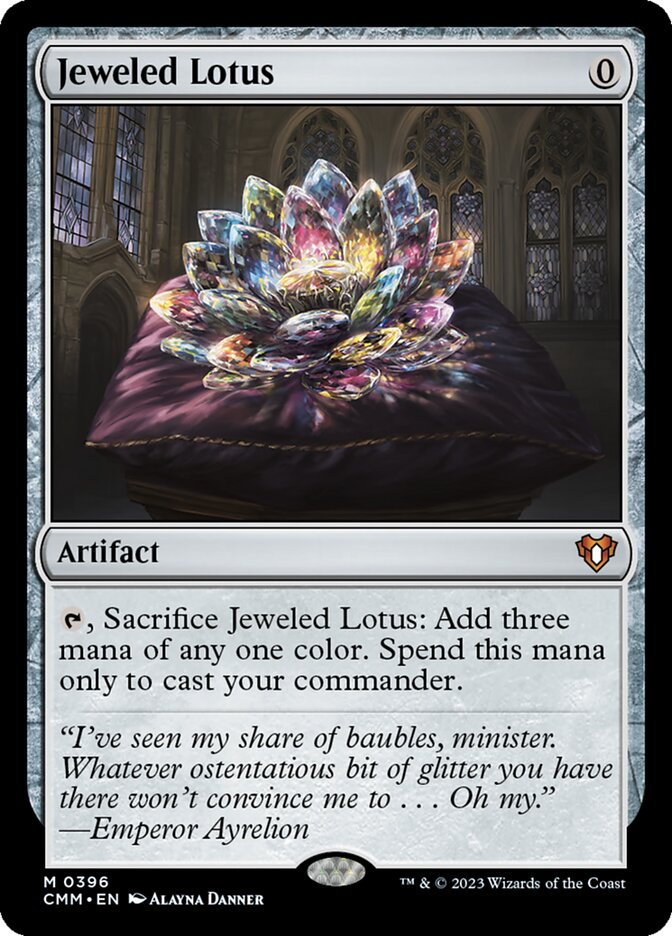
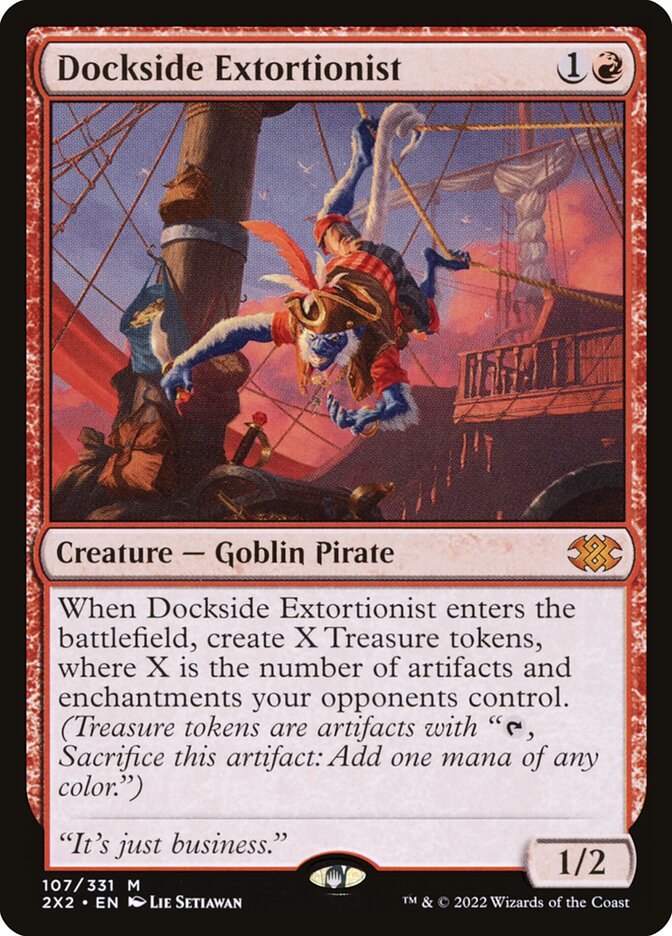
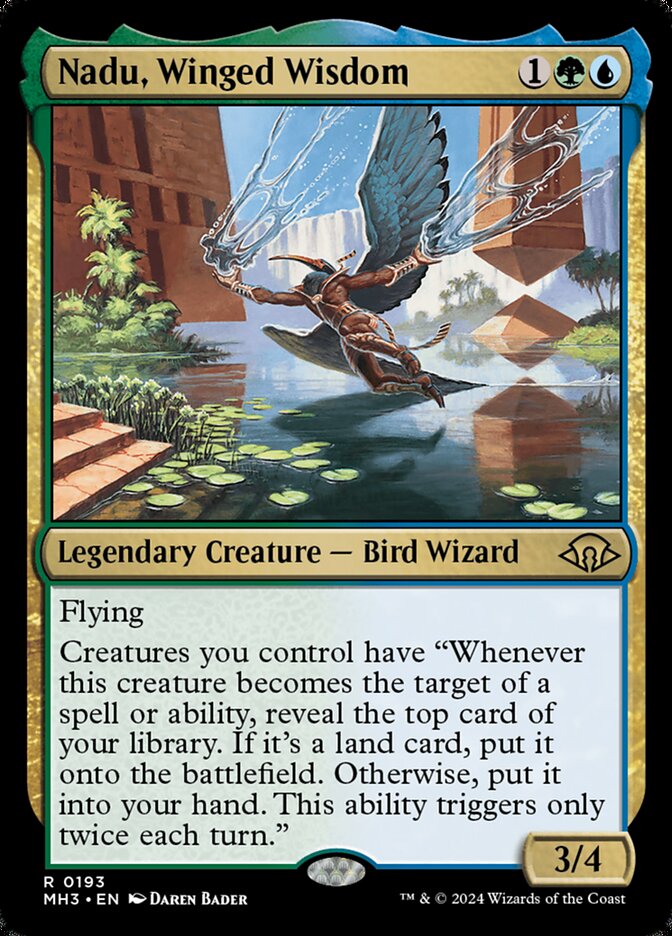
The backlash was severe enough that, one week later, on September 30, 2024, the Rules Committee dissolved itself and handed control to Wizards of the Coast, leaving the format without a governing body for the first time since its inception.
Wizards moved quickly to fill the gap, founding the Commander Format Panel that October as an advisory group. Wizards makes the final call on any Commander rules question, informed by the Panel's input, rather than the Panel holding independent authority of its own.
The bracket concept actually predates the Panel's formal debut. That same day, September 30, 2024, Wizards published "On the Future of Commander," floating an early four-bracket system (no Game Changers list yet) where a deck "would be defined by its highest-bracket card or cards." It was explicit this was an unfinished idea seeking feedback, illustrated with examples from low-impact cards to fast mana and premium tutors.
The Five Commander Brackets, Explained
Five months later, on February 11, 2025, Wizards and the Commander Format Panel published "Introducing Commander Brackets Beta," which replaced that early sketch with the finalized system in use today: five brackets, plus a companion Game Changers list to make restrictions concrete instead of a vague "highest bracket card" rule. Here's what each bracket covers.
| Bracket | Name | What It Looks Like |
|---|---|---|
| 1 | Exhibition | Ultra-casual, theme- or flavor-first decks (think an all-Horses tribal build or a joke deck) rather than anything built to win. Games are expected to run at least nine turns. |
| 2 | Core | Real engines and the occasional splashy turn, but nothing fully optimized -- no longer officially tied to precon power level specifically. Games are expected to run at least eight turns. |
| 3 | Upgraded | Carefully upgraded beyond precon strength, with limited access to premium cards (up to three Game Changers). Games end roughly one to two turns faster than Bracket 2. |
| 4 | Optimized | High-power casual Commander: explosive starts, full optimization, no restrictions beyond the banned list. The strongest deck most casual players will face. |
| 5 | cEDH | Fully competitive, metagame-aware, tournament-minded Commander built to win as fast and consistently as possible. |
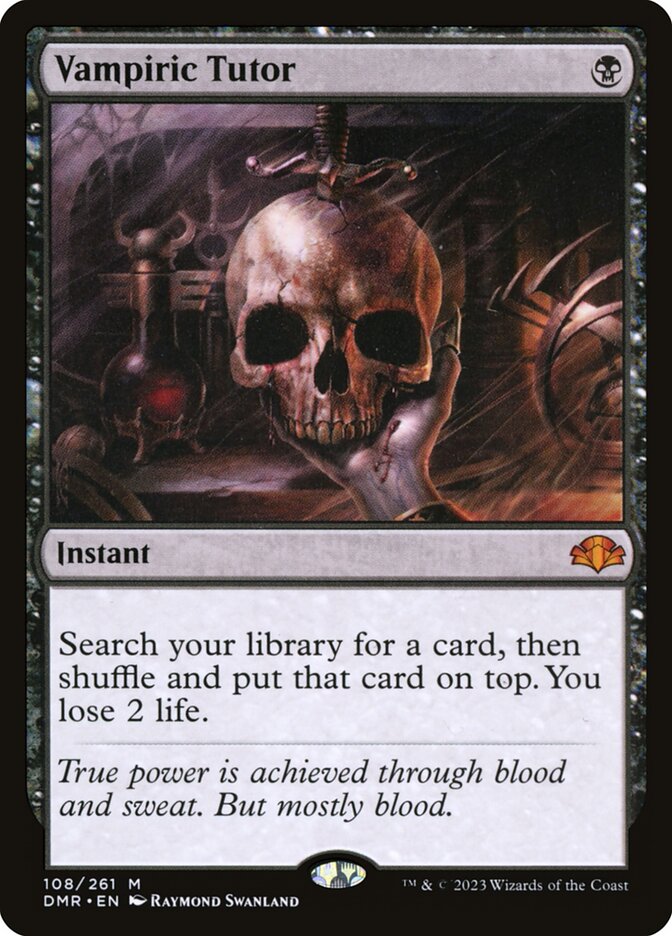
Brackets 1 through 3 are the socially-focused, casual end of the format; Brackets 4 and 5 are the higher-power, competitive end. If you would rather start from a bracket-appropriate deck already built for you, our list of the best Commander precons of all time is a good starting point. The finalized system also replaced the original draft's "highest bracket card" logic, a cheap removal spell like Swords to Plowshares at the low end, a premium tutor like Vampiric Tutor at the high end, with a full checklist covered next.

The Game Changers List: What It Is (and Why It Caps Your Bracket)
The centerpiece of the finalized system is the Game Changers list, Wizards' curated list of cards able to "dramatically warp Commander games" through overwhelming card advantage, resource denial, or similar effects. Game Changer count is the biggest input into a deck's bracket, though, as the next section covers, it isn't the only one.
| Bracket | Game Changers Allowed |
|---|---|
| 1 – Exhibition | 0 |
| 2 – Core | 0 |
| 3 – Upgraded | Up to 3 |
| 4 – Optimized | Unlimited (banned list only) |
| 5 – cEDH | Unlimited (banned list only) |
That zero-tolerance floor matters. A deck with even a single Game Changer cannot be Bracket 1 or 2, it's automatically bumped to Bracket 3 or higher, regardless of how casual the rest of the list looks. Sticking to genuinely affordable staples helps keep a deck honestly in that range — see our budget Commander staples under $5 list.
The list itself isn't frozen. Wizards treats it as a living beta list, revised on an uneven schedule since the February 2025 launch, growing and changing as the Format Panel reviews how it performs at actual tables. The most consequential revision so far was the October 21, 2025 "Commander Brackets Beta Update," which decoupled Bracket 2 from precon power level specifically, added the expected-turn-count guidance now used to describe each bracket, removed the separate tutor restriction, and delisted ten cards from Game Changers. The most recent confirmed revision, the "Commander Brackets Beta Update" dated February 9, 2026, added new cards without touching those October structural changes, and noted Wizards plans to hold off on further structural tweaks until observing at least one MagicCon, with a possible removal of the "beta" label later in 2026.
Because the list changes on its own schedule, this guide won't cite an exact count that could go stale by publish time. See our companion breakdown for the up-to-date roster: The Full MTG Game Changers List.
Whether you land in Bracket 2 or Bracket 5, a real playmat and clean sleeves belong at every table.
As an Amazon Associate, Geeky Domain earns from qualifying purchases. eBay links are affiliate links; Geeky Domain may earn a commission at no extra cost to you.
Mass Land Denial, Combos, and Extra Turns: The Other Restrictions
Game Changer count sets a ceiling, but three more restrictions run in parallel, and any one of them can push a deck into a higher bracket even with zero Game Changers. The table below summarizes all four categories together.
| Restriction | Brackets 1-2 | Bracket 3 | Brackets 4-5 |
|---|---|---|---|
| Game Changers | None allowed | Up to 3 | Unlimited |
| Mass land denial | Not expected | Not expected | Permitted |
| Two-card infinite combos | None intentional | None before turn six | Unrestricted |
| Extra-turn cards | None / low quantity, not chained | Low quantity, not chained | Unrestricted |
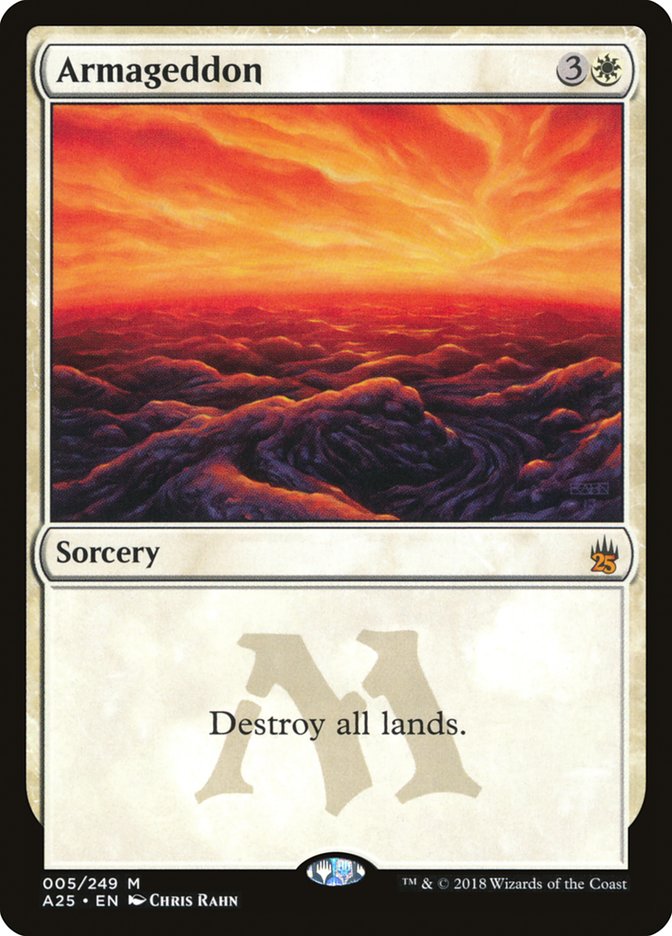
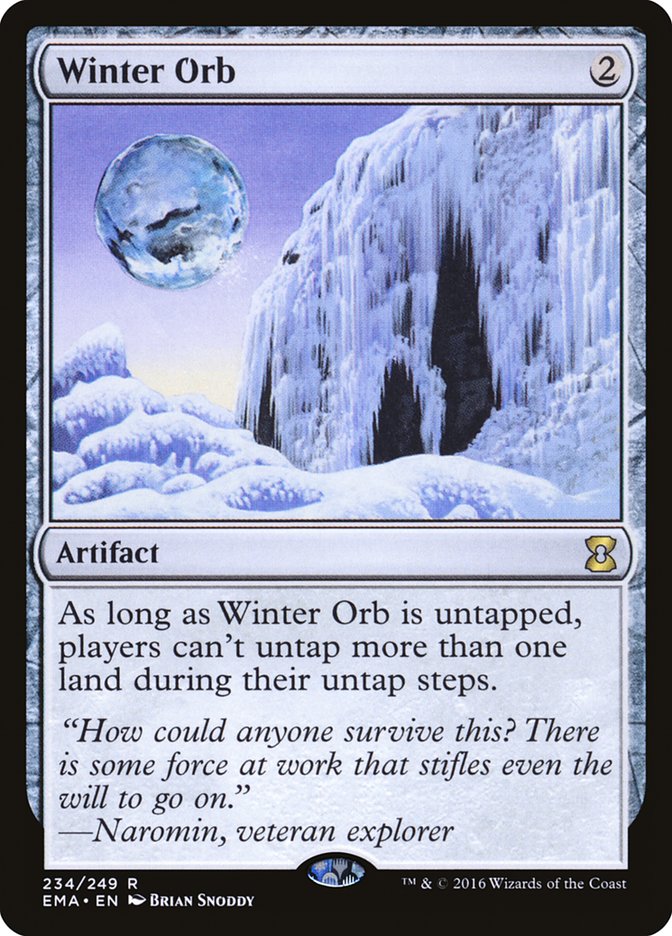
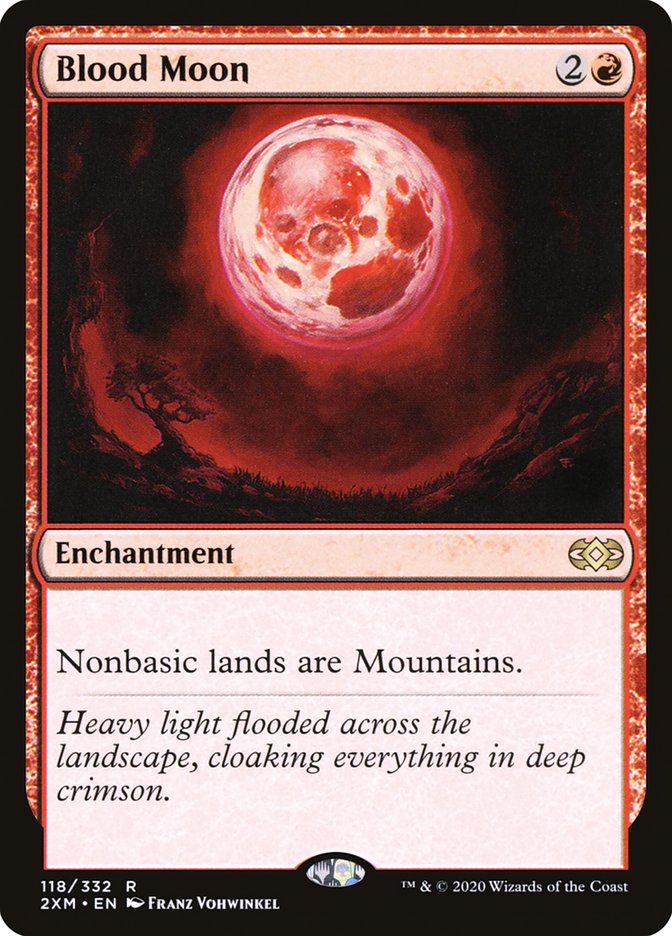
Mass land denial is officially defined as cards that "regularly destroy, exile, and bounce other lands, keep lands tapped, or change what mana is produced by four or more lands per player without replacing them." Wizards' examples include Armageddon, Winter Orb, and Blood Moon, among others. These effects aren't expected in Brackets 1 through 3, and are permitted in 4 and 5. Since this is tracked separately from Game Changers, a deck can have zero Game Changers and still get pushed up purely for running mass land denial.
Two-card infinite combos are handled with an eye toward intent rather than raw power. Brackets 1 and 2 expect none at all. Bracket 3 allows them only if they can't be assembled and won before turn six; later combos are tolerated more readily. Brackets 4 and 5 are unrestricted. Intent matters here: a combo a player stumbles into by accident mid-game is treated very differently from one deliberately built in as the win condition.
Extra-turn cards follow similar logic. Bracket 1 expects none. Brackets 2 and 3 allow them only in low quantities, not chained or looped. Brackets 4 and 5 are unrestricted. The stated rationale: extra-turn spells take time away from everyone else at the table, cutting against the casual, social intent of the lower brackets.
Tutors no longer carry a dedicated bracket restriction at all -- Wizards removed the separate tutor guideline in the October 21, 2025 Commander Brackets Beta Update, folding the format's most powerful tutors into the Game Changers list instead and managing the rest through that list alone.
How to Figure Out Your Deck's Bracket
None of this replaces the conversation your table already has before a game, it gives that conversation a shared vocabulary. Wizards is explicit that the system preserves what the community calls "Rule Zero," the pregame chat where players agree on what kind of game they're about to play, modeling the sentence it's meant to enable: telling your table, "I'm in Bracket 2, except for this one thing. Is that okay with everybody?"
Wizards frames the system as optional matchmaking language, not mandatory deck-construction law. If your playgroup already has its own informal sense of power level and it's working, you're not required to relabel anything. Official guidance also suggests players can usually "wiggle" one bracket away safely, a Bracket 3 deck and a Bracket 4 deck can often still produce a fair game, presented as practical advice rather than a hard boundary. Getting your deck's mana curve right matters just as much as its bracket for how a game actually plays out.
In practice, you don't have to self-assess entirely from memory. Deckbuilding sites Archidekt and Moxfield both display an estimated Commander Bracket on deck pages set to Commander/EDH format, and Archidekt visually flags Game Changer cards with an orange tag and diamond icon. Archidekt's estimator now factors in the full set of official criteria per bracket -- nonland tutors, extra turns, mass land denial, Game Changers, and two-card infinite combos -- rather than leaning on Game Changer count alone. Both sites let you manually override a deck's bracket, too.
Community members have also built their own bracket calculators and decision-tree tools. None are official Wizards products, so treat them as a sanity check, not a final ruling, the tables above are the authoritative source. Once you know your target bracket, our $50 Commander deck blueprint shows how to hit a casual bracket on a real budget.
Where You'll Actually See Brackets in Practice
The clearest sign the bracket system has caught on is that it's showing up outside Wizards' own announcements. Local game stores have started using the official labels to organize in-person Commander nights, advertising specific events by level, the vague "casual" or "competitive" listing of a couple years ago now reads as something closer to "Commander Night: Bracket 4."
Online, that same vocabulary shows up on deck pages across Archidekt and Moxfield, so a deck's bracket is now something a store, a convention stranger, or a random pod can all reference using the same five words.
The system is also still explicitly a work in progress. As of the most recent confirmed update in February 2026, Wizards continues to label it "beta," intending to let the current structure sit through at least one MagicCon before further changes, with a possible removal of the "beta" tag later in 2026.
Common Mistakes When Using the Bracket System
A few habits tend to trip players up once they start using bracket language. Here's what to watch for.
Counting only Game Changers and stopping there. A deck with zero Game Changers can still be a Bracket 3 or 4 deck if it runs mass land denial, chains extra turns, or leans on an early two-card combo. Check all four categories, not just the list.
Treating the bracket number as a hard rule instead of a conversation starter. Wizards built the system as optional matchmaking language, not deck-construction law. Playgroups with their own informal system aren't required to switch.
Assuming any two-card combo is automatically disqualifying. Intent matters: an accidental mid-game combo reads differently from one built in as the plan, and Bracket 3 only restricts combos that can close the game before turn six.
Skipping the Rule Zero conversation because you already stated a number. The bracket is meant to start the pregame chat, not replace it, especially for the "except for this one thing" exceptions almost every deck has.
FAQ and Quick Reference
Who runs Commander now that the Rules Committee is gone? Wizards of the Coast has final authority, informed by the advisory Commander Format Panel it founded in October 2024.
What are the five Commander brackets? From most casual to most competitive: Bracket 1 (Exhibition), Bracket 2 (Core), Bracket 3 (Upgraded), Bracket 4 (Optimized), and Bracket 5 (cEDH).
How many Game Changers can I run in each bracket? Zero in Brackets 1 and 2, up to three in Bracket 3, and unlimited (aside from the banned list) in Brackets 4 and 5.
Is the bracket system mandatory? No. Wizards describes it as an optional matchmaking and communication tool, and existing playgroups aren't required to adopt it.
Is the system still in beta? Yes. As of the most recent confirmed update, dated February 9, 2026, it's still labeled "beta," pending at least one MagicCon under the current structure before further changes.
Where can I find the current, full Game Changers list? See our dedicated Game Changers breakdown for the up-to-date roster rather than a count from any single article.
Know Your Bracket, Play Your Game.
Once you know which bracket you're building toward, the next step is making sure the rest of the deck backs it up.
© GEEKYDOMAIN.COM | Strategy Powered by Data