

The printers went brrr. A brutal, math-based breakdown of Expected Value (EV), the trap of modern booster boxes, and why your closet full of Azurite Sea isn't your retirement fund.
Let's rewind to August 2023. You couldn't find a booster pack of The First Chapter to save your life. Local game stores were charging eye-watering premiums, people were trading their cars for Enchanted Elsas, and the "investor bro" community swore that every single Lorcana set was going to turn into a Bitcoin-level asset class. Fast forward to 2026, and the reality of Ravensburger's master plan has finally set in: they are printing this game into the ground.
And honestly? That is fantastic for the actual players. But if you are someone hoarding cases of modern sets under your bed hoping to flip them for a 300% profit in five years, you need an immediate reality check. The vast majority of Lorcana sealed product released over the last 18 months is a mathematically terrible investment.
We are cutting through the hype. This 10-part market guide dissects the actual data behind Lorcana sealed investing in 2026. We will look at why sets like Fabled and The First Chapter are defying gravity, why modern sets are a race to the bottom of the Expected Value (EV) chart, and whether holding Illumineer's Troves is secretly the smartest play you can make.
In This Guide (The 10-Part Breakdown)
- → 1. The EV Trap: Why Modern Boxes Bleed Money
- → 2. The First Chapter: The Inaugural Exception
- → 3. The Fabled Anomaly: Rarity-Debut Premium
- → 4. Illumineer's Troves vs. Booster Boxes
- → 5. How Enchanteds Dictate the Floor Price
- → 6. Ravensburger's Aggressive Reprint Policy
- → 7. Opportunity Cost: Cardboard vs. The S&P 500
- → 8. The Liquidity Problem with Heavy Cases
- → 9. Storage Hazards: Humidity and Foil Curling
- → 10. The Verdict: What to Buy and What to Avoid
1. The EV Trap: Why Modern Boxes Bleed Money
To understand why hoarding modern Lorcana boxes is a bad idea, you have to understand Expected Value (EV). EV is the mathematical average of what the cards inside a sealed box are actually worth if you were to open it, sell every single piece of cardboard inside, and subtract seller fees.
For standard TCG economics to work, the EV of a box needs to sit relatively close to its retail price. But with recent sets like Shimmering Skies, Azurite Sea, and Reign of Jafar, Ravensburger got very close to the holy grail of trading card production: supply that keeps pace with player demand. They printed deep into demand — and the secondary market for singles fell accordingly.
The Brutal Math
Right now, the EV of a modern booster box like Azurite Sea sits at a fraction of its roughly $144 MSRP. If you walk into a Local Game Store and pay full retail for that box, you are instantly underwater the second you break the seal — because the singles are cheap, nobody is rushing to pay premium prices for the sealed box. If you are buying these sets at MSRP to stash in your closet for 10 years, you are starting your investment in a massive, mathematically devastating hole.
2. The First Chapter: The Inaugural Exception
Every rule has an exception, and in Lorcana there are currently two standout outliers that defy the EV gravity holding down the rest of the market: The First Chapter and the rarity-defining Fabled expansion.
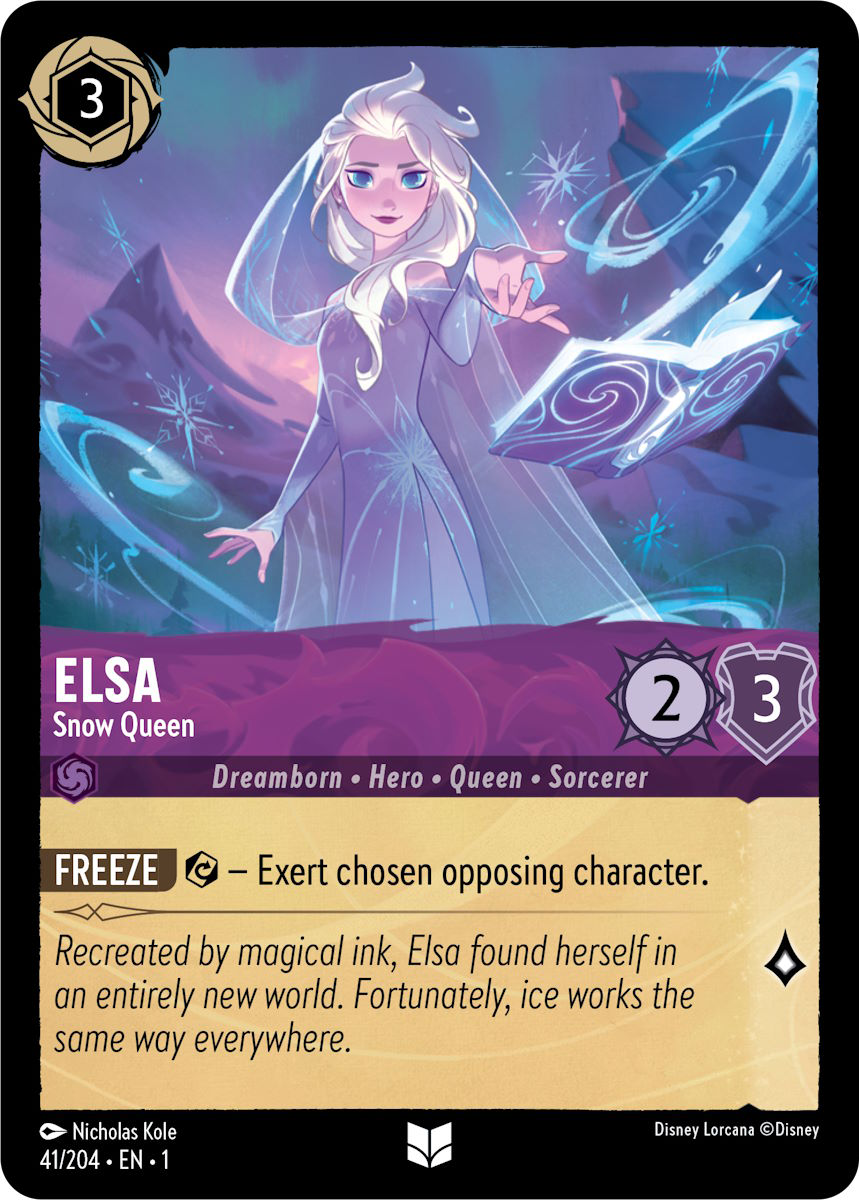
The First Chapter will always carry the inaugural premium. Even after Ravensburger announced set rotation and the original hype cooled from its frenzied launch peak, The First Chapter sealed boxes still comfortably command a strong premium over their original retail in 2026. It is the Alpha set. Ten years from now, collectors won't care about EV; they will pay for the nostalgia of ripping the original Disney magic.
3. The Fabled Anomaly: Rarity-Debut Premium
Then there is Fabled (Set 9, August 2025) — the set that changed Lorcana's rarity ceiling. Fabled introduced the game's first Epic and Iconic rarity cards, headlined by the debut Iconic Mickey Mouse and Minnie Mouse. That "first-of-its-kind" status gives Fabled a structural collector pull the mid-set grind never gets: it's the set people point to as a historical milestone, not just another expansion.
As a result, sealed Fabled has held a premium well above the modern-set floor. But the same caution applies as with any hot sealed product: buying in after a run-up means paying for demand that's already priced in. Chase the milestone for the collection, not as a guaranteed flip.
Where to Buy: Premium Sealed Boxes
Disclosure: As an Amazon Associate, Geeky Domain earns from qualifying purchases. Some links below are affiliate links — if you buy through them, we may earn a commission at no extra cost to you.
4. Illumineer's Troves vs. Booster Boxes
If you are absolutely dead-set on treating Lorcana as a financial vehicle, you need to stop buying standard 24-pack booster boxes and pivot toward the Illumineer's Troves. (For a full product-by-product breakdown of the newest set's options, see our Attack of the Vine products guide.)
Why? Because standard booster boxes are purely a vessel for raw packs. If the EV of the packs is garbage, the box is garbage. Illumineer's Troves, however, possess what the finance community would call a "sealed aesthetic premium." They come with beautifully designed storage boxes, exclusive dice, lore counters, and frequently a promo card. People will buy an old Illumineer's Trove just to put the box on their shelf as a display piece, largely regardless of what the packs inside are worth.
Furthermore, Troves are more tightly allocated by distributors than standard boxes. A game store might receive dozens of booster boxes but only a handful of Troves. The lower relative print run means they tend to appreciate faster on the secondary market. If you are going to tie up your liquidity in Lorcana cardboard, Troves historically provide a much safer floor than standard boxes.
5. How Enchanteds Dictate the Floor Price
If the Expected Value (EV) of standard singles is practically zero on modern sets, why do booster boxes hold any value at all? Two words: the lottery.
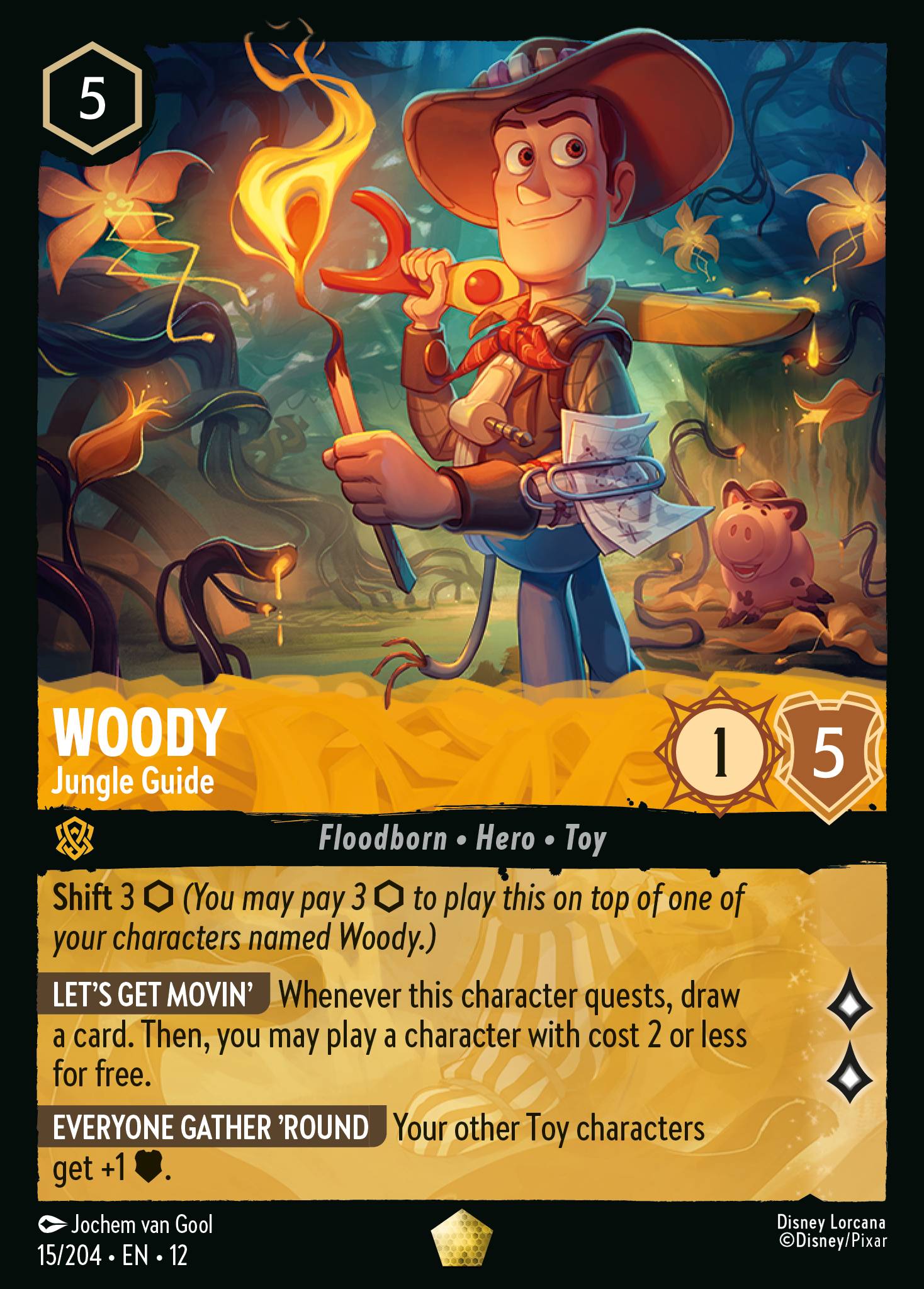
The entire floor price of a Lorcana booster box is propped up by the Enchanted cards inside it. Enchanteds sit at a low pull rate — on the order of roughly one per several boxes, and it varies meaningfully by set and print run. If a set features incredibly desirable Enchanted characters — like the Pixar headliners arriving with 2026's Wilds Unknown (Toy Story, Brave, and The Incredibles) — the sealed boxes maintain a respectable floor because gamblers are willing to pay a premium for the chance to rip them.
But if the Enchanted lineup is weak, the box price craters. Look at mid-tier sets where the Enchanteds were mostly obscure characters or unplayable action cards. Once the competitive players buy their cheap singles and exit the market, collectors have no reason to open the sealed product. If you are going to invest in sealed Lorcana, analyze the top three Enchanted cards in that set. If they aren't iconic, highly playable Disney/Pixar royalty, the sealed box will sit stagnant for years.
6. Ravensburger's Aggressive Reprint Policy
"But what about the long term?" the finance bros ask. "Won't these cards be scarce in five years?" Probably not. Because Ravensburger has signaled its strategy from the start: this is a game to be played, not a mutual fund. They want the cards in the hands of children and tournament grinders, not locked in acrylic cases in a basement.
Ravensburger has shown little hesitation about reprinting competitive staples to keep them accessible. And the introduction of set rotation in 2025 shifted the financial landscape further. As sets like Shimmering Skies and Azurite Sea rotate out of the Core Constructed format, the demand for those base singles falls off a cliff — a dynamic we cover in depth in the Lorcana rotation survival guide.
When the playable cards lose their utility, the only remaining value in the set is collector demand for the Enchanteds. But as Ravensburger keeps releasing four sets a year (Winterspell, Wilds Unknown, and Attack of the Vine! among the 2026 slate), the sheer volume of chase cards dilutes the market. There is simply too much shiny cardboard competing for the same collector dollars. Relying on artificial scarcity in a game engineered for mass-market retail is a fool's errand.
7. Opportunity Cost: Cardboard vs. The S&P 500
Let's do some brutal, undeniable math. Holding sealed booster boxes comes with a massive, invisible price tag called opportunity cost — the money you would have made if you invested that capital into a real financial asset instead of a cardboard box featuring Mickey Mouse.
The Break-Even Nightmare
Historically, a basic S&P 500 index fund returns roughly 8–10% a year. If you buy a Lorcana booster box for about $140, it needs to appreciate just to match a basic index fund — and you can't sell a Lorcana box for free.
Selling on eBay or TCGplayer costs roughly 13% in platform fees, plus shipping. To actually clear a real net profit on a $140 booster box after matching what an index fund would have returned, the market price has to climb substantially — roughly into the $190–$200 range. Do you honestly believe a mass-printed modern box is going to jump 40% in value in the next 24 months while Ravensburger is printing newer, hotter sets right behind it? The math does not support the delusion.
8. The Liquidity Problem with Heavy Cases
Okay, let's say you ignore the math. You buy 10 sealed cases (40 booster boxes) of Wilds Unknown because you are utterly convinced that Pixar Enchanteds will carry the set to the moon in 2030. You just created a massive liquidity nightmare for yourself.
Stocks are liquid; you click a button on your phone and the cash is in your bank account in 48 hours. Lorcana cases are a physical, heavy, highly illiquid asset. If the price of Wilds Unknown spikes by $30 a box, you cannot just click "sell." You have to source shipping boxes, pack them securely with bubble wrap, generate thermal shipping labels, and physically haul 60 pounds of cardboard to the post office.
Shipping a single booster box will eat your margins; shipping a heavy sealed case will absolutely incinerate them. The shipping costs alone frequently erase any marginal profit you might have gained from holding the product. You cannot day-trade heavy cardboard efficiently. If you are going to invest in physical TCG assets, invest in graded singles — they are infinitely easier to ship, store, and liquidate.
Where to Buy: Graded Lorcana Singles
Disclosure: Some links below are affiliate links — if you buy through them, we may earn a commission at no extra cost to you.
For graded slabs, the deepest live inventory is on the marketplaces — and pair any purchase with our Lorcana grading guide so you know what a given grade is really worth:
9. Storage Hazards: Humidity and Foil Curling
Let's talk about the physical reality of treating cardboard like a 401(k). Your bedroom closet is not a climate-controlled Swiss bank vault. Trading card boxes are incredibly susceptible to environmental damage, and modern foil printing has only made this worse.
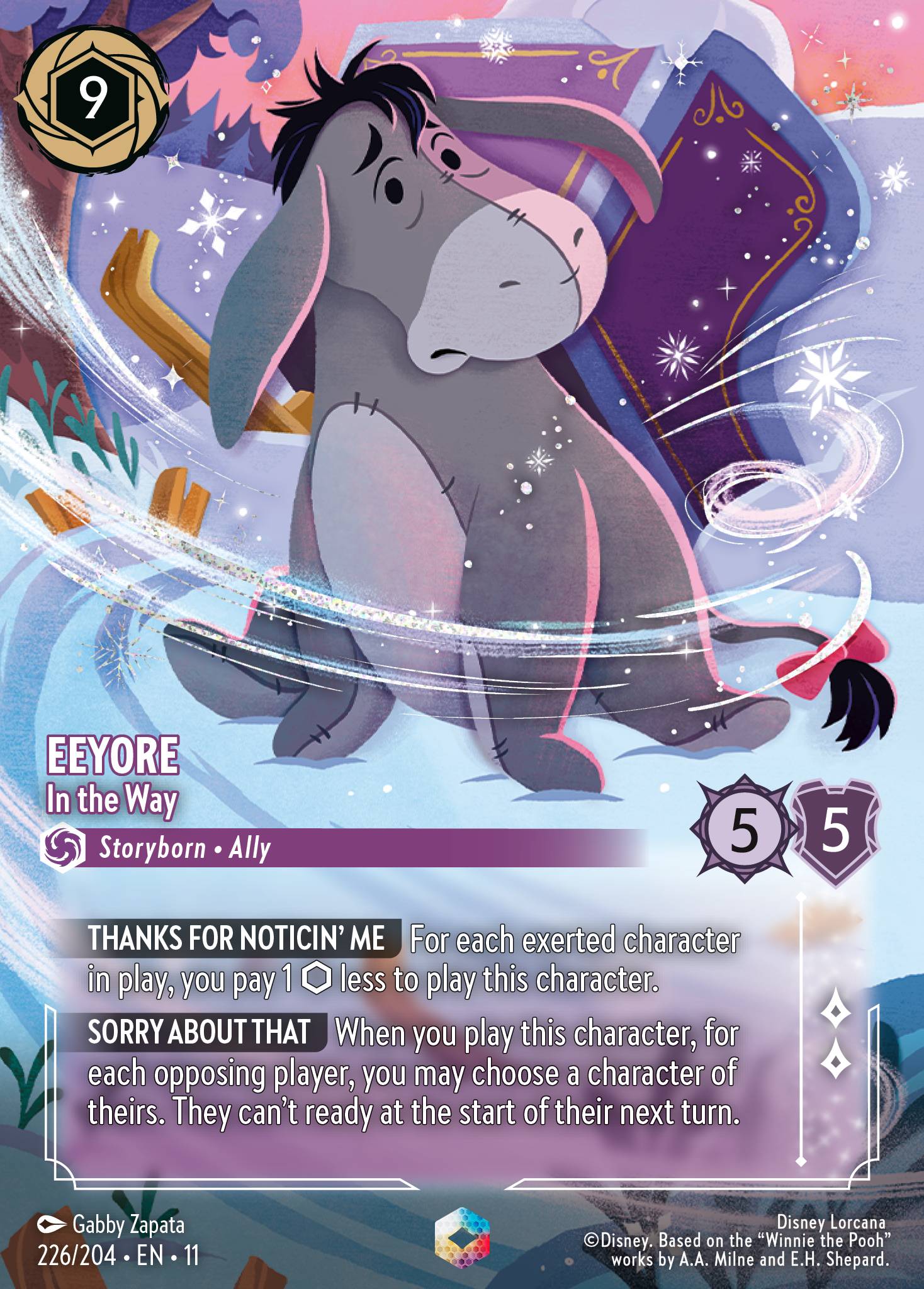
If you live in a humid climate and stack cardboard boxes on top of each other for five years, you are going to encounter the dreaded "Pringle effect." Moisture in the air gets trapped inside the plastic wrapping, causing the foil layers on the Enchanted cards inside to expand at a different rate than the cardboard backing. If someone buys a vintage box from you for a big premium, opens it, and finds every foil card curled into a U-shape, you are going to get hit with a devastating "item not as described" return claim on eBay.
On top of humidity, there's the sheer physical space and insurance. Standard renter's or homeowner's insurance rarely covers "collectibles" at their speculative secondary-market value unless you buy a specific, expensive rider. If a pipe bursts over your closet full of Shimmering Skies cases, you just lost thousands of dollars of uninsured capital. Holding physical, bulky assets carries risks that holding a stock index fund simply does not.
10. The Verdict: What to Buy and What to Avoid
Stop Hoarding Modern Boxes.
The definitive answer for 2026: standard, mass-printed Lorcana booster boxes are a poor long-term financial investment. Ravensburger has successfully engineered a market where supply meets demand. The Expected Value of ripping a box is abysmal, and the aggressive reprint policy ensures modern staples won't hold exorbitant premiums. If you are buying cases of standard sets at retail and stuffing them in a closet, you are actively losing money to inflation and opportunity cost.
The exceptions are strict: The First Chapter holds a premium as the inaugural set, and Fabled holds one as the Epic/Iconic rarity-debut set. If you absolutely must invest in sealed Lorcana, transition away from booster boxes and focus on Illumineer's Troves — their aesthetic display value and lower relative print runs offer a safer price floor. Otherwise, liquidate the heavy cardboard and buy graded Enchanted singles.
Where to Buy: Illumineer's Troves
Disclosure: As an Amazon Associate, Geeky Domain earns from qualifying purchases. Some links below are affiliate links — if you buy through them, we may earn a commission at no extra cost to you.
One last thing: none of this is financial advice — it's hobby-market analysis. Collectibles are speculative and illiquid; only ever spend what you'd be happy to keep and enjoy if it never appreciates a cent.
Master the Lorcana Market:
© GEEKYDOMAIN.COM | Strategy Powered by Data