

Flipping cards is a genuine small business model, not a get-rich-quick scheme — here's the honest version of how to actually start.
Flipping trading cards — buying with the specific intent to resell at a profit, rather than liquidating a collection you already own — is a different activity from simply selling your own cards, and it comes with its own learning curve, risks, and realistic expectations. Done well, it can be a genuine side income. Done carelessly, it's a fast way to tie up money in cards that don't move.
This guide is specifically about starting the reselling business model — sourcing inventory to flip, not sorting through or pricing a collection you already own for a one-time sale. If you're weighing the buy side of that equation, our guide on booster box vs singles budget math covers that related question.
Here's a realistic starting framework, including the parts that don't get talked about enough.
→ Short Version
Start with a niche you actually understand — flipping requires knowing what things are actually worth, and a game or category you already know well is a real advantage over a generalist approach. Sealed product margins are thinner and slower than most new sellers expect — singles arbitrage is usually the more realistic starting point. Track your actual costs, including fees, shipping, and supplies, not just the sticker price you paid — margin looks very different once all of that is counted. Cash flow, not raw profit percentage, is what actually sinks new flippers — money tied up in slow-moving inventory is money you can't use to buy the next opportunity.
→ Related Reading
In This Guide
Start With a Niche You Understand
Flipping cards profitably depends on knowing what things are actually worth better than the person you're buying from — that's the entire mechanism behind any resale arbitrage. A game or category you already have real knowledge of is a genuine head start over trying to flip across every TCG at once as a total beginner.
If you're a longtime Pokémon collector, start there. If you know Magic deeply, that's your edge. Spreading across every game you can find inventory in sounds like diversification, but for a beginner it usually just means you don't know any single market well enough to spot genuine undervaluation versus a card that's correctly priced.
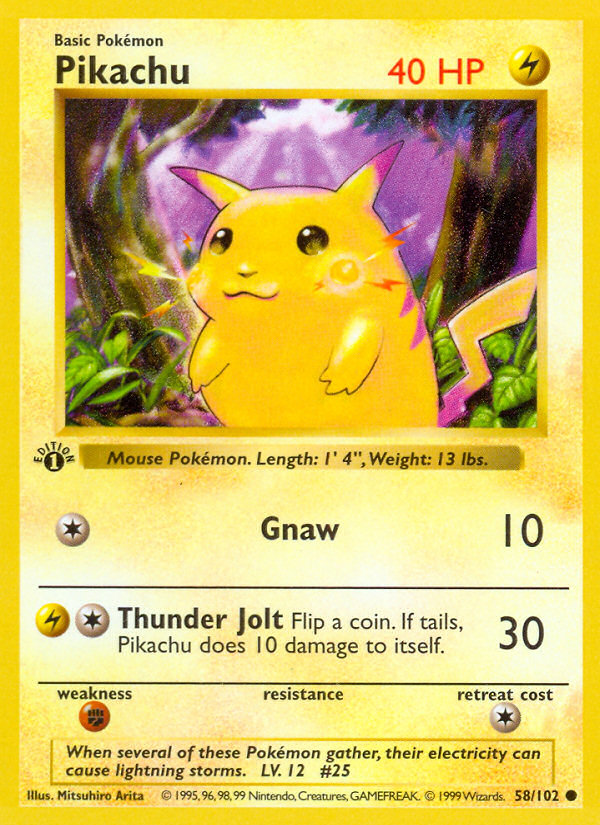
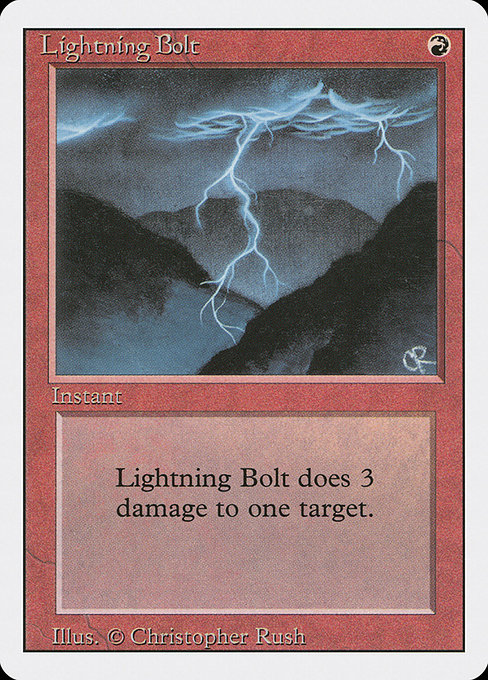
Your niche expertise also determines how quickly you can assess inventory in the field. When you are sorting through a bulk collection at an estate sale or a local store's trade-in bin, knowing which cards to pull and which to skip is the difference between spending thirty minutes productively and spending three hours to break even. Speed matters because time is an untracked cost that erodes your effective hourly rate faster than any marketplace fee.
Sealed Product vs Singles Arbitrage
New flippers are often drawn to sealed product — booster boxes and cases — because it feels like the more "serious" business. In practice, sealed product margins are frequently thinner than expected once you account for the capital tied up and the slower turnaround, and pricing on widely-available sealed product is usually efficient enough that genuine bargains are rare.
The exception is out-of-print sealed product, where supply constraints can create genuine price appreciation over time — a dynamic we cover in depth in is sealed product a good investment?. But holding out-of-print sealed product is closer to speculative investing than active flipping — it ties up significant capital for an indefinite period, the appreciation isn't guaranteed, and the storage and condition-maintenance requirements add real cost and risk. It's a valid strategy for experienced sellers with capital to spare, but it's not where a beginner should start.
Singles arbitrage — buying underpriced individual cards, often from sellers who don't specialize in the specific game or set, and reselling at accurate market price — is generally the more realistic starting point. It requires less capital per transaction, turns over faster, and rewards the exact pricing knowledge a niche-focused beginner can actually build. A new flipper who buys five underpriced singles for a few dollars each and resells them within a week is learning faster and risking less than one who ties up hundreds of dollars in a sealed case that might take months to move.
Tracking Your Real Costs
The margin that matters is what's left after marketplace fees, payment processing costs, shipping supplies, and your own shipping cost — not the gap between what you paid and the listed sale price. New flippers routinely underestimate how much these line items eat into a transaction that looked profitable on paper.
Build a simple, consistent habit of tracking these costs per sale from day one, even when the numbers are small. It's much easier to build good accounting habits early than to retrofit them once volume increases and the errors compound.
Returns and refunds are another cost that new sellers rarely budget for. Even with accurate listings and careful grading, a small percentage of buyers will open cases or request refunds, and marketplaces generally favor buyer protection. Consistent, honest condition assessment is your best defense here — our guide to card conditions (NM, LP, MP, HP, DMG) covers the grading vocabulary buyers expect you to get right. Factoring a return rate of two to five percent into your margin expectations gives you a more honest picture of profitability than assuming every sale is final.
Example: Real Cost Breakdown on a $20 Card Flip
| Line Item | Amount |
|---|---|
| Sale price | $20.00 |
| Purchase price | −$12.00 |
| Marketplace fee (~12%) | −$2.40 |
| Shipping + supplies | −$1.50 |
| Payment processing (~3%) | −$0.60 |
| Actual profit | $3.50 (17.5%) |
The "$8 profit" that looked obvious is actually $3.50 after real costs. This is why tracking matters.
Why Cash Flow Sinks New Flippers
The single most common reason new flipping businesses stall isn't picking bad cards — it's tying up too much money in inventory that doesn't move quickly enough. A card purchased at a genuine discount is still a loss of opportunity if it sits for months before selling, because that capital isn't available to buy the next genuinely good opportunity that comes along.
Think of it this way: a card you bought for $5 that sells for $8 in three days gives you a smaller per-unit profit than one you bought for $20 that sells for $35 in two months, but the fast-moving card lets you recycle that capital multiple times in the same period. Three cycles of the small-margin card at $3 profit each is $9 in the same timeframe that the slow-moving card generated $15 — and you had far less capital at risk at any given moment. Speed of turnover is a form of margin that new flippers consistently undervalue.
Prioritize inventory that turns over reasonably fast, especially early on, even if the per-unit margin is smaller than a slower-moving alternative. Cash flow, not headline profit percentage, is what actually lets a reselling operation grow. Once you have a stable, fast-turning base of inventory generating consistent income, you can afford to hold a few slower-moving, higher-margin items on the side — but building that base comes first. If you do hold inventory for any length of time, proper storage and protection is what keeps that held stock in the condition your margins assume.
Where to Actually Source Inventory
Local sources — estate sales, local game store bulk bins, and community trades — are often more reliably profitable for a beginner than online marketplaces, since online sellers are increasingly likely to have already checked comparable prices before listing. Local sourcing rewards the exact niche knowledge a specialized flipper has built.
Facebook Marketplace and local buy-sell-trade groups are another underused channel. Sellers listing inherited collections or old childhood binders through these platforms are often pricing based on guesswork rather than market data, and the absence of marketplace fees on peer-to-peer sales means your margins are immediately better than anything you could find on a platform that takes a cut. The trade-off is inconsistency — you cannot predict when inventory will appear, so local sourcing works best as a supplement to more reliable channels rather than your only pipeline.
A consistent weekly habit of checking these local channels, even for just fifteen minutes, tends to outperform sporadic deep dives — sellers move fast on obvious bargains, so being a regular presence in the groups and marketplaces you rely on matters more than occasional intense searching.
Online marketplaces still have a role, particularly for large, poorly-organized bulk lots where a seller hasn't sorted through what they actually have. Our marketplace comparison guide covers where different sourcing and selling strategies fit best.
| Source | Best For | Capital Needed | Margin Potential |
|---|---|---|---|
| LGS bulk bins | Underpriced singles hiding in unsorted inventory | Low | High (if you know the game) |
| Estate / garage sales | Bulk lots from non-collectors | Low–Medium | High (variable) |
| Online bulk lots | Large unsorted lots (eBay, FB Marketplace) | Medium | Moderate |
| Sealed product | Out-of-print or special editions | High | Low–Moderate (thin margins) |
Supplies and Sourcing
The shipping-and-supplies line in the cost table above is a penny sleeve, a team bag, a 35pt toploader and a mailer. Buy them in bulk counts rather than retail packs — single-pack pricing is a quiet way to push that $1.50 well past $1.50. Storage boxes are the other one: anything you hold for more than a week needs somewhere to sit sorted.
For the online bulk-lot row in the table above — unsorted collections where the seller has not gone through what they actually have. Expect to price the lot yourself; that sorting work is the whole margin. Pokémon and Magic collection lots are the two that turn up most often.
As an Amazon Associate, Geeky Domain earns from qualifying purchases. eBay links are affiliate links; Geeky Domain may earn a commission at no extra cost to you.
Realistic Expectations
Flipping cards as a side income is genuinely achievable for someone with real market knowledge and the discipline to track costs carefully. It is not a fast or reliably passive way to make significant money — the people who do this successfully treat it as an actual small business with real time investment, not a set-and-forget side hustle.
Expect a real learning curve in your first several months, including some purchases that don't work out as planned. That's a normal part of building the pricing intuition that eventually makes the whole operation profitable.
Tax Obligations Are Real
Once you're actively buying cards to resell for profit — even as a side hustle — this is generally considered taxable business income. In the US, marketplace platforms are required to issue 1099-K forms above certain thresholds. Track your purchases, fees, and shipping costs from day one — both because it's legally required and because accurate cost tracking is the only way to know whether you're actually profitable. Consult a tax professional for guidance specific to your situation.
Do This
- Start with singles in a game you already know well
- Track every cost — purchase, fees, shipping, supplies
- Calculate real profit after all fees, not headline margin
- Prioritize fast-moving inventory over highest per-unit margin
- Source locally first — bulk bins, estate sales, community trades
Avoid This
- Starting with sealed product — thin margins and high capital needed
- Calculating "profit" without subtracting marketplace and payment fees
- Tying up all your capital in slow-moving high-value singles
- Buying into games you don't understand — knowledge is the edge
- Treating this as passive income — it requires consistent time investment
FAQ
- How much starting capital do I actually need? Singles arbitrage can realistically start with a modest amount, since individual transactions are small. Sealed product flipping requires meaningfully more capital per unit and is generally not the recommended starting point for beginners.
- Is flipping cards a full-time-income business for most people? For most people who do this, it's a side income rather than a full replacement for other work, at least early on. Treat early expectations conservatively and let results guide how much you scale it.
- Do I need to worry about taxes on resale income? Resale income is generally taxable business activity in most jurisdictions once it's beyond occasional personal-item sales — consult a tax professional for guidance specific to your situation rather than assuming casual selling rules apply once you're actively flipping.
- How is this different from just selling my own collection? Flipping is an ongoing business model built around buying specifically to resell — a different activity and mindset from a one-time liquidation of a collection you already built for yourself.
A Real Business, Treated Like One.
Flipping cards works when you specialize in a niche you actually understand, prioritize singles over sealed product early on, track your real costs precisely, and manage cash flow rather than chasing headline margin. It's a genuine side income for people willing to treat it seriously — not a shortcut for people looking for easy money.
Start small, in a category you already know, and let the pricing intuition build from there.
© GEEKYDOMAIN.COM | Strategy Powered by Data