

Aggressive Red units, durable White blockers, and the Aile Strike Gundam at the center. The most beginner-friendly archetype in the game — built straight from one starter.
Some links below are affiliate links. If you buy through them, Geeky Domain may earn a small commission at no extra cost to you. We only recommend cards and products we believe offer real value to players.
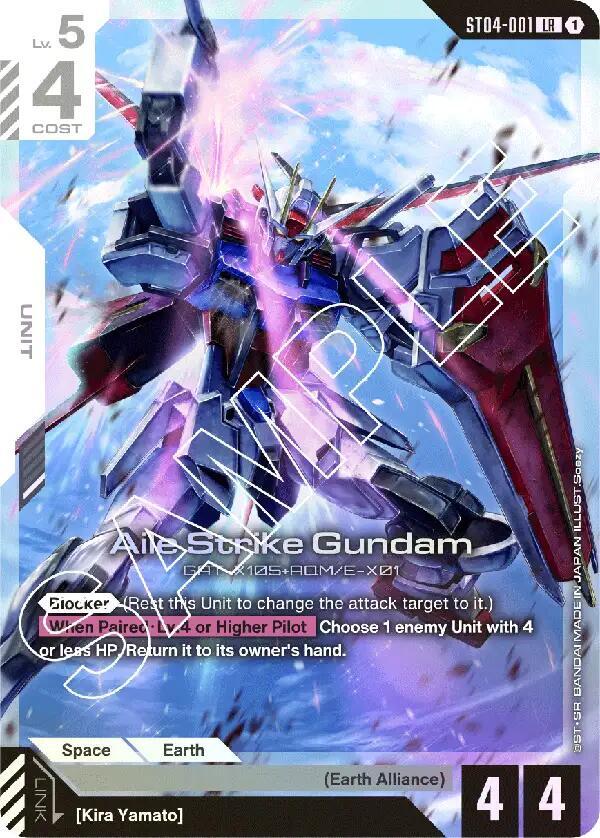
Red/White Aile Strike is the most accessible competitive archetype in Gundam Card Game right now. It's not the strongest deck in the format — current tier lists place it in Tier 3 — but it has the lowest barrier to entry of any coherent two-color shell. The reason is simple: the ST04 "SEED Strike" starter is officially a White/Red deck built around the Aile Strike Gundam + Kira Yamato Link Unit. You don't have to swap colors, cut starter cards, or buy a second starter to make the deck functional — the starter is the deck.
The archetype's character is midrange-aggro: Red supplies the attacking bodies and the combat keywords that punch damage through, and White supplies the durability and healing that lets your threats survive long enough to find lethal. It's slower than the format's pure aggro decks (Blue/Red Aegis Aggro, Red/Green Zeon Rush) but harder to disrupt, because every Unit on your side of the board can fight. That's a real trade-off, and it's a great trade-off for new players still learning the format.
This guide covers how Red/White Aile Strike actually wins, the cheap core that powers the budget shell, the honest weakness of a Tier 3 deck, the piloting habits that maximize what you've got, and the upgrade path toward a more competitive build. No fabricated cards, no chase-rare paywall — the starter is the budget deck.
→ Short Version
Red/White Aile Strike is the cheapest functional competitive shell in the game — the ST04 "SEED Strike" starter is officially a White/Red deck built around the Aile Strike Gundam + Kira Yamato Link Unit, no card swaps required. Red provides the aggressive curve; White provides durable blockers and healing. It's Tier 3, so it loses to dedicated Tier 1 builds in the long run, but its win rate against other budget decks is excellent and the matchup spread punishes greedy ramp openings. The honest catch: the deck's ceiling is lower than purpose-built aggro or control, but its floor is the highest in the format for a beginner.
→ More Reading
In This Guide
The Game Plan: Beatdown With Backstop
Red/White Aile Strike is a midrange-aggro deck: it wins by attacking, but it's not racing the clock the way a pure aggro deck does. Red supplies the early-game bodies and the keywords (Breach, High-Maneuver) that push damage through chump blockers. White supplies the durability — high-HP Units that survive combat, healing that erases chip damage, and a defensive Base that anchors the board. The combination is what makes the deck beginner-friendly: when an attack doesn't work, you fall back on the wall and try again next turn.
The win condition is straightforward: land the Aile Strike Gundam + Kira Yamato Link Unit, attack into Shields every turn it survives, and use White's defensive backup to absorb the counterswing. You're not trying to end the game on turn five like Aegis Aggro does — you're trying to win a slightly longer game where the math compounds. The deck wins almost every game it reaches turn six in.
The Core Idea
Midrange decks ask "how do I win this combat without losing my Unit?" — and trust that if they win enough combats cleanly, the damage adds up. The Aile Strike Link Unit is the centerpiece because it can both attack and block effectively, which is exactly what a midrange deck wants: one card that fits both halves of its game plan. Red supplies the pressure; White supplies the safety net.
Trade Efficiency Over Speed
What separates the three Red-based archetypes — where each one wins the game from:
Illustrative axis — all three decks attack to win, but they win different versions of the game. Aile Strike trades its speed for survivability, which makes it the most beginner-forgiving of the three.
The Three Phases of a Midrange Game
A midrange game doesn't have the sharp early/mid/late breakpoints of pure aggro or pure control — it has a longer, more gradual arc. Recognizing the arc and playing to it is what turns a midrange deck from "fine" into "winning."
From Curve to Centerpiece to Closeout
The most common new-player mistake with midrange is treating it like aggro and over-extending on turn three, or treating it like control and stalling out behind blockers. Neither works. Play on curve, deploy your centerpiece on time, and trust the slow compounding pressure. The deck's whole identity is "every fight goes your way" — let it do that.
The Cheap Core: ST04 Is The Deck
The cheapest path into Red/White Aile Strike is one copy of the ST04 "SEED Strike" starter — and uniquely among the Gundam budget archetypes, that one purchase gets you a complete, coherent deck out of the box. No color swaps. No starter combinations. No mandatory singles. The starter ships as a White/Red deck built around the exact Link Units that the archetype is named for.
-
The Aile Strike + Kira Yamato Link (from ST04)
The signature Link Unit of the archetype. Aile Strike Gundam is the centerpiece threat, and Kira Yamato is the Pilot that completes the Link Unit pairing. Linked, the Aile Strike gains stat bonuses that make it one of the most efficient mid-level Units in the format. The pairing is the named core of the shell and you own both pieces from a single starter. -
The Aegis + Athrun Link (also from ST04)
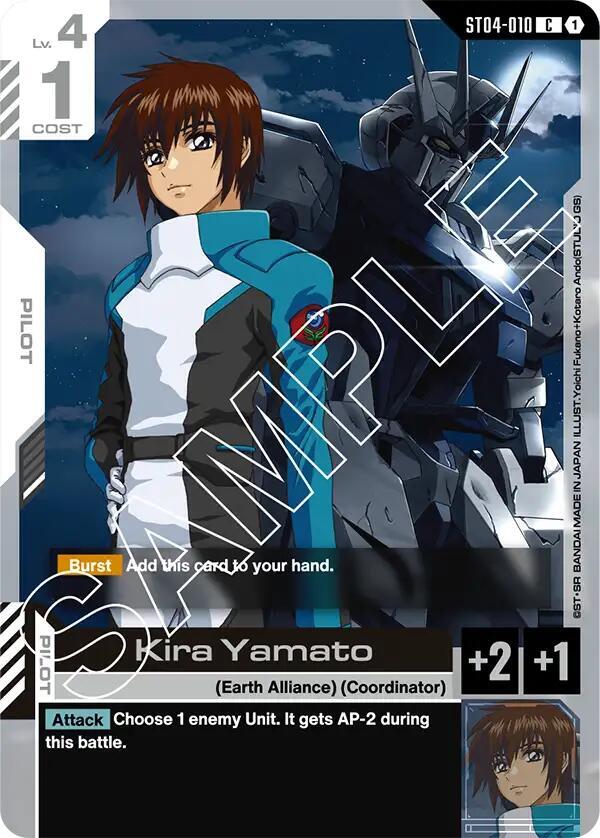
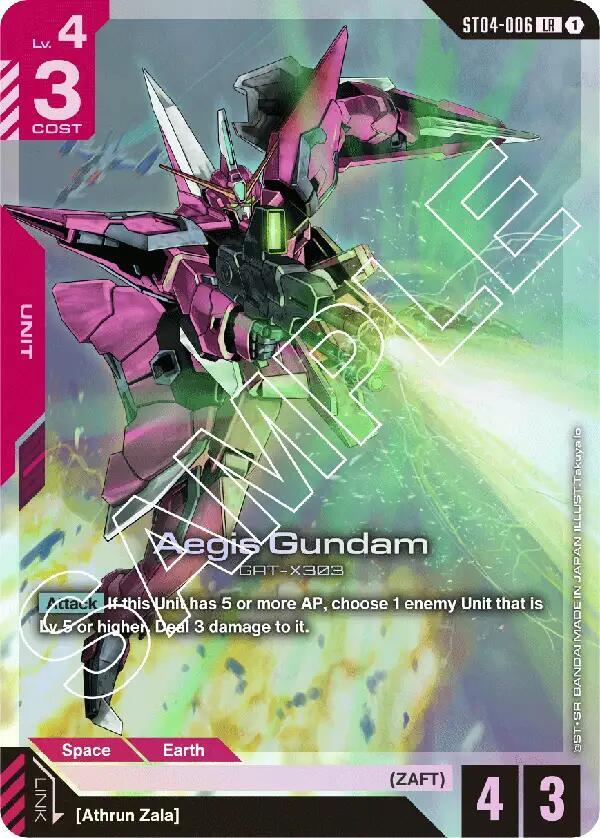
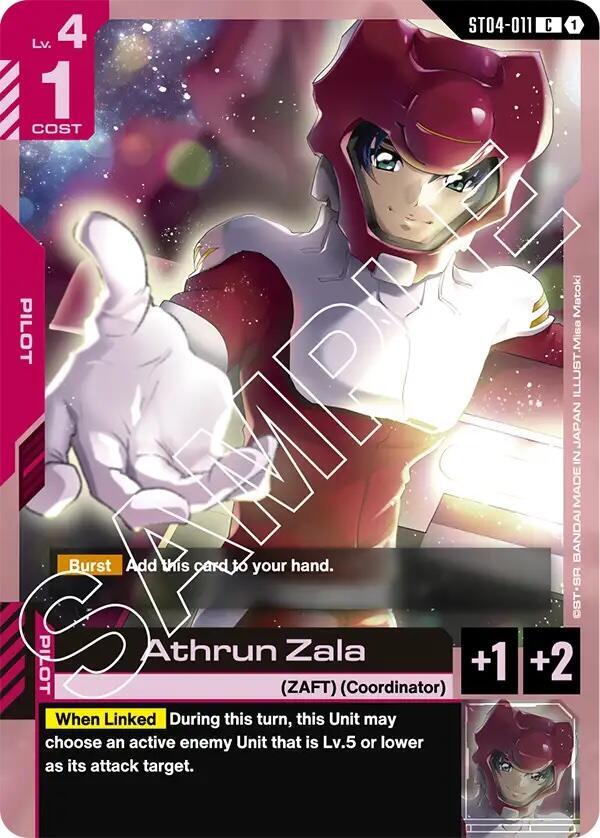
ST04 contains a second Link Unit pairing: Aegis Gundam and Athrun Zala. This is the same package the competitive Blue/Red Aegis Aggro deck is built around — in this midrange shell, it serves as a secondary threat that opens up the board when Aile Strike is being blocked. Two Link Unit options is a real advantage that no other budget archetype has. -
The White defensive shell (already in the starter)
White's high-HP Units, healing Commands, and the deck's defensive Base are pre-built into ST04. These are the cards that turn a fragile aggro deck into a survivable midrange one — the safety net that lets you keep attacking when the opponent tries to race you back. No additional purchases needed; the wall is in the box. -
A Red aggressive curve (also in the starter)
Cheap Level 1–3 Red Units round out the curve, giving you something to deploy and attack with on every turn before Aile Strike lands. The starter ships with a coherent curve already built; cheap Red commons from the GD-set boosters can replace the weakest slots when you're ready to tune.
Two Decks From One Starter
The same ST04 starter that builds this Red/White Aile Strike deck also supplies the Red half of the competitive Blue/Red Aegis Aggro deck — just swap the White cards for Blue commons. That makes ST04 the single best-value starter for new players who want options: one box, two coherent shells, two different ways to learn the format.
The Honest Weakness: A Tier 3 Ceiling
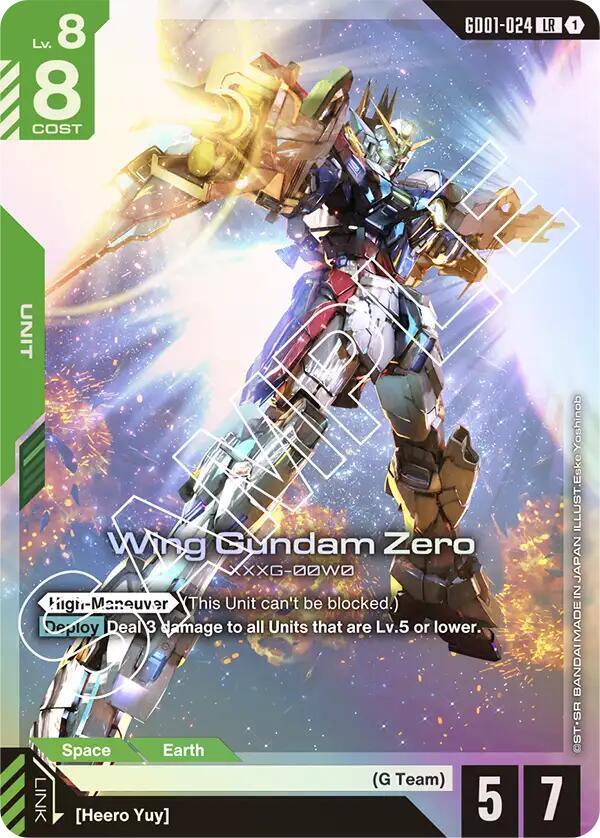
Here's the honest part a good guide owes you: Red/White Aile Strike is a Tier 3 deck. That means it loses to the format's Tier 1 builds — Green/White Wing Zero, Blue/White Seed Freedom — in a sustained matchup, because those decks have higher-power cards and tighter game plans. If you take this deck to a major tournament and play eight rounds against fully-tuned competitive lists, you're going to drop more rounds than you win.
But the floor is exceptional. The deck has the best matchup spread in the format against other budget decks, other starter-deck builds, and casual play. The safety net of White's defensive package means your worst games don't end on turn four — you stay in every game long enough to give yourself a chance, even when the matchup is bad. For a new player learning the format, that floor matters more than the ceiling. You'll have more fun, lose fewer games to draw variance, and develop fundamentals that transfer to whatever deck you build next.
Two skills carry most of the weight, and both have dedicated guides worth reading: knowing the exact outcome of a fight before you commit (our combat math guide), and reading Shield Burst triggers to know which attacks are safe. Midrange decks reward players who do this math deliberately on every turn.
Piloting: Trades That Win the Game
A few habits separate a winning Aile Strike pilot from one whose midrange feels mushy:
-
Mulligan for curve, not power.
You want an opening hand with a turn-one play, a turn-two play, and the Aile Strike Link Unit waiting in hand. A hand of all big Units is a hand that does nothing on turns one and two — ship it. Our mulligan guide covers the redraw decision. -
Trade up, never down.
A midrange deck wins by winning combats it shouldn't lose. Use White's high-HP Units to trade into Red threats that should be bigger than they are. Use Red's attacking keywords to push damage through White blockers that should stop you. Every clean trade-up is a step toward the closeout phase. -
Land Aile Strike when you can protect it.
The Link Unit is the deck's strongest single card. Don't deploy it on an empty board into a Cleared opponent — deploy it the turn your defensive backup is also in play, so it survives the counter-swing. The longer Aile Strike lives, the more inevitably the math works in your favor. -
Close before turn nine.
The deck's ceiling is the late game where Tier 1 decks deploy their Level 7+ closers. If a control or ramp deck reaches that point with their plan intact, you're behind. When the math gives you lethal in the mid-game, take it — don't wait for a "safer" turn that might not come.
Matchup Snapshot
Versus aggro (Aegis Aggro, Zeon Rush): the favorable matchup. Your White blockers are exactly what their fast curve doesn't want to see, and your healing erases their chip damage. Trade efficiently in the early game, deploy Aile Strike on time, and ride your defensive backbone to a slow win. They'll often quit before your closeout phase begins.
Versus ramp (Green/White Wing Zero): the winnable matchup. Their first two turns are spent ramping, which is your damage window. Press hard early, force them to use their defensive cards before Wing Gundam Zero lands. If you can have them at five Shields by turn four, the matchup tilts to you. If they stabilize on White healing, the game gets very long.
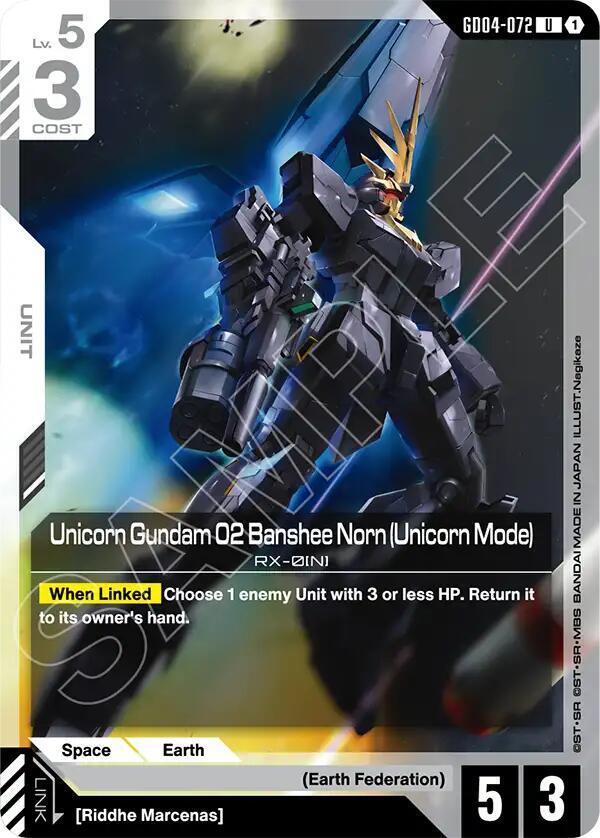
Versus control (Blue/White, Banshee Norn): the hard matchup. Your threats are smaller than their answers in the long run. Don't deploy threats one at a time into their removal — bank a hand and double-deploy on a turn where they can't respond. Aile Strike sticking past their removal phase is the only realistic path to a win.
The Upgrade Path: Starter to Beyond
The cheapest entry is one ST04 starter, full stop. From there, the upgrades that move the deck toward a more competitive shell, in priority order:
- 1. Playsets of your best Red curve and White defensive cards. Extra copies of the cheap Red Level 1–2 Units and the sturdiest White blockers are the biggest consistency gains. The deck wants a play every turn from turn one — playsets make that happen.
- 2. A second Pilot for each Link. Additional copies of Kira Yamato (Aile Strike) and Athrun Zala (Aegis) make the Link Units show up more reliably. Pilot redundancy is the single biggest tuning gain a budget Gundam deck can make.
- 3. GD-set Red/White interaction cards. Cheap Red and White Commands from GD01–GD04 boosters add the interaction the starter is light on. This is what closes the gap between Tier 3 and Tier 2 — not chase rares, but playsets of the right commons.
- 4. Graduate to a Tier 1 archetype. When you've outgrown what the Aile Strike shell can do, the natural next step is either pure Aegis Aggro (Blue/Red), Wing Zero (Green/White), or a control build. The fundamentals you learn here transfer cleanly to all three.
Where This Deck Leads
Once you've mastered the fundamentals here and want to push toward a Tier 1 or Tier 2 deck, two paths are open from this exact starter: the same ST04 box converts into the competitive Blue/Red Aegis Aggro shell, or the lessons transfer to the Blue/White Control archetype if you prefer the defensive side. Think of this guide as the on-ramp; the other two are the destinations.
Where to Buy
Red/White Aile Strike is the cheapest competitive shell in the game, because the ST04 "SEED Strike" starter is the entire budget deck in one box. Grab the starter first, then fill in cheap singles to tune it. These searches are a good starting point; compare current listings before you commit, since prices move with new set releases.
Shop the ST04 SEED Strike Starter on Amazon Search Aile Strike & Red/White Singles on TCGplayer Browse Aile Strike Singles & Lots on eBayPrices move with new set releases, so check current listings before buying playsets. For a deck built on a starter plus cheap singles, marketplaces almost always beat chasing cards in sealed product.
The Best On-Ramp in the Game.
Red/White Aile Strike is the cheapest, most coherent, most beginner-friendly competitive shell in the Gundam Card Game. The ST04 "SEED Strike" starter is the entire deck in a single box — no color swaps, no mandatory singles, no chase rares. The ceiling is Tier 3, but the floor is the highest in the format for a new player learning the fundamentals.
Trade efficiently, deploy your Link Units on time, and ride the midrange arc to a slow, decisive win. The deck teaches everything a stronger archetype later will demand: curve, combat math, Shield management, and patience. Learn it here, and the upgrade path goes anywhere you want.
© GEEKYDOMAIN.COM | Strategy Powered by Data