

Going Wide: The Token Swarm Strategy
How to turn a handful of 1/1 tokens into an army your opponents can't answer one card at a time.
Some links below are affiliate links. If you buy through them, Geeky Domain may earn a small commission at no extra cost to you.
Somewhere between the first swing with your Commander and the moment your opponents realize they're staring down thirty attacking bodies, a token deck stops being a curiosity and starts being a plan. Going wide — filling the board with a swarm of small creatures instead of leaning on one or two large threats — is one of the most durable strategies in Commander, because it turns single-target removal, the most common answer in the format, into a card that solves almost nothing.
This guide breaks the go-wide token swarm down into its working parts: the engines that actually produce the tokens, the doubling effects that turn a slow trickle into a flood, and the payoff spells that convert a wide board into a game-ending attack. Along the way we'll look at the specific cards that define each role, how they interact, and the one category of card — the symmetric board wipe — that every wide deck needs a real plan for. For the wider strategy picture, start with our MTG Strategy Hub.
None of this requires an exotic manabase or a rare collection. Bitterblossom, Krenko, Overrun, and their peers are long-standing Commander staples precisely because the plan is mechanically simple: make tokens, make more tokens, then turn all of those tokens into damage before someone wipes the board out from under you.
The Short Version
Going wide means building a deck around many small creature tokens instead of a few large threats, which makes single-target removal far less effective against you. The plan has three layers: token engines like Bitterblossom and Krenko, Mob Boss, that generate the swarm over time; doublers like Anointed Procession and Doubling Season that multiply every token-producing effect and stack multiplicatively with each other; and payoffs like Overrun and Craterhoof Behemoth that turn a wide board into lethal damage in a single turn. The single biggest threat to the plan is a symmetric board wipe such as Wrath of God or Toxic Deluge — since your whole resource base is the board, a wipe that resets everyone hurts you far more than it hurts anyone else.
In This Guide
What "Going Wide" Actually Means
"Going wide" is community shorthand rather than a term with a single traceable origin — it's the natural counterpart to "going tall," where a deck pours resources like auras, equipment, and counters into one or two creatures to make them enormous. A wide deck spreads that same investment across many bodies instead. The tradeoff is straightforward: a tall deck can be stopped cold by a single well-timed removal spell on its one big threat, while a wide deck barely notices losing any individual token — but it becomes extremely vulnerable to effects that hit everything at once.
That tradeoff is the entire strategic identity of the archetype. Commander is a format saturated with efficient one-for-one removal, and a token swarm simply refuses to present a single target worth spending that removal on. Killing one Faerie Rogue token or one Goblin token barely dents a board that's about to have a dozen more of them.
Mechanically, the strategy breaks into three roles that stack on top of each other: engines that generate tokens turn after turn, doublers that multiply whatever the engines produce, and payoffs that convert a wide board into a lethal attack in one swing. The rest of this guide walks through each layer using the cards that define it. If sacrificing your board for value sounds more appealing than attacking with it, our sacrifice and aristocrats guide covers that opposite approach.
The Token Engines: How You Build the Swarm
Every go-wide deck needs a source of tokens, and the format's engines generally split into two speeds: slow-and-steady generators that chip away every turn, and burst generators that can flood the board all at once if left unchecked.
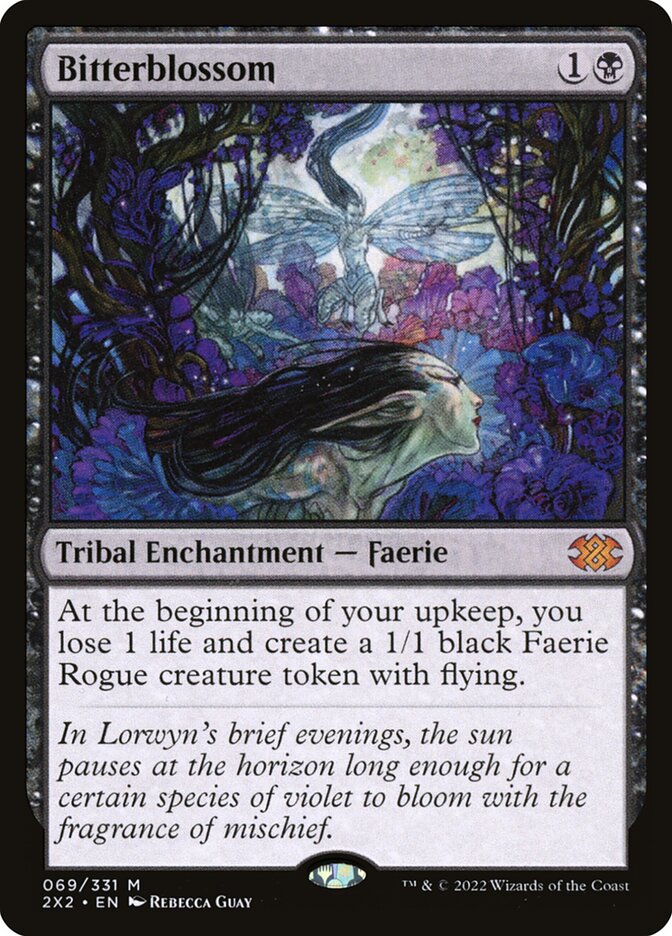
Bitterblossom is the archetypal slow engine. For {1}{B}, it creates a 1/1 black Faerie Rogue token with flying at the beginning of your upkeep, every turn, for as long as it survives — at the cost of 1 life per token. It's cheap, low-commitment, and quietly builds an army in the background while you play the rest of your game plan.
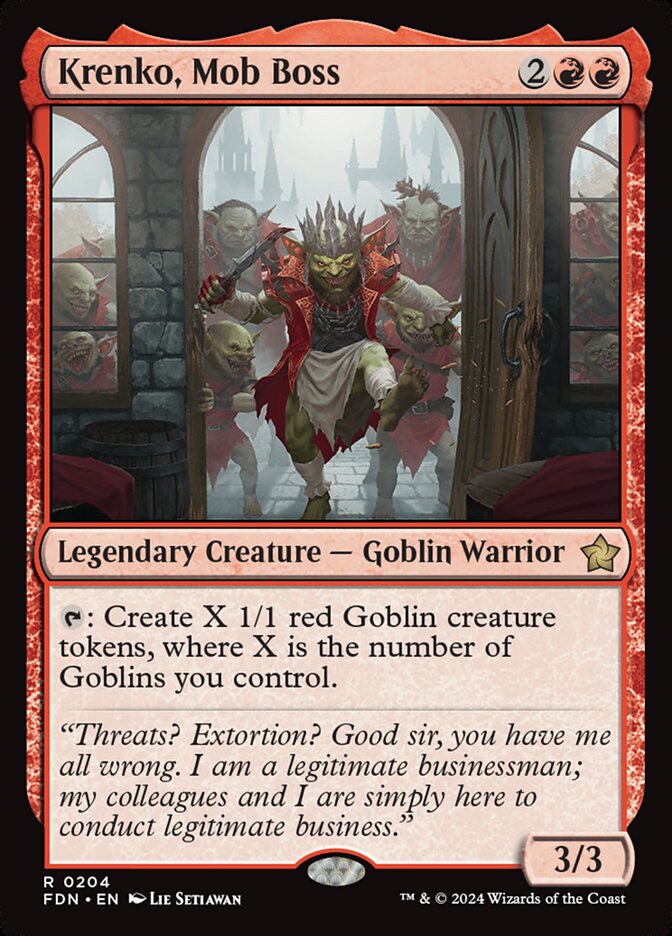
Krenko, Mob Boss is the burst counterpart. His tap ability creates X 1/1 red Goblin tokens, where X is the number of Goblins you control — and that count includes Krenko himself. Left unanswered, that's exponential growth: one activation makes a handful of Goblins, and the next activation counts all of those Goblins plus Krenko again. A deck that can protect Krenko for even two or three turns can go from a nearly empty board to an overwhelming one almost instantly.
Between those two extremes sit flexible, instant-speed options like Secure the Wastes, which lets you hold up mana and drop a variable number of Warrior tokens exactly when you need them — a meaningfully different kind of resilience than a repeatable upkeep trigger provides. None of these engines need to break the bank — our $50 Commander deck blueprint covers building a functional shell on a real budget.
| Card | Speed | Output Pattern | Trade-off |
|---|---|---|---|
| Bitterblossom | Slow, repeatable | 1 token per upkeep | Costs 1 life per token |
| Krenko, Mob Boss | Explosive, if protected | Exponential per activation | Does nothing if Krenko dies immediately |
| Secure the Wastes | Instant, one-shot | X tokens, scales with mana | No repeat value once cast |
Doublers: Turning a Trickle Into a Flood
This is the layer that separates a go-wide deck from an ordinary creature deck. Token doublers don't add tokens themselves — they change the rules for every token-producing effect already in your deck, and because they're replacement effects rather than triggered abilities, they compound with each other multiplicatively rather than just adding up.
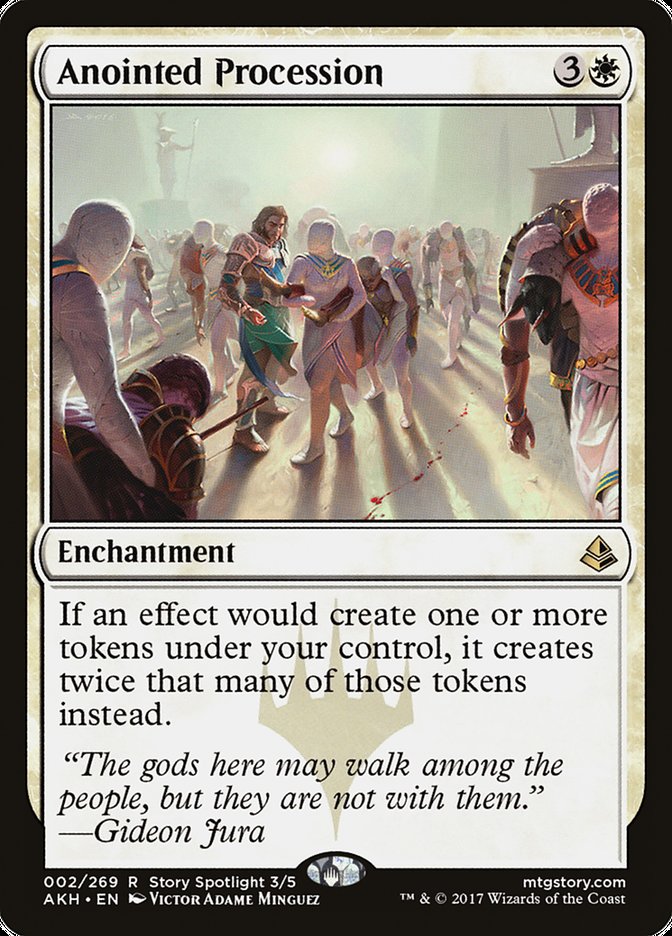
Anointed Procession is a 4-mana enchantment with a single, elegant line of text: if an effect would create one or more tokens under your control, it creates twice that many instead. Because that's a replacement effect and not a trigger, stacking a second copy-effect doubler doesn't just add another doubling — it multiplies. Two doublers in play turn a single token into four; three doublers turn it into eight.
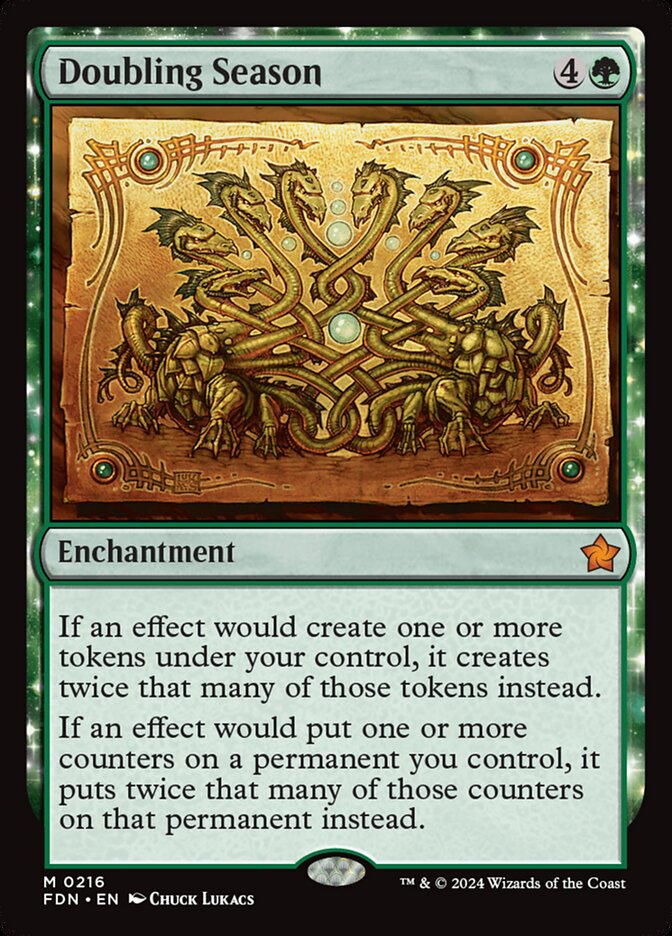
Doubling Season does everything Anointed Procession does and then some: for {4}{G}, it doubles tokens the same way, but it also doubles any counters you'd put on a permanent you control. That second clause is a huge upgrade in a go-wide shell that's also using proliferate effects, planeswalkers, or counter-based engines, since it's pulling double duty on two different resource types at once. Both enchantments are considered premium pieces of Commander tech, and are often pricier due to Commander demand — the same raw power that makes a deck's bracket climb on our Commander bracket list.
| Card | Mana Cost | What It Doubles | Stacking |
|---|---|---|---|
| Anointed Procession | 4 mana | Tokens only | Multiplicative with other doublers |
| Doubling Season | {4}{G} (5 mana) | Tokens and counters | Multiplicative with other doublers |
A wide board wants a wide playmat -- and a few key anthem effects to actually close the game.
As an Amazon Associate, Geeky Domain earns from qualifying purchases. eBay links are affiliate links; Geeky Domain may earn a commission at no extra cost to you.
The Payoff: Turning Bodies Into a Win
A board full of 1/1 tokens doesn't win games by itself — it needs a spell that turns raw numbers into lethal damage in a single turn. This is where the classic green "Overrun effect" earns its reputation as the archetype's signature finisher.
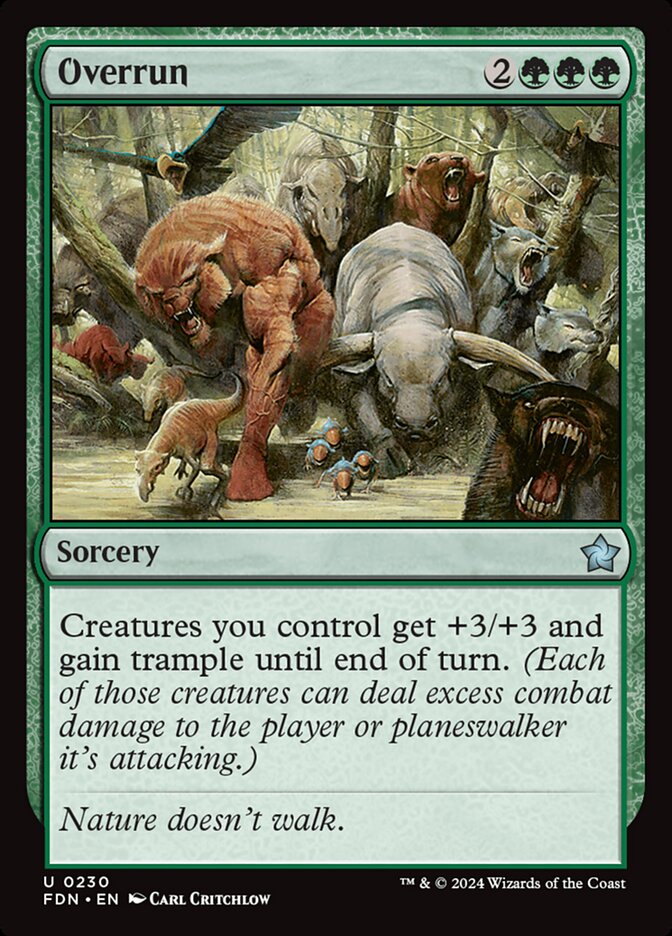
Overrun itself, first printed in Tempest and reprinted many times since, is about as clean as this effect gets: for {2}{G}{G}{G}, all your creatures get +3/+3 and gain trample until end of turn. Against a dozen 1/1 tokens, that single sorcery is the difference between a board that's merely threatening and a board that ends the game on the spot.
Craterhoof Behemoth takes the same idea and makes it scale automatically. For {5}{G}{G}{G}, it enters as a hasty 5/5, and when it does, all your creatures gain trample and get +X/+X until end of turn, where X is the number of creatures you control. The wider your board already is, the bigger that pump gets — which makes it the premier go-wide finisher, since its power grows in direct proportion to the exact resource a token deck has been stockpiling all game.

| Card | Mana Cost | Effect | Scales With |
|---|---|---|---|
| Overrun | {2}{G}{G}{G} | +3/+3 and trample to your creatures | Flat bonus, any board size |
| Craterhoof Behemoth | {5}{G}{G}{G} | +X/+X and trample, X = creature count | Board width directly |
The Board Wipe Problem
Every go-wide player eventually learns this the hard way: your whole resource base lives on the battlefield, which means a symmetric board wipe hurts you disproportionately compared to an opponent who only has one or two creatures out. Strategy writers and Commander forums consistently point to this as the defining weakness of the archetype — it's less a single rule and more a strategic consensus that shows up in deck after deck.
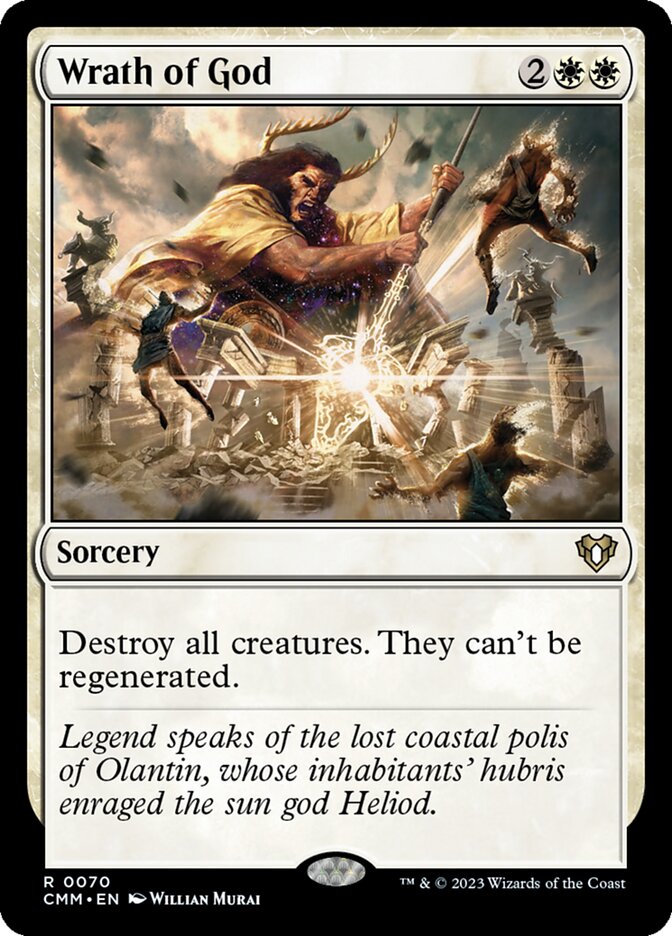
Wrath of God is the archetypal example: for {2}{W}{W}, it destroys all creatures, full stop, no regeneration. It doesn't care whether you have thirty tokens or one big Commander — it erases the board in one card, and against a go-wide deck, that one card is doing the work of thirty removal spells at once.
Toxic Deluge is specifically prized as a token-board answer because of how cheaply it scales. For {2}{B} plus an additional cost of paying X life, all creatures get -X/-X until end of turn — and against a wall of 1/1s, paying as little as 1 life is enough to wipe the entire swarm while barely touching your own life total in the process.

The practical takeaway is that a go-wide deck's best defense usually isn't running its own symmetric wipes — that would undercut the exact plan the deck is trying to execute. Instead, wide decks generally lean on protection (ways to save the board or dodge the wipe entirely) and asymmetric answers rather than trading their own resource advantage away.
Building Your Own Swarm: A Simple Curve
Once you understand the three layers, deckbuilding order becomes intuitive. Early turns are for engines — cards like Bitterblossom that start accumulating tokens as soon as possible, since every extra turn they're in play compounds the eventual payoff, which is exactly why keeping the rest of the deck's mana curve low matters so much here. The earlier a repeatable engine lands, the more upkeeps it gets to work before anyone can remove it.
Midgame is where doublers want to come down. Playing Anointed Procession or Doubling Season before your engines are producing tokens wastes their potential; playing them after you already have a few token sources established means every subsequent token — from any source, including ones you draw later — comes out doubled from that point forward.
Payoffs come last, and ideally only once you've assessed the board. Overrun and Craterhoof Behemoth are at their best when they're closing a game that same turn, not when they're cast into an empty board with nothing to pump. Holding a payoff in hand until the swarm is wide enough to matter is usually correct, even if it means passing a turn where you could have cast it earlier.
Common Mistakes
Overloading on payoffs, underloading on engines. A hand full of Overrun-style effects is useless if you never have more than three or four creatures on board to pump. Prioritize consistent token generation before stacking finishers.
Playing doublers too early. A doubler that resolves before you have any token sources in play is a do-nothing enchantment until your engines catch up. Sequence engines first when you can.
Running your own symmetric board wipes. Wrath of God-style effects work against the entire premise of a go-wide deck. If your deck wants to answer a bigger threat on the board, an asymmetric or one-sided answer generally fits the plan better than a card that also destroys your own army.
Forgetting that Doubling Season affects counters too. Players build around it purely as a token doubler and overlook that it also doubles any counters placed on their permanents, which is easy value left on the table in a deck that has any counter synergies at all.
FAQ & Quick Reference
Do token doublers stack with each other? Yes. Because effects like Anointed Procession and Doubling Season are replacement effects rather than triggered abilities, running two of them turns a single token into four, and three turns it into eight — the effect is multiplicative, not additive.
What's the difference between Anointed Procession and Doubling Season? Both double tokens the same way. Doubling Season additionally doubles any counters placed on permanents you control, which Anointed Procession does not do, making it the stronger pick if your deck also cares about counters.
Why is Krenko, Mob Boss so dangerous? His tap ability creates X 1/1 Goblin tokens, where X counts every Goblin you control, including Krenko himself. Each activation adds to the count the next activation reads, so an unanswered Krenko snowballs the board size exponentially over just a few turns.
Should a go-wide deck run its own board wipes? Generally no, at least not symmetric ones. A wipe that destroys everyone's creatures destroys your entire resource base along with it, which works against the deck's own plan. Leaning on protection and one-sided answers tends to fit the strategy better.
What's the fastest way to lose to a token deck as an opponent? Treating individual tokens like meaningful removal targets. Spending a full removal spell on one 1/1 Faerie or Goblin token almost never changes the outcome — symmetric board wipes and life-total-scaling effects like Toxic Deluge are far more efficient answers to a wide board.
Is going wide a beginner-friendly strategy? Yes. The core loop — generate tokens, multiply them, pump them — is easy to understand and forgiving to pilot, since no single card the deck draws is usually a "must answer" threat on its own the way a single big creature would be.
More Bodies, Fewer Problems.
Going wide rewards patience: build the engines, layer the doublers, and hold your payoff until the board is ready to punish anyone who didn't answer it in time.
© GEEKYDOMAIN.COM | Strategy Powered by Data