

Fusion World Meta Report: The Post-ST01 Shakeup (August 2026)
Vegito ran the format for two months straight. Then one weekend in Auckland turned the Top 8 upside down.
Some links below are affiliate links. If you buy through them, Geeky Domain may earn a small commission at no extra cost to you.
→ Short Version
Vegito (Blue, FB10 Cross Force) was the undisputed S-tier deck all through July 2026, and it kept winning into August — but Pomona and Madrid both showed real diversity underneath that dominance, and even Vegito's Rotterdam win came against a Gogeta: BR deck good enough to make that final, all before Story Booster ST01 even released. Then, on August 30, the first major regional of the post-ST01 era landed in Auckland, and the Top 8 came back looking almost nothing like July's tier list: an even split between a new SSJ3 archetype and Gogeta: BR, with only a single Vegito making the cut. It's one event, days old — but it's a real, dated signal that the format just moved.
In This Guide
If you've been following the Fusion World meta tier list over the summer, none of what happened in July will surprise you. Vegito sat comfortably at the top, and every other deck in the format was essentially playing catch-up. What's changed since is that the picture has stopped standing still. Between late July and the end of August, four regional events and one new set release chipped away at that certainty piece by piece, and the most recent data point — Auckland's Wave 2 regional on August 30 — is the biggest jolt the format has seen since Vegito's own FB10 release back in June. This report walks through that timeline in order, from the July baseline through the Auckland result, and is intentionally dated rather than evergreen: it's a snapshot of where the format stood as of August 31, 2026, not a claim about where it's headed next.
That distinction matters more than it might sound. A living tier list is useful precisely because it gets overwritten the moment new results justify it — that's the whole point of the format's own tier list page. A report like this one does the opposite job: it freezes a specific stretch of time so you can see the shape of the change itself, event by event, rather than just the end state. Read together, the two pieces answer different questions — the tier list tells you what's strong today, and this report tells you how the format actually got here between one S-tier deck's two-month reign and a regional Top 8 that split almost evenly between two completely different archetypes.
The Format Through July: Vegito's Reign
To understand why Auckland landed as hard as it did, it helps to be precise about what the format looked like just before it. According to Shonentcg's "Dragon Ball Fusion World July Meta: 4-Week Breakdown," published July 15, 2026, the picture across four weeks of results was about as settled as competitive Fusion World gets. Vegito (Blue, FB10 Cross Force, released in June 2026) sat alone at S-tier, and the reason cited again and again was its ability to string together multi-action Evolve turns that other decks simply couldn't answer in time.
Right below it, Gohan/Piccolo (Green, FB10) held down the S/A-tier consistency slot — not as flashy as Vegito's Evolve turns, but reliable enough that it was the deck most likely to grind out a win when a matchup went long. A-tier belonged to Cell (Black, FB10) and Majin Buu: Evil (Yellow, SB01), both strong enough to medal at a regional but not quite able to keep pace with Vegito's ceiling. B-tier rounded out with Boujack (Yellow, FB10) and Son Goku (Red, FB10) — the latter frequently described as the format's best beginner pick, playable and forgiving even if it wasn't going to top an event outright.
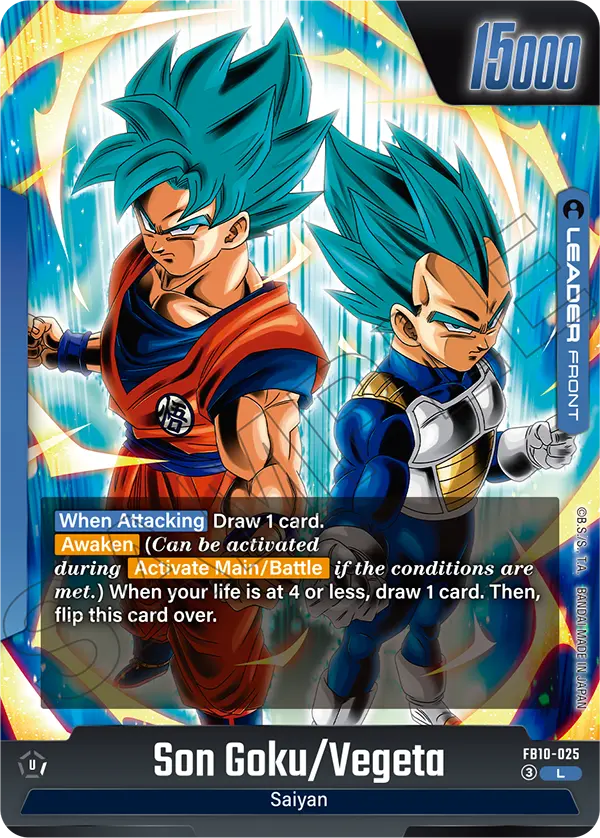
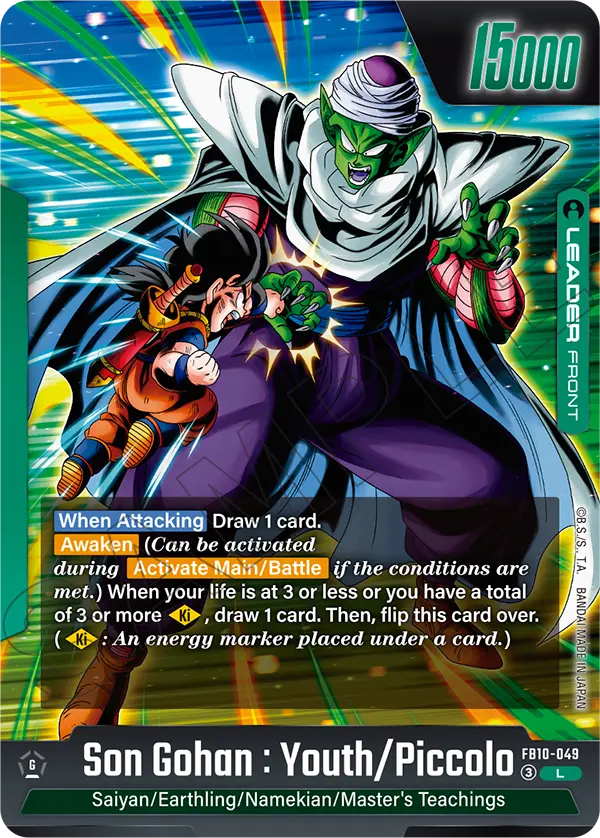
That was the format for essentially all of July: one dominant deck, one strong second option, and a handful of decks fighting over the rest of the podium. It's the same baseline the site's own meta tier list reflected heading into August. What follows is the story of how that baseline started to wobble — first quietly, then all at once.
Cracks in the Armor: Pomona, Rotterdam, and Madrid
The first hint that Vegito's grip wasn't absolute came at the Pomona Regional on July 26, 2026. FS11 Son Goku was the most-played deck in the room by a clear margin — the kind of raw numbers advantage that usually translates into a win somewhere in the Top 8. Instead, the event was actually taken down by FB09 Son Gohan: SH, a deck that hadn't been putting up S-tier numbers on paper. It wasn't a Vegito loss exactly, since Vegito wasn't the story of that room to begin with, but it was an early data point that the "most-played deck wins" assumption didn't hold, and that format diversity was creeping in underneath the tier list's surface.
Two weeks later, Vegito answered emphatically. At Rotterdam Wave 2 on August 9, 2026, Vegito (FB10) took the whole event, beating Gogeta: BR in the finals. On paper this looked like business as usual — the S-tier deck doing exactly what an S-tier deck is supposed to do. But it's worth flagging in hindsight for a different reason: Gogeta: BR was already good enough to make a regional final in early August, nearly two weeks before Story Booster ST01 even gave the format anything new to build around. Whatever Gogeta: BR would go on to do at Auckland, it wasn't a deck that came out of nowhere.
Then came Madrid Wave 2 on August 16, 2026, and this one was harder to wave off as noise. The winner was Son Goku UI — notably not an FB10 deck at all, and widely framed at the time as a comeback or tech pick rather than a mainstay of the top tier. Two regionals in a row had now been won by decks outside the S-tier conversation. Vegito hadn't lost its place on the tier list yet, and nothing here proved the format had actually shifted, but by the time Madrid wrapped, "Vegito is the format" had quietly become a less accurate sentence than it was in mid-July. The stage was set for a new set to land in exactly the kind of environment where a shakeup was already overdue.
The Majin Buu saga-themed booster hit shelves on August 21, 2026, and its tools were already powering a Top 8 nine days later. If you're looking to build into the format's newest archetype, this is where to start hunting.
Prices and availability vary by seller. Geeky Domain may earn a commission on qualifying purchases.
August 21: Story Booster ST01 Changes the Calculus
Story Booster ST01 released on August 21, 2026, built around the Majin Buu saga and totaling 85 cards. Its headline chase cards are a pair of Special Rares: Vegito (ST01-070) and Vegeta (ST01-071). It's worth pausing on that first name specifically, because it's easy to conflate with the deck that had already been running the format for two months. ST01's Vegito (ST01-070) is a different print entirely from the Blue Vegito that anchors FB10 Cross Force — same fusion character, different card, different set. Going forward in this report, "Vegito (FB10)" refers specifically to the June-released S-tier deck, and any reference to ST01's Vegito print will carry its ST01-070 card number to keep the two straight.
Set releases in Fusion World don't automatically reshuffle the top of the format — plenty of boosters land and the existing tier list barely moves. What made ST01 different is that it didn't take long to find out whether it mattered. Nine days after release, the first major regional of the post-ST01 era took place, and it gave the format its clearest answer yet.
August 30: Auckland Wave 2, the Post-ST01 Shakeup
The Auckland (Oceania) Wave 2 regional on August 30, 2026 was, per db-fusionworld.com's results archive, the first major regional held after Story Booster ST01 entered the format — and its Top 8 looked almost nothing like the July tier list. Here's how the eight slots broke down:
SSJ3 — 3 decks (37.5% of the Top 8), including the event winner. Built around ST01's Goku SSJ3.
Gogeta: BR — 3 decks (37.5% of the Top 8).
Majin Vegeta — 1 deck (12.5% of the Top 8).
Vegito (FB10) — 1 deck (12.5% of the Top 8), down sharply from its dominant position through July.
Two decks — SSJ3 and Gogeta: BR — accounted for exactly three-quarters of the field between them, an even 3-3 split that reads less like one deck edging out another and more like a genuine co-dominant format arriving fully formed. SSJ3, built around ST01's Goku SSJ3 card, is brand new to the competitive conversation; it didn't exist as an archetype before August 21. Gogeta: BR, by contrast, had already shown its face in Rotterdam's finals three weeks earlier, so its strong Auckland showing looks less like a shock and more like a deck that finally got the results to match its ceiling. Majin Vegeta's single appearance is notable mostly for being new to this report's timeline entirely — given the thematic overlap with ST01's Majin Buu saga focus and the timing, it's a reasonable bet the archetype leans on ST01 cards, but that specific build hasn't been confirmed, so we're not stating it as fact here. And Vegito (FB10) — the deck that had defined the format for two straight months — made the Top 8 exactly once.
It bears repeating plainly: this is one event, days old. A single Top 8, even a striking one, is not the same thing as a settled new format, and nothing here is a claim about what August 30 became by the time you're reading this — no events after that date are reflected in this report. What Auckland does establish is that ST01 had an immediate, measurable impact on what wins, and that the format's shape changed meaningfully inside of nine days. Given that Vegito's own July dominance took a full month of results to establish, a full sample for the post-ST01 era simply doesn't exist yet. Treat Auckland as the opening data point of a new chapter, not the final word on it.
The deck that defined July and won Rotterdam still put a copy into Auckland's Top 8. If you're building or upgrading a Cross Force Vegito list, here's where to look for singles and product.
Prices and availability vary by seller. Geeky Domain may earn a commission on qualifying purchases.
What This Means (and Doesn't Mean Yet)
Stack the whole timeline next to each other and a shape emerges. July belonged to Vegito outright, with Gohan/Piccolo as the only deck reliably close behind it. Late July and early-to-mid August were a mixed bag — Pomona and Madrid went to decks outside the top tier, while Rotterdam confirmed Vegito could still win when it mattered and put Gogeta: BR on notice as a legitimate finals-caliber deck in its own right. Then ST01 landed on August 21, and the very next major regional produced a Top 8 with a brand-new archetype tied for first place in deck share and Vegito reduced to a single copy.
What that sequence supports is a genuine narrative: dominance, gradual erosion, then a sharp inflection point tied to a specific, dated release. What it doesn't support is a rewritten tier list. One regional's Top 8 — even a compelling 3-3-1-1 split — is a sample size of eight decks from one region. SSJ3 and Gogeta: BR earned their spot in this report by winning real matches in a real event on August 30, and that's worth taking seriously. Whether that 3-3 split holds up at the next wave of regionals, whether Vegito adapts its list to answer the new tools, or whether a third archetype nobody's talking about yet shows up and changes the conversation again — none of that is knowable from a single weekend, and this report isn't going to guess at it.
For an ongoing, continuously updated read on where each deck sits, the site's Fusion World meta tier list is the right page to bookmark — it's built to be revised as more results come in, rather than frozen to a single date the way this report deliberately is. This piece exists to tell the story of how the format got from July to August 30; the tier list is where you go to find out what's considered strong right now, whenever "now" happens to be.
How to Approach Your Own Deck Right Now
If you're sitting on a Vegito (FB10) list, nothing about Auckland means it's time to tear it apart. A deck that won Rotterdam on August 9 and still made a Top 8 on August 30 is not a deck in freefall — it's a deck that's facing real competition for the first time since June. It's a reasonable moment to look closely at how your list handles Gogeta: BR specifically, given that matchup has now shown up in two separate Top 8s in the space of three weeks.
If you're newer to the format or building on a budget, the calculus is a little different. Son Goku (Red, FB10) held its spot through July as the format's most commonly recommended beginner pick, and nothing in this report's timeline changes that — it wasn't built to compete with S-tier decks in the first place. If you're just getting your first list together, the site's guide to building your first Fusion World deck and its companion piece on budget-friendly leaders for new players are both still solid starting points regardless of how the top tier shakes out.
And if you're chasing the new wave specifically, understand what you're chasing: SSJ3 is nine days old as a competitive archetype, built around a single ST01 card that just proved it can win a major regional. That's a real signal, not hype — but it's also a much thinner track record than the deck it just shared a Top 8 with. Gogeta: BR, by comparison, has now backed up two separate strong finishes three weeks apart, at Rotterdam and again at Auckland, which arguably makes it the more proven of the two decks that just split the format's headlines, even though SSJ3 is the one carrying the "new set" storyline.
Whichever direction you go, the smartest move heading into the next wave of regionals is the same one it always is after a result like this: watch what the next event or two actually confirms before committing heavily to any one read of where the format is headed. Chasing every new archetype the moment it posts one good finish is an easy way to overspend on cards that don't stick, and settling into a proven list you already understand is rarely the wrong call while a shakeup this fresh is still sorting itself out.
One Regional Doesn't Rewrite the Format — But Auckland Is a Real Signal
Vegito (FB10) defined July and still won Rotterdam in early August, but Auckland's August 30 Top 8 split evenly between SSJ3 and Gogeta: BR with only a single Vegito surviving — a genuine, dated shift, not a settled new tier list. Watch what the next wave of regionals actually confirms before committing heavily to any one read of where the format is headed.
Keep Reading
- → Fusion World Meta Tier List — the living, continuously updated ranking this report feeds into.
- → Dragon Ball Super Fusion World Strategy Hub — the jumping-off point for every strategy guide on the site.
- → Fusion World Organized Play & Tournaments Guide — how regionals like Auckland fit into the wider event calendar.
- → How to Play Dragon Ball Fusion World — new to the game entirely? Start here.
© GEEKYDOMAIN.COM | Strategy Powered by Data