

Vegito's two-month run at the top just cracked wide open. The first major regional held after Story Booster ST01's release rewrote the top of the format in a single weekend — here's where things actually stand.
Some links below are affiliate links. If you buy through them, Geeky Domain may earn a small commission at no extra cost to you.
Fusion World's competitive scene doesn't have a single official deck tracker, but a consistent picture emerges from tournament results, community trackers like DeckPlanet, and the decklists top finishers post after big events. Right now, that picture is in the middle of rewriting itself.
This is a snapshot, not a permanent hierarchy — especially this week. Story Booster ST01 released on August 21, 2026, and the first major regional held afterward already reshuffled the top of the format. This list will keep being refreshed as the next wave of events confirms or complicates what happened.
Here's what's defining competitive Fusion World right now.
→ Short Version
Vegito (FB10) was the format's clear #1 through July and into early August, per community meta tracking — but that dominance had already started cracking before Story Booster ST01 arrived. The August 30 Auckland Wave 2 regional, the first major event after ST01's release, produced a real shakeup: SSJ3 — a brand-new archetype built around a card that didn't exist nine days earlier — and Gogeta:BR tied for the most Top 8 slots, while Vegito was reduced to a single slot. Son Goku's many printings remain the format's most-played Leader family by raw volume and are still widely considered the best beginner pick, even though no single Goku build has been the format's single strongest deck this summer. One regional's Top 8 is a real, dated signal — not a confirmed new hierarchy. Treat the SSJ3 / Gogeta:BR split as the leading edge of a story still being written.
→ Related Reading
- Fusion World Meta Report: August 2026 — a full recap of how the format got here
- Leader Awakening by Color
- Fusion World Red Aggro Budget Deck Guide
- Closing Games vs Control in Fusion World
- DBS Fusion World Strategy Hub (2026)
In This Guide
| Leader | Current Standing |
|---|---|
| SSJ3 | Brand-new archetype built around a Story Booster ST01 card; won the August 30 Auckland regional in its first major outing |
| Gogeta:BR | Tied for the most Auckland Top 8 slots; was already reaching regional finals before ST01 even released |
| Vegito (FB10) | The format's clear #1 through July; fell to a single Auckland Top 8 slot after a run of shakier August results |
| Majin Vegeta | Newly present at the Top 8 level; one Auckland slot and limited track record so far |
| Son Gohan:SH | Proven tournament winner (Pomona); a consistent secondary option through a chaotic summer |
| Son Goku (various forms) | Still the most-played Leader family by raw volume; individual variants like Ultra Instinct can win regionals outright |
Leader Profiles
SSJ3
| Playstyle | Transformation payoff / scaling threats |
| Difficulty | Medium–High |
| Budget | $$ (too new for a firm estimate) |
| Best vs | Unclear — one event of data |
| Weak to | Unclear — one event of data |
Gogeta:BR
| Playstyle | Aggressive midrange |
| Difficulty | Medium |
| Budget | $$$ |
| Best vs | Unclear — limited head-to-head data |
| Weak to | Vegito (lost the Rotterdam final) |
Vegito (FB10)
| Playstyle | Multi-action "Evolve" combo turns |
| Difficulty | High |
| Budget | $$$$ |
| Best vs | Field, through July (Evolve engine); Gogeta:BR (Rotterdam final) |
| Weak to | Unclear — no confirmed head-to-head loss; share fell sharply at Auckland alongside SSJ3 and Gogeta:BR's combined rise |
Majin Vegeta
| Playstyle | Aggressive value hybrid (early read) |
| Difficulty | Unclear — still emerging |
| Budget | Unclear — still emerging |
| Best vs | Unclear — limited data |
| Weak to | Unclear — limited data |
Son Gohan:SH
| Playstyle | Tempo / pressure |
| Difficulty | Medium |
| Budget | $$ |
| Best vs | Goku-heavy fields (per Pomona) |
| Weak to | Unclear — limited head-to-head data |
Son Goku (Various Forms)
| Playstyle | Flexible / form-dependent |
| Difficulty | Medium |
| Budget | $$–$$$ |
| Best vs | Field (consistency, sheer volume) |
| Weak to | Varies heavily by specific variant |
Vegito's Two-Month Reign — And the Cracks
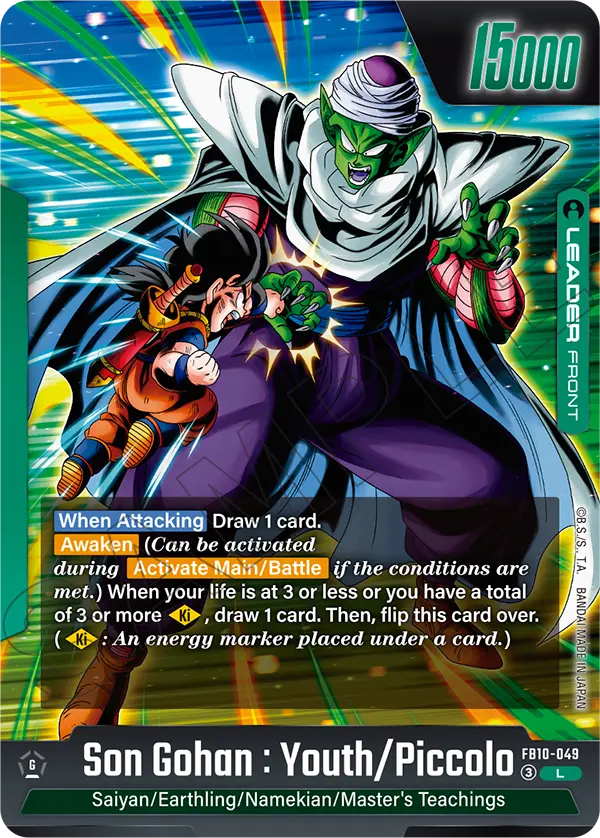
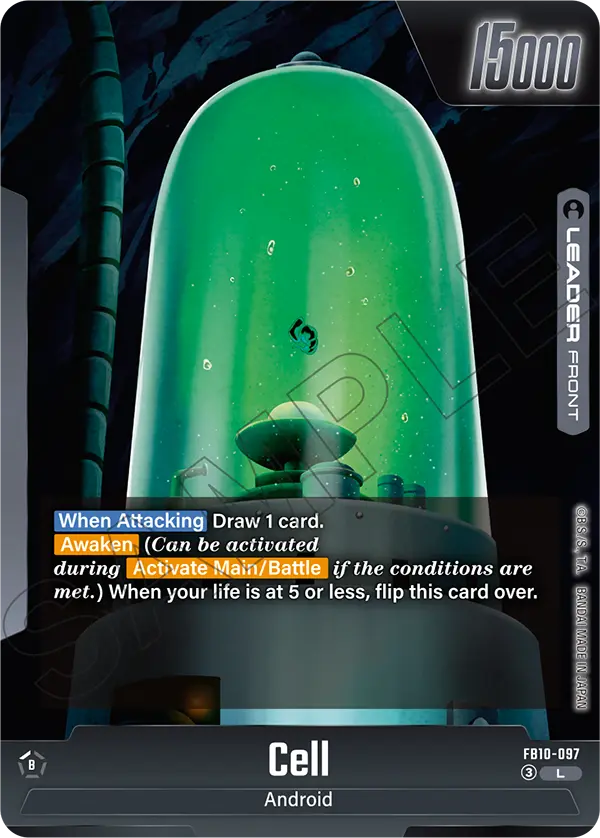
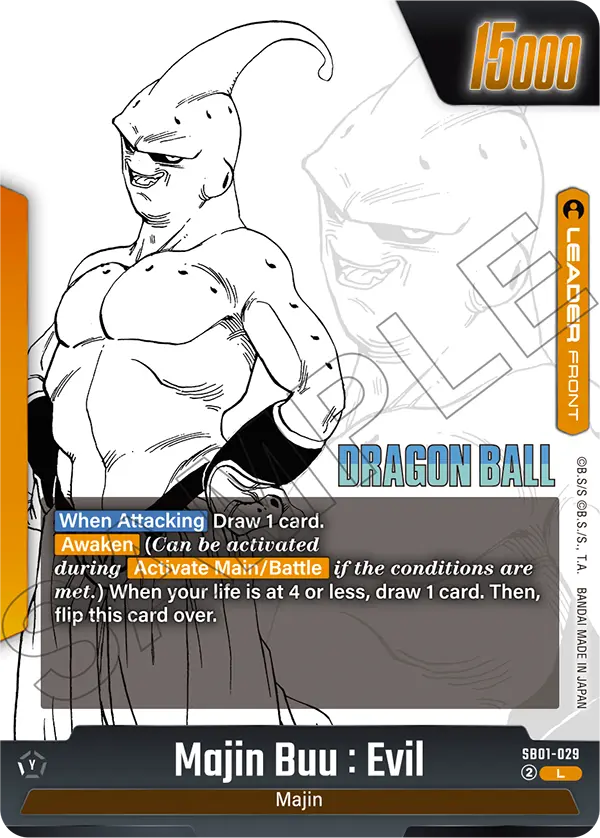
FB10 Cross Force released on June 12-13, 2026, and within weeks the set had produced a clear standout. Shonentcg's "Dragon Ball Fusion World July Meta: 4-Week Breakdown," published July 15, 2026, put Vegito — the Blue Leader built around FB10's cards, printed as Son Goku & Vegeta fusing into Vegito — at the top of the format, with Gohan/Piccolo (Green, FB10) holding the clearest S/A-tier consistency slot behind it. Cell (Black, FB10) and Majin Buu: Evil (Yellow, SB01) rounded out A-tier, with Boujack (Yellow, FB10) and Son Goku (Red, FB10) in B-tier — Son Goku's Red build was already being cited as the format's best beginner pick even at that early stage.
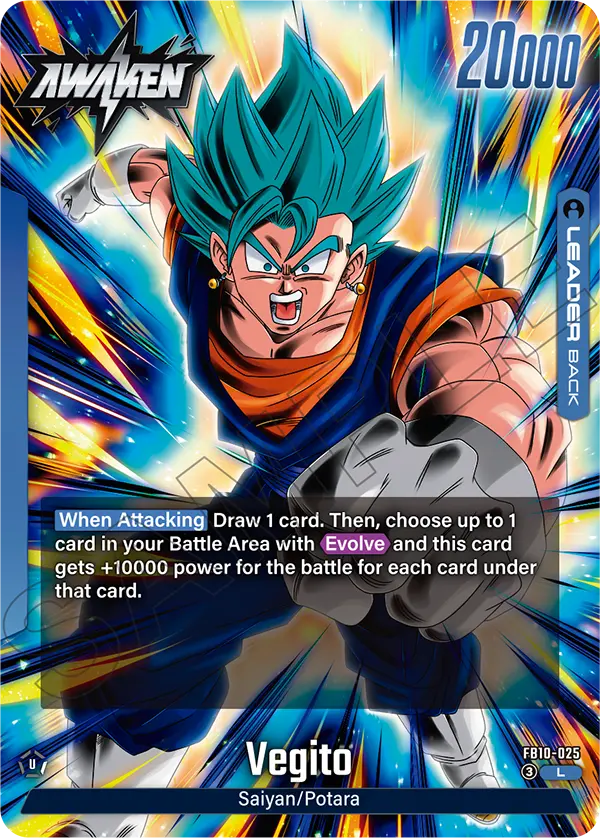
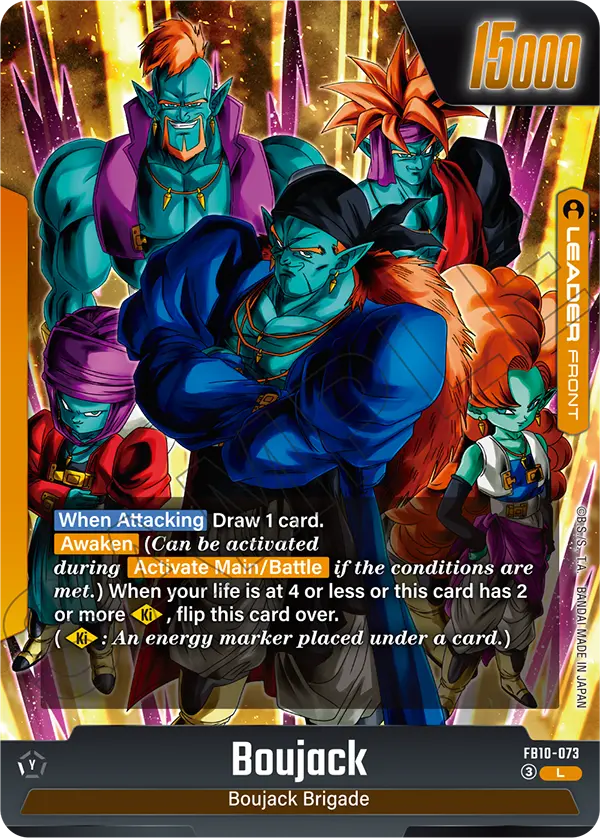
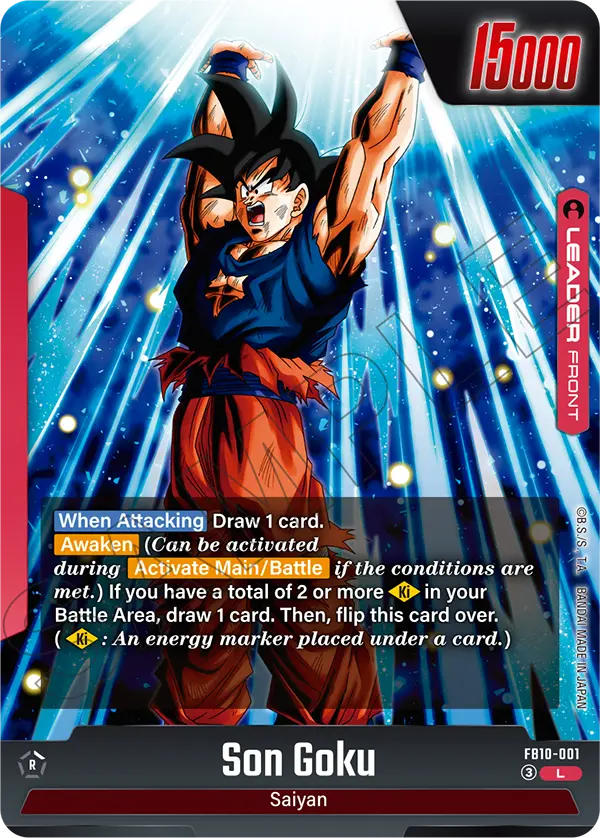
What made Vegito the deck to beat wasn't raw popularity — it was ceiling. DeckPlanet's aggregate data across seven FB10-era events and 187 decks, last updated August 6, 2026, actually shows Son Goku leaders as the most-played family by a wide margin (49 of 187 decks), with Gogeta:BR (13) and Son Gohan:SH (13) close behind, and the Son Goku/Vegeta-to-Vegito leader itself sitting at just 10 of 187 — fewer reps than three other decks on the sheet. Vegito's strength came from stringing together multi-action "Evolve" turns, a combo-dense plan that rewards precise sequencing more than it rewards being easy to pick up. That's a low-volume, high-power profile, the opposite of Son Goku's, and it's why a deck with a relatively small slice of the metagame could still be the format's clear #1 through the middle of the summer.
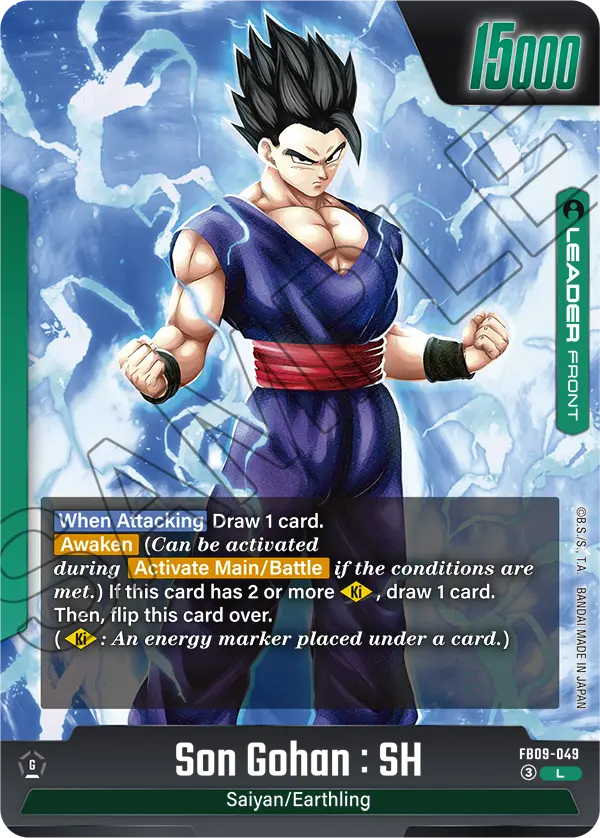
The first complication showed up at the Pomona Regional on July 26, 2026, where an FB09-era Son Gohan:SH build took the title despite an FS11 Son Goku build being the room's most-played deck. It wasn't a direct loss for Vegito, but it hinted that "the strongest deck on paper" and "the deck that wins the room" weren't guaranteed to be the same thing — a pattern that would matter more five weeks later. Four days on, a July 30 Top 32 event saw Son Goku builds take both first and second place outright, reinforcing how deep the format's Goku volume ran even while Vegito held the top power ranking.
The clearer cracks came in mid-August. On August 9, Rotterdam Wave 2 was won by Vegito, which beat Gogeta:BR in the finals — a genuine Vegito result, but one that reads differently in hindsight, since it means Gogeta:BR was already strong enough to reach a regional final nearly two weeks before ST01 even released. Then, on August 15, Son Goku Ultra Instinct — notably not an FB10 deck — won the Madrid Regional outright, and won Madrid Wave 2 the very next day too. Two straight Madrid titles for a non-FB10 Goku variant were enough to end the working assumption that "Vegito is the format," before the set that would truly upend things had even shipped. (Regionals also ran in Hurstville, Australia on August 9 and Mexico City on August 22, part of a busy summer circuit.) By the time ST01 dropped on August 21, Vegito's grip on the top spot was already looser than it had been in July.
Gearing Up for the New Meta?
Whether you're chasing ST01's Secret Rares or stocking up on FB10 staples for the decks that are actually winning right now, here's where to start looking.
The Auckland Shakeup
Story Booster ST01 released on August 21, 2026, built around the Majin Buu saga and adding 85 card types to the format, including two confirmed Secret Rares: Vegito (ST01-070) and Vegeta (ST01-071). Worth flagging clearly, since the naming collision is easy to miss: ST01's Vegito (ST01-070) is a different card from the FB10 Cross Force Blue Vegito that spent July and early August as the format's top deck. A "Vegito" mention after August 21 doesn't automatically mean the leader that dominated the summer — check which set it's from.
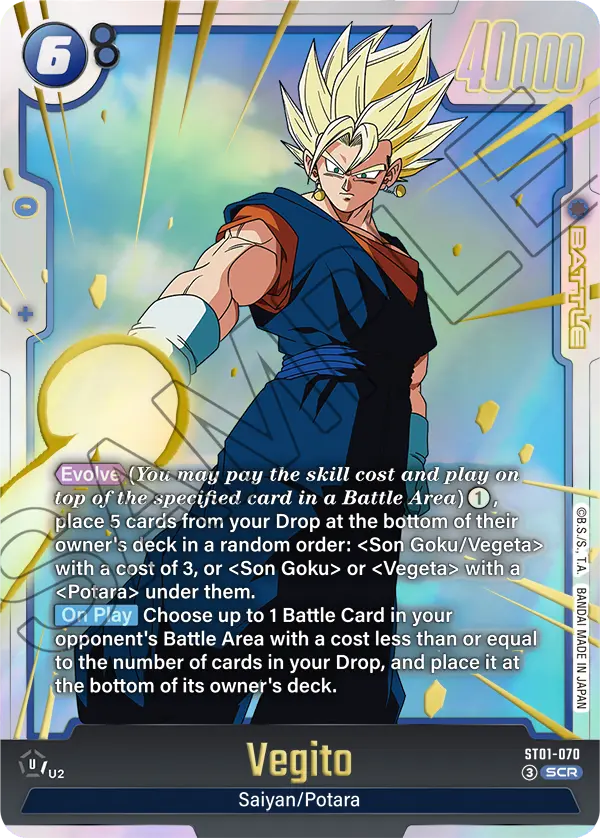
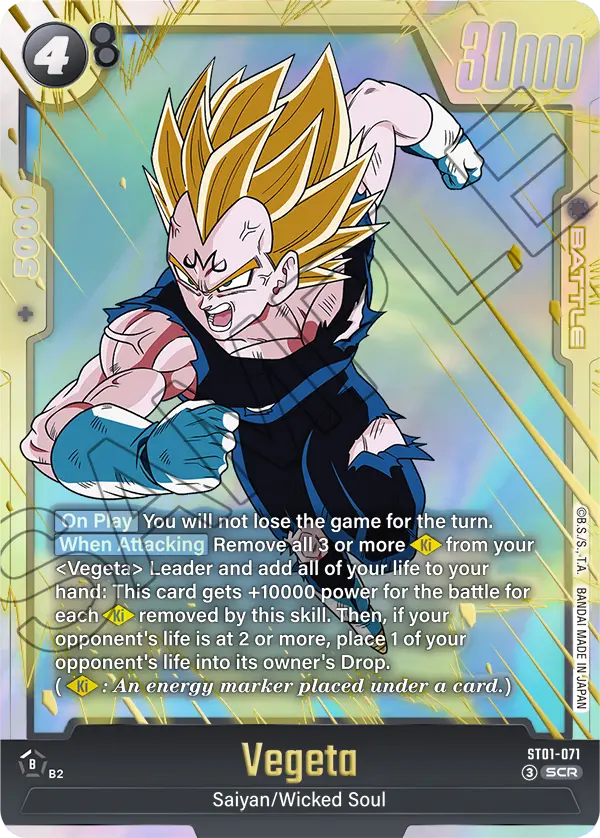
The August 30, 2026 Auckland (Oceania) Wave 2 regional was the first major event held after ST01's release, and it delivered the format's biggest single shift of the summer. SSJ3 — an archetype built around ST01's Goku SSJ3 card, and one that simply did not exist as a deck nine days earlier — took three of the event's eight Top 8 slots (37.5%), including the tournament win. Gogeta:BR matched that exactly, also taking three of eight (37.5%), tying it for the most-represented deck in the room. Majin Vegeta took one slot (12.5%), and Vegito (FB10) — the deck that had defined the format for two straight months — was reduced to a single Top 8 slot (12.5%), a sharp fall from where it stood in July.
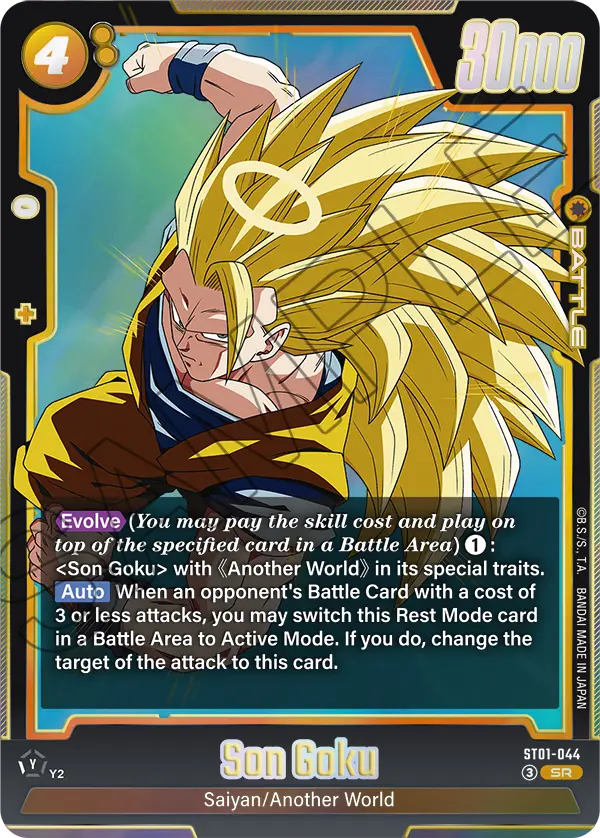
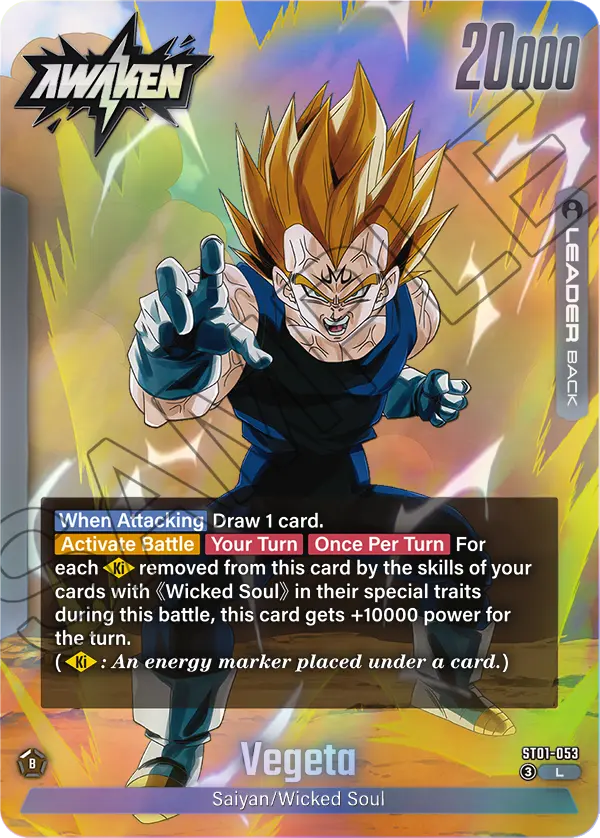
It's worth being precise about what that data does and doesn't show. Eight decks in one Top 8 is a real, dated signal — not noise — but it's also just one event. It doesn't confirm SSJ3 and Gogeta:BR have permanently unseated Vegito, and it doesn't tell us how the three would fare against each other over a larger sample. What it does tell us is that a brand-new archetype went from nonexistent to tournament-winning in under two weeks, and that Gogeta:BR's rise wasn't a one-off — it lines up with the Rotterdam final three weeks earlier, where it was already good enough to make the final before ST01 existed.
The honest framing: Fusion World just got its first real post-ST01 data point, not a settled post-ST01 format. The next wave of regionals will show whether the SSJ3 / Gogeta:BR split holds, whether Vegito claws back ground, or whether something nobody's talking about yet takes advantage of a metagame that's currently unsettled at the top.
Gogeta:BR: Co-Leader Now
If SSJ3's story this month is a sudden explosion, Gogeta:BR's is the opposite — a quiet, steady climb that's easy to miss until the results are lined up in order. It was already sitting at 13 of 187 decks in DeckPlanet's broader FB10-era tracking as of August 6, tied with Son Gohan:SH for the second-most-played deck behind Son Goku's forms. Then, on August 9, it reached the Rotterdam Wave 2 final — losing to Vegito there, but proving it could go the distance against the format's best deck nearly two weeks before ST01 gave the format anything new to build around. Three weeks later, at Auckland, it tied SSJ3 for the most Top 8 slots in the room.
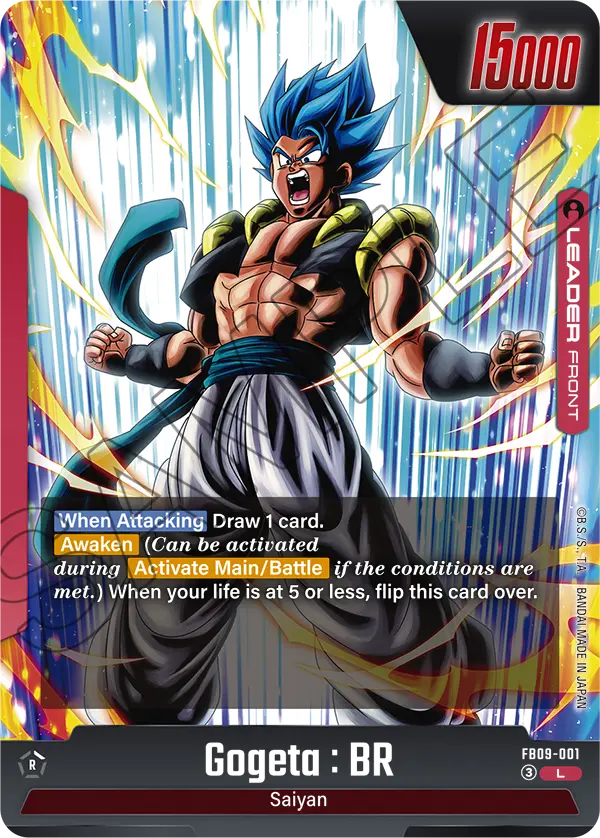
That timeline matters: it means Gogeta:BR's current standing isn't a byproduct of ST01 the way SSJ3's is — it was already trending upward on its own FB10 tools, and simply stayed strong once the format's newest set arrived. That's a meaningfully different story than "brand-new card, brand-new archetype," and it's part of why Gogeta:BR looks like a more durable piece of the top tier than a single hot weekend would suggest.
Practically, that makes Gogeta:BR one of the safer investments of preparation time in the current environment. Where SSJ3 has exactly one event of data behind it and Vegito's slide is still fresh enough that reversal is plausible, Gogeta:BR has now shown up at the top of results across a June-to-August span under two different metagames — one built entirely around FB10, and one that had just absorbed ST01. A deck that keeps performing across a format-defining release is usually worth taking seriously past the news cycle.
Son Goku: Volume Over Ceiling
Through all of this — Vegito's rise, its cracks, and Auckland's shakeup — one thing hasn't moved: Son Goku's various Leader forms remain the single most-played option in the format by raw volume. DeckPlanet's tracking puts Son Goku leaders at 49 of 187 decks, roughly a quarter of the field and well ahead of anything else. That's before accounting for the fact that "Son Goku" isn't one decklist here — FS11 Son Goku, Red FB10 Son Goku, and Son Goku Ultra Instinct are meaningfully different builds sharing a name, each showing up in results independently this summer.
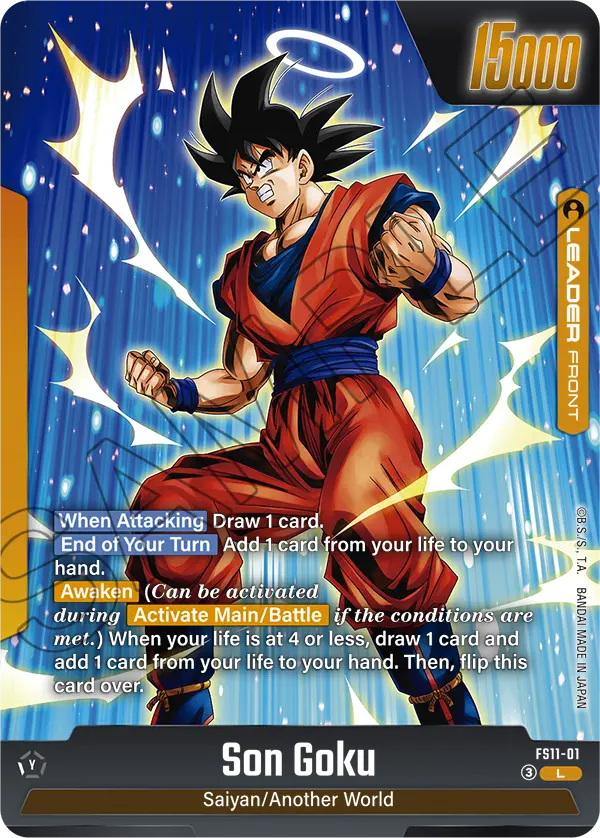
The distinction between volume and ceiling remains the important one for preparation, and this summer's results make the case better than any single ranking could. Shonentcg's mid-July breakdown had the Red FB10 Son Goku build sitting in B-tier — solidly playable, often cited as the format's best beginner pick, but not the format's strongest deck. And yet a July 30 Top 32 event saw Son Goku builds take both first and second place, and Son Goku Ultra Instinct — a different build entirely — won both the Madrid Regional and Madrid Wave 2 back to back in mid-August, while most of the format's attention was still on Vegito. A Leader family can sit a tier below the format's single best deck and still be the deck you're most likely to face on any given round.
That range also makes Goku hard to prepare for as a single opponent. A sideboard plan built for an aggressive Red build won't necessarily hold up against Ultra Instinct, and neither will necessarily match what a future ST01-influenced Goku list looks like once the dust from Auckland settles. Opponents facing "Goku" across a tournament day are, in a real sense, facing several different decks that happen to share a name.
Practically, Goku decks are still the matchup you should expect most often at a given event — more often than SSJ3, Gogeta:BR, and Vegito combined, based on the volume numbers above — even with none of its forms sitting at the very top of the power rankings. A clean plan against the Goku forms you're likeliest to see locally keeps you ahead of the field on expected matchup frequency, regardless of how the SSJ3 / Gogeta:BR story plays out.
The Matchup Matrix
How the format's five most-discussed post-Auckland Leaders line up against each other. Son Goku's various forms are left out of this grid — several genuinely different builds share the name, and forcing them into one row would flatten a distinction covered in the section above. Read each row as "this Leader versus the column": favored (+), even/unclear (=), or unfavored (−). Most pairings simply don't have head-to-head tournament results behind them yet — where that's the case, we're marking it even/unclear rather than guessing, which itself says something about how fresh this hierarchy is. The one clear signal: Vegito beat Gogeta:BR in the Rotterdam Wave 2 final.
| Leader vs → | SSJ3 | Gogeta:BR | Vegito | M. Vegeta | Gohan:SH |
|---|---|---|---|---|---|
| SSJ3 | — | = | = | = | = |
| Gogeta:BR | = | — | − | = | = |
| Vegito | = | + | — | = | = |
| Majin Vegeta | = | = | = | — | = |
| Son Gohan:SH | = | = | = | = | — |
Favored (+), even/unclear (=), unfavored (−). Based on confirmed tournament results through the August 30, 2026 Auckland Wave 2 regional — not simulated or estimated win rates.
Do This in the Current Meta
- Test your list against both SSJ3 and Gogeta:BR before your next event
- Watch the next wave of regionals before writing Vegito off entirely
- Track ST01 card support as more decks build around it, not just SSJ3
- Prepare for high Son Goku volume regardless of which specific variant shows up
Avoid This
- Treating one regional's Top 8 as a confirmed new format
- Assuming ST01's only relevant card is the one SSJ3 is built around
- Confusing ST01's Vegito (ST01-070) with the FB10 Vegito that dominated July
- Building around July's numbers now that August has moved the picture twice
FAQ
Is there an official Fusion World deck tracker?
Not for the online client specifically — community trackers like DeckPlanet build this picture from reported tournament results, decklists, and event coverage, so treat the numbers here as well-corroborated community tracking rather than an official statistic.
Is Vegito done, or still worth playing?
Still worth taking seriously. One regional's Top 8 is a real signal, not a verdict — Vegito spent two months as the format's clear #1 on genuine strength, and a single event, even a rough one, isn't enough to call it finished. Watch the next few results before making a call either way.
What is SSJ3, and why did it appear out of nowhere?
SSJ3 is a new archetype built around a Goku SSJ3 card from Story Booster ST01, which released August 21, 2026. The archetype simply didn't exist before that date — its Auckland win nine days later means it went from unplayable to tournament-winning in under two weeks.
How quickly does this list change?
As fast as a single regional, evidently — the Auckland Wave 2 results reshuffled the top of the format in one weekend. Check back regularly, and see our Fusion World Meta Report for the full story of how this shift happened.
The Format Just Got Rewritten — Again.
Vegito's two-month reign has given way, at least for now, to a co-dominant split between SSJ3 — a brand-new ST01 archetype — and Gogeta:BR, a deck quietly building toward this moment for weeks before ST01 released. Majin Vegeta has arrived as a name worth watching, Son Gohan:SH remains a proven secondary threat, and Son Goku's many forms still out-play every other Leader by sheer volume, even without the format's single top spot.
Build with this list in mind, but hold it loosely — a single regional just showed how fast this hierarchy can move. Know what's winning right now, prepare for what you'll actually face most often, and treat the next wave of results as the real test of whether Auckland was a turning point or an outlier.
© GEEKYDOMAIN.COM | Strategy Powered by Data