

Budget Dragapult ex Deck Guide, Under $100
The highest win rate among the format's top-share decks, plus a fresh World Championship trophy — here's how to budget-build toward one of Standard's most dominant decks before a definitive decklist even exists.
Some links below are affiliate links. If you buy through them, Geeky Domain may earn a small commission at no extra cost to you.
Dragapult ex is not a budget deck in the usual sense of that phrase. It isn't a discount alternative to something better, and it isn't a stepping-stone archetype you're supposed to graduate out of once you can afford the real thing. As of late August 2026, Dragapult ex is the real thing. Per Limitless TCG's aggregated tournament data — a sample covering 511 tournaments and 36,903 players — the archetype holds a 7.24% share of the competitive Standard metagame and a 54.20% win rate, the highest win rate among the format's top-share decks. Then, on August 28-30, 2026, in San Francisco, Andrew Hedrick of the United States piloted Dragapult ex to the 2026 World Championship title in the Masters division, finishing the event 13-2-0. That's not hype talking. That's a deck that is simultaneously the format's best-performing top-share archetype and its newest World Champion, in the same week.
Up to now, this site's only budget-deck guide has pointed cost-conscious players toward Charizard ex — and for a while, that was a genuinely good call. The original build paired an Obsidian Flames Charizard ex with Pidgeot ex, and it earned its spot. That combination didn't survive the April 2026 "G" regulation-mark rotation, which removed it from legal Standard play entirely. The current rebuild pairs a Surging Sparks Charizard ex with Mega Evolution's Noctowl, and PokeBeach's own January 2026 assessment called it "the most consistent ex attacker in Standard." That's a real compliment, but it comes with a caveat worth sitting with: PokeBeach's own read is that the rebuilt Charizard ex is not elite. Three viable builds exist for it, and none of them stand out as the build. Dragapult ex isn't a "still viable" recommendation in that same way. It's one of the format's most dominant decks, with a trophy to back it up.
Here's where a lot of budget-deck content goes wrong, though: it's tempting to pair a headline like "Worlds-winning, best-in-format win rate" with a tidy 60-card list and a dollar-by-dollar breakdown, because that's what budget-deck guides are supposed to look like. We're not doing that here. No specific Dragapult ex decklist has been confirmed for this guide, and inventing one — dressing up a guess as a real list — would be actively worse than useless. It would send you shopping for the wrong cards, in the wrong counts, chasing a list nobody actually played. So instead, this guide does something more useful: it explains why Dragapult ex is worth building toward, how to approach that build sensibly while the metagame is still settling around a brand-new World Champion, and exactly where to go to check a real, tournament-verified decklist before you spend a single dollar.
Treat what follows as the strategic and financial groundwork for a Dragapult ex build — the reasoning, the timing, and the buying discipline — rather than a shopping list. Pair it with a live decklist tracker the moment you're ready to actually buy, and you'll end up with a more accurate, more current build than any static list published today could give you anyway.
→ Short Version
Dragapult ex currently holds a 54.20% win rate — the highest among the format's top-share decks — at 7.24% meta share, per Limitless TCG's aggregated tournament data (511 tournaments, 36,903 players, as of late August 2026). It also just won the 2026 World Championship Masters division in the hands of Andrew Hedrick (USA), 13-2-0. No specific budget decklist for it is confirmed here, so we're not inventing one. Instead: build toward the archetype's proven core, hold off on hyper-specific tech choices until the metagame settles, and check a live tracker like Limitless TCG for a current list before you buy singles.
→ Related Reading
In This Guide
- → Why Dragapult ex Is Worth Building Toward
- → The Numbers: Meta Share, Win Rate & a World Championship
- → What Changed: Why the Old Charizard ex Pick Fell Off
- → Why This Guide Won't Hand You a Decklist
- → Budget Deckbuilding Principles for a Proven Meta Leader
- → Where to Check a Real, Current Decklist
- → Buying Smart: Singles, Verification & Timing
Why Dragapult ex Is Worth Building Toward
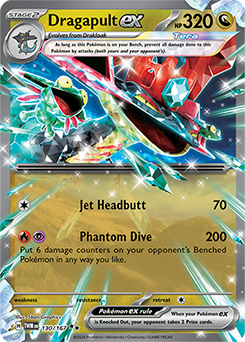
Not every popular deck is worth chasing on a budget, and not every deck that wins one big event is either. Popularity alone can be a trap: a deck can be everywhere in the field because it's cheap, familiar, or easy to pilot, while quietly posting a mediocre win rate once you actually tally results. A single tournament win, on the other hand, can be a fluke — a good bracket, a favorable set of pairings, one exceptional pilot having a great weekend with a deck that isn't otherwise dominant. Neither signal alone tells you a deck is a safe long-term budget target.
Dragapult ex clears both bars at once, which is the actual reason it belongs in a budget guide. It isn't just widely played — at 7.24% of the metagame, per Limitless TCG's tracking, it's one of the format's most-represented decks. And it isn't just winning because it's everywhere; its 54.20% win rate is the best mark posted by any deck at that level of meta share, meaning it isn't riding volume to relevance, it's actually outperforming the field when it's played. Layer a World Championship win on top of that — the single highest-pressure, highest-scrutiny event the format has — and you have a deck that has been independently validated three different ways: by raw adoption, by aggregate win-rate data, and by beating every other archetype in the room on the biggest stage there is.
For a budget builder specifically, that combination matters more than any single stat would on its own. A deck with this much independent support behind it is unlikely to be a one-tournament flash in the pan that quietly falls out of the format a month later. That doesn't guarantee it stays on top forever — nothing in a rotating card game does — but it's about as strong a signal as you'll get that money spent on its core pieces right now is money spent on cards you'll actually get to use.
You don't need a finished decklist to start comparing prices on the format's newest World Champion attacker. Browse current listings on Amazon and eBay to get a feel for what a copy is running right now.
These are live marketplace searches, not a reserved or curated bundle. Confirm card name, set, and legality before you buy.
The Numbers: Meta Share, Win Rate & a World Championship
It's worth being precise about what these numbers actually say, because meta share and win rate answer two different questions. Meta share — 7.24% for Dragapult ex — tells you how often the deck shows up: roughly seven out of every hundred players at a tournament are sitting down with it. Win rate — 54.20% — tells you how it performs once it's there. A deck can have a high meta share and a middling win rate if it's popular mostly because it's accessible or fun to play. Dragapult ex doesn't have that problem: its 54.20% win rate is the highest posted by any deck at its level of meta share, which is the specific combination that makes a deck a genuine format leader rather than just a popular one.
The sample behind that number is large enough to trust: Limitless TCG's aggregated tournament data draws on 511 tournaments and 36,903 players, as of late August 2026. That's not a handful of local events — it's a wide cross-section of the competitive scene, which is exactly why this guide leans on it instead of any single event's results. Numbers like these do keep moving as the format keeps getting played, which is part of why this guide sends you to a live tracker rather than freezing a snapshot in place as a permanent decklist — but a top-two position built on a sample this size isn't something that reverses overnight.
Then there's the result that turns "strong deck" into "proven deck": the 2026 World Championships. Held August 28-30, 2026, in San Francisco, the event's Masters division was won by Andrew Hedrick of the United States, piloting Dragapult ex to a 13-2-0 finish. Worlds is a single tournament, and any single tournament can be won by a deck having a good run — that's exactly why this guide doesn't lean on the Worlds win alone. What makes Dragapult ex different is that the trophy and the aggregate data point the same direction. A deck that's both statistically dominant across tens of thousands of games and just won the sport's biggest event is about as strong a double-confirmation as competitive Pokemon TCG data gets.
What Changed: Why the Old Charizard ex Pick Fell Off
We won't re-walk the full rotation mechanics here — that's a separate topic with its own detail, and our existing Charizard ex guide (linked above and again below) covers it properly. The short version, for context, is this: the pre-rotation Charizard ex build this site previously recommended as its budget pick relied on a card pairing that stopped being legal in Standard at the April 2026 rotation. A rebuilt version exists and is playable — PokeBeach called it the most consistent ex attacker in the format as of their January 2026 assessment — but by their own read, it's a solid, not standout, pick: three viable builds, none of them the clear best one.
That's a perfectly fine deck to still play. It's not, however, a top-tier deck in the way it used to be, and it's not the strongest budget recommendation this site can currently make. Dragapult ex is. That's the whole comparison: not a takedown of Charizard ex, just an acknowledgment that the competitive picture has moved, and a budget guide should move with it.
Why This Guide Won't Hand You a Decklist
If you've read our Budget Green Mihawk guide for One Piece, this framing will look familiar — it's the same standard applied to a different card game. When a card or archetype has just proven itself but the field hasn't yet settled on a definitive build, publishing a specific 60-card list is a worse move than not publishing one, not a better one. Immediately after a headline result like a World Championship win, tournament lists are still shifting: players are copying the winning pilot's approach, tweaking it against their local metagame, swapping tech cards in and out as counter-strategies emerge, and generally converging toward a "solved" list over the following weeks rather than arriving at it instantly.
Publishing a guessed list into that environment and presenting it as fact would mean sending you to buy specific cards, in specific counts, based on a build that may not resemble what's actually winning by the time you've assembled it. That's the opposite of what a budget guide is supposed to do — it's supposed to protect your money, not put it at risk on a guess dressed up as research. What this guide can responsibly give you instead is everything short of that exact list: the reasoning, the buying priorities, and a direct path to the real thing, laid out in the sections below.
Budget Deckbuilding Principles for a Proven Meta Leader
Building toward a deck before its exact list has stabilized isn't the same as building blind. There's a sensible order of operations that lets you start spending now without wasting money on choices that get overwritten in a week.
The Core Idea
Buy the pieces that will be in almost every build first, and buy the pieces that only appear in some builds last. The Dragapult ex attacker itself is the safest early purchase in this whole guide — it's the one card guaranteed to be in the deck no matter how the surrounding 59 cards eventually shake out. Everything more specific than that gets safer to buy the longer you wait.
Buy the engine before the tech. The attacker(s) that define the archetype are worth acquiring early because they'll appear in essentially any version of the deck. Situational tech cards — answers to specific opposing strategies, one-of counters, niche support pieces — are exactly the slots most likely to differ from list to list and shift as the format reacts to Dragapult ex's new dominance. Save that money until you're looking at an actual current list.
Prioritize cards that cross decks. Basic energy and widely-played trainer and supporter staples tend to show up across many Standard archetypes, not just this one. Money spent there isn't wasted even if your plans shift, which makes those purchases lower-risk than anything hyper-specific to a single build you haven't confirmed yet.
Expect a post-Worlds price bump — and decide how you want to handle it. Cards from a deck that just won a World Championship tend to see real demand spikes in the days and weeks right after the result, as the wider player base reacts to the same news this guide is built around. You can buy in early and accept the fresh-off-the-win price, or wait for demand to cool and hope the price settles — there's a real trade-off either way, and which one is right depends on how badly you want to be playing the deck now versus later.
Respect the cap. Under $100 almost certainly means you're building the core shell of the deck, not a maxed-out, fully-teched tournament list. That's not a failure of the budget approach — it's the point of it. A lean version of the deck with the format's top win-rate among its top-share decks is still a genuinely strong deck to learn and play, even before every slot is optimized. If you're still deciding how far that $100 goes as singles versus sealed product, our booster box vs. singles budget math guide breaks down that trade-off in more detail.
Cross-reference before you buy, don't copy a single source. Once you're ready to fill in the rest of the list, pull up several recent tournament results rather than one. What shows up consistently across multiple independent lists is safe to treat as core; what only appears in one list is more likely a personal or local-metagame choice, and can wait.
Where to Check a Real, Current Decklist
Every statistic in this guide — the meta share, the win rate, the tournament and player counts — comes from the same place we'd point you to for an actual decklist: Limitless TCG, a tournament-results and decklist tracker built directly from real event data rather than guesswork. It's the reason this guide can speak confidently about Dragapult ex's numbers at all, and it's the tool that will still be accurate next month, when this static page won't have updated but the format will have kept moving.
To use it well: look up recent tournament results, filter or search for Dragapult ex specifically, and open up several of the highest-finishing recent lists rather than just the first one you find. As noted above, comparing multiple lists rather than trusting a single one is exactly how you tell the archetype's stable core apart from one pilot's personal read on the current field — and it means the list you end up building toward reflects what's actually winning right now, not what was winning the week this guide was written.
Before singles start arriving, it's worth having sleeves and toploaders on hand so nothing gets damaged in the meantime. Compare current options on Amazon and eBay.
These are live marketplace searches, not a curated kit. Check seller ratings and listing condition before you buy.
Buying Smart: Singles, Verification & Timing
A freshly-crowned World Championship archetype is exactly the kind of moment that draws out counterfeit listings — demand spikes fast, buyers get less careful in the rush, and bad actors know it. Before you buy singles for a hot deck like this one, it's worth knowing what to look for. Our guide to spotting counterfeit cards covers the general red flags that apply to any high-demand card, not just this one.
If you'd rather try to pull pieces of the deck from packs than buy every card as a single, it helps to understand the real trade-offs between sealed formats before you commit part of your budget that way — our ETB vs. booster box comparison walks through that decision. For a budget build specifically, buying the confirmed core pieces as singles and reserving sealed product only if you actually want the pack-opening experience is usually the more predictable way to hit a $100 target.
One more piece of buying discipline worth stating plainly: for a deck you intend to actually play, you don't need graded or gem-mint copies. Grading exists to protect a card's condition and resale value for collectors, not to make it perform better across the table. Save that spending for cards you're collecting long-term, and put your $100 toward playable-condition copies of the cards you actually need for the deck. Once those singles arrive, a sleeves and toploaders buying guide can help you keep them in that same condition.
Build the Core. Check the List. Then Spend.
Dragapult ex is a rare kind of budget target: an archetype that's simultaneously the format's best win-rate performer among its top-share decks and its newest World Champion, validated by tens of thousands of tracked games and by an actual trophy on the same weekend. That's worth building toward. What it isn't, at least not from this guide, is a pre-packaged 60-card list — because that list wasn't something we could confirm, and a guessed list would have cost you more than it saved.
The honest path is the one laid out above: buy the core attacker and the cross-deck staples first, hold off on tech choices until the metagame settles, watch for the post-Worlds price movement and decide how you want to handle it, and pull your final 60 from a live, current source like Limitless TCG rather than a static guess. This guide isn't going to put a firm dollar figure on any single card — check live prices before you buy — but built in that order, a genuinely top-tier deck's core is a realistic target for a $100 budget, even accounting for a post-Worlds bump.
© GEEKYDOMAIN.COM | Strategy Powered by Data