

30th Celebration's Base Set Charizard Reprint vs. the Original
Pokemon's most famous card is getting a modern foil reprint. Here's what that probably won't -- and what could still -- do to the value of the 1999 original.
Some links below are affiliate links. If you buy through them, Geeky Domain may earn a small commission at no extra cost to you.
→ Short Version
30th Celebration launches worldwide on September 16, 2026, and its 30-card Classic Collection reprint subset is confirmed to include the original 1999 Base Set Charizard (4/102).
The reprint's exact card number, rarity label, and print run are not yet confirmed. What we do know is that it sits inside the all-foil Classic Collection lineup, so it's fair to describe it generally as a modern foil reprint without pinning down a more specific rarity name.
Historically, reprints of iconic vintage cards have not tended to crash the value of the originals, largely because grading population reports and serious collectors tend to treat a reprint as its own category rather than a substitute for the vintage card. This piece walks through why -- and what would actually have to change for that pattern to break.
In This Guide
- → What's Actually Launching on September 16
- → The Original Card: A Quick Refresher
- → What We Actually Know About the Reprint (And What We Don't)
- → How Reprints Typically Affect Vintage Card Value
- → Three Factors Worth Watching as More Details Land
- → What Probably Won't Move the Needle
- → If You Already Own -- or Want -- an Original 4/102
- → Bottom Line
Every time a company reprints one of its most iconic cards, the same question shows up in collector forums and Discord servers within hours: does this tank the value of the original? It happened with Magic's Reserved List debates, it happens with sports card buybacks, and it's happening again now that Pokemon has confirmed the 1999 Base Set Charizard -- arguably the single most recognizable card in the entire TCG hobby -- is getting a modern reprint as part of the 30th Celebration set's Classic Collection subset.
The instinct is understandable. If a brand-new, easier-to-pull, presumably cheaper version of the same card enters the market, it seems logical that demand for the harder-to-get original would soften. But that instinct doesn't hold up well against how vintage card markets have actually behaved when this has happened before. This article isn't about predicting a specific dollar figure for either card -- we're not going to invent one, and you shouldn't trust any source that does before the reprint has even been pulled from a pack. Instead, it's about walking through the actual mechanics of how a reprint interacts with an original's value, so you can reason through it yourself as more details about the Classic Collection card become official.
What's Actually Launching on September 16
Before getting into value dynamics, it's worth being precise about what 30th Celebration actually is, because a lot of the online chatter around this set conflates details that are confirmed with details that aren't. 30th Celebration ships worldwide simultaneously on September 16, 2026 -- the first set in Pokemon TCG history to launch on the same day in every region rather than staggering a Japan release ahead of the rest of the world. The set totals approximately 150 cards, and every pack is all-foil: six cards per pack, all of them foil-treated, with a guaranteed 1-of-30 unique Pikachu variant in every single pack opened.
The set also introduces a brand-new rarity tier called "Futuristic Rare," illustrated by YOSHIROTTEN. That's a distinct part of the set's structure worth knowing about, but it's a separate rarity track from the piece of the set we're focused on here: the 30-card Classic Collection, a subset built specifically around reprinting cards that matter to the hobby's history. The original 1999 Base Set Charizard, card 4/102, is confirmed to be one of the 30 cards receiving that treatment.
That's the full extent of what's locked in about the reprint's placement within the set. It's part of Classic Collection. Classic Collection is 30 cards. The original Charizard is one of them. Everything past that -- the exact card number it will carry, which specific rarity label within Classic Collection it gets, how large the print run is -- has not been confirmed as of this writing, and we're not going to fill in those blanks with guesses dressed up as facts.
The Original Card: A Quick Refresher
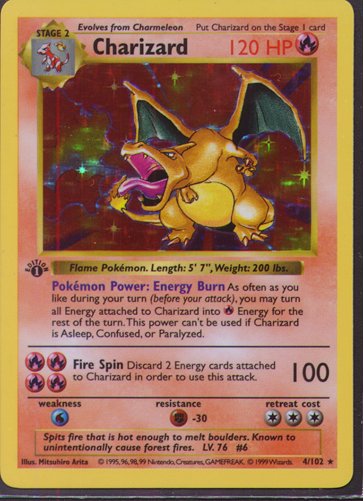
The original 1999 Base Set Charizard (4/102) -- no image exists yet of the 30th Celebration reprint since the set hasn't released.
The card at the center of all this is the 1999 Base Set Charizard, numbered 4/102, a Stage 2 Fire-type with 120 HP. If you've spent any time around this hobby you already know the broad strokes of why it matters: it was the chase card of the set that introduced most of the English-speaking world to the Pokemon TCG, and that combination of nostalgia, scarcity, and cultural recognition has kept it at the center of vintage collecting for over two decades.
We're intentionally not re-deriving the authentication and grading details here, because we've already covered that ground in depth elsewhere on the site, and duplicating it would mean either repeating ourselves or introducing inconsistencies between articles. If you're trying to confirm whether a specific copy is genuine, our guide to spotting a fake Base Set Charizard covers the physical traits and red flags to check, and our broader guide to spotting counterfeit cards covers the red flags that carry over to other games and sets. If you're deciding between grading companies for a vintage submission, CGC vs. PSA for vintage Pokemon breaks down how the two compare specifically for older cards like this one. Both of those pieces also carry more current pricing context than we'd want to re-derive from scratch in a reprint-comparison article, so treat them as the source of record for numbers rather than anything stated here.
What We Actually Know About the Reprint (And What We Don't)
This section is short on purpose, because there simply isn't much confirmed yet. Here's the complete list of what's locked in: the original Base Set Charizard is one of the 30 cards in the Classic Collection subset of 30th Celebration, and the set as a whole uses all-foil packaging. That's it. That's the extent of official information about this specific reprint as of late August 2026.
Here's what is not confirmed, and what you should be skeptical of if you see it stated as fact anywhere else: the reprint's card number within Classic Collection, the exact rarity label it will carry, and the size of its print run. None of those have been announced. Given the all-foil format of the set, it's reasonable to describe the upcoming card generally as a modern foil reprint -- that much follows directly from how the set is packaged -- but that's different from claiming a specific named rarity tier, and we're not going to manufacture one just to sound more precise.
It's also worth flagging that the "Futuristic Rare" rarity mentioned earlier, illustrated by YOSHIROTTEN, is a feature of the set overall -- it hasn't been confirmed as the rarity tier applied to the Classic Collection Charizard specifically. Don't assume the two are the same thing; treat them as separate facts about the set until Pokemon says otherwise.
30th Celebration ships worldwide on September 16, 2026, with all-foil packs and a guaranteed 1-of-30 unique Pikachu variant in every pack. These links pull up current marketplace search results -- they don't reserve stock or lock in a price.
Prices and availability are set by third-party sellers and change constantly ahead of and after the official release date.
How Reprints Typically Affect Vintage Card Value
Since we can't point to confirmed pricing for a card that hasn't been pulled from a pack yet, the useful thing we can do instead is walk through the general mechanics of how reprints have historically interacted with the value of the vintage cards they're based on. This is informed reasoning about the pattern, not a prediction about specific numbers for either the reprint or the original.
The typical pattern across the collectibles hobby -- not unique to Pokemon -- is that a reprint of an iconic card does not simply cannibalize demand for the original. There are a few reasons this tends to hold. First, print run size matters enormously, and modern sets in general tend to run many multiples larger than a 1999-era product did, since the collector base and print infrastructure have both grown enormously since then. The 30th Celebration reprint's actual print run hasn't been announced yet, so it's not yet possible to say how it specifically compares -- but a card that's comparatively abundant by design doesn't behave like a card that's scarce by the accident of its age.
Second, whether a reprint reuses the exact same iconic artwork or introduces new art matters to how collectors perceive it -- and that detail hasn't been confirmed for this specific Classic Collection card. Even when a reprint does reuse the same illustration, collectors of vintage cards are typically drawn to a specific set of things a reprint can't replicate: the original print sheet, the period-accurate card stock and gloss, the specific set symbol and copyright line, and the simple fact of being from the exact print run that defined the hobby's early years. A modern foil version, however faithful the artwork, is a different physical object with a different collecting story attached to it.
Third -- and this is often the most decisive factor in practice -- grading companies and their population reports typically treat a reprint as a wholly separate collecting category from the original card it's based on. A graded modern reprint doesn't get lumped into the population count for the vintage original; it gets its own set entry, its own population report, and its own line in price guides. That separation is exactly why collectors of "the real vintage card" generally don't treat a reprint as a substitute. It's a general tendency across the collectibles hobby, not a guarantee: a reprint tends to expand who can own a version of an iconic card, without necessarily eroding the specific market for the original vintage copy.
Three Factors Worth Watching as More Details Land
Given all of the above, here's a short checklist of what's still open, so you know exactly what to look for as Pokemon fills in details between now and the September 16 launch -- rather than treating every headline about the reprint as automatically bad news for the original.
The reprint's actual print run, once announced. The gap between it and a 1999 regional print run is the single biggest input into how this plays out, and it's not something worth estimating before an official number exists.
Whether the artwork matches the original illustration or is new. Pokemon hasn't said either way yet for this specific card.
How grading companies list and pop-report it once it starts getting submitted. That's the most concrete real-world evidence of whether the market is treating it as a separate category, as described above. For background on how the major graders differ before that data starts rolling in, see our PSA vs. BGS vs. CGC comparison and whether grading is worth it for the cost-benefit side of submitting a copy of either card.
What Probably Won't Move the Needle
A few specific fears keep coming up around this reprint that are worth addressing directly, since they tend to drive more anxiety than the underlying mechanics actually justify.
The fact that a reprint exists at all is not, by itself, a meaningful signal. Iconic cards across the entire collectibles hobby get reprinted constantly -- that's part of how anniversary sets work, and it's happened to other landmark cards without erasing the market for their vintage counterparts. The mere existence of the Classic Collection version doesn't change any of the physical or historical facts that make the 1999 original what it is: still the same 4/102, still the same Stage 2 Fire-type from the same Base Set that started the hobby's English-language run.
Initial hype-driven pricing on the reprint right after launch also isn't a reliable signal either way. New-set chase cards, including whatever the guaranteed 1-of-30 Pikachu variant ends up trading for, tend to swing wildly in the first weeks after a release before settling into whatever their actual long-term collecting niche turns out to be. Reading too much into day-one reprint prices -- in either direction -- isn't a sound basis for judging what happens to the original's market over the following months and years.
Raw and graded copies of 4/102 change hands across marketplaces constantly. Always confirm authentication and grading before buying -- our guides linked in this article walk through both.
These links search live third-party listings and are not a price guide or valuation of any specific copy.
If You Already Own -- or Want -- an Original 4/102
If you own a genuine copy of the 1999 Base Set Charizard, nothing about the Classic Collection announcement changes what you have. It's still a Stage 2, 120 HP, Fire-type card numbered 4/102 from the set that introduced most Western collectors to the game -- and it's still worth keeping stored the way any vintage card deserves, with our card sleeves and toploaders buyer's guide as a starting point if you haven't upgraded its holder in a while. What the reprint does add is a lower-friction way for newer or more casual collectors to own a version of the card's artwork and legacy without needing to navigate the vintage market at all -- arguably a healthy thing for the hobby's on-ramp, separate from what it means for existing original copies.
If you're shopping for your first original copy, or considering a grading submission for one you already have, this is a good moment to make sure you're working from solid fundamentals rather than reacting to reprint headlines. Start with authentication -- our fake Base Set Charizard guide is the right place for that -- get comfortable with how raw card conditions are scored, and then decide on a grading path using the CGC vs. PSA breakdown for vintage cards. If you're newer to vintage collecting generally and want the wider context on how the 30th Celebration era fits into current Pokemon TCG collecting, our 30th anniversary products buyer's guide covers the rest of what's launching around this milestone.
Bottom Line
Nothing in this piece is a prediction about where either card lands in dollars -- that's not something worth guessing at before the Classic Collection card has even been pulled from a pack. What it should leave you with instead is a framework: track the specifics as Pokemon confirms them in the run-up to September 16, and weigh them against the checklist above rather than reacting to the first headline that calls this a threat to the original's value. For most 4/102 owners, that points toward staying informed rather than alarmed, and toward leaning on solid authentication and grading fundamentals -- covered in the guides linked throughout this piece -- regardless of how the reprint ultimately shakes out.
Stay Informed, Not Alarmed
Nothing here is a prediction about where either card lands in dollars -- track the specifics as Pokemon confirms them in the run-up to the September 16 launch, and weigh them against the factors above rather than reacting to the first headline calling this a threat to the original's value. For most 4/102 owners, that means staying informed rather than alarmed, and leaning on solid authentication and grading fundamentals regardless of how the reprint shakes out.
© GEEKYDOMAIN.COM | Strategy Powered by Data