

Mill in Commander: How the Strategy Actually Works
Decking out three opponents with 100-card libraries sounds impossible — and the naive version is. Here's how mill actually wins in multiplayer, and how to build it so it doesn't fall flat.
Mill — emptying a library card by card until its owner can't draw — is the most misunderstood archetype in Commander. New players slap a few "mill 5" cards together, point them at one opponent, and discover that chipping 15 cards off a 99-card deck does absolutely nothing. Then they conclude mill is unplayable. They're half right: that version is unplayable.
Real mill wins by changing the math. You either mill exponentially with doublers and percentage-based effects, or you stop trying to mill opponents at all and use your own graveyard as the engine. This guide explains both, the pieces that make them work, and the mistakes that sink budget mill lists.
It's also worth saying upfront: mill has a reputation problem. Plenty of players find it the least fun way to lose, and a poorly-paced mill deck can turn a 90-minute Commander game into a slog. None of that means you should avoid the archetype — it means you should build it to close games fast once it's online, not to grind for an hour doing nothing else.
→ Short Version
Linear mill loses — milling fixed numbers across three 100-card decks is far too slow. Win one of two ways: exponential/percentage mill (doublers + "mill half" effects) aimed at the table, or self-mill that fuels a graveyard payoff. You still need removal and a way to not die while you durdle. Protect your engine and respect that killing a player via mill paints a target on you.
→ Sharpen Your Strategy
In This Guide
Why Naive Mill Fails: The Math
Start with the numbers, because they explain everything. In a four-player game you face three opponents, each with a ~99-card library — call it ~297 cards of "life" to chew through, and they're drawing cards off the top the whole time. A card that mills a single opponent for five is removing roughly 1.7% of one of three decks. You would need to resolve dozens of them to deck a single player, while the other two sit untouched.
This is why "I added some mill cards" never works. Mill isn't a pile of small effects; it's an engine that has to scale faster than three players can draw. There are exactly two ways to make that happen.
There's a second, subtler problem with fixed-number mill: it's symmetric in the wrong way. While you're spending your turns casting "mill 5," your opponents are spending theirs developing their boards and digging for answers. You're not advancing your own game plan at all — you're just slowly inconveniencing someone who's still doing everything else a normal deck does. The math has to be lopsided enough that milling is your tempo, not a tax on it.
The Two Ways Mill Actually Wins
- 1. Exponential / percentage mill (table-facing). Instead of fixed numbers, use effects that mill half a library or that hit each opponent, then multiply them with a mill-doubler. "Each player mills half" twice is already most of a deck. This is the version that actually decks the table.
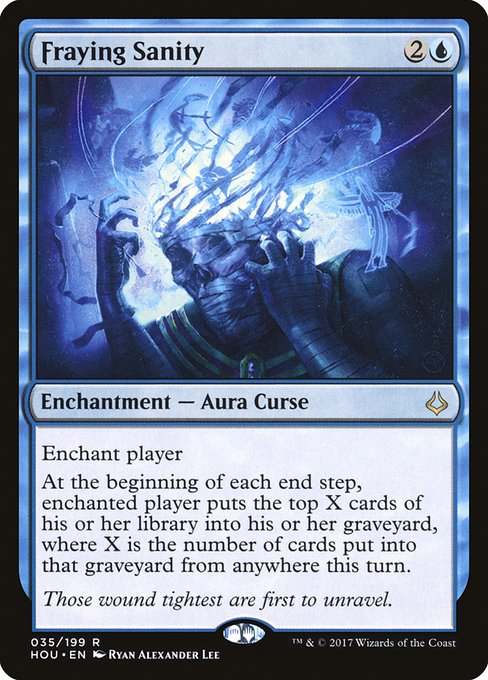
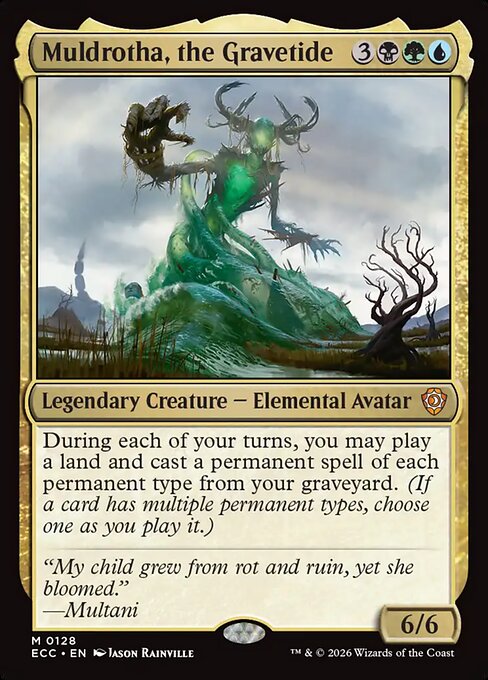
- 2. Self-mill into a payoff (you-facing). Here mill isn't the win condition — it's fuel. You mill yourself to stock a graveyard for reanimation, recursion, or a "creatures in your graveyard" payoff. The "mill" is just the cheapest way to fill the yard fast.
Pick One Lane
The classic budget mistake is trying to do both. A deck that wants to deck the table and use its own graveyard usually does neither well. Decide which lane you're in before you build — it changes every card choice, from which lands you run to which finisher you're protecting.
A Worked Example: The Exponential Curve
To see why percentage effects and doublers matter so much, compare two lines of play against an opponent sitting at roughly 80 cards left in their library (after a typical early-game's worth of draws):
| Approach | Cards Spent | Turns Used | Library: 80 → | % Removed |
|---|---|---|---|---|
| 3× "Mill 5" | 3 | 3 | 65 | 19% |
| 1× "Mill half" | 1 | 1 | 40 | 50% |
| 2× "Mill half" | 2 | 2 | 20 | 75% |
| "Mill half" + doubler | 1 (+doubler) | 1 | ~0 | ~100% |
The table makes the thesis obvious: three fixed-number spells and three full turns barely dent a library. One percentage effect with a doubler ends it. Even without the doubler, two "mill half" effects back to back removes three-quarters of what's left — a number that actually threatens to close the game. This is why budget mill lists are built around stacking percentage millers, not piling up small fixed numbers.
Key Budget Pieces
Most mill enablers are cheap commons and uncommons — the engine doesn't cost much. Prices below are approximate as of June 2026; verify before buying.
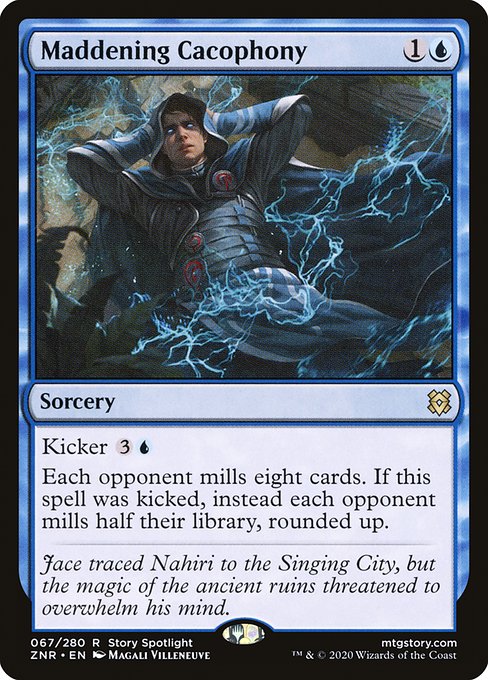
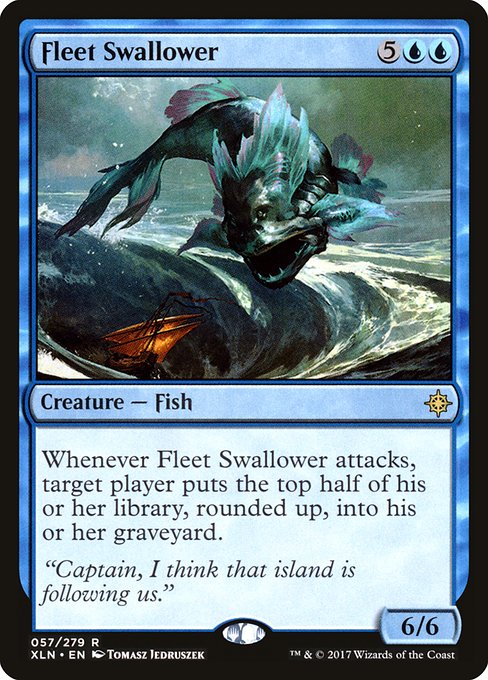
- Percentage mill (~$1 each). Effects that mill half a library — like Maddening Cacophony (with its kicker) or Fleet Swallower on a creature — do in one card what a dozen "mill 5" spells can't.
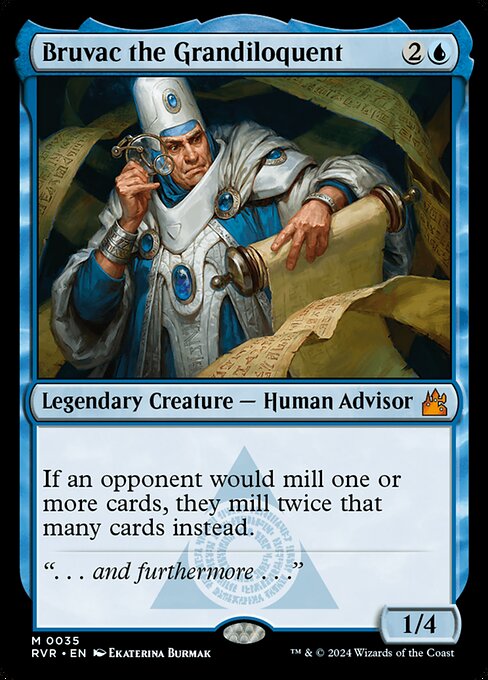
- Mill doublers. A doubler turns "mill half" into "mill the whole thing." Bruvac the Grandiloquent is the famous one (and a price-spiked chase card — treat it as an upgrade, not a budget staple). Even without it, stacking two percentage millers gets there.
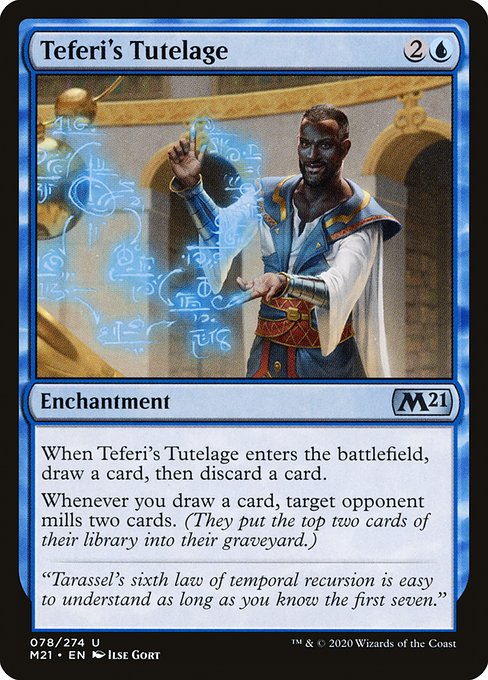
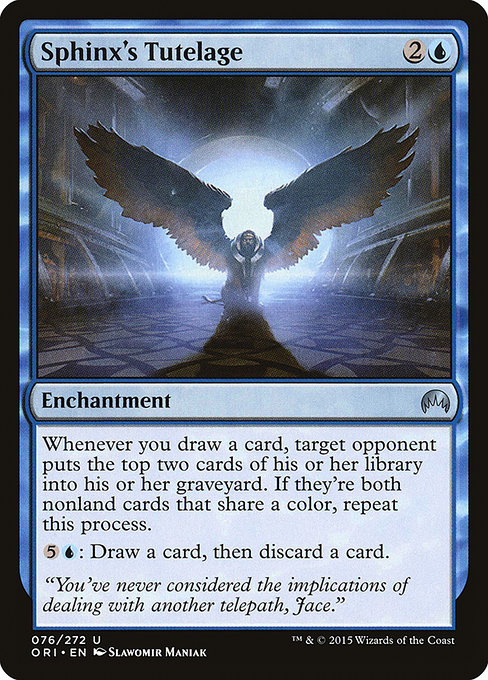
- Engine enchantments (~$0.50–1). Teferi's Tutelage and Sphinx's Tutelage mill a little every time you draw or cast — slow alone, brutal with extra draw and a doubler.
- Self-mill fuel (~$0.50). For the graveyard lane: cards like Grisly Salvage and other "mill yourself, then grab a piece" effects fill your yard and find your payoff at once.

Picking Up These Pieces
These are all singles, bought one at a time. The dollar pieces — the two percentage millers, both Tutelages, and Grisly Salvage for the self-mill lane — go in a single TCGplayer cart with standardised condition grading, which beats five separate checkouts. Bruvac the Grandiloquent is the out-of-print exception, so eBay is where older and graded copies turn up; as noted above, prices move, so check the current number before you buy.
As an Amazon Associate, Geeky Domain earns from qualifying purchases. eBay links are affiliate links; Geeky Domain may earn a commission at no extra cost to you.
How to Build It
- Run a real removal and defense suite. Mill is slow, so you must survive. Cheap interaction and a wrath or two buy the turns your engine needs — see budget removal by color.
- Lean blue (or Dimir). Blue has the percentage millers, the doublers, and the card draw that powers tutelage engines; black adds removal and graveyard payoffs.
- Add a backup win condition. Smart mill decks pack a non-mill finisher (a big creature, a drain combo) so a single graveyard-hate card doesn't end your game.
- Beware graveyard payoffs for opponents. Milling a reanimator or "cards in graveyard matter" deck helps them. Read the table before you fill someone's yard.
One more sequencing note: hold your doubler until you can immediately follow it with a percentage miller, ideally in the same turn or the next. A doubler sitting on an empty board with no mill spell behind it is a wasted draw step — opponents will see it coming and can sometimes remove it before you ever cash in the combo.
Common Mistakes
- Relying on fixed-number mill. "Mill 5" cards are filler. Build around percentage effects and doublers instead.
- Forgetting you have three opponents. Single-target mill leaves two players free to win. Favor "each opponent" effects.
- No plan to survive. A mill deck with no interaction just dies before it decks anyone. Defense first.
- Playing the doubler too early. A doubler with nothing to double is a target the table will remove before it matters. Sequence it with a mill spell in hand.
Mill FAQ
- What happens when a player can't draw? They don't lose the instant their library empties — they lose the next time they're required to draw with no cards left (usually their next draw step).
- Is mill viable on a budget? Yes — most enablers are cheap. The only pricey "want" is a doubler like Bruvac, and you can win without it by stacking percentage millers.
- Why do people hate playing against mill? It can feel non-interactive. Be gracious, telegraph your wins, and keep games moving — table goodwill matters.
- Can opponents fight back against mill? Yes — graveyard hate (exile effects), library-shuffling effects, and simply killing your doubler all slow you down. Expect resistance once the table notices the plan, and don't telegraph your win line until you're ready to execute it.
Pick a Lane, Then Do the Math.
Mill isn't bad — naive mill is. Pick a lane (deck the table with percentage effects and a doubler, or self-mill into a graveyard payoff), back it with real removal, and pack a backup win condition. Do that and you've got one of the most satisfying — and budget-friendly — engines in the format. Ignore the math and you've got a pile of "mill 5" cards that accomplish nothing.
Keep Learning:
© GEEKYDOMAIN.COM | Strategy Powered by Data