

Magic's three biggest formats play nothing alike — different deck sizes, different costs, different vibes entirely. Here's an honest breakdown of what each one is, what it costs, and which one actually fits how you want to play.
"I want to get into Magic" is one sentence. What follows it is a fork in the road that shapes everything: how much you'll spend, whether your deck stays legal next year, whether you play one-on-one or around a table of four, and whether a game lasts ten minutes or an hour. That fork is the format — the ruleset and card pool you commit to — and the three biggest are Standard, Modern, and Commander.
They're not three flavors of the same thing. They're genuinely different games that happen to share a card library. Standard is the fast-evolving competitive proving ground. Modern is the high-powered eternal format where your collection lasts forever. Commander is the social, multiplayer, build-around-a-legend format that's become the most popular way to play Magic, period. Choosing the wrong one for your temperament means spending money on a style you don't enjoy; choosing the right one means Magic clicks.
This guide gives you the honest comparison: how each format works, what it costs to buy in, what a game actually feels like, and a clear-eyed recommendation for who each one suits. We'll also touch on Pioneer, the increasingly popular middle ground, so you have the full picture before you commit a single dollar.
The Short Version
Standard — 60-card decks from roughly the last three years of sets; rotates yearly (no rotation in 2026, next is Jan 2027); cheapest competitive buy-in; one-on-one; best if you like a fresh, evolving meta and competitive play. Modern — 60-card decks from 2003 forward; never rotates; high-powered and expensive ($400–$1,200+ per deck); one-on-one; best if you want a permanent collection and powerful, complex games. Commander — 100-card singleton decks led by a legendary creature; 40 life; multiplayer (usually four players); enormously social and flexible on budget; best if you want a casual, creative, table-of-friends experience. Most-played format by a wide margin. If you're brand new and want one recommendation: Commander — it's the most welcoming, the most flexible on budget, and where most of the community actually is. Pioneer sits between Standard and Modern: non-rotating, cheaper than Modern, a strong competitive middle ground.
Find Your MTG Format
Answer five quick questions and get a practical recommendation: Standard, Modern, Commander, or Pioneer. No oracle text. No cardboard personality test. Mostly.
1. What kind of Magic night sounds best?
2. How do you want spending to feel?
3. How do you feel about rotation?
4. What game length sounds right?
5. What matters most right now?
Commander
Why this fits
Your format score
Tiny disclaimer: this is a guide, not a blood oath. Your local store, friend group, budget, and preferred amount of nonsense should still get a vote.
→ More MTG Guides
In This Guide
What "Format" Even Means
A format is a set of rules that defines two things: which cards you're allowed to use, and how you build and play your deck. Magic has printed tens of thousands of cards over thirty-plus years; no single game uses all of them. Formats carve that enormous pool into playable, balanced subsets — and each subset creates a distinct game experience.
The two big axes that separate the formats:
- Rotating vs. Eternal. A rotating format (Standard) periodically drops its oldest sets, keeping the card pool small and fresh. An eternal format (Modern, Commander) never rotates — cards stay legal forever. Rotation affects how long your purchases stay relevant.
- Singleton vs. Playset. Most formats let you run up to four copies of a card (a "playset"). Commander is singleton — one copy of each card (besides basic lands) — which makes every game wildly different and rewards a broad collection over a deep one.
Those two axes, plus player count (1-on-1 vs. multiplayer) and starting life total, are most of what separates the three big formats. Let's take them one at a time.
Standard: The Proving Ground
The rules: 60-card minimum deck, up to a 15-card sideboard, max 4 copies of any card (except basic lands), one-on-one. The card pool is the most recently released sets — currently about three years' worth, roughly 14–16 sets.
Rotation: Standard rotates once a year, dropping its oldest sets. Since 2023, sets stay legal for about three years (up from two), giving the format more stability than it used to have. Notably, there is no rotation in 2026 — Wizards is skipping it to recalibrate the schedule to the calendar year, with the next rotation arriving in January 2027. The Foundations set is a special case designed to stay legal through at least 2029.
What it feels like: Standard is Magic's competitive bread and butter and the most popular format on MTG Arena. The smaller card pool means the metagame evolves constantly — the best deck one week may be answered the next. Games are quick (around 20 minutes), decks are tightly tuned, and because everyone's working from the same recent sets, it's the most accessible competitive format to learn. It's where Wizards showcases new design, so it always feels current.
Best for: Competitive Players & Arena Grinders
Standard is the format to pick if you want to play competitive one-on-one Magic without the steep card-pool learning curve (and expense) of Modern. It's especially strong if you play digitally on MTG Arena, where Standard is the headline format and you can build decks with in-game currency rather than buying physical cards.

The trade-off: Rotation. Decks you build will eventually rotate out of Standard, so your investment has a shelf life if you only play this format. The upside is that buy-in is cheaper than Modern, and the three-year rotation (plus the 2026 skip) means your cards last longer than they used to.
Modern: The Eternal Powerhouse
The rules: 60-card minimum deck, up to a 15-card sideboard, max 4 copies, one-on-one. The card pool is everything printed from Eighth Edition (2003) forward — a vast library that includes the powerful, Modern-only "Modern Horizons" sets that inject cards directly into the format.
Rotation: None. Modern never rotates — once you build a deck, it's legal forever, barring bans. That permanence is the format's core appeal.
What it feels like: Modern is high-powered, complex, and fast. Wizards designs it around the informal "Turn 4 Rule" — games shouldn't consistently be decided before turn four — which keeps it from devolving into pure combo races, but make no mistake: Modern decks are powerful, with efficient threats, free counterspells, and intricate mana bases built on fetch lands and shock lands. It rewards mastery; the skill ceiling is among the highest of any 1-on-1 format. An extensive ban list (50+ cards) keeps the power level in check.
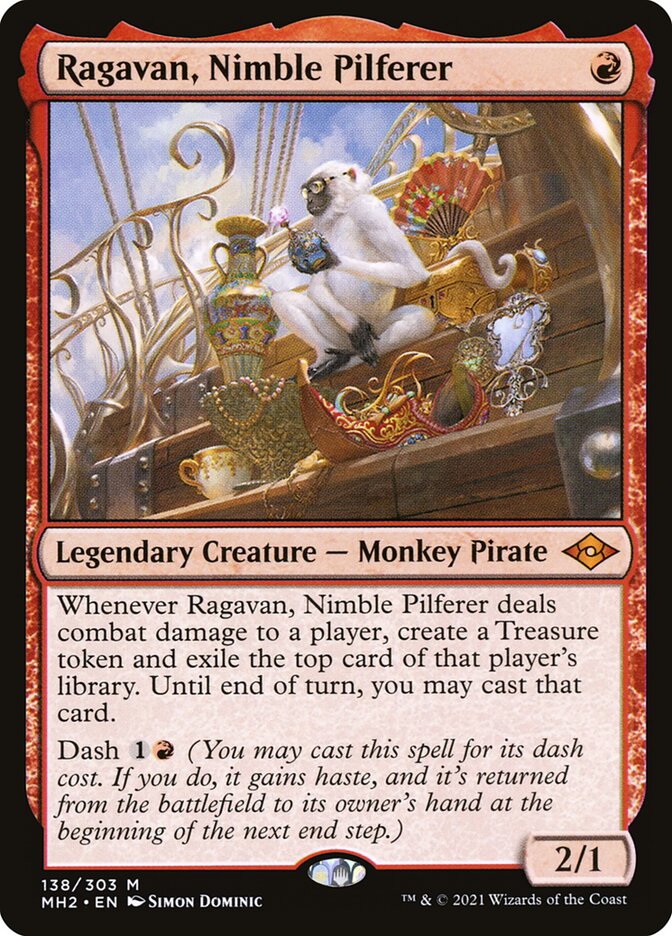
The trade-off: Cost and complexity. Modern is expensive — competitive decks run from roughly $400 for a budget Burn list to well over $1,200 for premium midrange decks loaded with fetch lands and high-value rares. The mana base alone can cost more than an entire Standard deck. It's also the least beginner-friendly of the three; the card pool is enormous and the play patterns are deep. But the cards never rotate, so it's a one-time investment that lasts indefinitely.
Commander: The Social Giant
The rules: A 100-card singleton deck (exactly 100 cards, only one copy of each card besides basic lands), led by a legendary creature — your Commander — that lives in a special "command zone" and can be cast repeatedly throughout the game. Your deck can only contain cards matching your Commander's color identity. Players start at 40 life (double the usual 20), and games are usually multiplayer — four players free-for-all is the default.
Rotation: None. Commander is eternal — nearly the entire history of Magic is legal, governed by a dedicated banned list and the newer Bracket system (a 1-to-5 power-level framework that helps players match deck power for fairer games).
What it feels like: Social, creative, and varied. Because it's singleton and multiplayer, no two games play alike, and the format rewards self-expression — you build a deck around a Commander you love, themed however you like. Games are longer (often an hour or more) and more political, with table talk, temporary alliances, and big swingy plays. Commander has become the most popular way to play Magic by a wide margin, which means it's the easiest format to find a game for. It spans the full spectrum from ultra-casual kitchen-table play to high-powered competitive (cEDH).
Best for: Almost Everyone, Especially Beginners
Commander is the format we'd point most new players toward. It's the most welcoming socially, the most flexible on budget (a singleton format means you can build a fun deck with mostly cheap cards), the easiest to find games for, and the most forgiving of a casual approach. You can buy a ready-to-play preconstructed Commander deck for a reasonable price and start playing the same night, then upgrade it card by card over time.

The trade-off: It's not the format for tight, competitive one-on-one play (that's Standard, Modern, or Pioneer). Multiplayer politics can feel chaotic, games run long, and the social-contract / Bracket conversation about power level is something you'll need to navigate so everyone has fun. But for sheer accessibility and longevity, nothing beats it.
A Word on Pioneer
The fourth option worth knowing about: Pioneer, created in 2019 as a deliberate middle ground between Standard and Modern. It's a non-rotating 60-card format whose card pool starts at Return to Ravnica (2012) — newer than Modern, older than Standard. Crucially, Pioneer has no fetch lands, which keeps mana bases cheaper and more forgiving than Modern's.
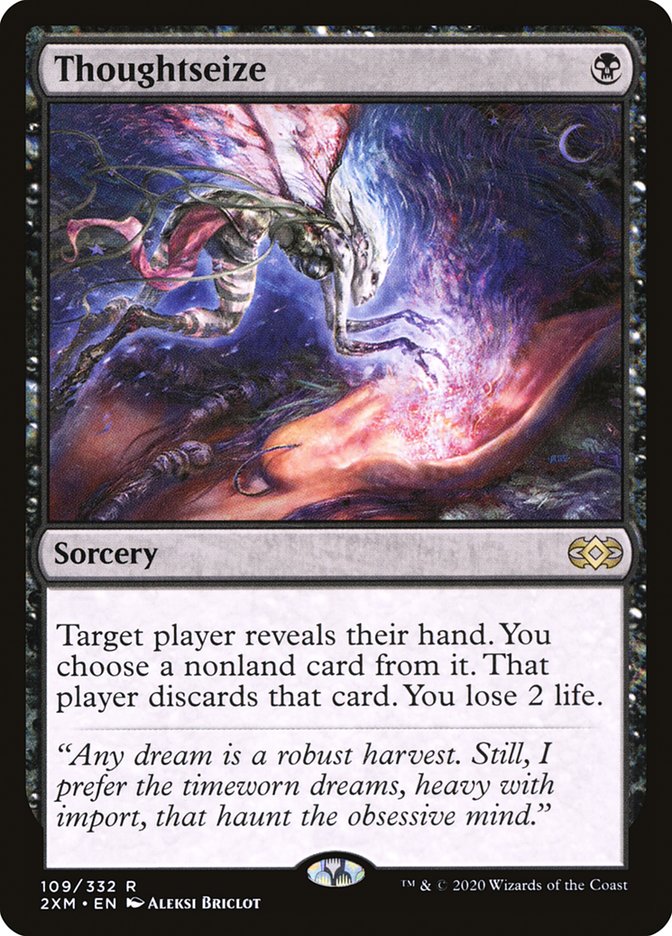
Pioneer hits a sweet spot for a lot of players: powerful enough to feel rewarding, but not so fast that games end on turn three, with a more reasonable entry cost than Modern. If you're coming from Standard and want a non-rotating home for your cards without jumping all the way to Modern's expense, Pioneer is the natural next step. It's not as widely played as the big three, but it has a healthy competitive scene.
The Formats Side by Side
| Standard | Modern | Commander | |
|---|---|---|---|
| Deck size | 60 (min) | 60 (min) | 100 (exact) |
| Copies allowed | 4 | 4 | 1 (singleton) |
| Players | 1v1 | 1v1 | Multiplayer (usually 4) |
| Starting life | 20 | 20 | 40 |
| Card pool | ~3 years of sets | 2003–now | Nearly all of Magic |
| Rotates? | Yes (yearly) | No | No |
| Typical deck cost | $ (lowest) | $$$ ($400–$1,200+) | $–$$$ (very flexible) |
| Game length | ~20 min | ~20–30 min | 45–90+ min |
| Vibe | Competitive, current | Competitive, high-power | Social, creative |
The Real Cost of Each
Money matters, and the three formats sit at very different price points. A realistic picture:
- Standard is the cheapest competitive entry. A competitive Standard deck is generally the most affordable of the three, and on MTG Arena you can build digitally with in-game resources for free. The catch is rotation — you periodically re-invest as sets cycle out. Think of it as a subscription rather than a purchase.
- Modern is the highest fixed cost. Competitive Modern decks run from roughly $400 (budget Burn) to $1,200+ (premium midrange). The mana base — fetch lands and shock lands — is the biggest expense. But it's a one-time cost; the cards never rotate, so a Modern deck is a long-term investment that holds value.
- Commander is the most flexible. This is Commander's secret weapon: because it's singleton, you don't need expensive playsets, and you can build a genuinely fun deck mostly from cheap cards. A preconstructed Commander deck gets you playing immediately for a modest price, and you upgrade gradually. You can spend $50 or $5,000 on a Commander deck and both can be fun — the format scales to any budget better than any other.
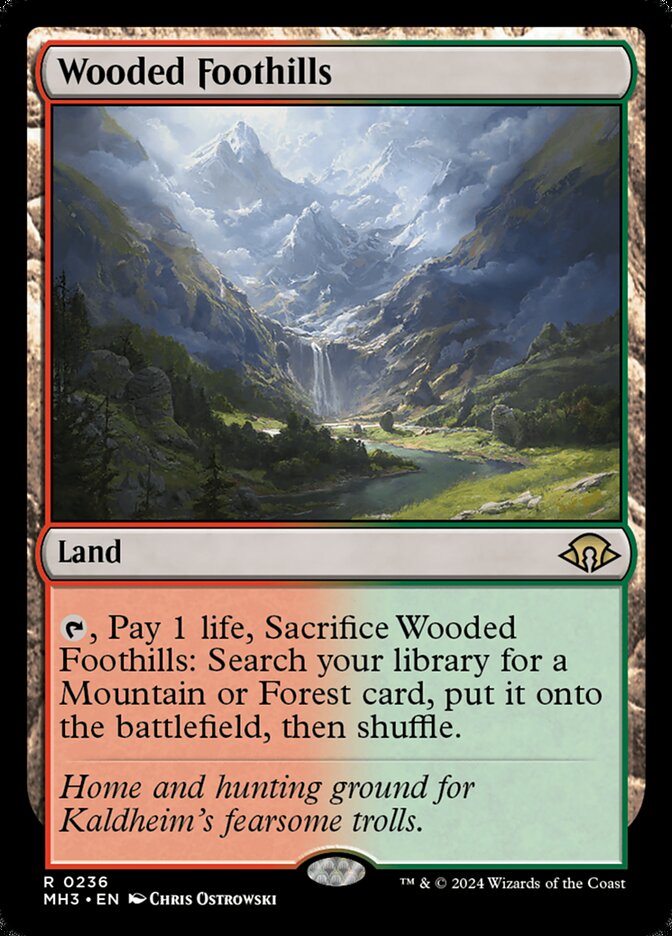
For pure value-per-dollar as a beginner, Commander wins: low floor, immediate playability via precons, and no rotation eating your investment. For competitive value, Standard's low entry (especially digital) is hard to beat. Modern is the premium option — expensive up front, but permanent.
Which Format Is You?
A quick self-diagnostic. Find the description that sounds most like what you want:
- "I want to play with friends around a table and build creative decks." → Commander. The social, multiplayer, build-around-a-legend format. Most welcoming for beginners, most flexible on budget, easiest to find games. Start here if you're unsure.
- "I want competitive 1-on-1 Magic without breaking the bank." → Standard. The cheapest competitive entry, especially on Arena. A fresh, evolving meta and tight games. Accept that you'll re-invest as sets rotate.
- "I want the most powerful 1-on-1 Magic and a collection that lasts forever." → Modern. High-powered, complex, permanent. Expensive up front but never rotates. For dedicated competitive players who want to master a deep format.
- "I want non-rotating competitive Magic but Modern's too pricey." → Pioneer. The middle ground: eternal, powerful, cheaper mana bases (no fetch lands), reasonable entry cost. The natural step up from Standard.
Start With One Precon
If the list above pointed you at Commander, a preconstructed Commander deck is the whole format in one box — 100 cards, a legendary commander, playable the night it arrives, then upgraded card by card. If it pointed you at Standard, a Magic: The Gathering Foundations starter is the equivalent on-ramp, and Foundations stays Standard-legal into 2029.
As an Amazon Associate, Geeky Domain earns from qualifying purchases. eBay links are affiliate links; Geeky Domain may earn a commission at no extra cost to you.
Common Format-Choice Mistakes
Mistake #1: Buying a Modern deck as your first purchase.
Modern's permanence is tempting — "buy once, play forever" — but dropping $800 on a format you've never played, with the steepest learning curve of the three, is how people bounce off Magic entirely. Start with a Commander precon or a cheap Standard deck, learn the game, then graduate to Modern if its style appeals to you.
Mistake #2: Picking a competitive format when you want a social one.
If what you actually want is to hang out with friends and play big, fun, swingy games, Standard and Modern's tight 1-on-1 competition will feel cold. Be honest about whether you want competition or community — Commander is built for community, the others for competition.
Mistake #3: Ignoring what your local scene actually plays.
The best format on paper is useless if nobody near you plays it. Before committing, check what your local game store runs on which nights, and ask what your friends play. A thriving Commander night you can attend beats a "better" format with no opponents. Local availability should weigh heavily in your decision.
Mistake #4: Forgetting that Standard rotates.
New players sometimes invest heavily in a Standard deck without realizing the cards will eventually rotate out of the format. That's fine if you know it going in (and the three-year cycle is gentler than it used to be), but budget for it. If permanence matters to you, an eternal format like Commander, Modern, or Pioneer is the better home.
Mistake #5: Thinking you have to pick just one.
Plenty of players have a Commander deck for game night and a Standard or Pioneer deck for competitive play. The formats serve different moods. You don't have to marry one — many players' "main" format is Commander with a competitive format on the side. Start with one, branch out as your interest grows.
FAQ & Quick Reference
- What's the single best format for a brand-new player? Commander, for most people. It's the most social, the most budget-flexible, the easiest to find games for, and the most forgiving of casual play. Buy a preconstructed Commander deck, find a pod, and you're playing the same night. If you specifically want competitive 1-on-1 Magic, Standard (especially on Arena) is the cheaper, more accessible competitive entry.
- Is Standard rotating in 2026? No. Wizards is skipping the 2026 rotation to recalibrate the schedule to the calendar year. The next rotation is in January 2027. This means cards from recent sets enjoy extra longevity right now — a good time to invest in a Standard deck if that's your format.
- Why is Commander so much more popular than the others? Several reasons: it's social and multiplayer (you play with friends, not against a single opponent), it's endlessly creative (singleton + build-around-a-Commander means huge variety), it scales to any budget, and the cards never rotate. That combination has made it Magic's most-played format by a wide margin, and Wizards now designs heavily around it.
- Can I use the same cards across formats? Sometimes. A card legal in Standard is usually also legal in Modern, Pioneer, and Commander (subject to each format's ban list and Commander's singleton/color-identity rules). But a 4-of Standard deck doesn't convert to a 100-card singleton Commander deck, and Modern staples are often too expensive or simply not in the Standard pool. Some overlap exists, but each format generally wants its own cards.
- What's the deal with the Commander "Bracket" system? It's a relatively new 1-to-5 power-level framework (Exhibition, Core, Upgraded, Optimized, cEDH) that helps players communicate how powerful their decks are before a game, so a casual deck doesn't get crushed by a tuned one. It makes pickup games fairer and the social contract easier to navigate. If you play Commander, it's worth understanding so you can find appropriately-matched games.
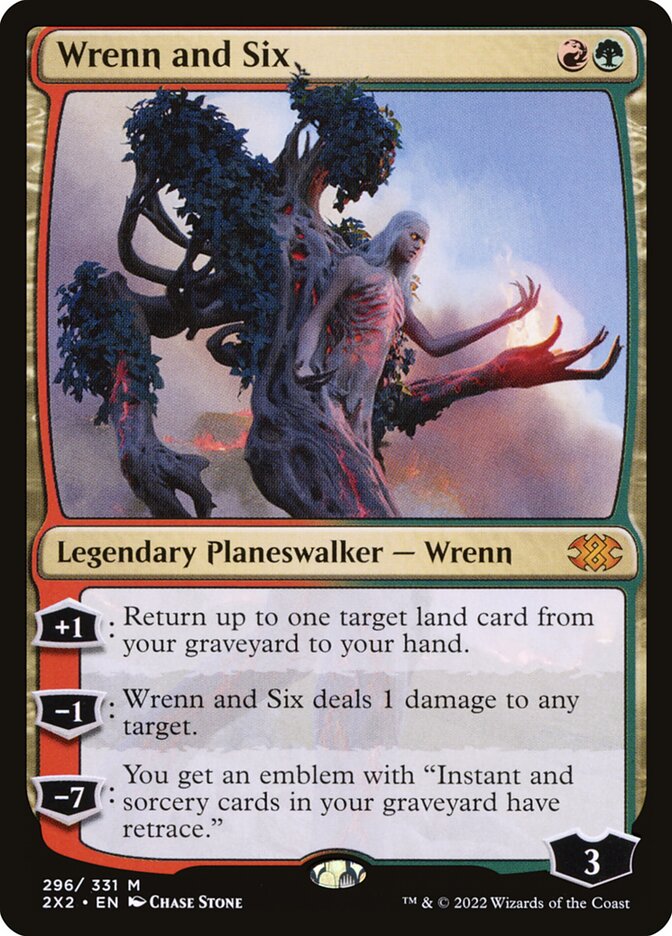
- Standard: 60-card, rotates yearly (skipped in 2026, next Jan 2027), cheapest competitive, 1v1.
- Modern: 60-card, never rotates, 2003-forward, high-power, expensive ($400–$1,200+), 1v1.
- Commander: 100-card singleton, 40 life, multiplayer, social, budget-flexible, most popular.
- Pioneer: the middle ground — non-rotating, no fetch lands, cheaper than Modern.
- Beginner pick: Commander, for accessibility and flexibility.
- Competitive-budget pick: Standard (especially on Arena).
- Permanent-collection pick: Modern or Pioneer.
- Choose on: social vs. competitive, budget, and what your local scene plays.
Pick the Game You Actually Want to Play.
Standard, Modern, and Commander aren't better or worse than each other — they're different games for different people. Want a fresh competitive challenge on a budget? Standard. Want the most powerful 1-on-1 Magic and a collection that lasts forever? Modern. Want to build creative decks and play big social games with friends? Commander — which is exactly why it's become the most popular way to play. Figure out whether you want competition or community, what you can spend, and what your local scene runs, and the right format chooses itself.
© GEEKYDOMAIN.COM | Strategy Powered by Data