

Pokemon TCG Glossary: Key Terms Every Player Should Know
From Basic Pokemon to Regulation Marks, here's every term you'll actually run into at the table or in the display case.
Some links below are affiliate links. If you buy through them, Geeky Domain may earn a small commission at no extra cost to you.
→ Short Version
Every Pokemon card falls into one of three categories -- Pokemon, Trainer, or Energy -- and once you know how those three interact, the rest of the vocabulary clicks into place. This glossary covers the terms that trip up new players and rusty returning collectors alike: Basic, Stage 1, and Stage 2 Pokemon; Energy types and attack costs; Retreat Cost; the Active spot and the Bench; Prize cards; Item, Supporter, and Stadium Trainer cards; Weakness and Resistance; special rule cards like ex, GX, and V; and the Regulation Mark that quietly governs what you can play in Standard format. Bookmark it and come back whenever a card's text box stops making sense.
Pokemon TCG vocabulary tends to arrive all at once. You open a pack, or someone hands you a binder, and suddenly you're staring at words like "Retreat Cost" and "Regulation Mark" with no idea whether they matter for playing the game, collecting it, or both. The honest answer is: a bit of both. Some of these terms are pure gameplay mechanics you'll only need if you're sitting across from an opponent working through our complete rules guide. Others matter just as much if you never intend to play a single match and only care about what's sitting in a toploader. This glossary tries to serve both readers by grouping terms the way you'll actually encounter them -- card anatomy first, then the board, then the special cases, then the language collectors use once a card leaves the table for good.
If you're brand new to the hobby entirely, not just to Pokemon specifically, our beginner's guide to starting any TCG covers the habits and vocabulary that carry over between games. Everything below is Pokemon-specific.
In This Guide
- → Card Types: The Three Categories
- → Anatomy of a Pokemon Card: Stages, HP, and Attacks
- → Energy Types and Attack Costs
- → Trainer Cards: Item, Supporter, and Stadium
- → Board Positions: Active, Bench, and Retreat Cost
- → Special Rule Cards: ex, GX, V, and Beyond
- → Prize Cards and Winning the Game
- → Regulation Marks and Format Legality
- → Collector Terms: Rarity, Condition, and Grading
- → Putting It All Together
→ Related Reading
Card Types: The Three Categories
Every card in the Pokemon TCG belongs to one of three categories, and the color of the card border is your first clue. A Pokemon card is what it sounds like -- a creature you can put into play, attack with, and eventually knock out or lose. A Trainer card represents an item, a person, or a location that affects the game in some way without being a Pokemon itself. And an Energy card is what powers your Pokemon's attacks -- you attach Energy cards to a Pokemon over the course of the game to "pay" for the attacks printed on its card. Nearly everything else in this glossary is a more specific term nested inside one of those three buckets, so if you only remember one thing, remember that split. It's also the foundation the full rules guide builds on, so it's worth having solid before you dig into turn structure or deck construction.
A standard Pokemon deck contains 60 cards total, mixing all three types in whatever ratio the deck's strategy calls for. There's no fixed split -- a fast, aggressive deck might run more Energy and fewer Trainers, while a control-oriented deck often leans the opposite way. Once you're ready to move past theory and actually build one, our guide to building your first competitive deck walks through how experienced players think about that ratio.
Anatomy of a Pokemon Card: Stages, HP, and Attacks
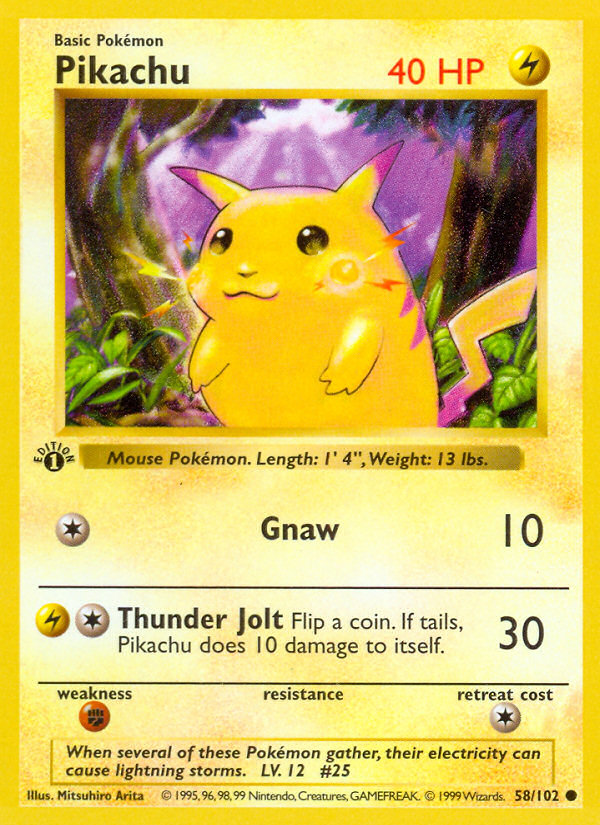
Pokemon cards come in evolutionary stages, and the stage printed near the Pokemon's name tells you how it enters play. A Basic Pokemon can be played directly from your hand at any time -- no prerequisites. A Stage 1 Pokemon has to evolve from a specific Basic Pokemon already in play, and a Stage 2 Pokemon evolves from that Stage 1 in turn. Charizard is the textbook example: it's a Stage 2 card that evolves from Charmeleon, which evolves from Charmander, a Basic Pokemon. That three-card chain is a big part of why classic Charizard cards carry so much weight with collectors -- getting one into play the "long way" takes real deckbuilding investment, which our Base Set collecting guide gets into if you want the full history.
Every Pokemon card also lists HP (Hit Points) in the top right corner -- the amount of damage it can take before it's knocked out. Attacks are listed in the lower half of the card, each with an Energy cost (shown as small symbols) and a damage number. Near the bottom you'll usually find Weakness and Resistance: a Weakness multiplies the damage a Pokemon takes from an attacking type it's vulnerable to, while a Resistance reduces incoming damage from a type it defends well against. Not every card has a printed Resistance -- plenty of modern cards leave that line blank.
Energy Types and Attack Costs
The Pokemon TCG has built its Energy types around a consistent core for most of its 25-plus year history: Grass, Fire, Water, Lightning, Psychic, Fighting, Darkness, Metal, and Colorless. That list wasn't fixed from day one, though -- Base Set launched with a smaller set of types, and Darkness and Metal were folded in later as the card pool grew. A Fairy type also existed for a stretch of the game's history before being folded back into Psychic in a later rule era, which is a good reminder that this list has shifted over time -- if you're comparing an older card's typing to a newer one, don't assume the categories line up perfectly. Colorless deserves a special mention: when an attack's cost includes Colorless Energy symbols, you can pay that portion with any Energy type at all, not specifically a Colorless Energy card. It's the "generic" slot in an attack's cost.
You attach one Energy card per turn under normal rules (some card effects can bend this), building up the Energy attached to a Pokemon until it can afford its attacks. This is one of the areas where the game has actually changed the least since 1999 -- if you're curious how much else has shifted between the earliest sets and today's Standard format, our modern rules vs. Base Set comparison breaks it down side by side.
Trainer Cards: Item, Supporter, and Stadium
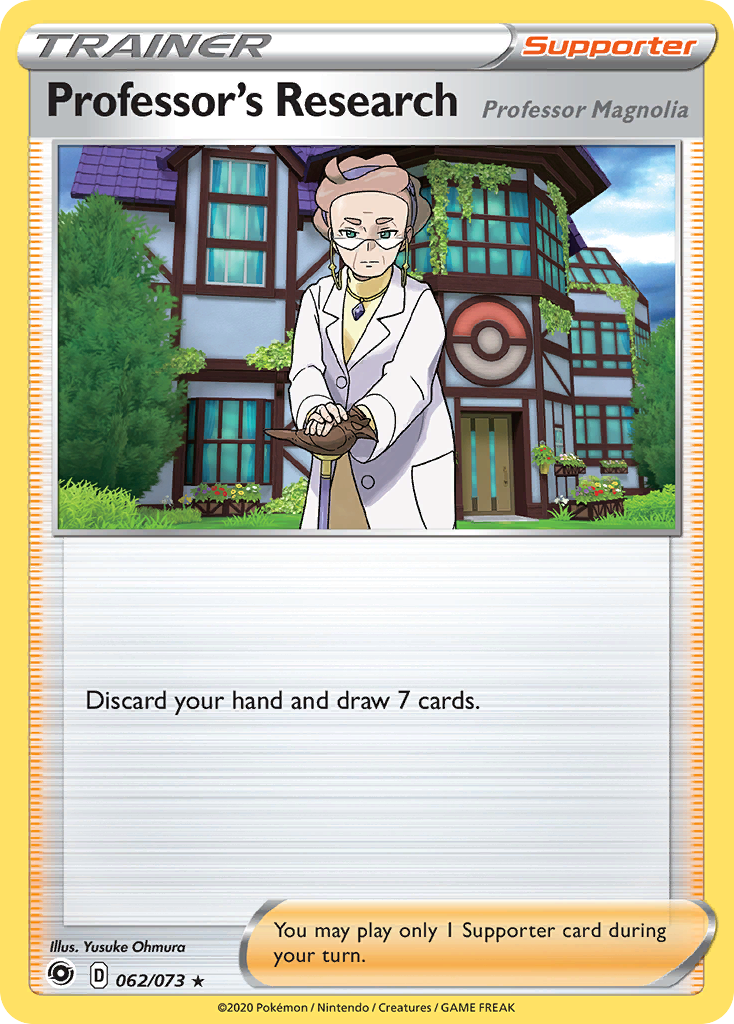
"Trainer card" is the umbrella term, but three distinct subtypes live under it, and mixing them up is one of the most common mistakes new players make. An Item card can generally be played as many times as you want in a turn, as long as you have copies and nothing on the card itself says otherwise. A Supporter card is limited to one per turn, full stop -- Supporters tend to be some of the most powerful cards in any given format precisely because of that restriction, which is why competitive decks build their whole strategy around which Supporter they draw into. Professor's Research, a card that lets you discard your hand and draw a fresh one, is a well-known modern example of the Supporter subtype. A Stadium card is different again: it affects both players for as long as it stays in play, and only one Stadium can be active on the field at a time, so playing a new one replaces whatever Stadium was already there.
Knowing which Trainer subtype a card belongs to matters as much for deckbuilding as knowing its Pokemon count. A deck that's light on Supporters can stall out with a hand full of cards it can't use fast enough, which is exactly the kind of tuning our first competitive deck guide walks through in more detail.
Board Positions: Active, Bench, and Retreat Cost
Only one of your Pokemon can be in the Active spot at a time -- it's the one that attacks and the one your opponent's Pokemon attack in return. Every other Pokemon you have in play sits on your Bench, a holding area where they're safe from most direct attacks (though some attacks and effects can reach the Bench specifically) and where you can keep building up their attached Energy for later. The Bench has room for up to five Pokemon under the standard rules, which gives you room to set up multiple threats before rotating one into the Active spot.
Retreat Cost is the price, in Energy, of swapping your Active Pokemon out for one waiting on the Bench. It's printed near the bottom of every Pokemon card as a row of Colorless Energy symbols, and you pay it by discarding that many Energy cards attached to the retreating Pokemon (not by using cards from your hand). A low Retreat Cost is genuinely valuable in competitive play -- being able to pull a damaged Pokemon to safety cheaply, or reposition for a better matchup, is a real strategic lever, which is part of why it's worth checking before you build around a card.
Special Rule Cards: ex, GX, V, and Beyond
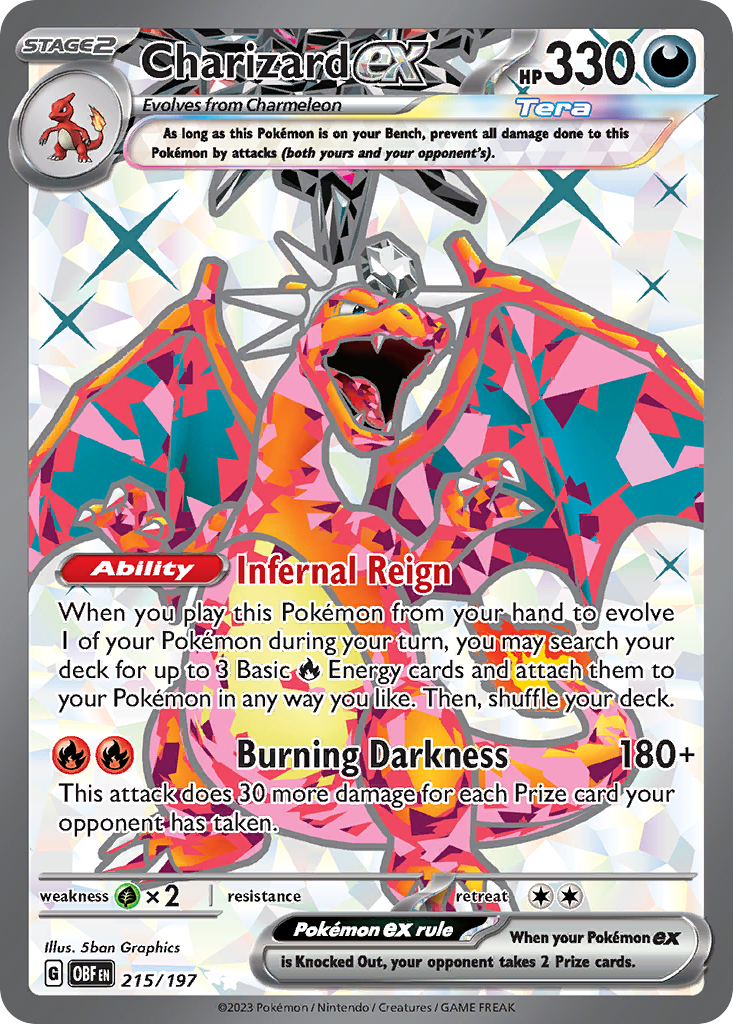
Across the game's history, Pokemon TCG has repeatedly introduced Pokemon with a "special rule" printed directly on the card -- text along the lines of "this Pokemon has X extra rule that applies to it." The original ex cards ran from the early 2000s, GX cards defined the Sun & Moon era, and today's ex cards (alongside V, VMAX, and VSTAR before them) are the current version of the same idea in the Scarlet & Violet era -- Pokemon deliberately revived the same lowercase "ex" styling from the original run for this modern version. The common thread across every one of these mechanics is the same trade-off: these Pokemon tend to hit harder and have higher HP than a standard card of the same species, but they also give your opponent extra Prize cards when knocked out compared to a regular Pokemon. Exactly how many extra prizes has varied from one rule era to the next, so don't assume an older special-rule card and a current one work identically -- check the card's own text or the current official rulebook rather than carrying over an assumption from a different set.
These cards are also where collecting and competitive play overlap most visibly. A card like Charizard ex tends to headline both the tournament results and the secondary market at the same time, which is exactly the dynamic our Charizard ex budget meta guide is built around. If you're more interested in which special-rule cards are worth watching purely as collectibles, our roundup of the most valuable modern Pokemon cards is the better starting point.
Prize Cards and Winning the Game
At the start of a game, each player sets aside six cards face-down as their Prize cards, separate from their deck and hand. Every time you knock out one of your opponent's Pokemon, you take one of your own Prize cards into your hand (more if the Pokemon you knocked out was a special-rule card, as covered above). Taking all of your Prize cards is one of the three ways to win a game of Pokemon TCG -- the others are knocking out every Pokemon your opponent has in play with none left to promote, or having your opponent be unable to draw a card at the start of their turn because their deck is empty (commonly called "decking out"). New players usually fixate on the first win condition and forget the other two exist, but experienced players will sometimes deliberately play around a slow, grindy deck's deck-out risk instead of racing Prize cards directly. The full mechanics of turn structure and how these win conditions interact are covered start to finish in our complete rules guide.
Regulation Marks and Format Legality
Look at the bottom corner of any modern Pokemon card, near the set symbol and the illustrator's name, and you'll find a small letter inside a circle -- that's the Regulation Mark. It quietly tells you which sets a card belongs to for tournament legality purposes, and it's the mechanism behind why some perfectly good, recent-looking cards suddenly can't be played in Standard format anymore. As new sets release, the officially supported window of Regulation Marks shifts forward, and older marks eventually roll out of Standard entirely -- a process usually just called "rotation." If you play competitively, or you're buying singles specifically to build a tournament-legal deck rather than just to collect, checking the Regulation Mark before you buy is a habit worth building early. Our dedicated breakdown of Standard rotation covers exactly which marks are currently legal and what's scheduled to change.
It's worth stressing that Regulation Marks are strictly a tournament-format concept -- a card that's rotated out of Standard is exactly as playable, valuable, and fun as it was the day before, for anyone playing casually or in formats like Expanded that allow a wider pool of sets. Rotation affects what you can bring to a sanctioned Standard event, not what's "good" in any broader sense.
Collector Terms: Rarity, Condition, and Grading
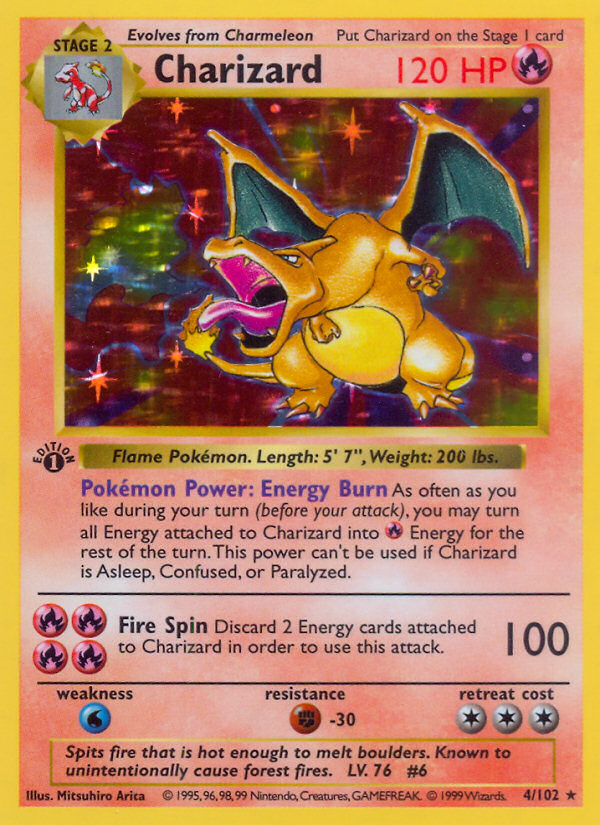
Step outside the rulebook and into the collecting side of the hobby, and a whole separate vocabulary shows up. Rarity symbols (a circle, diamond, or star printed in the bottom corner) indicate a card's print rarity within a set, with stars generally marking the rarer end of that scale. Holo refers to a card with a holographic foil pattern across the artwork, while a reverse holo flips that treatment onto the card's border and text box instead of the illustration. Modern sets add further tiers on top of that -- full art, alternate art, and secret rare cards that push beyond a set's normal numbering -- and the specific pull rates and value drivers behind those tiers are exactly what our TCG finance and pull rates guide is built to explain.
Condition language matters just as much once a card has any real age or value to it. Terms like Near Mint, Lightly Played, Moderately Played, Heavily Played, and Damaged describe a sliding scale of wear, and they directly affect what a card is worth in the secondary market. Once a card is valuable enough to justify the cost, collectors often send it off for professional grading -- having a third-party service assess its condition, seal it in a hard plastic "slab," and assign it a numeric grade. If you've inherited or acquired a collection and you're trying to work out what any of this is actually worth, our guide to valuing an inherited Pokemon collection is the right starting point, and our CGC vs. PSA comparison covers how to choose between grading services once you decide a card is worth the investment. Either way, protecting a card before it ever reaches a grader is step one -- our rundown of sleeves, binders, and toploaders covers what actually keeps a card in submittable condition.
Putting It All Together
Pick up almost any Pokemon card now and you should be able to read it top to bottom without guessing: what stage it evolves from, what its HP and Weakness tell you about how it survives a fight, what its attacks cost in Energy, whether it carries a special rule that changes the Prize math, and whether its Regulation Mark even lets you play it in a Standard tournament right now. That's the whole language of the game condensed onto one small rectangle of cardstock, and once it stops looking like noise, everything else about the hobby -- deckbuilding, set collecting, grading -- gets a lot more approachable.
Where you go next really depends on which half of the hobby pulled you in. If it's the game itself, our gameplay hub is the best jumping-off point for rules, deck archetypes, and strategy. If it's the cards themselves you're chasing, our guide to the best products for beginners is a solid next stop before you start buying.
The vocabulary is the easy part -- now put it to work
Knowing what a Retreat Cost or a Regulation Mark is doesn't take long. Recognizing them instantly, mid-game or mid-purchase, just takes reps -- so keep this page handy and revisit it the next time a card's text box has you stumped.