

Neo-Era Holos Worth Owning
A collector's field guide to the real chase cards from Pokémon's Neo era, for anyone chasing Lugia, Ho-Oh, or a Shining card instead of Base Set.
Some links below are affiliate links. If you buy through them, Geeky Domain may earn a small commission at no extra cost to you.
The Short Version
The Neo era covers four English-language Pokémon TCG sets released between December 2000 and February 2002: Neo Genesis, Neo Discovery, Neo Revelation, and Neo Destiny. It's the set run that introduced Generation II Pokémon to the game, and it produced some of the hobby's most collected holos outside Base Set and 151 — Lugia (Neo Genesis 9/111) as the era's signature chase card, and Shining Gyarados and Shining Magikarp (Neo Revelation) as the first-ever Shining Pokémon cards, a reversed-holo rarity that Neo Destiny expanded into eight secret rares numbered 106–113, including Shining Charizard. A CGC 9 Shining Charizard sold for $3,600 at Heritage Auctions in March 2022, and top-grade copies of several Neo Destiny Shinings are genuinely scarce at the population-report level. Prices swing hard by grade and edition, so treat any single dollar figure you see online as a snapshot, not a fixed value.
In This Guide
- → What the Neo Era Actually Is
- → Lugia, Ho-Oh, and Neo Genesis's Signature Holos
- → Shining Pokémon: The Era's Defining Rarity
- → The Full Neo Destiny Shining Checklist
- → Eeveelution and Starter Holos Worth Knowing
- → Grading, Population, and What "Worth Owning" Means
- → Where to Find Real Neo-Era Singles and Slabs
- → FAQ & Quick Reference
What the Neo Era Actually Is
If you've spent any time with the Base Set collecting guide or the breakdown of why 151 hit so hard, you already know those two sets don't cover the same ground. Neo is its own era entirely, and it's easy to overlook because it sits between the WOTC-era sets everyone talks about (Base Set, Jungle, Fossil, Team Rocket, Gym Heroes/Challenge) and the later e-Card sets. Neo Genesis, the first set in the run, released in English on December 16, 2000 with 111 cards. It's the set that introduced Generation II Pokémon to the TCG for the first time, added two brand-new energy types to the game, and debuted the very first "Baby Pokémon" cards — a pre-Basic evolution stage that didn't exist before this set.
Three more sets followed over the next fourteen months. Neo Discovery released June 1, 2001 with 75 cards. Neo Revelation released September 21, 2001 with 66 cards (a 64-card base set plus two secret-rare Shining Pokémon), and it's the set that matters most for this guide, because it's where Shining Pokémon cards debuted. Neo Destiny closed out the era on February 28, 2002, with a 105-card base set plus eight secret "Shining" rares numbered 106 through 113, bringing its total to 113 cards. Taken together, that's 365 cards across four sets, printed over a window when the Pokémon TCG was still riding its first wave of popularity but had already cooled off from the absolute peak of Base Set mania — which is part of why Neo-era holos get overlooked by newer collectors and undervalued relative to how genuinely scarce some of them are in top grade.
Lugia, Ho-Oh, and Neo Genesis's Signature Holos
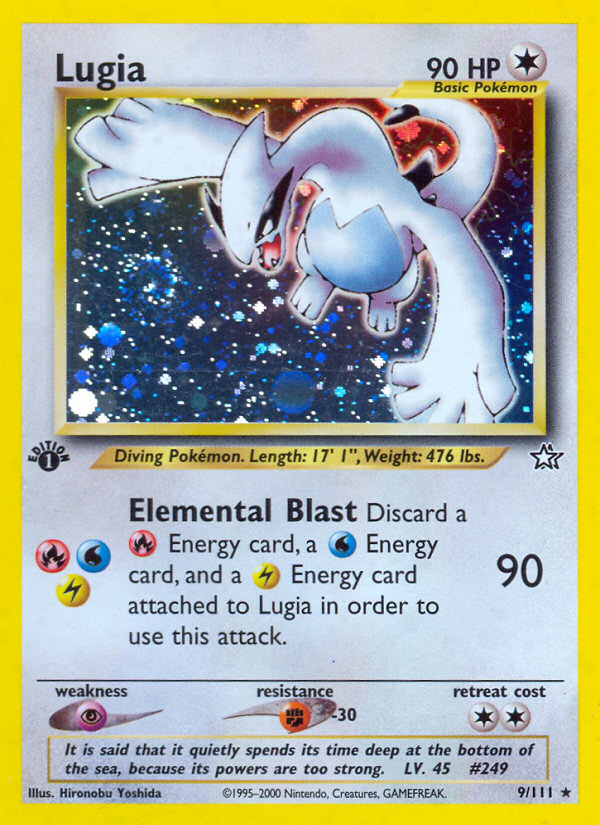
Every Neo set has a card that functions as its face. For Neo Genesis, that's Lugia (9/111) — a Basic Colorless Pokémon with 90 HP, printed as a Rare Holo and illustrated by Hironobu Yoshida. It's the signature chase card of the set, the same way Charizard anchors Base Set, and it shows up on collector want-lists constantly precisely because it's the card people picture when they think "Neo Genesis." Lugia wasn't just the chase card in the singles market, either — Neo Genesis 1st Edition booster boxes shipped with four different wrapper designs, and Lugia got one of them, alongside wrappers spotlighting Feraligatr, Meganium, and Typhlosion.
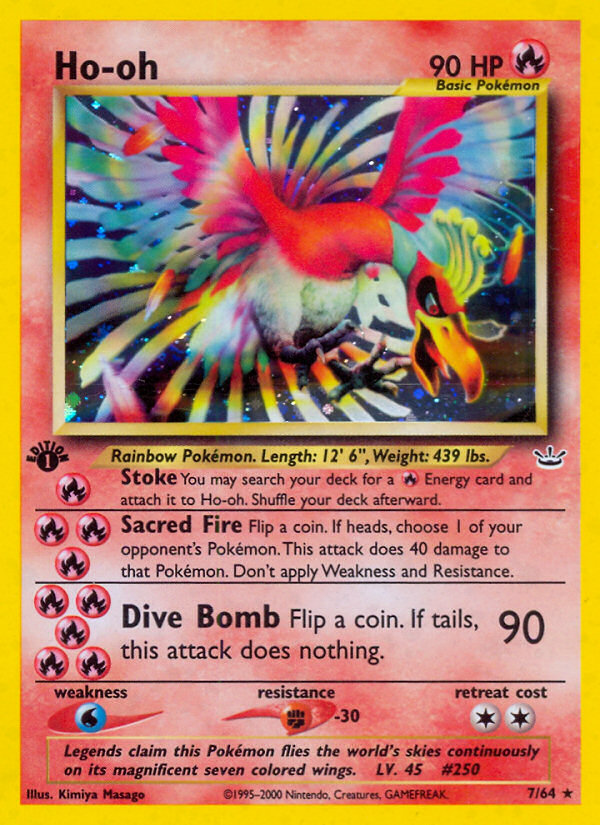
Neo Revelation answers Lugia with its own legendary bird, Ho-Oh (7/64) — a Basic Fire Pokémon with 90 HP, printed as a Rare Holo and illustrated by Kimiya Masago. Worth knowing if you're buying loose singles: Neo Revelation also contains a second, non-holo Ho-Oh at 18/64, illustrated by Aya Kusube, and the two get mixed up in casual listings often enough that it's worth double-checking the card number before you pay a holo price for the wrong print.
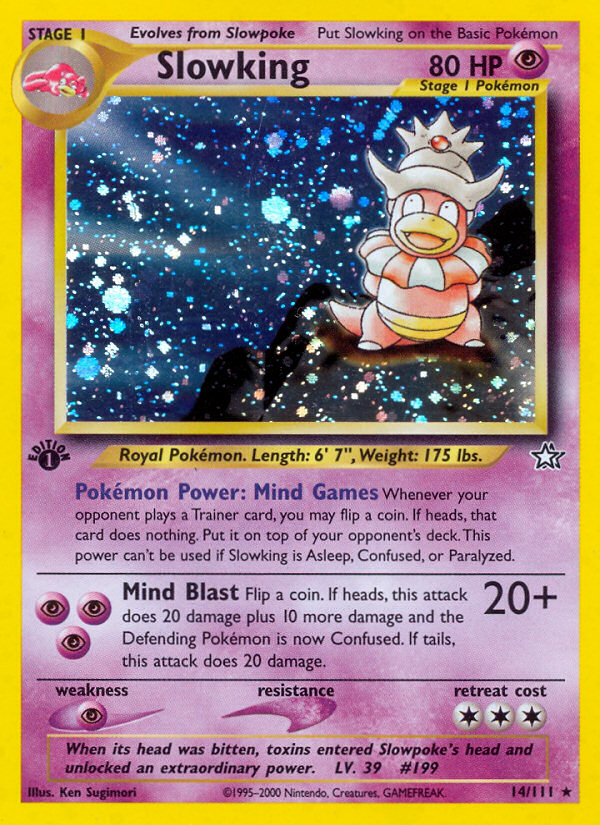
The third card worth knowing from Neo Genesis isn't a legendary at all, and its story is more interesting than its stat line. Slowking (14/111) has 80 HP, the attack Mind Blast, and a Pokémon Power called Mind Games. In the Japanese original, Mind Games could only be used while Slowking was your Active Pokémon. The English translation dropped that restriction, meaning stacked Slowking on the Bench could fire off the effect over and over — and it became such a dominant tournament tactic that Slowking was formally banned from competitive play in 2002. It's a genuinely fun piece of Neo-era trivia to know if you're building a collection around the set, and it's part of why the card still gets attention from players interested in the TCG's older rules terminology, not just collectors.
Shining Pokémon: The Era's Defining Rarity
If there's one thing that makes the Neo era collectible in its own right, separate from whatever else is happening in the hobby, it's the Shining Pokémon subset. Neo Revelation introduced the mechanic to the TCG with two cards: Shining Gyarados (65/64) and Shining Magikarp (66/64) — the first two Shining Pokémon cards ever printed. Shining Gyarados is a Basic Pokémon with 100 HP and two attacks, Outrage (which does 30-plus damage) and Devastate (a flat 50 damage), and it's the card most people mean when they say "the Shining era started here."
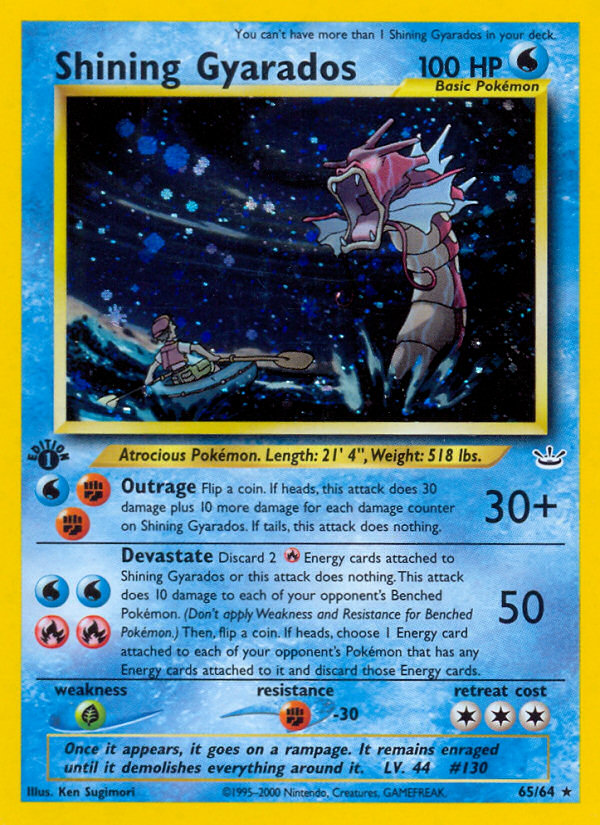
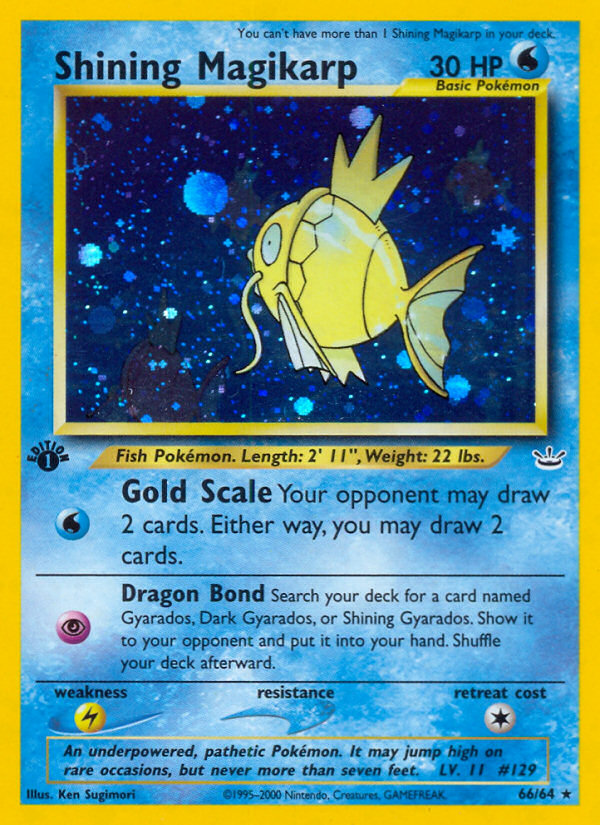
What makes a Shining card visually distinct — and what trips up newer collectors who've only ever handled modern holos — is that the foil treatment runs backwards from a normal Rare Holo. On a standard Rare Holo, the card's background or frame carries the shine while the Pokémon's silhouette stays flat. The two Neo Revelation Shinings that started the run, Shining Gyarados and Shining Magikarp, are the exception: they still use a conventional holofoil background behind a non-foil Pokémon. On the eight Neo Destiny Shinings, it's reversed — the Pokémon's silhouette itself is holographic, while the background and frame around it stay plain and matte. It's a genuinely different printing technique, not just a rarer stamp, and it's the single easiest way to tell a real Shining card from a mislabeled listing at a glance.
The Full Neo Destiny Shining Checklist
Neo Destiny took the Shining concept from a two-card novelty and turned it into a full secret-rare subset. The 105-card base set is followed by eight Shining Pokémon numbered 106 through 113: Shining Celebi (106/105), Shining Charizard (107/105), Shining Kabutops (108/105), Shining Mewtwo (109/105), Shining Noctowl (110/105), Shining Raichu (111/105), Shining Steelix (112/105), and Shining Tyranitar (113/105). That's the complete, verified checklist — if a listing offers you a "Shining" card from Neo Destiny outside this list of eight numbers, something is off.
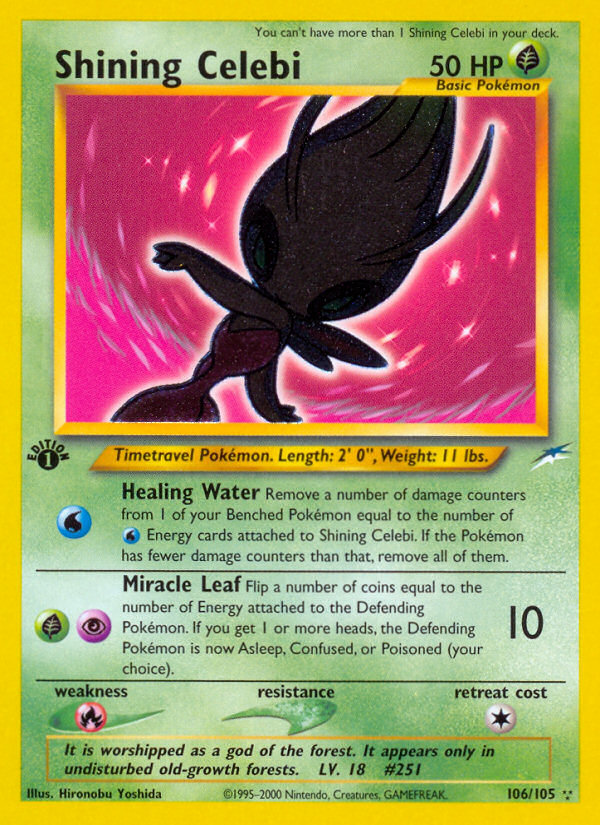
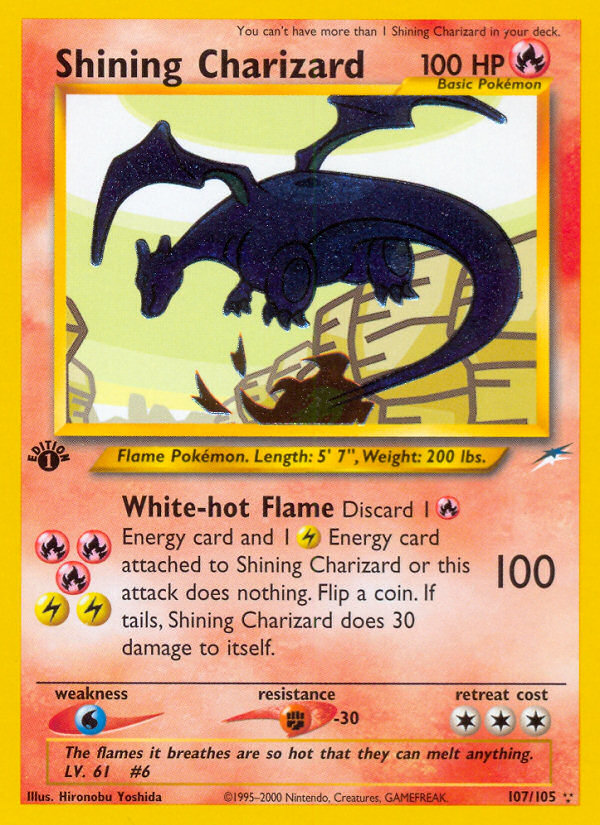
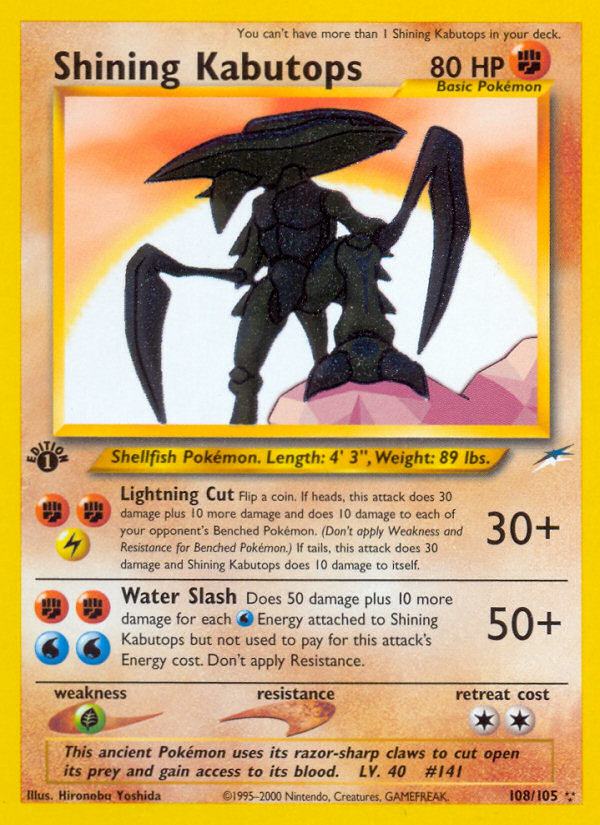
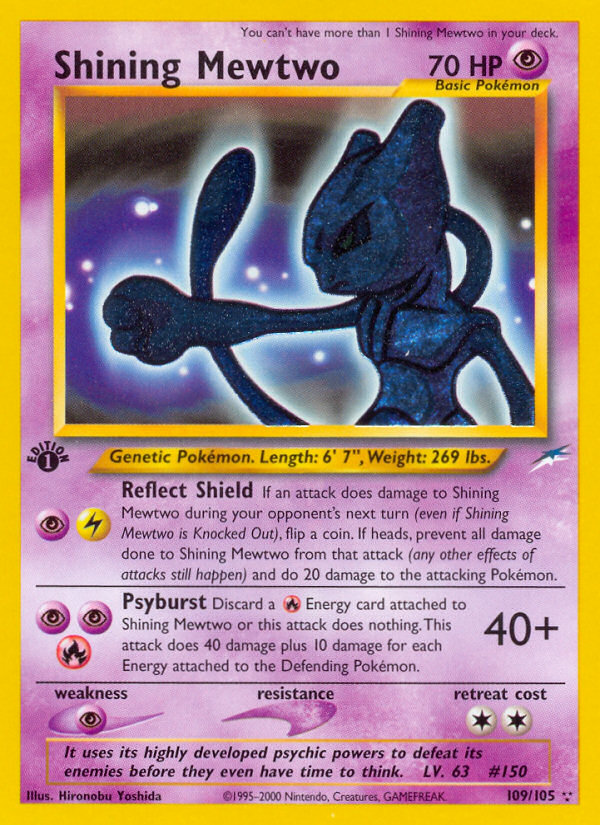
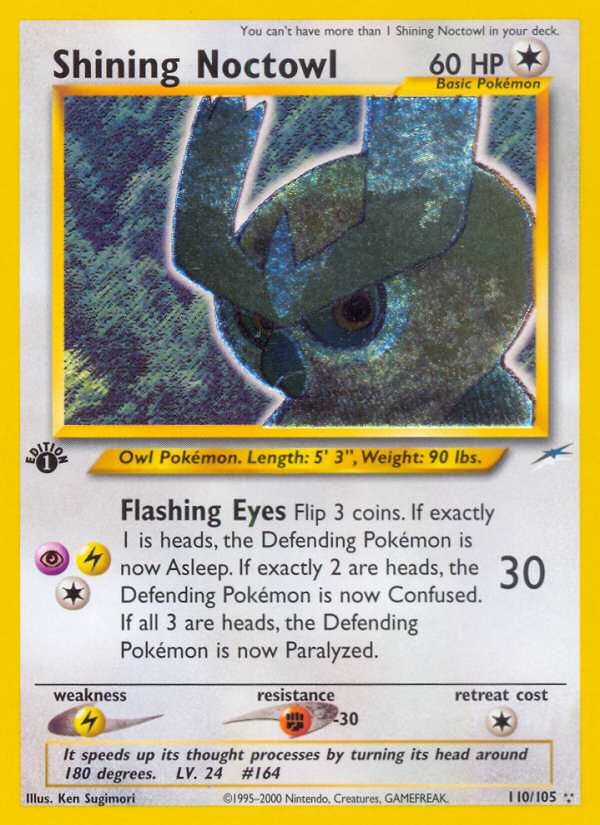
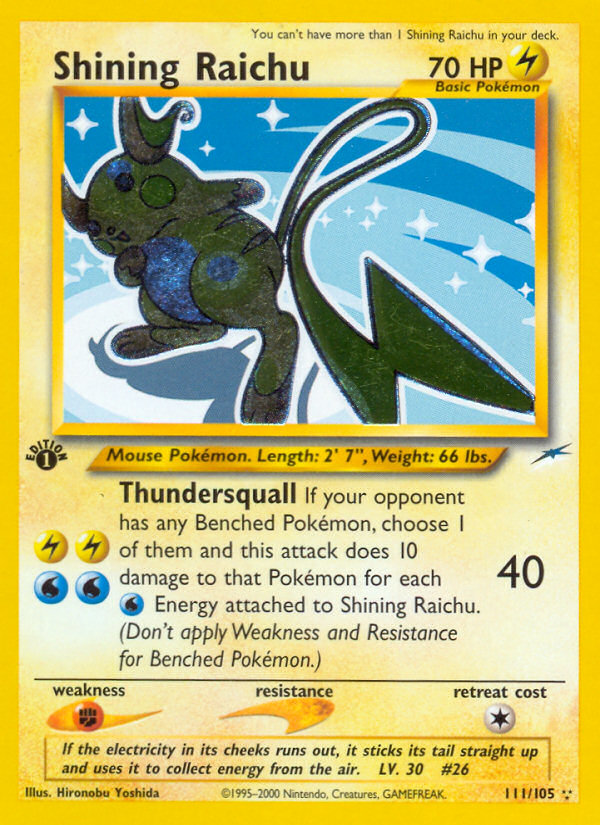
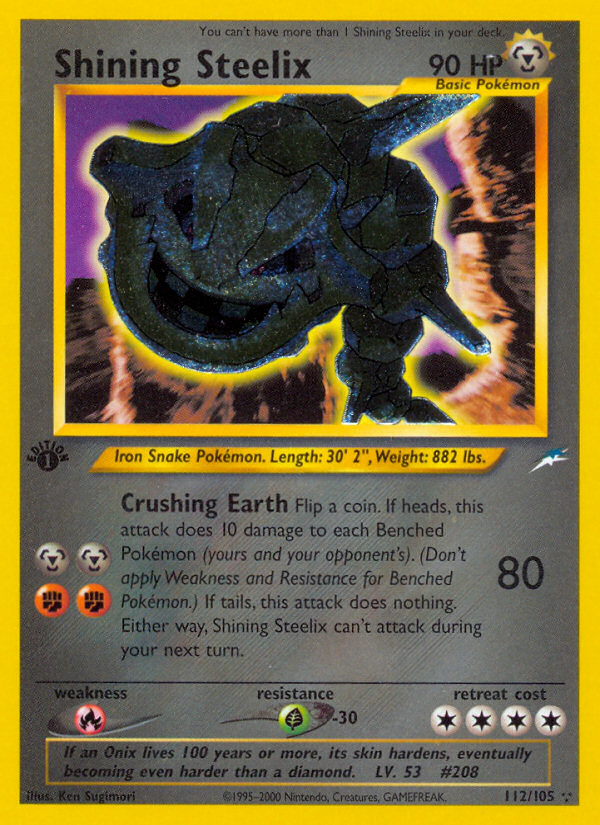
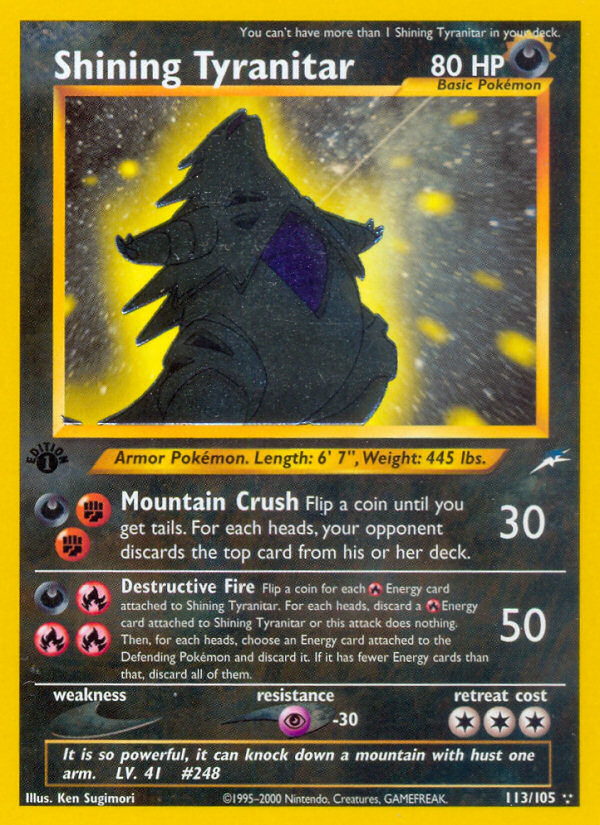
Shining Charizard is the card most people mean when they talk about this checklist. In one documented sale, a CGC 9 copy sold for $3,600 at a Heritage Auctions event in March 2022. CGC's population report also lists it as the highest-graded copy of the card at the top Pristine 10 grade — and it's not alone up there. CGC has certified early copies of Shining Mewtwo, Shining Noctowl, Shining Raichu, and Shining Tyranitar at Pristine 10 as well, which tells you these are genuinely difficult cards to find in flawless condition, not just expensive because of hype. Shining Tyranitar, as the last number in the checklist, is also frequently cited as one of the priciest cards in the full Neo Destiny base-plus-secret lineup in 1st Edition Holofoil form, behind only Shining Charizard and Shining Mewtwo — though that figure moves with the market and should be treated as a snapshot rather than a fixed price.
Geeky Domain doesn't stock vintage singles directly, so here's where to actually look for real Neo Genesis, Neo Discovery, Neo Revelation, and Neo Destiny cards and graded slabs.
As an Amazon Associate, Geeky Domain earns from qualifying purchases. eBay links are affiliate links; Geeky Domain may earn a commission at no extra cost to you.
Eeveelution and Starter Holos Worth Knowing
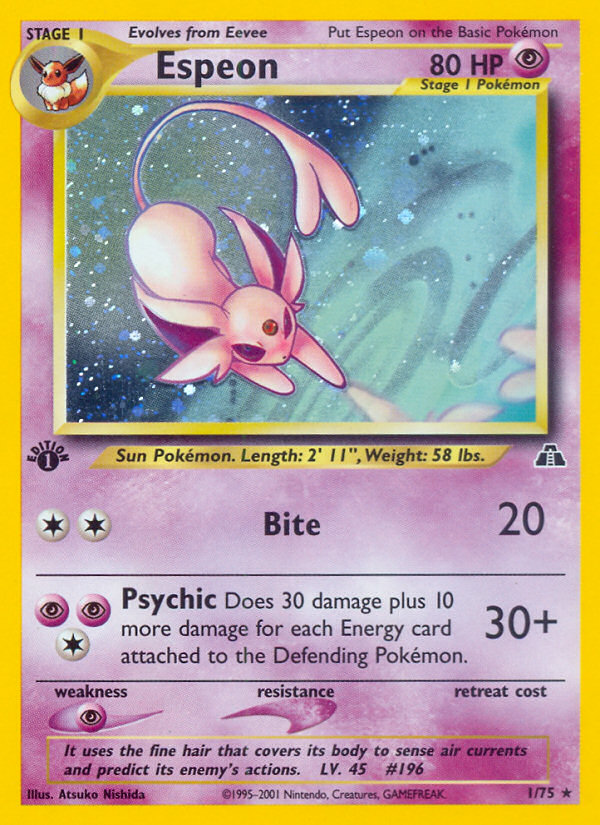
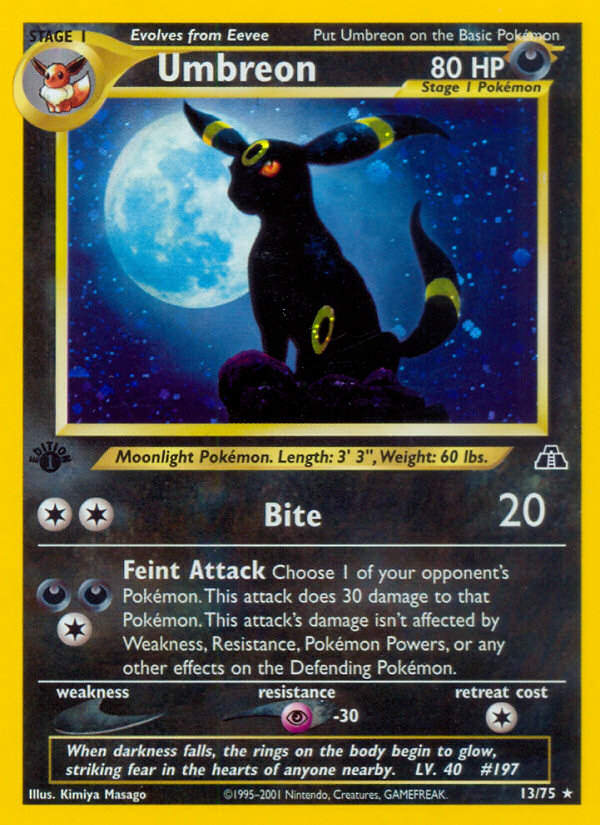
Not every Neo-era holo worth owning is a legendary or a Shining. Neo Discovery gave the TCG its first-ever printings of two Generation II Eeveelutions: Espeon (1/75) and Umbreon (13/75), both Rare Holo cards. They're a natural pair for collectors to chase together, since they debuted in the same set and represent the day/night split of the Eeveelution line that Pokémon fans had been waiting to see since Gold and Silver introduced them in the games.
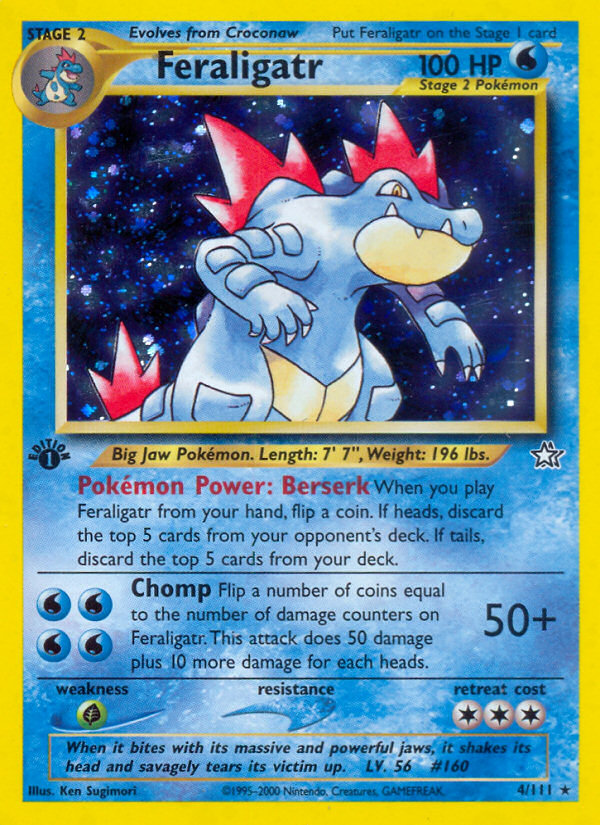
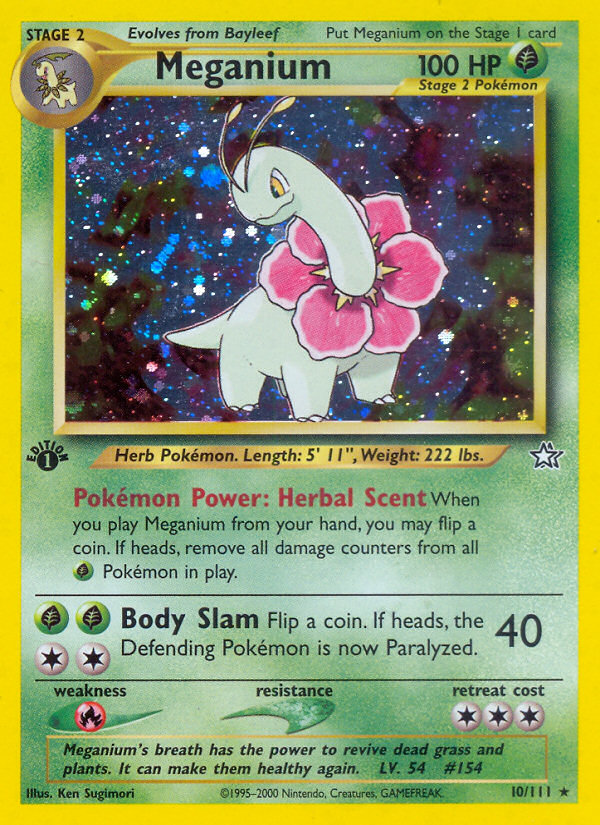
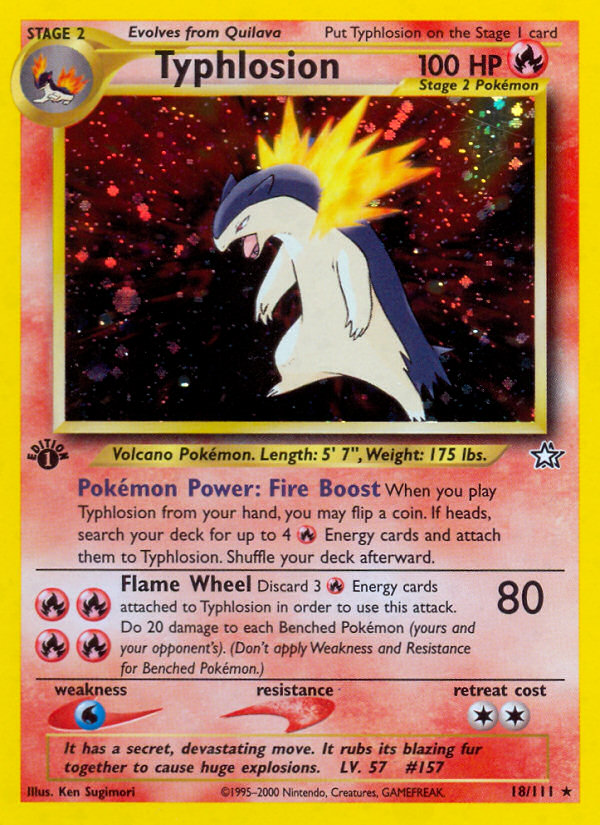
Back in Neo Genesis, the three fully-evolved Johto starters each got their own Rare Holo treatment: Feraligatr (4/111), Meganium (10/111), and Typhlosion (18/111). None of these hit Lugia-level chase-card status, but they're historically significant as the first holo printings of that starter trio, and — as mentioned above — each one anchored its own 1st Edition booster box wrapper design alongside Lugia's. For a collector building a complete "first appearances" run of Generation II Pokémon in holo form, these five cards plus Lugia and Ho-Oh form the backbone of the era, well before you even get into the Shining subset.
Grading, Population, and What "Worth Owning" Means
Before you chase a specific dollar figure for any Neo-era card, it's worth understanding how much grade and edition move the number. Shining Charizard is the clearest example: one pricing tracker has shown a PSA 10 1st Edition estimate north of $40,000, while a separate CGC-reported Unlimited-edition PSA 10 sale from February 2024 came in around $3,900. Those aren't contradictory data points — they're describing two genuinely different cards (1st Edition versus Unlimited) at the same numeric grade, and the gap between them is exactly why "Shining Charizard is worth $X" is close to meaningless without specifying both the edition and the grading company. If you're serious about buying or selling in this space, start with the fundamentals in CGC vs. PSA for vintage Pokémon and the wider PSA vs. BGS vs. CGC comparison before you send anything in.
Population data is a better anchor than any single sale price, because it doesn't move week to week. The fact that CGC's Pristine 10 population for Shining Charizard, Shining Mewtwo, Shining Noctowl, Shining Raichu, and Shining Tyranitar is small enough that individual top-graded copies get called out by name in CGC's own coverage tells you these cards are legitimately hard to find flawless — 24-year-old cardstock with centering, edge, and surface issues baked in from the printing process, not modern cards with tight quality control. If you're weighing whether a Neo-era holo is worth submitting for grading in the first place, our grading worth-it breakdown walks through the cost-versus-payoff math in more detail.
One more caution on numbers you'll see floating around collector forums and blog posts: pull-rate claims for Shining cards are not official WOTC or Pokémon Company data. One community estimate puts Neo Destiny's Shining pull rate at roughly one per eleven packs, while a separate estimate for Shining Gyarados in Neo Revelation suggests something closer to one per three-to-four booster boxes, or roughly one in 100 to 150 packs. Those two figures aren't even measuring the same thing (one covers any Shining across an eight-card subset, the other a single named card), and neither is a verified statistic — treat any specific pull-rate percentage you encounter as an anecdotal, crowd-sourced approximation, not a documented print ratio.
Where to Find Real Neo-Era Singles and Slabs
Geeky Domain doesn't carry Neo-era singles or slabs directly — this is a 24-to-26-year-old print run, so it lives entirely in the secondary market. That makes authentication your first job before value. Vintage Pokémon holos, and Shining cards especially, get reprinted as counterfeits often enough that you should not buy a "raw" Neo-era holo from an unfamiliar seller without checking it against a real authentication guide first. Our counterfeit card guide and the more Pokémon-specific vintage slab and pack authentication guide both cover what to check before you commit money to a Neo-era purchase.
If you're buying with resale or long-term appreciation in mind rather than pure nostalgia, treat Neo-era holos as part of the broader vintage market rather than a set apart from it — our vintage Pokémon slab investment guide covers how these older sets tend to hold value relative to modern chase cards. And once you actually own a Neo-era holo — raw or slabbed — protecting it matters more than it does for a modern pull, simply because you can't reprint or replace it; a decent binder or toploader from our Pokémon accessories roundup is cheap insurance against the kind of edge wear that separates a PSA 9 from a PSA 6 on a card this old.
On sealed product: some sources describe Neo Genesis 1st Edition booster boxes trading in the tens of thousands of dollars (recent sales have ranged from the high $30,000s to $50,000+), but that's a secondary-market estimate from a single reference point and it will have moved by the time you read this — sealed vintage product pricing is genuinely volatile, so confirm current listings rather than anchoring to any number in an article.
FAQ & Quick Reference
What exactly counts as "the Neo era" in Pokémon TCG collecting? Four English-language sets released between December 2000 and February 2002: Neo Genesis (111 cards, Dec. 16, 2000), Neo Discovery (75 cards, June 1, 2001), Neo Revelation (66 cards including 2 secret Shining rares, Sept. 21, 2001), and Neo Destiny (113 cards including 8 secret Shining rares, Feb. 28, 2002).
What's the difference between a Shining Pokémon card and a regular Rare Holo? The foil is reversed. On the eight Neo Destiny Shinings, the Pokémon's silhouette itself is holographic while the background and frame stay plain — the opposite of a standard Rare Holo, where the background or frame carries the shine and the Pokémon stays flat. The two Neo Revelation Shinings, Gyarados and Magikarp, still use a normal holofoil background.
How many Shining Pokémon cards exist from the Neo era? Ten total: Shining Gyarados and Shining Magikarp from Neo Revelation, plus eight secret rares from Neo Destiny — Shining Celebi, Shining Charizard, Shining Kabutops, Shining Mewtwo, Shining Noctowl, Shining Raichu, Shining Steelix, and Shining Tyranitar.
Is Lugia or Shining Charizard the more valuable Neo-era card? It depends entirely on grade and edition, and the gap can be enormous — one Shining Charizard PSA 10 estimate has come in above $40,000 in 1st Edition while a documented Unlimited PSA 10 sale went for under $4,000. Always ask "which edition, which grading company, which grade" before comparing two cards' values.
Are Neo-era pull rates for Shining cards documented anywhere official? No. Every pull-rate figure circulating online, including the "1 in 11 packs" and "1 in 100–150 packs" estimates you'll see referenced for Neo Destiny and Neo Revelation respectively, comes from community tracking rather than a WOTC or Pokémon Company source. Treat them as rough approximations.
Should I buy raw Neo-era cards or graded slabs? If you're new to vintage Pokémon, a graded slab from PSA or CGC removes the authentication guesswork, since counterfeits are a real risk on cards this old and this recognizable. If you're comfortable inspecting cards yourself, raw copies are cheaper and let you choose your own grading company later.
What happened to Slowking in tournament play? A translation error in the English print of Slowking (Neo Genesis 14/111) let its Mind Games Pokémon Power work from the Bench instead of only while Active, as the Japanese original required. Stacking multiple Slowking on the Bench became a dominant tactic, and the card was banned from competitive play in 2002.
Which Neo Destiny Shining cards have been graded at the top Pristine 10 by CGC? Early copies of Shining Charizard, Shining Mewtwo, Shining Noctowl, Shining Raichu, and Shining Tyranitar have all been certified at Pristine 10 by CGC, with the Shining Charizard example noted as the highest-graded copy of that card in CGC's population report.
Neo-Era Picks at a Glance
| Card | Set & Number | Why It Matters |
|---|---|---|
| Lugia | Neo Genesis 9/111 | Signature chase card of Neo Genesis; Basic Colorless Rare Holo, 90 HP, art by Hironobu Yoshida. |
| Ho-Oh | Neo Revelation 7/64 | Basic Fire Rare Holo, 90 HP; the set's headline legendary (a separate non-holo Ho-Oh, 18/64, also exists). |
| Shining Gyarados | Neo Revelation 65/64 | One of the first two Shining Pokémon cards ever printed; 100 HP with Outrage and Devastate. |
| Shining Magikarp | Neo Revelation 66/64 | Printed alongside Shining Gyarados as the second-ever Shining card; the affordable on-ramp into the subset. |
| Shining Charizard | Neo Destiny 107/105 | The era's most recognized secret rare; a CGC 9 sold for $3,600 at Heritage Auctions in March 2022, and CGC's population report lists it as the highest-graded copy at Pristine 10. |
| Shining Mewtwo | Neo Destiny 109/105 | One of only a handful of Neo Destiny Shinings CGC has certified at Pristine 10. |
| Shining Tyranitar | Neo Destiny 113/105 | Closes out the secret-rare run (106–113); among the priciest cards in the 1st Edition Holofoil checklist, behind Shining Charizard and Shining Mewtwo. |
| Espeon | Neo Discovery 1/75 | TCG debut of Espeon; Rare Holo, natural pair with Umbreon from the same set. |
| Umbreon | Neo Discovery 13/75 | TCG debut of Umbreon; companion Rare Holo to Espeon. |
| Feraligatr / Meganium / Typhlosion | Neo Genesis 4/111, 10/111, 18/111 | Rare Holo cards for the three fully-evolved Johto starters; each anchored its own 1st Edition booster box wrapper. |
Verdict: Neo Holos Are the Underrated Middle Chapter of Vintage Pokémon.
Lugia, Ho-Oh, the Espeon/Umbreon pair, and the ten real Shining Pokémon cards give the Neo era its own identity, distinct from Base Set nostalgia and 151's modern nostalgia loop alike. Buy for the specific card and its documented print run, not for a headline number — grade and edition swing Neo-era values too hard for any single price to mean much on its own.
© GEEKYDOMAIN.COM | Strategy Powered by Data