

MTG's Hybrid-Mana Commander Rule Change: Inevitable, But Shelved
Mark Rosewater's own read is that fixing hybrid mana's color identity in Commander is basically a matter of when, not if. Wizards' own Commander Brackets team shelved the idea in February 2026 anyway. Both of those things are currently true at the same time.
Some links below are affiliate links. If you buy through them, Geeky Domain may earn a small commission at no extra cost to you.
→ Short Version
Mark Rosewater, MTG's head designer, has said on Blogatog that changing how hybrid-mana cards handle color identity in Commander is "the whole reason" he wants a rules change, and has personally framed it as effectively inevitable -- that's his own characterization, not a verbatim quote using that word. Beckett News has floated a figure of nearly 500 cards that could be affected, with mono- and dual-color Commander decks standing to gain the most. But per the official Commander Brackets Beta Update posted February 9, 2026, Wizards actually shelved this specific proposal after community feedback came back split. As of the most recent official Commander updates available at the time of this writing (June 10 and June 29, 2026), that shelving hasn't been reversed. The designer wants it. The rules body that would have to approve it, hasn't.
→ Related Reading
- MTG Strategy Hub
- MTG Game Changers List & Bracket Rules -- the related Commander Brackets system this proposal is part of
- Commander Mana Curve Basics
In This Guide
- → What Rosewater Actually Proposed
- → Color Identity 101, and Where Hybrid Cards Get Stuck
- → The ~500-Card Number, and What "Unlocking" Would Mean
- → Why the Proposal Got Shelved Anyway
- → The Real Tension: Designer Enthusiasm vs. Official Caution
- → What a Hybrid-Friendly Ruling Would Mean for Your Deck
- → Our Take: Inevitable Isn't the Same as Enacted
What Rosewater Actually Proposed
Start with what this is not: it is not a Wizards of the Coast press release, and it is not a Comprehensive Rules update. It's a position Mark Rosewater, MTG's head designer, has staked out publicly on Blogatog — the Tumblr where he answers fan questions about design philosophy — and it concerns a fairly narrow but persistent irritant for Commander deckbuilders: how hybrid-mana cards get treated for color identity purposes in that specific format.
Rosewater's own words, as quoted by MTG Rocks, lay out both the ask and the reasoning behind it:
"It's the whole reason we'd like to see the hybrid rules change for Commander. Making a second card just to have the functionality that every other format already has is very inefficient."
That "second card" line is the whole argument in miniature. Rosewater is describing a design team that, under the current rules, sometimes has to print a separate gold (straightforward two-color) version of a card just to get the color-identity behavior it wants for Commander, because a hybrid-mana version of that same design doesn't produce the same result in that one format. To a designer, that reads as redundant work solving a problem the rules themselves created. It's worth being precise about what this is and isn't: Rosewater has gone as far as calling the change effectively inevitable in his own commentary. That's his characterization — an influential one, given his role, but still his own framing rather than an announcement that the change is locked in. Nothing about "inevitable" here has the force of an official ruling behind it.
Color Identity 101, and Where Hybrid Cards Get Stuck
If you don't play much Commander, "color identity" is the rule that decides what colors a card counts as for deckbuilding purposes — most importantly, what your commander lets you legally include in your deck. A straightforward two-color gold card gives you a clean, unambiguous answer: it's both of its colors, full stop, and Commander players build entire archetypes around that predictability.
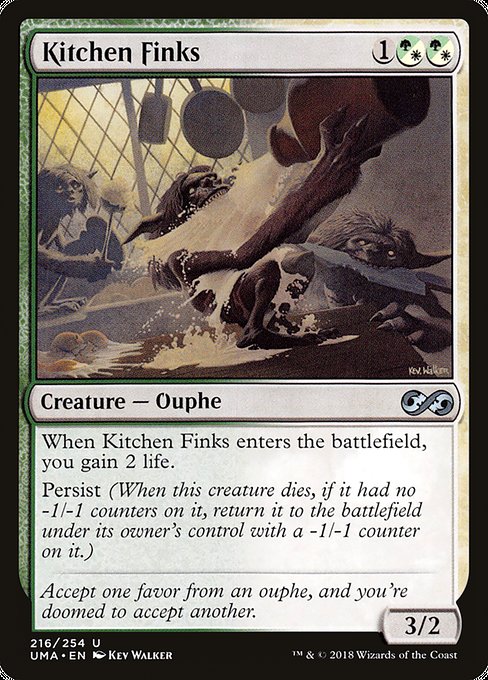
Hybrid mana cards sit in a stranger spot. The whole point of hybrid mana, in any other format, is flexibility — a card like Kitchen Finks, costing {1}{G/W}{G/W}, can be cast with any mix of green or white mana, which is exactly the kind of card that a mono-color or two-color deck loves to run because it doesn't force you outside your existing mana base. That flexibility is the format-agnostic selling point Rosewater is referring to when he says hybrid cards already have "the functionality that every other format already has." His argument, in short, is that Commander is the outlier: elsewhere, a hybrid card just works the way you'd expect, but Commander's own color-identity handling doesn't extend that same straightforward, gold-card-like treatment to hybrid designs — which is exactly the gap his proposed change is meant to close.
We're deliberately not going further than that into the exact technical mechanics, because Rosewater's public comments frame the problem and the intent, not a finished rules text. Beyond "we'd like to see the hybrid rules change for Commander," Wizards hasn't published the specific implementation.
The ~500-Card Number, and What "Unlocking" Would Mean
Beckett News has put a number on the potential scale of this: their reporting frames the change as potentially unlocking nearly 500 cards, with mono- and dual-color Commander decks specifically getting a boost. Treat that figure as Beckett News's own estimate rather than a Wizards-confirmed count — we haven't seen an official card-by-card audit from Wizards itself, and "nearly 500" is doing the work of a ballpark, not a verified total.
Still, even as a ballpark, it tells you something about why this keeps coming up in design conversations. Magic has printed hybrid mana across a long stretch of its history, in a lot of different sets and a lot of different power levels. If a meaningful fraction of that print run currently behaves like an awkward middle case in Commander — not quite a mono-color card, not quite treated like a full gold card either — that's not a niche complaint about a handful of build-arounds. It's a standing tax on an entire mana-cost design space, paid by exactly the players Beckett News says would benefit most: mono- and two-color deckbuilders, who are usually the players with the least mana-base flexibility to spare in the first place.
That's also the honest version of why Rosewater keeps returning to this in public commentary. It isn't one card he's annoyed about. It's a category.
Building Around Your Commander Mana Base?
While this specific hybrid-mana ruling sits shelved, your deck's mana base still has to work today. Compare current Commander precon and singles pricing before you build.
Shop MTG Commander Decks on Amazon Shop MTG Commander Decks on eBayWhy the Proposal Got Shelved Anyway
Here's where the story stops being a straightforward "designer wants change, change is coming" narrative. The official Commander Brackets Beta Update, posted to wizards.com on February 9, 2026, addressed this exact hybrid-mana color-identity proposal — and shelved it. The stated reason was that community feedback on the idea came back split, rather than landing on a clear consensus either for or against.
We want to be careful here not to overstate what we actually know about that feedback. The update tells us the response was mixed; it doesn't spell out, at least not in what we've reviewed, a detailed breakdown of who objected and why, or what specific counterarguments carried the most weight internally. So we're not going to invent a tidy pro-and-con list on the community's behalf. What we can say is that a proposal a games's own head designer has called effectively inevitable ran into enough organized pushback, or at least enough lack of consensus, that the team responsible for Commander's official brackets and rules infrastructure chose not to move forward with it. That's a real signal, even without a granular map of the objections.
The Real Tension: Designer Enthusiasm vs. Official Caution
This is the part of the story that makes it worth writing about at all, rather than just filing under "rules trivia." You have Magic's head designer, on the record, calling a specific change both desirable and effectively inevitable, and explaining exactly why in design terms: it's wasteful to keep making duplicate gold-card versions of designs just to route around a Commander-specific quirk that no other format has to deal with. That's about as strong an internal endorsement as a proposal can get without being an actual announcement.
And then you have the format's own official update process shelving that same idea, in writing, because the community wasn't unified behind it.
Neither side of that is wrong, exactly. Rosewater's argument is a design-efficiency argument, and on those terms it's hard to argue with: nobody benefits from Wizards printing redundant cards to work around a rules gap. But "inevitable" is a claim about direction, not timing, and it's a claim from one advocate inside the process, not a commitment from the body that actually controls Commander's official rules infrastructure. As of the most recent official Commander announcements we've checked — June 10 and June 29, 2026 — there's been no reversal of the February shelving. The proposal remains parked, not adopted.
If you're a player trying to figure out what to actually expect, that's the honest state of play: strong designer intent, no official timeline, and a shelved status that hasn't moved in months.
What a Hybrid-Friendly Ruling Would Mean for Your Deck
Assume, hypothetically, that this eventually does get unshelved and adopted roughly along the lines Rosewater has described. Who actually benefits?
Per Beckett News's framing, the clearest winners would be mono- and dual-color Commander decks. That tracks with the underlying logic: those are the decks with the tightest mana bases, and therefore the decks that get the most value out of a card that can flex between two colors of mana without technically forcing a full multicolor commitment. A hybrid card that finally behaved like a proper gold card for color-identity purposes would, in principle, become eligible to slot into commanders and deckbuilding restrictions it currently can't touch — expanding the legal card pool for those builds rather than changing how any individual card plays on the battlefield.
It's worth being clear about what this change would not do. Nothing in Rosewater's comments or in Beckett News's reporting suggests this is a power-level change, a ban-list issue, or anything that touches how a hybrid card functions once it's actually cast. This is entirely a deckbuilding-legality question — which cards you're allowed to put in the 99 (or 98, alongside your commander) in the first place. If it happens, the day-one effect is a wider legal card pool for a specific slice of deckbuilders, not new card behavior at the table.
Given that scope, it's also a change you'd likely absorb quietly rather than notice as a single dramatic event. Commander players update decklists constantly; a rules clarification that widens eligibility for a category of cards would mostly show up as "oh, I can run this now" moments scattered across a lot of different tables and a lot of different decks, rather than a single headline shift in the format's metagame.
Our Take: Inevitable Isn't the Same as Enacted
We'll say plainly that we find Rosewater's underlying argument reasonable on its own terms. "Don't make us print a second card to fix a rules quirk" is a clean, low-drama efficiency case, and it's the kind of argument that tends to age well precisely because it isn't really about power level or format health — it's about not wasting design effort on workarounds. That's presumably a real part of why he's comfortable calling it inevitable in his own commentary.
But we'd caution against treating "the head designer wants this and thinks it's coming" as functionally the same thing as "this is coming." Commander's governance doesn't run through design intent alone, and the February 2026 shelving is a concrete, official data point that cuts against the inevitability framing, whatever the eventual outcome turns out to be. Split community feedback is exactly the kind of thing that can stall a change indefinitely, revive it a year later once more voices weigh in, or send it back for a different implementation entirely. We don't know which of those paths this is on, and neither, as far as the public record shows, does anyone outside the room where that feedback got reviewed.
Our actual recommendation for players: don't build around this. Don't bench a hybrid card, and don't pass one up, on the assumption that its Commander legality is about to change. Build with the rules as they exist right now, and treat Rosewater's comments as a useful signal about where design sentiment sits — not as a release date.
Verdict
The hybrid-mana Commander proposal is a genuinely interesting case study in how Magic's design ambitions and its format governance don't always move in lockstep. Mark Rosewater has made as strong a public case as a head designer can make without it being an announcement: his own words call making a second card just to get functionality every other format already has "very inefficient," and he's framed the fix as effectively inevitable -- his own characterization, not an official timeline. Beckett News frames the upside at nearly 500 cards, with mono- and dual-color decks positioned to gain the most. And the official Commander Brackets Beta Update from February 9, 2026 shelved the whole idea after feedback came back split — a status that, as of the June 10 and June 29, 2026 updates, hasn't changed.
Read that as what it is: a live disagreement between a designer's stated intent and an official process that hasn't signed off yet. Watch future Commander Brackets updates if you want to know when — or whether — that changes.
The Designer Wants It. The Rules Body Hasn't Signed Off.
Rosewater's own framing and Wizards' actual shelving decision are both true at once, and they point in opposite directions. Watch future Commander Brackets updates if you want to know when -- or whether -- that changes.
Keep Reading
© GEEKYDOMAIN.COM | Strategy Powered by Data