

Rush, Reckless & Challenger: The Aggressive Keyword Trio
Three keywords that exist to make characters fight. Here's exactly how Rush, Reckless, and Challenger work, the rulings that trip people up, and how to weaponize them — including pointing one of them at your opponent.
Most Lorcana keywords help you gain lore or protect your board. This trio does something different: it's about combat. Rush, Reckless, and Challenger all change how and when your characters challenge, and together they form the backbone of aggressive and tempo-focused decks — the lists that win by controlling the board and forcing trades rather than racing quietly to 20.
They're worth covering together because they interlock. Rush lets a character challenge the moment it hits the table. Challenger makes that challenge hit harder. Reckless forces challenges to happen — and is the one keyword you usually want to hand to your opponent, not keep for yourself. Used well, the three turn combat from a risky side-action into a precision tool for blowing out exerted threats and grinding the opposing board to nothing.
This guide breaks down each keyword's exact rules (including the wording details and rulings that people consistently get wrong), shows how they combine, explains the counterintuitive way Reckless is best used as a weapon against your opponent, and covers the misplays that waste their aggression. If you've read our deep-dives on Singer, Shift, and Evasive, this is the same treatment for the keywords that win the board.
The Short Version
Rush lets a character challenge the turn it's played (it bypasses summoning sickness) — but it still can't quest or sing that turn, only challenge. Challenger +N gives a character +N Strength while it is challenging — only on offense, and only for that challenge. Reckless means a character can't quest and must challenge every turn if it's able. Rush + Challenger is the classic tempo combo: drop a body, immediately challenge an exerted threat, with bonus Strength to guarantee the kill. The twist with Reckless: it's usually a weapon you give your opponent's character — forcing it into bad trades and stopping it from questing for lore. Two rulings to know: Challenger's bonus is temporary ("while challenging," not permanent), and a Reckless character can be made "unable" to challenge by exerting it another way (singing, an ability) or by there being no legal targets.
→ More Lorcana Guides
In This Guide
Why These Three Go Together
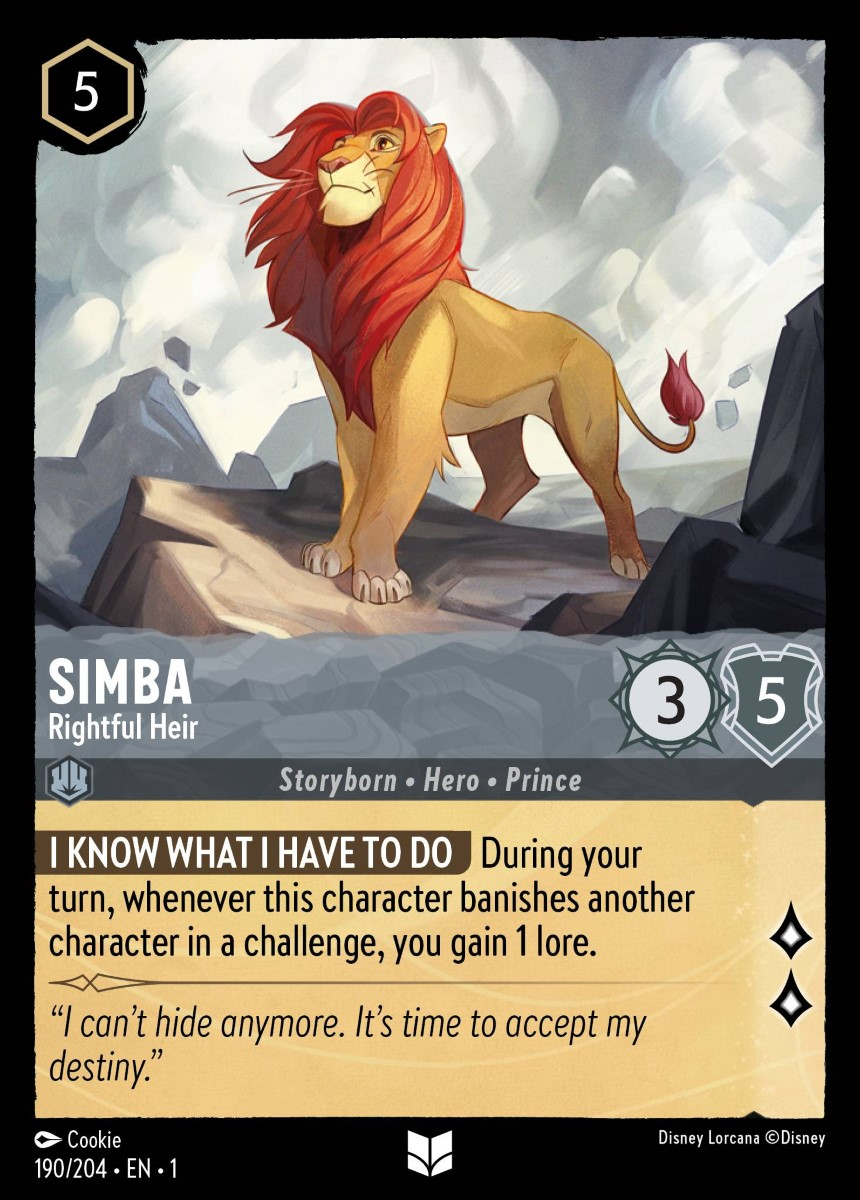
In Lorcana, challenging is how you remove the opponent's characters — there are no instant-speed interruptions, so combat is the primary way to interact with their board. That makes the keywords that govern when and how well your characters challenge enormously important to any deck that wants to control the board rather than ignore it.
Each of the three answers a different question about challenging:
- Rush answers "when?" It removes the one-turn wait, letting a freshly played character challenge immediately.
- Challenger answers "how hard?" It boosts Strength while attacking, letting small bodies trade up into bigger ones.
- Reckless answers "whether?" It removes the choice entirely — a Reckless character must challenge, and can't quest at all.
Put together, they're the toolkit of aggressive and tempo decks. As the design pros note, strong lists build around two-keyword packages, and Rush + Challenger is one of the most common — a tempo engine for winning the board race fast. Reckless sits a little apart, because its best use is usually offensive in a different sense: you give it to the other player. We'll get to that.
Rush: Challenge Right Away
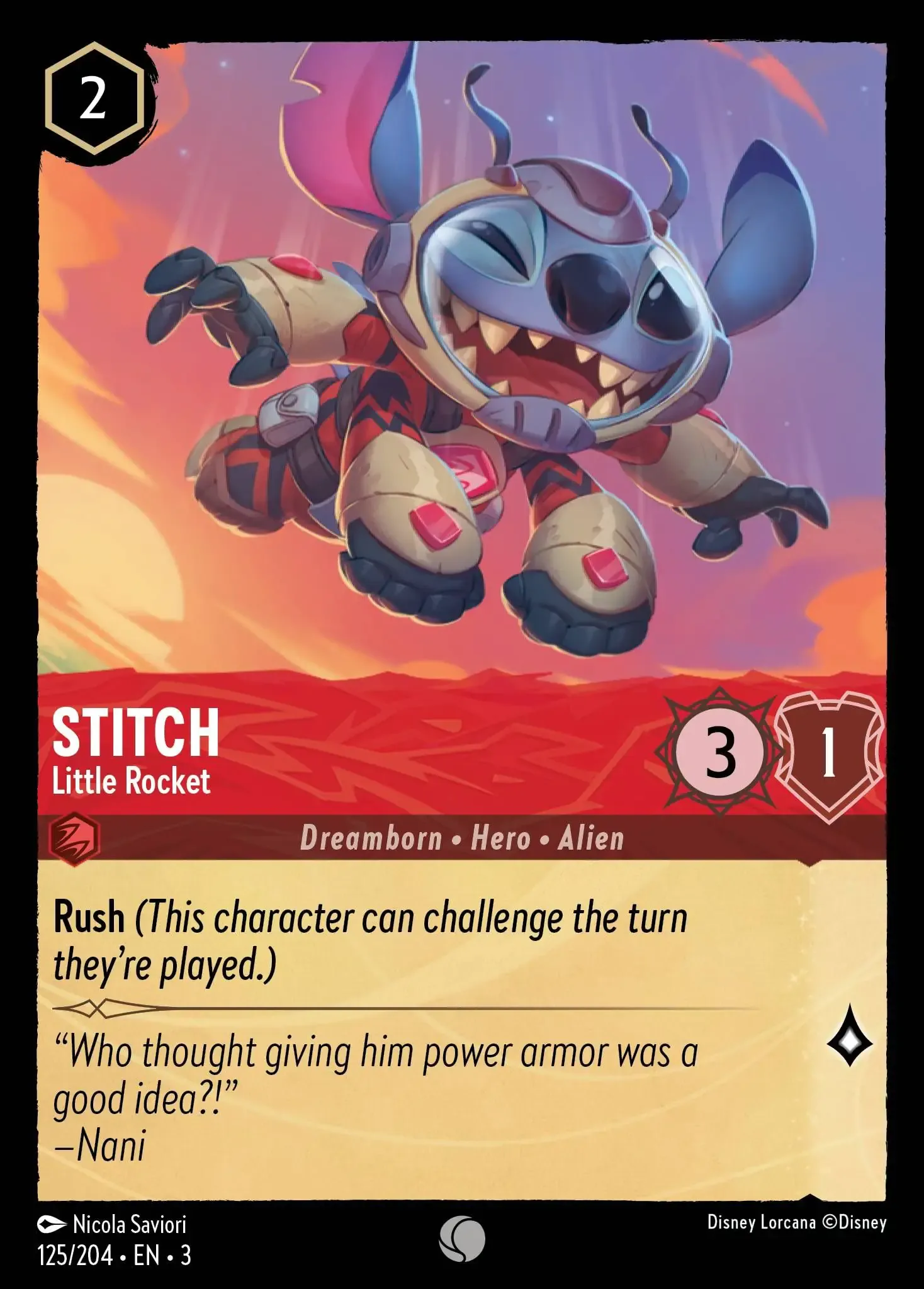
Reminder text: "This character can challenge the turn it's played." Normally a character has summoning sickness — it can't challenge (or quest, or sing) on the turn it enters play, because its ink hasn't "dried." Rush lifts that restriction for challenging specifically.
The crucial limit: Rush only enables challenging on the turn it's played. A Rush character still can't quest or sing that turn. That's a deliberate balance — if Rush characters could instantly quest, they'd be far too hard to play around. So Rush is purely a combat tool on the turn it arrives.
Where Rush shines is the ambush. Your opponent ends their turn with an exerted character — one they quested with, say, that's now sitting vulnerable. On a normal turn you'd have to wait for a character to dry before you could punish it. With Rush, you drop a body and immediately challenge that exerted threat, banishing it the same turn it became vulnerable. It's also your emergency answer when you have no board: an opponent's exerted characters that would normally be safe for a turn suddenly aren't.
Rush in one line:
It's not "haste for everything" — it's permission to challenge immediately.
Quest and sing still have to wait.
Challenger: Punch Above Your Weight
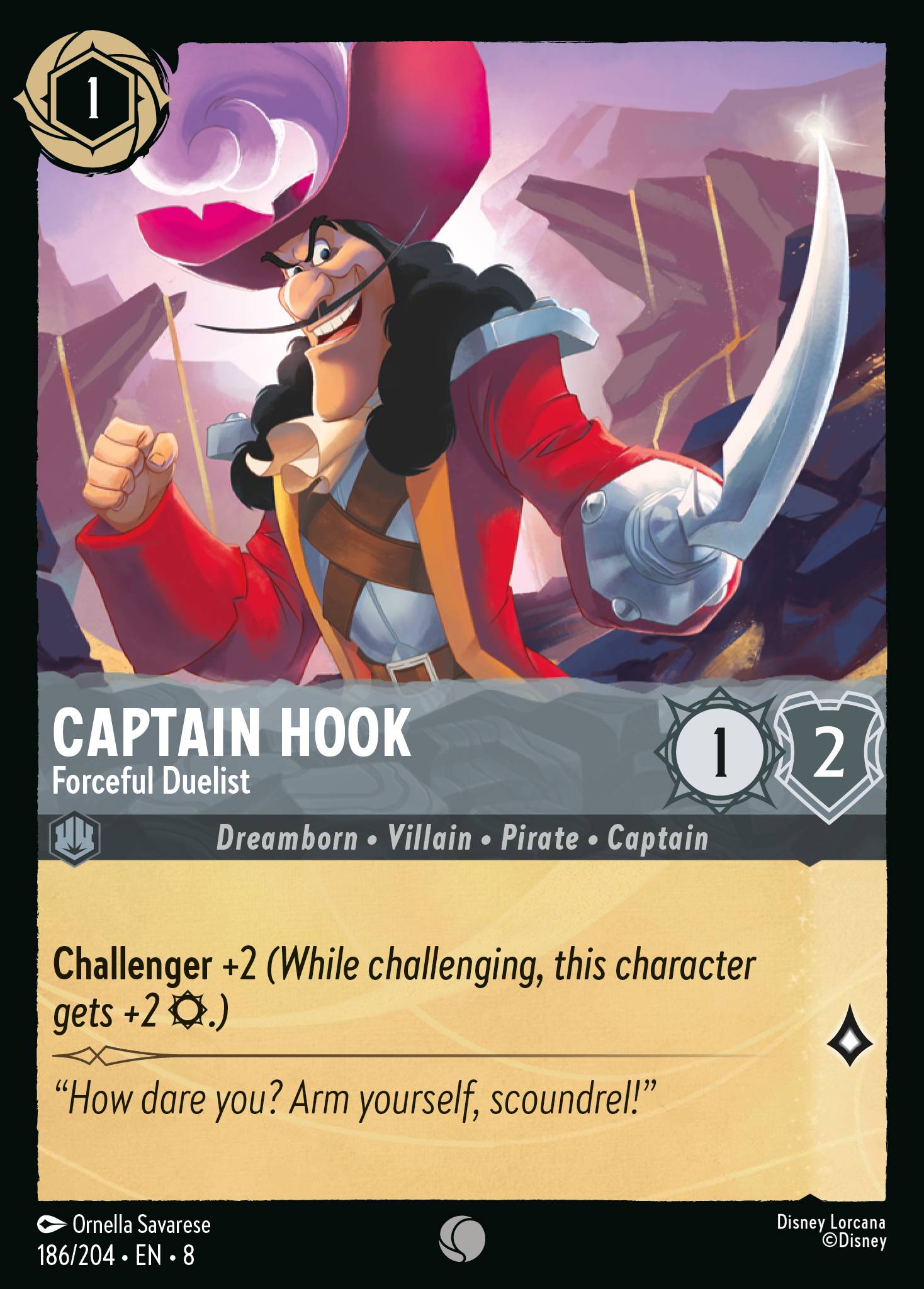
Reminder text: "Challenger +N (While challenging, this character gets +N {Strength}.)" When a Challenger character is the one initiating a challenge, it gets a temporary Strength boost equal to N. A 2-Strength character with Challenger +2 effectively hits as a 4 when it attacks.
Two words in that text carry all the weight: "while challenging." The bonus applies only when this character is the attacker, and only for the duration of that challenge. It does not apply when the character is being challenged on defense, and it does not stick around afterward — once the challenge resolves, the character is back to its printed Strength. (This wording was a deliberate clarification; an older printing used "when challenging," which players misread as a permanent, stacking buff. "While challenging" makes the temporary, offense-only nature explicit.)
Strategically, Challenger is a trade-up engine. It lets a cheap, low-Strength body punch into something bigger and win the exchange — you challenge their valuable character, the +N pushes your damage high enough to banish it, and you've traded a small card for a big one. Captain Hook – Forceful Duelist (Challenger +2) is the textbook example.
Because the bonus is offense-only, Challenger characters are bad blockers — they get none of the boost when defending. Don't leave a Challenger character back expecting it to trade well on your opponent's turn; its whole value is in initiating.
Reckless: The Double-Edged Keyword
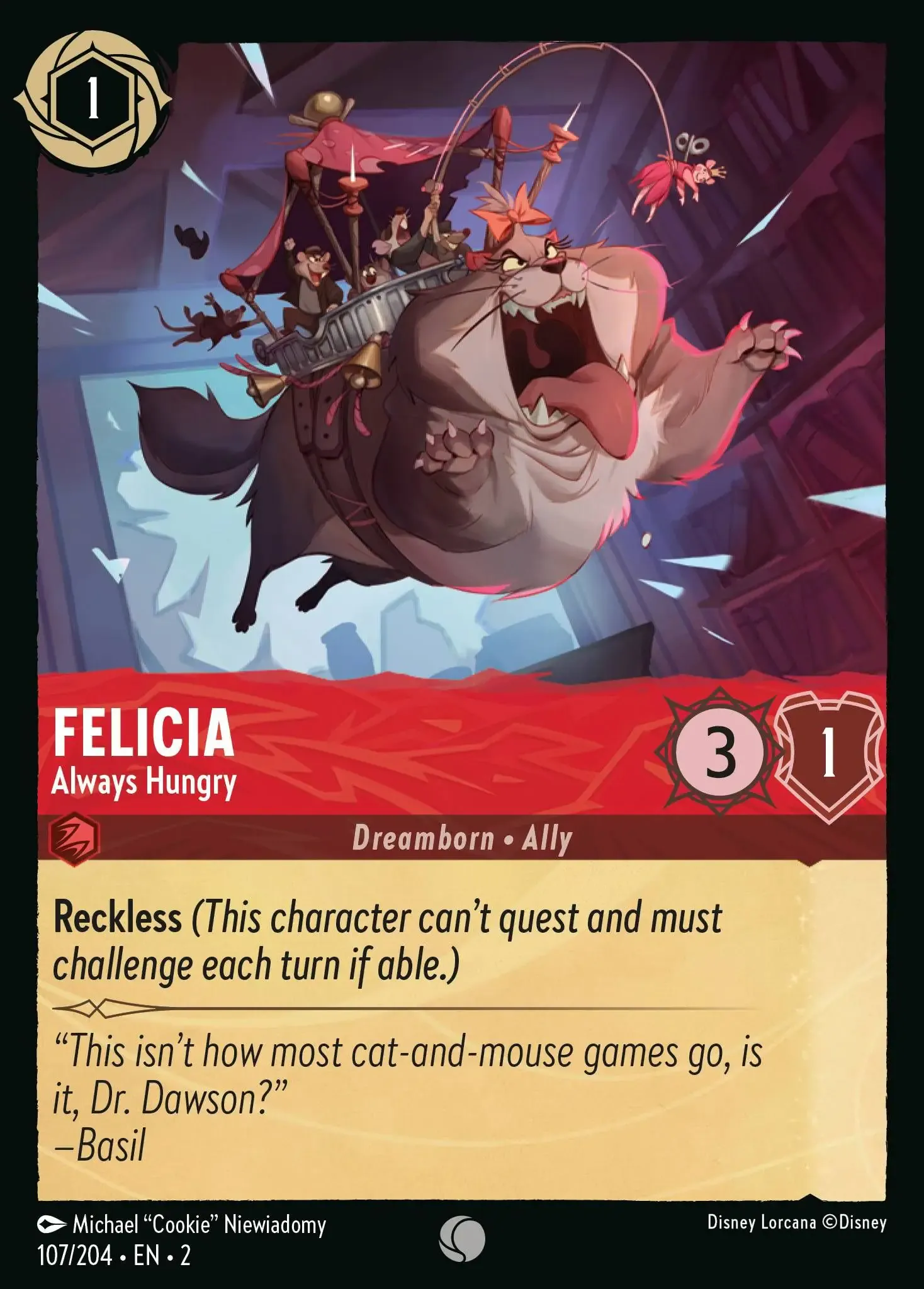
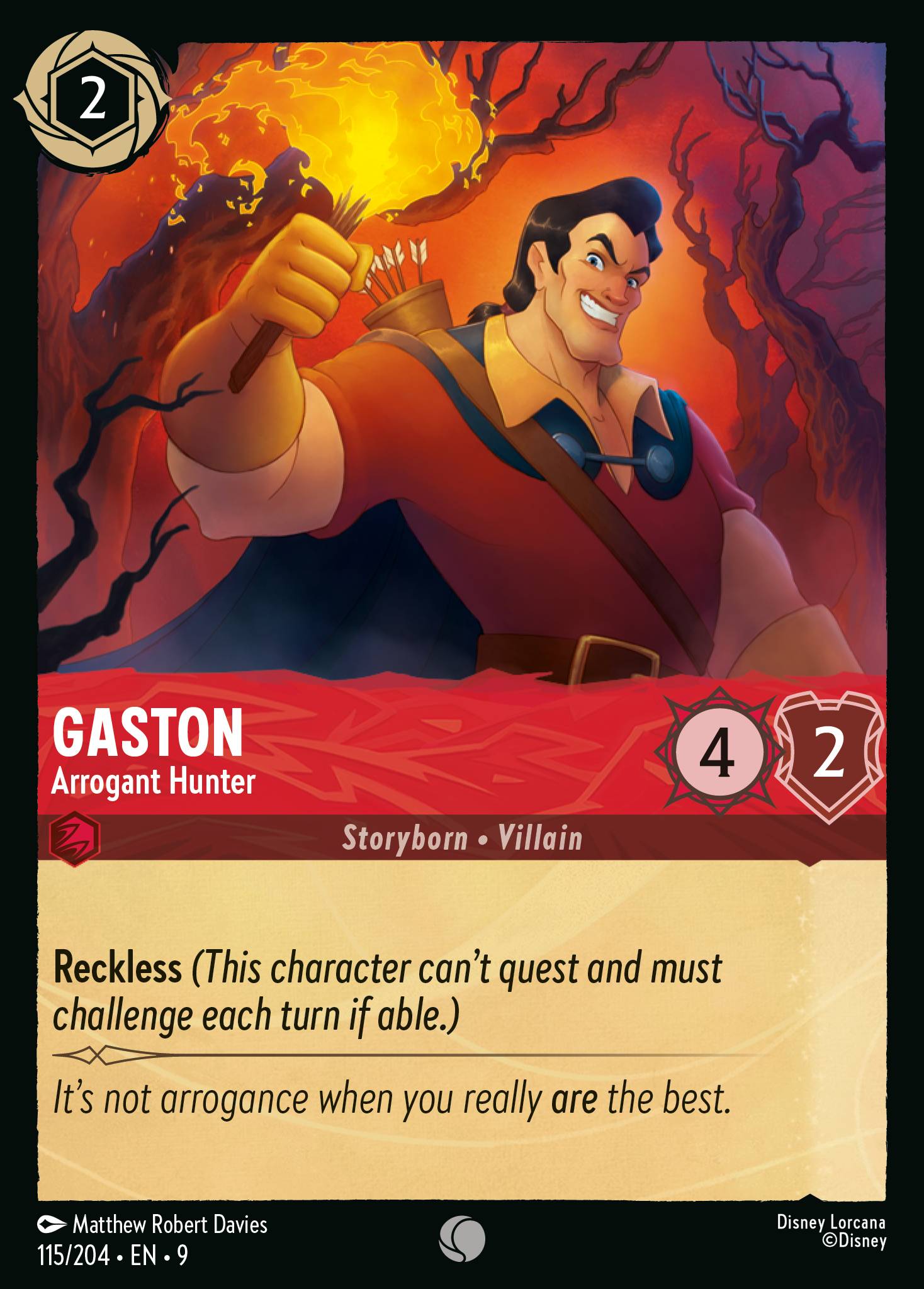
Reminder text: "This character can't quest, and must challenge each turn if able." Two effects bundled together: a Reckless character can never gain lore by questing, and it is forced to challenge every turn there's a legal target — regardless of whether the challenge is good for you. It'll throw itself at a character that banishes it, triggers a nasty effect, or trades badly, because it has no choice.
That downside is exactly why Reckless is usually a weapon you point at your opponent. Cards that grant Reckless let you slap it onto an opposing character — ideally their best lore-generating quester. Suddenly that character can't quest (cutting off their lore) and is compelled to challenge into your board (often dying on bad terms). It's one of the cleaner ways to neutralize a problem quester without removal.
On your own characters, Reckless is a liability the format generally avoids — it's too easily exploited by the opponent, who can simply present a target that's bad for you to challenge into. If a card you want has Reckless printed on it, you accept the drawback for the rest of the package; you rarely seek it out.
The Escape Hatches
If your own character has Reckless (printed or granted by an opponent) and you don't want it to challenge, you have outs. A Reckless character only "must" challenge if it's able — so you can make it unable: exert it another way (sing a Song, use an exert-cost ability) so it's tapped out, rely on there being no legal targets (including Locations), or use any effect that prevents challenges. As long as the character can't challenge before your turn ends, it isn't forced to. And note the ruling: Reckless stays attached even after the character readies, and even if it was only granted — it doesn't wear off at end of turn.
Combining the Trio
The keywords get much stronger in combination. The standout pairings:
| Combo | What it does |
|---|---|
| Rush + Challenger | Drop a body and immediately challenge an exerted threat with bonus Strength — an instant, guaranteed removal swing. The premier tempo package. |
| Reckless (on opponent) + your board | Force their best quester to stop questing and throw itself into your characters on your terms — soft removal plus lore denial. |
| Rush + Reckless (granted to you) | Niche: a Rush body forced to challenge the turn it lands is sometimes fine if you want the trade — but usually you'd rather choose. Handle with care. |
The throughline: these keywords reward decks that treat combat as the main event. If your plan is to control the board and grind the opponent out (rather than quietly out-quest them with Evasive), this trio is your engine — Rush for timing, Challenger for efficiency, Reckless for disruption.
The Rulings People Get Wrong
Ruling #1: Challenger Is Offense-Only and Temporary
The +N applies only while this character is challenging — not when it's being challenged, and not after the challenge ends. It's a momentary attacking buff, not a permanent stat increase and not a defensive one. Plan your trades around the boosted number on offense, and around the printed number on defense.
Ruling #2: Rush Doesn't Let You Quest or Sing
Rush is challenge-only on the turn played. New players assume a Rush character is "fully awake" and try to quest with it for lore the same turn — it can't. If you want lore from that body, it has to survive to your next turn first.
Ruling #3: Reckless Is "Must Challenge If Able"
The forced challenge only triggers if the character is able to challenge. Exert it another way (singing, an ability), leave it no legal targets, or use a challenge-prevention effect, and it's off the hook for that turn. Also remember Reckless sticks — it doesn't fall off when the character readies, even if it was only granted.
Common Mistakes
Mistake #1: Expecting a Rush character to quest the turn it lands.
Rush only grants the ability to challenge immediately. If your plan needed lore from that body this turn, it doesn't happen — play it for the combat swing, and quest with it next turn if it survives.
Mistake #2: Leaving a Challenger character back to block.
Challenger gives nothing on defense. A Challenger +2 body defends at its printed Strength, so holding it back to "trade well" on the opponent's turn wastes its entire identity. Challenger characters want to attack — use them to initiate.
Mistake #3: Running Reckless on your own key characters.
A Reckless character you control can't quest and is forced into challenges your opponent gets to set up. Unless the rest of the card is worth the drawback, Reckless on your side is a liability — its best home is on your opponent's board, via a grant effect.
Mistake #4: Forgetting the Reckless escape hatch.
If an opponent gives your character Reckless, you're not helpless — exert it to sing a Song or use an ability before the forced-challenge window, and it's "unable" to challenge. Players panic and challenge into a bad board when a free exert outlet was right there.
Mistake #5: Misjudging a trade by forgetting Challenger is one-way.
When your opponent's character has Challenger and attacks yours, the boost is on their side, not yours — and when you attack into a Challenger character, it gets no boost defending. Mixing up which direction the +N applies leads to losing a body you thought would survive. Always read which character is initiating.
FAQ & Quick Reference
- Can a Rush character quest the turn it's played? No. Rush only lets it challenge immediately. Questing and singing still have to wait until the character has been in play since the start of your turn.
- Does Challenger help when my character is being challenged? No. Challenger only applies "while challenging" — when your character is the attacker. On defense, it uses its printed Strength with no bonus.
- Can I stop my own Reckless character from challenging? Yes, by making it "unable." Exert it to sing a Song or use an exert-cost ability, ensure there are no legal targets, or use a challenge-prevention effect. If it can't challenge before your turn ends, it isn't forced to.
- Why would I give my opponent Reckless? Because it shuts off their character's questing (no more lore from it) and forces it to challenge into your board on your terms — effectively soft removal plus lore denial. It's the keyword's best use.
- Do these keywords stack? Challenger values from multiple sources add together (Challenger +2 and a granted Challenger +1 make +3 while challenging). But you can't have two instances of the same keyword on one character — a second copy of Rush or Reckless does nothing extra.
- Rush: can challenge the turn it's played — but can't quest or sing that turn.
- Challenger +N: +N Strength while challenging only — offense-only and temporary.
- Reckless: can't quest; must challenge each turn if able.
- Best combo: Rush + Challenger — instant, boosted removal swing (the tempo package).
- Reckless twist: usually given to an opponent's quester to deny lore and force bad trades.
- Escape hatch: a Reckless character isn't forced to challenge if it's made "unable."
Win the Board, Win the Game.
Where Evasive wins by ignoring combat, this trio wins by mastering it. Rush dictates the timing of your challenges, Challenger dictates their efficiency, and Reckless dictates whether your opponent's best character even gets to do its job. Learn the wording — "while challenging," "if able," challenge-only — and these keywords stop being risky and start being a scalpel. Drop the Rush body, take the trade with Challenger, hand the opponent's quester a Reckless problem, and grind the board until there's nothing left to stop you.
© GEEKYDOMAIN.COM | Strategy Powered by Data