

Best Budget Enchantress Deck Under $100
Enchantress is one of Magic's oldest archetypes — and one of the cheapest to build well. Here's how the draw engine works, a Sythis build under $100, and the mistakes that stall it out.
Most budget Commander decks ask you to choose between power and price. Enchantress doesn't. The archetype's best cards have been printed and reprinted for decades, which means the engine that makes it tick — cheap enchantments that draw you cards every time you play another one — costs a few dollars, not a few hundred. You're not buying expensive bombs; you're assembling a value machine out of commons and uncommons that quietly out-draws the whole table.
The idea is simple and very old: play enchantments, draw cards off your "enchantress" effects, and bury your opponents in card advantage until you can lock the game up or win on tokens. It dates all the way back to Argothian Enchantress in Urza's Saga, and in Commander it's only gotten better with every set that adds a new draw engine or payoff. It sits comfortably in the casual-to-mid power range (roughly Bracket 1–2), it's beginner-friendly, and it's one of the most satisfying budget decks to pilot because every land you draw into turns into more gas.
This guide explains the three-part engine that powers the deck, recommends the best budget commander, walks through the core cards by role, lays out a sample build that comes in under $100, and covers the common misplays that turn a powerful value engine into a pile of do-nothing enchantments. As always, prices move — so we keep dollar figures qualitative and tell you to validate before you sleeve.
The Short Version
Enchantress wins by turning every enchantment you cast into a card. Run 5–6 "enchantress" draw engines (Argothian Enchantress, Mesa Enchantress, Verduran Enchantress, Setessan Champion, Eidolon of Blossoms, Enchantress's Presence), fill the deck with cheap, useful enchantments (ramp, removal, pillowfort), and close with token payoffs like Sigil of the Empty Throne, Luminarch Ascension, and Hallowed Haunting. The best budget commander is Sythis, Harvest's Hand — a two-mana Selesnya (white/green) enchantress that draws and gains life, keeping the deck two-color and the mana base cheap. Protect your engine with Sterling Grove + Greater Auramancy (your enchantments become untargetable). The whole thing fits under $100 because almost nothing in it is a chase card — it's an engine, not a pile of bombs.
→ More MTG Guides
In This Guide
What Enchantress Actually Does
"Enchantress" is named after a family of cards that share one effect: whenever you cast (or sometimes play) an enchantment, draw a card. Build a deck where most of your spells are enchantments, put a few of these draw engines on the board, and suddenly every spell you cast refills your hand. You stop running out of gas the way other decks do — the more you play, the more you draw.
From there, the deck has options. The classic Commander version plays like a pillowfort — cheap defensive enchantments (Ghostly Prison, Propaganda, Sphere of Safety) that make it painful for opponents to attack you, buying time while your enchantresses bury the table in card advantage. Once you're far enough ahead, you flip the switch with a payoff that converts your wall of enchantments into a win, usually a flood of tokens.

The engine in one line:
Enchantment + Enchantress = a card.
Do that five times a turn, and you simply have more resources than anyone else at the table.
Card advantage is the whole strategy. The win conditions are just how you cash it in.
The reason it's so budget-friendly is structural. The draw engines, the cheap enchantments, and the token payoffs are mostly old, heavily reprinted cards with no competitive demand outside this niche. There's no $40 staple holding the deck together — the power comes from how the pieces combine, not from any single expensive card. That's the dream for a budget build.
The Three-Part Engine
Every Enchantress deck is built from three categories of card. Get the ratio right and the deck hums; skew it wrong and it sputters. Here's how they fit together:
| Role | What it does | Examples |
|---|---|---|
| Draw engines | Turn each enchantment into a card | Argothian, Mesa, Verduran Enchantress; Setessan Champion; Eidolon of Blossoms; Enchantress's Presence |
| Fuel (enchantments) | Cheap permanents that trigger the engine and do a job | Utopia Sprawl, Fertile Ground (ramp); Ghostly Prison, Propaganda (defense); Oblivion Ring, Banishing Light (removal) |
| Payoffs | Convert your enchantment pile into a win | Sigil of the Empty Throne, Luminarch Ascension, Hallowed Haunting, Felidar Retreat, Starfield of Nyx |
The rule of thumb from experienced builders: run at least five to six enchantress draw effects so you reliably have one online, lean heavily on cheap enchantments (one- and two-drops are ideal because they trigger every engine for almost no mana), and include a handful of payoffs — you don't need many, because your card advantage will find them.
A subtle point that makes the deck efficient: many of your "fuel" enchantments do double duty. Ramp enchantments like Utopia Sprawl and Fertile Ground accelerate you and draw a card when an enchantress is out. Removal like Oblivion Ring answers a threat and triggers the engine. You're rarely spending a card just to spend it — almost everything advances two goals at once.
Picking a Budget Commander
Your commander choice mostly decides your colors and your mana-base cost. For a strict under-$100 build, the math strongly favors staying two colors.
- Sythis, Harvest's Hand (GW — the budget pick). The most efficient enchantress commander there is: two mana, draws a card whenever you cast an enchantment, and gains you a life each time too. Being a two-color Selesnya commander keeps the mana base cheap, which is exactly what an under-$100 build needs. This is our recommended default.
- Tuvasa the Sunlit (Bant / GWU). Opens up blue for counterspells and extra draw, and grows as you control more enchantments. Powerful — but the three-color mana base is harder to build well on a tight budget. A great second deck once you've got the engine down; not the cheapest starting point.
- Karametra, God of Harvests (GW). An older Selesnya option that leans on creatures-and-lands value alongside enchantments. Viable and cheap, but Sythis is simply a tighter fit for a pure enchantress engine.
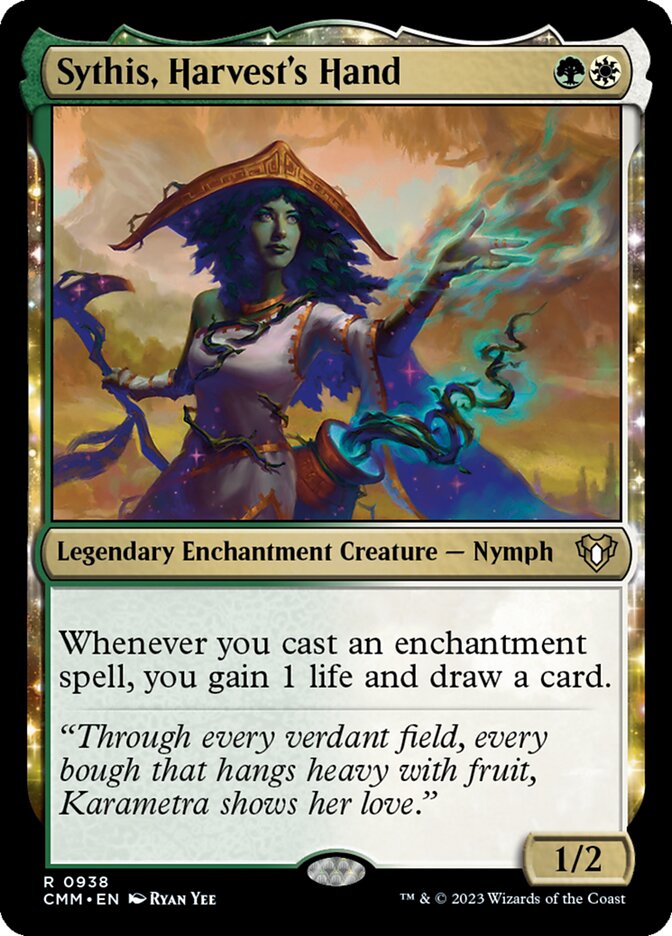
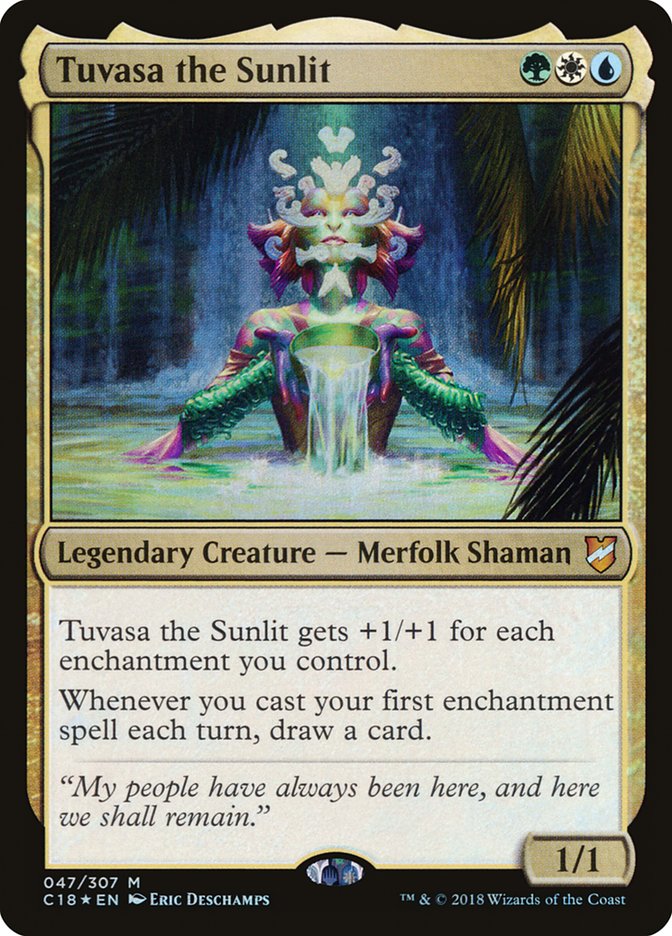
For the rest of this guide, we'll assume Sythis. It's the cleanest, cheapest, most beginner-friendly entry to the archetype, and a Selesnya core means your dual lands stay affordable.
The Core Cards by Role
Here's the verified backbone — the cards that show up in nearly every budget Sythis list, grouped by what they do:
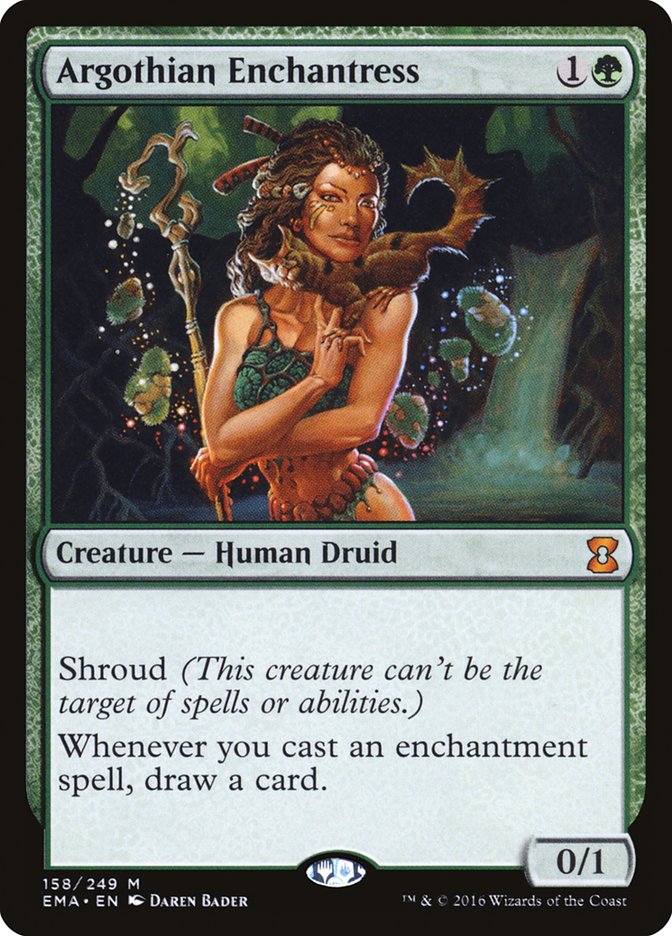
- Draw engines: Argothian Enchantress (has shroud — dodges spot removal entirely), Mesa Enchantress, Verduran Enchantress, Femeref Enchantress, Setessan Champion, Eidolon of Blossoms, and Enchantress's Presence (the engine on an enchantment, so it triggers itself-adjacent effects and survives creature wipes).
- Ramp enchantments: Utopia Sprawl, Fertile Ground, Wild Growth — one-drops that accelerate you and trigger every enchantress on the board. Sanctum Weaver scales with how many enchantments you control.
- Pillowfort & stax: Ghostly Prison, Propaganda, and Sphere of Safety tax attackers; Blind Obedience and Authority of the Consuls slow opponents down. These keep you alive while the engine snowballs.
- Removal (on enchantments): Oblivion Ring, Banishing Light, Grasp of Fate (hits up to three permanents), and Song of the Dryads — all answer threats and trigger your draw engines.
- Card-advantage extras: Sylvan Library for filtering and extra draws, plus a couple of enchantment tutors (Enlightened Tutor, Idyllic Tutor) to find your protection or your win condition when you need it.
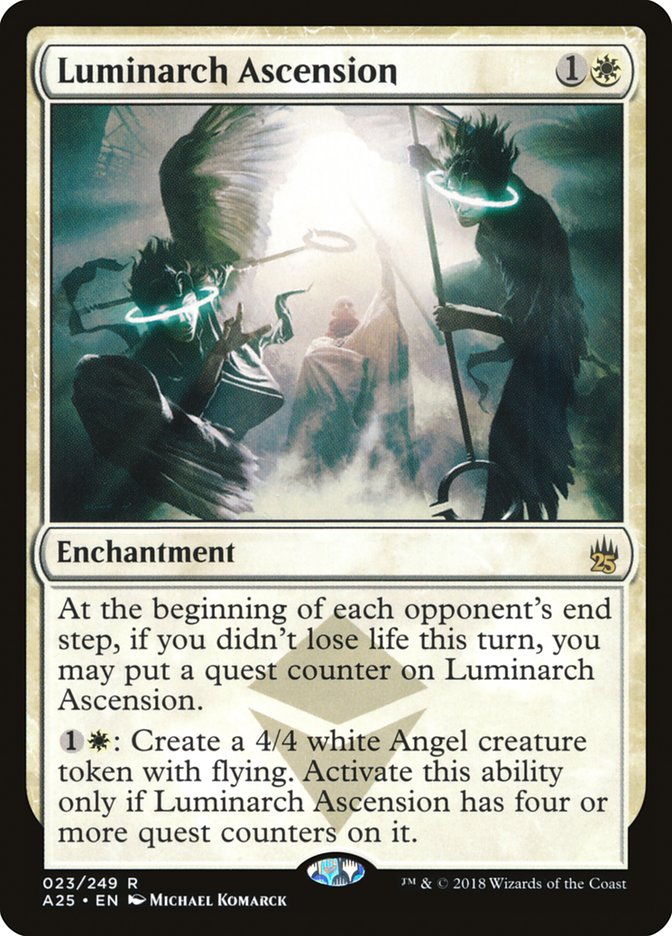
- Payoffs / win conditions: Sigil of the Empty Throne (an angel per enchantment cast), Luminarch Ascension (a 4/4 angel every turn), Hallowed Haunting and Felidar Retreat (token engines), and Starfield of Nyx / Opalescence (turn all your enchantments into creatures and swing).
Protecting the Engine
Enchantress's one real weakness is that a well-timed board wipe or a removal spell on your key enchantress can knock the wind out of the deck. Two cheap enchantments solve most of that, and they're a famous pairing:
The Protection Lock: Sterling Grove + Greater Auramancy
Greater Auramancy gives all your enchantments shroud. Sterling Grove gives your other enchantments shroud too — and crucially, when both are out, Sterling Grove protects Greater Auramancy and vice versa, so the pair can't be targeted and neither can anything else you control. The result is that your opponents simply can't aim single-target removal at your enchantments anymore. Sterling Grove can also be sacrificed to tutor up your next enchantment, so it's never a dead card.
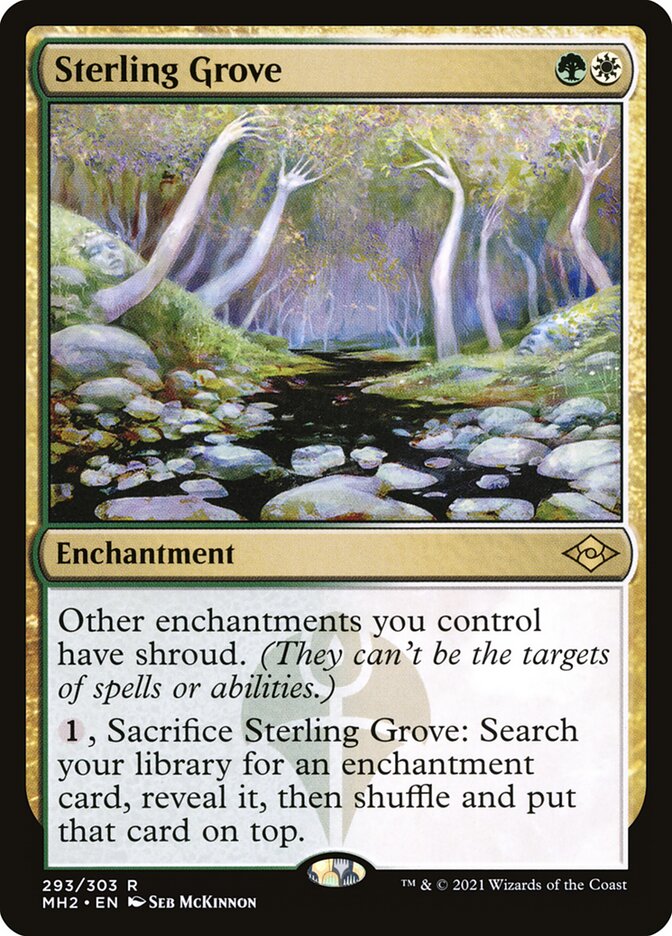
A few more protection notes worth knowing:
- Argothian Enchantress dodges removal on its own. Its built-in shroud means no Swords to Plowshares, no Beast Within — opponents need a board wipe to get rid of it, by which point it's drawn you several cards. The trade-off: you can't target it with your own auras either, which is rarely a problem since you're not suiting it up.
- Spread your engines. Because some of your draw comes from creatures (the enchantresses) and some from enchantments (Enchantress's Presence), a creature board wipe doesn't shut off everything. Running both kinds of engine is its own form of insurance.
- Rebuild speed is your safety net. Even when you do get wiped, an enchantress deck refills faster than almost anything — one new draw engine plus a couple of cheap enchantments and you're rolling again. Don't panic; just redeploy.
A Sample Build Under $100
Rather than hand you a brittle 100-card list (prices shift, and your collection may already have pieces), here's the skeleton to assemble a Sythis deck that lands comfortably under $100. Fill each role to the counts shown and you'll have a functional, resilient engine.
| Role | How many | Notes |
|---|---|---|
| Commander | 1 | Sythis, Harvest's Hand |
| Draw engines | 6–7 | Always want one online by turn 3–4 |
| Ramp enchantments | 6–8 | One-drops that also trigger the engine |
| Pillowfort / stax | 5–7 | Buys time while you snowball |
| Removal (enchantments) | 6–8 | Answer threats and trigger draw |
| Protection | 2–4 | Sterling Grove + Greater Auramancy core |
| Payoffs / win cons | 4–6 | Token makers + an enchantment-animator |
| Extra value / tutors | 3–5 | Sylvan Library, Enlightened/Idyllic Tutor |
| Lands | ~36 | Budget GW duals + basics; few utility lands |
Validate Before You Sleeve
Card prices move constantly, and many of these staples have both cheap and expensive printings of the exact same card. Before you buy, price your list on a current marketplace, choose the cheapest functional printing of each card, and confirm the total still lands where you want it. The $100 ceiling is very achievable for this archetype — just don't assume a quoted price from a guide is still current.
Where To Price This List
TCGplayer is the practical place to run that check: condition-graded sellers, every printing of a card on one page, and one cart for the whole order. Start with the commander (Sythis, Harvest's Hand), the draw engines (Argothian Enchantress, Enchantress's Presence) and the protection lock (Sterling Grove, Greater Auramancy) — the payoffs (Sigil of the Empty Throne, Luminarch Ascension) are usually the cheapest part of the build.
Sterling Grove and Argothian Enchantress have the thinnest reprint support of anything on the list, and their older printings often turn up cheaper as single-card lots on eBay than on a marketplace front page. Worth checking both before you buy either.
Once it's built, the last line item is protection: 100 matte sleeves for a 100-card deck, and a box that holds the whole thing plus your angel tokens. Generic bulk supplies like these are cheapest on Amazon.
As an Amazon Associate, Geeky Domain earns from qualifying purchases. eBay links are affiliate links; Geeky Domain may earn a commission at no extra cost to you.

Where Enchantress Players Misplay
Mistake #1: Dumping enchantments before an enchantress is online.
Casting your enchantments with no draw engine on the board wastes the whole point of the deck — you get the permanent but none of the cards. When you can, sequence a draw engine first, then pour out your cheap enchantments so each one replaces itself. The exception is early ramp, which you play on curve regardless.
Mistake #2: Running too few draw engines.
If you only run three enchantress effects, you'll have games where you never draw one and the deck does nothing. Six or so is the floor for consistency — redundancy is what makes the engine reliable. Don't cut enchantresses to fit more flashy enchantments.
Mistake #3: Forgetting the deck has no plan to actually win.
Drawing twenty cards and building an impregnable pillowfort feels great — right up until the game has gone 45 minutes and you have no way to close it. Include real payoffs (Sigil of the Empty Throne, Luminarch Ascension, an enchantment-animator) and actually pivot to winning once your card advantage is overwhelming. Value is the means, not the end.
Mistake #4: Leaving the engine exposed to a known board wipe.
Against a deck telegraphing a sweeper, over-committing every enchantress to the board is how you get blown out. Hold a draw engine in hand as a rebuild, lead with Enchantress's Presence (an enchantment, safe from creature wipes), and get Sterling Grove + Greater Auramancy down to shut off spot removal before you go all-in.
Mistake #5: Treating ramp and removal as "off-theme."
Newer builders sometimes cut enchantment-based ramp and removal to jam more "pure" enchantments. That's backwards — those cards are enchantments, so they trigger your engine while also doing a job. Utopia Sprawl drawing you a card is the deck working as intended. Keep them.
FAQ & Quick Reference
- What power level is budget Enchantress? Comfortably casual-to-mid — roughly Bracket 1–2 under the current bracket system. It's a value-and-pillowfort deck with no fast combo, which makes it a friendly, fair pod deck rather than a cEDH contender. You can push it higher with pricier protection and tutors, but the budget version sits in the sweet spot for most kitchen tables.
- Should I build auras or pure enchantments? For a first budget build, lean toward standalone enchantments (ramp, pillowfort, removal) rather than auras. Auras risk two-for-ones — lose the creature and the aura goes with it. Aura-focused enchantress is a fun variant, but the pure-enchantment version is more resilient and easier to pilot.
- Is Sythis really the best budget commander? For value and price, yes. Two mana, draws and gains life on every enchantment, and a two-color Selesnya identity that keeps your mana base cheap. Tuvasa is more powerful in a vacuum but the three-color mana base costs more — not ideal for a strict under-$100 build.
- How do I deal with enchantment removal (Aura Shards, naturalize effects)? The Sterling Grove + Greater Auramancy lock stops single-target removal, and Argothian Enchantress's shroud protects your key engine. For mass enchantment hate you mostly rely on rebuild speed — the deck refills fast. It's a real weakness, but an uncommon one in casual pods.
- Can I upgrade it later? Easily. The natural upgrades are better lands, a few more tutors (Idyllic Tutor, Enlightened Tutor), and premium protection like Privileged Position. The engine itself doesn't need to change — you're just smoothing the mana and adding consistency. That's the beauty of an archetype where the core is already cheap.
- The engine: enchantment + enchantress = a card; do it repeatedly to out-resource the table.
- Three parts: 5–6 draw engines, a pile of cheap enchantments, a handful of payoffs.
- Best budget commander: Sythis, Harvest's Hand (GW), two colors, cheap mana base.
- Protection lock: Sterling Grove + Greater Auramancy = untargetable enchantments.
- Win cons: Sigil of the Empty Throne, Luminarch Ascension, Hallowed Haunting, Starfield of Nyx.
- Why it's cheap: it's an engine of reprinted commons/uncommons, not a pile of bombs.
Out-Draw the Table for Under $100.
Enchantress is the rare budget deck that doesn't feel like a compromise. The engine is decades old and dirt cheap, but the experience — drawing five cards a turn, walling off attackers, and grinding the table into the ground before flooding the board with angels — plays like a deck worth far more than it cost. Get six draw engines, a stack of cheap enchantments, the Sterling Grove + Greater Auramancy lock, and a few payoffs, and you've got a resilient, satisfying deck under $100. Just remember to validate prices before you buy, and don't forget to actually win once you're drowning in cards.
© GEEKYDOMAIN.COM | Strategy Powered by Data