

Control in Commander: A Practical Guide
Say no a lot, draw more cards than everyone else, and win when the table is exhausted. Here's how to actually build and pilot a control deck in multiplayer Commander.
Control is one of Magic's oldest and most satisfying archetypes: instead of racing to deploy threats, you answer everyone else's, grind the table out of resources, and close the game once the coast is clear. In a 1v1 format that's a clean, well-understood plan. In multiplayer Commander — three or four opponents, bigger life totals, a hundred-card singleton deck — control becomes a genuinely different and harder puzzle.
The core problem is simple math: you have one set of answers and three sets of threats. A counterspell trades one-for-one, but you're outnumbered three-to-one. That single fact reshapes everything about how control works at a Commander table, and it's why so many players try to build "control" and end up with a slow, threatless pile that loses to the first aggressive deck at the table.
This guide covers what control actually means in multiplayer, the pillars you build around, the ratios that work, how to pilot it turn to turn, and the mistakes that quietly lose games. It's evergreen strategy — the cards shift over time, but the principles don't.
→ Short Version
Control wins by denying opponents' plans while accruing card advantage, then closing once the table is depleted. The pillars: cheap instant-speed removal, mass removal / board wipes (which scale beautifully in multiplayer), selective counterspells (you can't counter everything, so don't try), and repeatable card advantage (the engine that makes it all possible). Lean harder on board wipes and card draw than on a wall of counters — and always run a real win condition, because the classic control failure is not losing, it's never actually winning.
→ Sharpen Your Strategy
In This Guide
What Control Actually Is
A control deck has a simple goal: prevent opponents from executing their gameplans while quietly accruing incremental advantage, and only move to win once the threats are neutralized. You're not the deck doing exciting things on turn three — you're the deck making sure nobody else does, until the game tilts so far in your favor that closing it out is a formality.
The defining trait is reactivity. Control decks run a high density of diverse answers — spot removal, board wipes, counterspells — and prefer to hold mana open rather than commit to the board, so they can respond to whatever develops. They favor cheap, efficient answers (paying one mana to remove a card an opponent spent five on is a winning exchange) and instant-speed effects that let them keep that mana up.
The trade-off is tempo. By staying reactive, control concedes the early game and bets that its superior late game will win out. That bet is sound at a slow table and disastrous against a fast one — which is the central tension we'll keep returning to.
Why Multiplayer Changes Everything
Most control theory comes from 1v1 Magic, and the biggest mistake new Commander control players make is importing it wholesale. Multiplayer breaks several assumptions:
- You're outnumbered on answers. One-for-one trades favor you in a duel; in a four-player game, every spot-removal spell or hard counter you cast still leaves two other opponents untouched. You can't answer everything one card at a time.
- Mass removal gets dramatically better. A board wipe that kills one creature in a duel might kill eight across a multiplayer table — one card answering many threats. Board wipes are the best card-economy play control has, and Commander control runs an above-average number of them.
- You can't counter everyone. There's far more total mana and far more spells being cast than you can possibly hold up answers for. Counterspells must be saved for the threats that genuinely demand it, not spent on the first creature you see.
- The clock is longer — but so is the danger window. Bigger life totals and more players mean games run long, which suits control's grind. But it also means more combo turns, more value engines, and more chances for someone to win out of nowhere before you're ready.
The upshot: Commander control leans harder on mass answers and card advantage than on the wall of cheap counterspells that defines 1v1 control. Removal and the ability to neutralize commanders are arguably more central than countermagic here.
The Four Pillars
Every control deck stands on four legs. Underbuild any one and the deck wobbles.
| Pillar | Job | Multiplayer Priority |
|---|---|---|
| Spot removal | Answer the single threat you must kill now | High — cheap, instant, flexible |
| Board wipes | Reset the table when you're behind on board | Very high — best card economy you have |
| Counterspells | Stop the one spell you can't afford to resolve | Selective — save for combos & bombs |
| Card advantage | Refuel so you never run out of answers | Very high — the engine that wins |
Those four pillars aren't independent — they chain into a single loop. That loop is the control gameplan:
Neutralize threats efficiently
Draw faster than you spend
Let the table exhaust itself
Deploy a win nobody can stop
The engine in one line: answer threats efficiently, refill your hand faster than you spend it, let opponents exhaust their resources against your wall, then deploy a win condition when nobody can stop it. Control wins by outlasting, not outracing.
Removal & Board Wipes
Removal is the backbone of Commander control — arguably more so than counterspells. You want a mix of cheap, flexible spot removal and a healthy stack of board wipes.
Spot removal: Prioritize cheap and instant-speed so you can hold it up alongside other interaction. White's Swords to Plowshares and Path to Exile are the gold standard — one mana to exile any creature. Dipping outside blue unlocks a deep removal pool: black's efficient kill spells (Infernal Grasp, Go for the Throat), red's burn (Lightning Bolt), and flexible answers like Get Lost. Instant speed is the throughline — it lets you keep mana open and react rather than tapping out.
Board wipes are where control shines in multiplayer. A single sweeper can erase three opponents' boards at once — the best card-for-card exchange in the format. The staples worth knowing:
- Wrath of God / Supreme Verdict / Damnation. Clean "destroy all creatures" sweepers. Cheap, reliable resets.
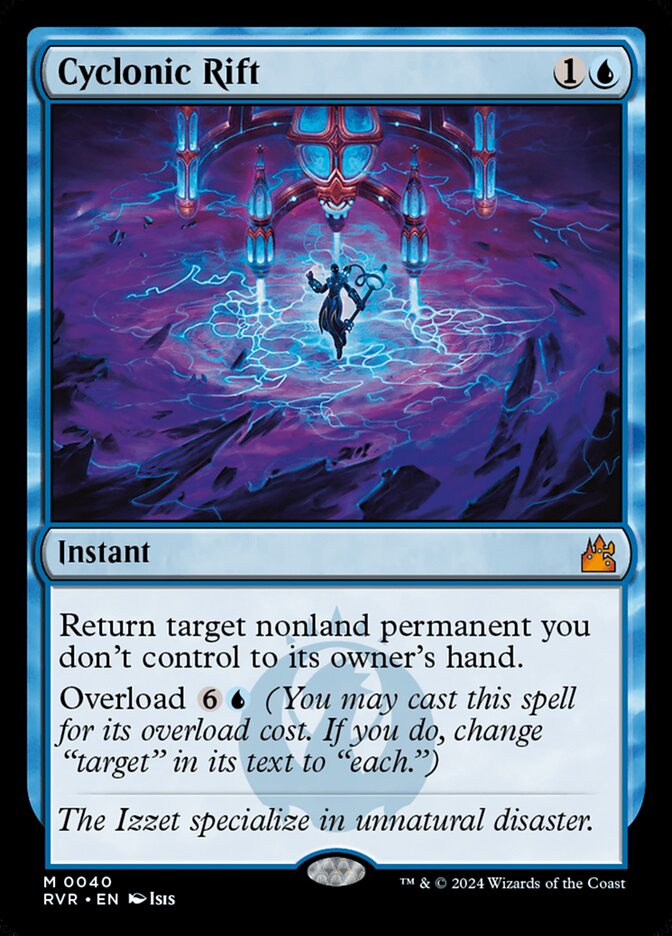
- Cyclonic Rift. The iconic blue control finisher. Overloaded, it bounces every nonland permanent your opponents control while leaving yours untouched — a one-sided reset and a real panic button.
- Farewell / Austere Command. Modal wipes that let you choose what to destroy (creatures, artifacts, enchantments, graveyards). Maximum flexibility, so you can leave your own pieces intact.
- Toxic Deluge / Vanquish the Horde. Scalable wraths that handle indestructible threats or go-wide boards cheaply.
For deeper, color-pair-specific removal packages, our Orzhov staples guide is a good starting point for white-black control shells.
Counterspells in Multiplayer
Here's the most important counterspell lesson for Commander: you cannot counter everything, so don't try. With three opponents casting spells, your counters are a scarce resource to spend on the cards that actually threaten to win or that you have no other answer to — a game-ending combo piece, an uncounterable-once-resolved bomb, a key value engine.
Practical guidance on the counter package:
- Run a focused suite, not a wall. A hard-control blue deck typically wants somewhere around 10–15 pieces of countermagic; many control decks run fewer and lean on removal instead. More isn't always better — a hand clogged with situational counters does nothing proactive.
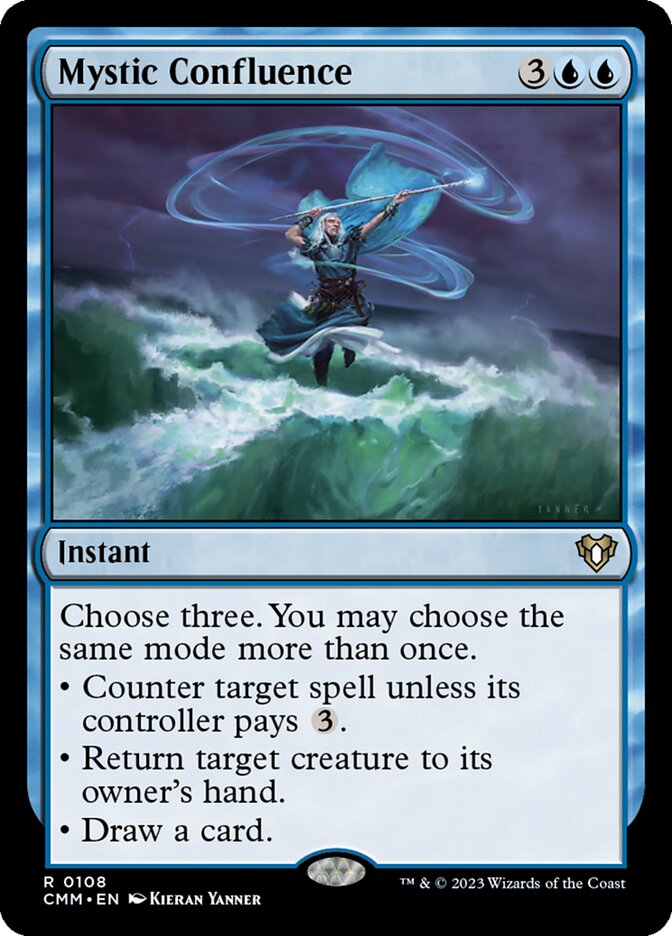
- Mix cheap and flexible. A few cheap counters (Counterspell, Swan Song, Negate) to interact early, plus a couple of high-impact modal ones (Mystic Confluence, Cryptic Command) for late-game value. Too many expensive counters and you have no early interaction.
- Counters aren't your only interaction. Drawing only counters in your opening hand is a dead start. Pair them with removal and card draw so every hand can do something, whether or not an opponent gives you a target.
A subtle but powerful Commander control tool: commander denial. Locking an opponent's commander in the command zone (Drannith Magistrate), stealing it, or otherwise shutting off its value can permanently defang a deck in a way a single counter never will. Against value-engine commanders, that's often more important than countering any one spell.
Card Advantage: The Engine
Every answer you cast is a card spent. If you trade one-for-one all game against three opponents, you run out of cards long before they run out of threats. Card advantage is what makes control mathematically possible in multiplayer — it's how you refill faster than you deplete.
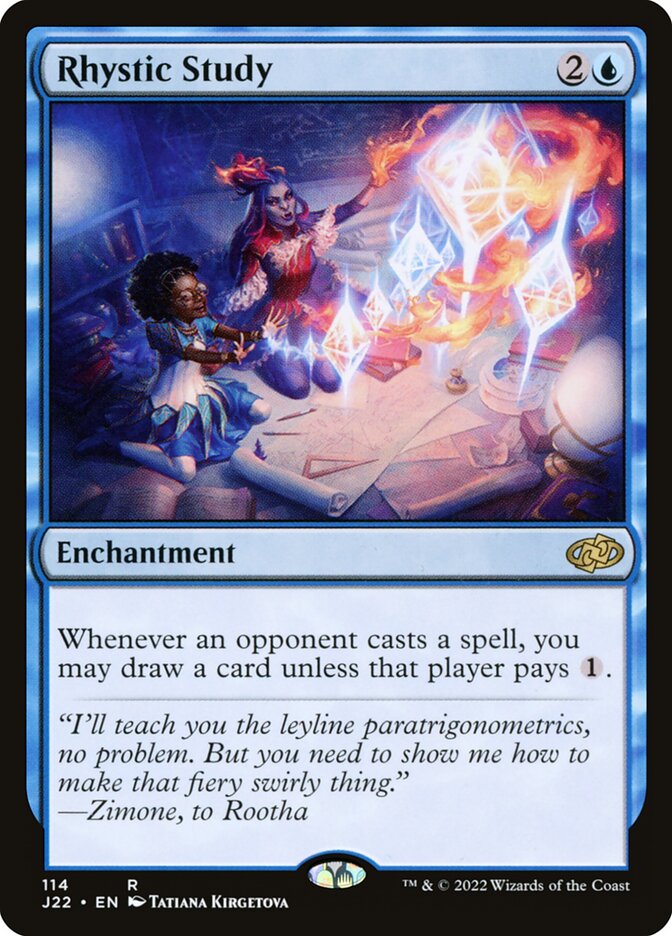
Prioritize repeatable draw over one-shot cantrips. A draw engine that ticks every turn (an enchantment like Rhystic Study or Mystic Remora, a planeswalker that generates value, a recurring artifact) compounds across a long game in a way a single "draw two" never will. Planeswalkers earn special mention — they provide ongoing advantage turn after turn and double as soft win conditions.
One structural note from control theory: draw-go control prefers instant-speed card draw, so you can refill on opponents' turns while keeping mana open for answers on yours. There's real tension between tapping out for a sorcery-speed "draw three" and holding up a counter — the best control draw lets you avoid that choice.
How Control Closes the Game
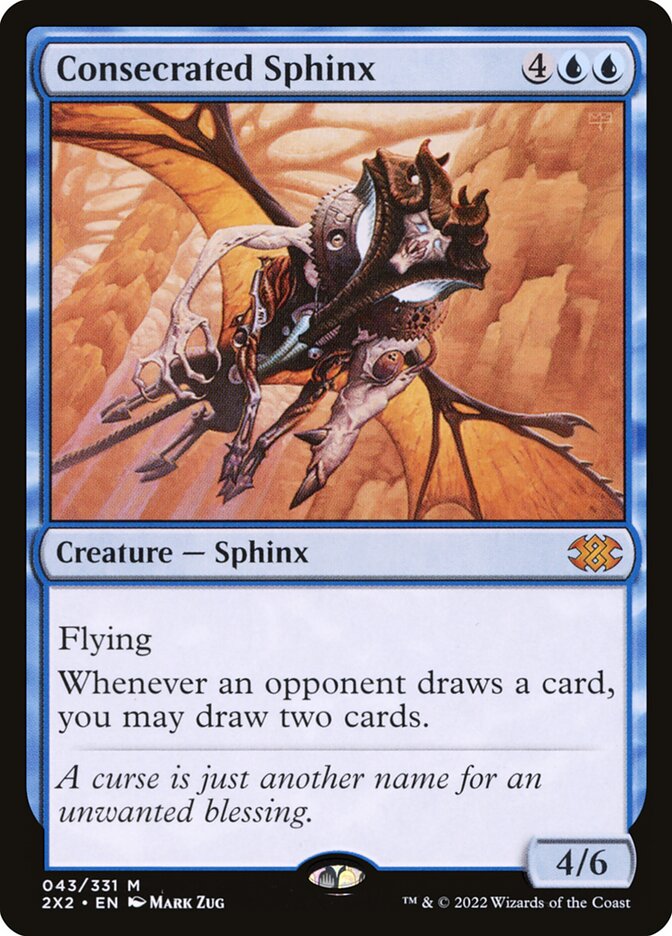
The most common control failure isn't losing — it's not winning. You neutralize the table, reach a dominant position, and then... can't actually end the game, so it drags until someone topdecks their way past you. A control deck needs a real, reasonably efficient win condition. The usual routes:
- A resilient finisher. One or two hard-to-answer threats — a big flier, a planeswalker ultimate, a recurring creature — you deploy once the coast is clear and protect to the finish.
- A compact combo. Many control decks run a small, two-card win they can assemble and protect with their counters and removal. Efficient, but make sure it's not your only plan.
- Incremental inevitability. Planeswalkers, a card-advantage engine that buries the table, or an alternate win condition that triggers once you're far enough ahead.
- The overloaded reset into a swing. A one-sided wipe (Cyclonic Rift) that clears the table, followed by a clean attack into defenseless opponents.
Deckbuilding Ratios
A control-leaning Commander deck shifts the standard ratios toward interaction and card draw. A workable starting framework for your 99:
| Category | Count (of 99) | Notes |
|---|---|---|
| Lands | 36–38 | Control wants to hit land drops reliably |
| Ramp | 8–10 | Rocks help you hold up answers earlier |
| Card draw | 10–12 | Above average; lean on repeatable engines |
| Spot removal | 8–10 | Cheap and instant-speed preferred |
| Board wipes | 4–6 | More than other archetypes — your best economy |
| Counterspells | 8–12 | Scale to your commander & plan; don't overload |
| Win conditions | 3–5 | Don't skimp — you must be able to close |
These overlap — a modal board wipe is removal, a value planeswalker is both card draw and a win condition — so treat them as guidelines, not a rigid checklist. The headline shift versus a midrange deck: more interaction, more card draw, fewer raw threats. As a rough target, aim for roughly a third of your nonland cards to be interaction or card advantage.
Piloting Control
Control is the most decision-dense archetype to play well. The recurring skills:
- Let small threats resolve. Don't spend a premium answer on a minor creature. Save your interaction for the threats that actually threaten to win — you'll need it.
- Hold mana open. Control's power is the threat of an answer. Representing open mana on others' turns deters plays even when your hand is empty.
- Let the table fight. In multiplayer, you don't have to answer everything — sometimes the right play is to let two opponents trade resources while you sit back and accrue value.
- Time your board wipe. Wiping too early wastes it; too late loses you the game. The ideal wipe answers multiple opponents' boards at once and ideally spares your own pieces.
- Don't become the archenemy too early. Countering and wiping makes you a target. Be diplomatic, answer the scariest deck rather than the closest player, and avoid drawing three opponents' aggression before you're ready.
Those principles are easier to internalize with a concrete example. Here's how a control pilot thinks through a mid-game turn cycle at a four-player table:
A Worked Turn: Reading the Table
The board: It's turn six. Player A has a developing creature deck (two mid-size threats out). Player B is a combo deck durdling on lands, clearly assembling something. Player C just cast a value engine that draws them a card each turn. You have a counterspell, a piece of spot removal, and three untapped mana.
The instinct to resist: killing one of Player A's creatures. It's the most visible threat, but it's also the least dangerous — two creatures won't win the game this turn, and spending removal there leaves you naked against the combo player.
The correct line: hold everything. Pass with three mana up, representing the counter. Player B, seeing open mana from a known control deck, may not go for their combo — the threat of the answer buys you a turn without spending a card. Save the counter for B's win attempt, save the removal for whatever demands it most, and let A and C's boards develop a little longer. You can wipe them together later; you can't get the countered combo piece back if you waste the counter now. Patience is the play.
That's the core control skill in miniature: the scariest thing on the board isn't always the biggest, open mana does work even when you never spend it, and the answer you hold is often worth more than the answer you cast. Every turn is a version of this read.
Where Control Players Misplay
Mistake #1: No win condition.
The classic control trap — building a deck that can stop everything but can't actually win. You stall the table forever and then lose to a topdeck. Run 3–5 real, reasonably efficient ways to close, and respect them as much as your answers.
Mistake #2: Trying to counter everything.
In multiplayer you'll be drowned in spells. Burning counters on early, low-impact plays leaves you defenseless against the combo or bomb that actually matters. Save countermagic for what you truly can't afford to let resolve.
Mistake #3: Too few board wipes.
Spot removal alone can't keep pace with three developing boards. Board wipes are your best card economy in multiplayer — underrunning them is how control decks get overwhelmed and buried under sheer numbers.

Mistake #4: Folding to fast aggro.
Control's structural weakness is the deck that ends the game before you stabilize. If your meta is fast, lower your curve, add cheap early interaction and lifegain, and don't durdle — against aggro, your removal needs to come down before you're dead, not on turn seven.
FAQ & Quick Reference
Do I have to play blue to play control?
No. Blue has the best counterspells and card draw, so it's the classic control color, but white brings the best board wipes and removal, and black adds efficient kill spells and recursion. Plenty of strong control decks are Azorius (W/U), Esper (W/U/B), or even removal-heavy white-based builds with little or no countermagic.
How many counterspells should I run?
For a hard-control blue deck, roughly 10–15 is a common target, but many control decks run fewer and lean on removal instead. Scale it to your commander and plan — spell-matters commanders want more; creature-based control wants fewer.
Isn't control just "no fun" at a casual table?
It can be, if you counter everything and never close. Played well — answering real threats, letting small stuff go, and actually winning in a reasonable time — it's a respected archetype. Read the table's power level and be diplomatic; "draw-go that never wins" is what earns the reputation, not control itself.
What beats control?
Fast aggro that ends the game before you stabilize, and resilient value engines that out-grind your card advantage. Lower your curve and add cheap interaction for the former; add ways to permanently neutralize engines and commanders (commander denial) for the latter.
Is control good for beginners?
It's the hardest archetype to pilot well — it's decision-dense and demands you read the whole table. It's a fantastic deck to grow into, but if you're brand new, a midrange or ramp deck teaches the fundamentals with a lower difficulty floor.
Outlast, Don't Outrace.
Commander control isn't 1v1 control with more cards — it's a different puzzle built on mass answers and card advantage rather than a wall of counters. Lean on board wipes, refuel relentlessly, spend your counters only on what truly matters, and never forget to pack a real way to win.
Play it patiently and diplomatically, answer the scariest deck rather than the nearest player, and close the game once the table is exhausted. Do that, and control goes from "the deck that never wins" to the one nobody at the table wants to see resolve its engine.
© GEEKYDOMAIN.COM | Strategy Powered by Data