

Lifegain Strategies Beyond Just Gaining Life
A big life total doesn't win games on its own. The trick to a great lifegain deck is turning life into a resource — into damage, cards, creatures, and wins.
Lifegain has a reputation as the "do nothing" archetype — gain a bunch of life, sit behind it, and lose slowly anyway. And that reputation is earned by decks that miss the point. Gaining life by itself doesn't pressure anyone; you can sit at 80 life and still get ground out. The decks that win with lifegain treat the life total not as a comfort blanket but as fuel — a resource they spend and convert into things that actually end games.
That's the whole idea behind this guide. Like our other archetype breakdowns — spellslinger and Voltron — this is a concept piece, not a decklist. We'll explain how lifegain becomes a real strategy: the payoffs that turn life into a weapon, the roles a deck needs, and the trap of building around the gaining instead of the using.
We'll frame it in Commander terms, where starting at 40 life makes the archetype especially potent, but the principles apply anywhere lifegain appears. Let's make that life total do some work.
The Short Version
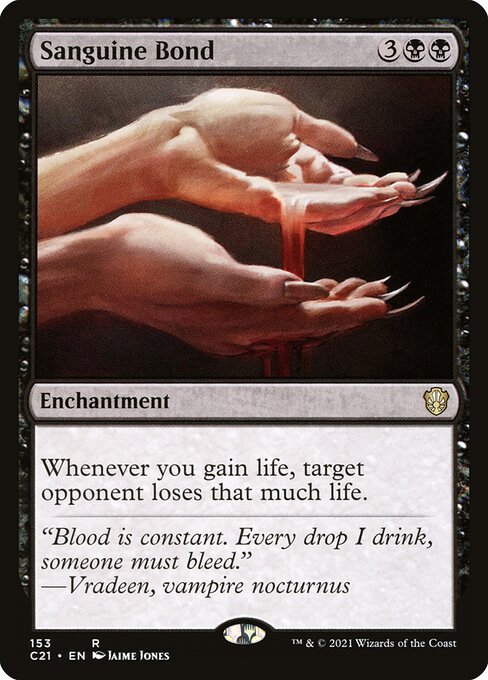
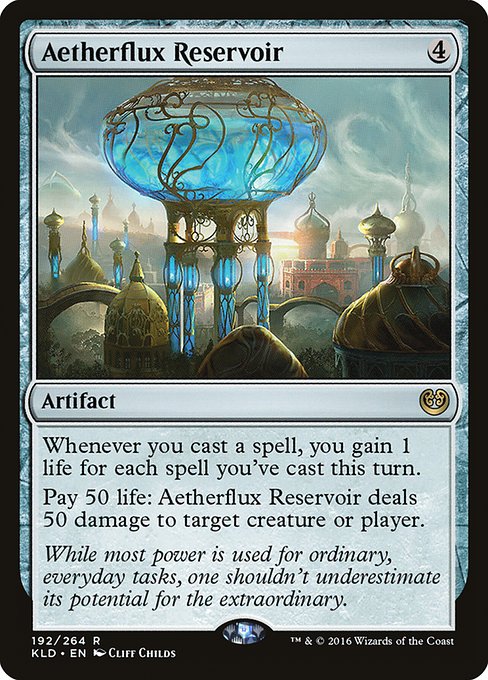
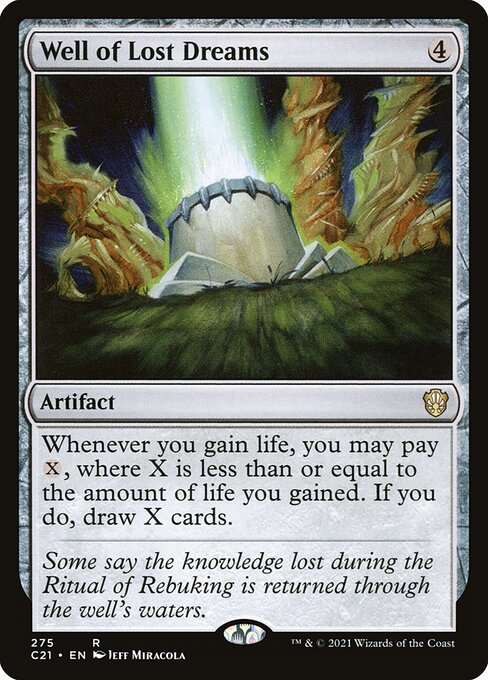
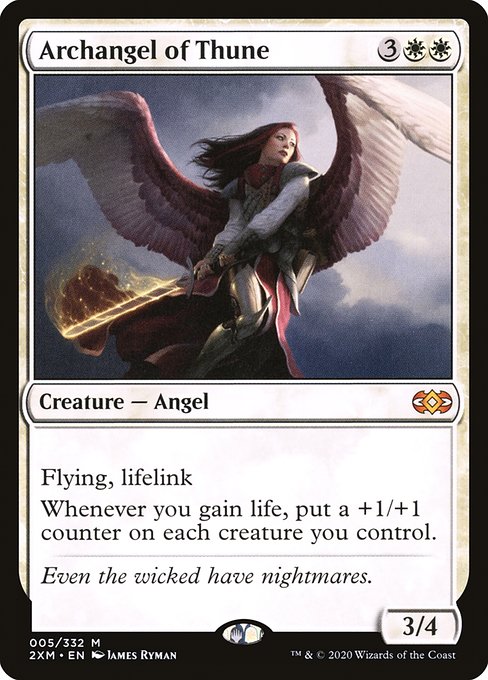
Gaining life isn't a strategy — using it is. A real lifegain deck pairs reliable, repeatable lifegain sources (Soul Warden and friends, lifelink, free triggers) with payoffs that convert life into something that wins. Those payoffs come in four flavors: drain (Sanguine Bond and kin turn your gains into opponents' losses), damage (Aetherflux Reservoir flings your life total at faces), card advantage (Well of Lost Dreams draws off every gain), and board growth (Karlov, Archangel of Thune, and "gain life, make a creature" effects). Some decks add a win-the-game trigger like Felidar Sovereign or Test of Endurance. Black-white (Orzhov) is the classic home. Build around the payoffs, not the number.
→ Related MTG Guides
In This Guide
The Lifegain Trap
The mistake that defines bad lifegain decks is treating the life total as the goal. Going from 40 to 80 life feels productive, but it changes nothing about the board — your opponents are still developing, and a big life total just means you lose a few turns later. Life is not a clock. On its own, it doesn't threaten anyone.
The fix is a mental reframe: life is a resource you spend, not a score you protect. The good lifegain decks gain life as a means — every point of life is potential damage, a card drawn, a counter placed, or an opponent's life lost. The gaining is the setup; the payoff is the deck.
So the right way to build is backwards from the payoff. Decide how your life total wins the game first, then add the lifegain to fuel it. Everything below is organized that way: first the sources, then the four ways to cash them in.
Reliable Lifegain Sources
Payoffs that trigger "whenever you gain life" want lifegain that's frequent and repeatable, not one big burst. A single 10-life spell triggers a payoff once; a card that gains 1 life every turn triggers it over and over. The best sources are cheap and passive:
- The "Soul Sisters." Soul Warden, Soul's Attendant, Essence Warden, and newer kin like Guide of Souls are one-mana creatures that gain you a life whenever a creature enters the battlefield. In a deck that makes tokens or plays lots of creatures — or a multiplayer game where everyone's casting creatures — they trigger constantly. For a lifegain deck, one of these is a better turn-one play than almost anything.
- Lifelink. Lifelink creatures gain life every time they deal damage — including on your opponents' turns when they block or attack. It's the most consistent way to gain life through combat, and it ties your lifegain to a board presence that also pressures opponents.
- Free, repeatable triggers. Enchantments and effects that gain life each turn without spending mana — the Abiding Grace and Contemplation family — are gold, because they fire your payoffs for free while leaving your mana open to actually use the life. Passive, repeatable lifegain is the backbone of the engine.

Payoff 1: Drain
The most direct way to weaponize lifegain: make every point you gain a point your opponents lose. Drain payoffs flip a defensive mechanic into an offensive one.
- Sanguine Bond & kin. Sanguine Bond (and similar effects like Vizkopa Guildmage and Defiant Bloodlord) cause an opponent to lose life whenever you gain it. Suddenly your Soul Warden isn't gaining you 1 — it's draining the table. These are the heart of the drain plan, and near-essential in any black-based lifegain deck.
- Dedicated drainers. Cards like Vito, Thorn of the Dusk Rose provide the same gain-equals-loss effect on a creature, giving you redundancy so the strategy survives removal. Run several drain payoffs so losing one doesn't fold the deck.
- The infinite loop (handle with care). Sanguine Bond plus Exquisite Blood forms a famous infinite loop — you gain, they lose, that loss gains you more, and around it goes until the table is dead. It's powerful and worth knowing, but it's a true combo finish; whether you want it depends on your pod's power level (more on combos below).
Payoff 2: Life as Damage
The cleanest "spend your life total" payoff: convert that big number directly into damage at the faces.
- Aetherflux Reservoir. The number-one lifegain finisher. It gains you life for each spell you cast in a turn, and then lets you pay 50 life to deal 50 damage to any target. Once you're comfortably above 50 — easy in a lifegain deck, especially from 40 — you simply start blasting opponents out of the game. It's also the "out" that ends games for many infinite-life loops, so they don't just stall at a huge number.
- Life-as-payment effects. A high life total also fuels cards that pay life for powerful effects — card draw, mana, tutoring. Your stockpile becomes a second resource pool you can convert into raw advantage, which is its own subtle "beyond gaining life" payoff.
Payoff 3: Card Advantage
Life can buy you the one thing that keeps any deck going: more cards. These payoffs turn the engine into fuel for itself.
- Well of Lost Dreams. Lets you pay mana to draw a card each time you gain life (up to the amount gained). Pair it with frequent, repeatable lifegain and it's a draw engine that refills your hand all game — converting your defensive mechanic straight into card advantage.
- Gain-and-draw spells. Cards like Sphinx's Revelation bump your life and refill your hand in one shot — you stabilize and reload simultaneously. These keep a grindy lifegain deck from running out of gas while it assembles its payoffs.
Payoff 4: Board Growth
The final flavor turns lifegain into a growing battlefield — bigger creatures or more of them, every time you gain.
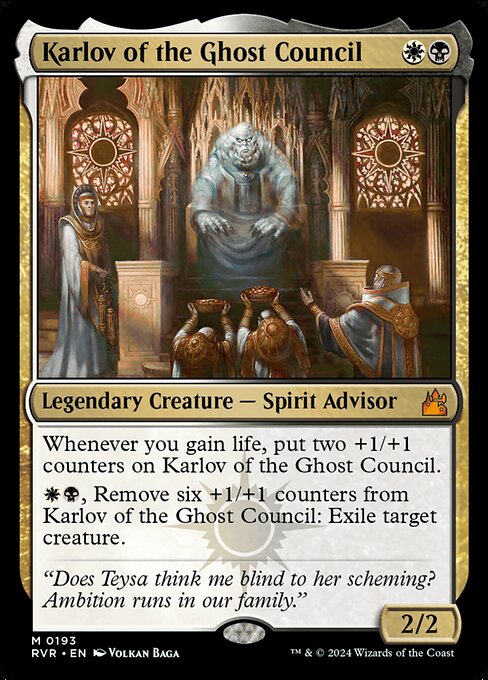
- Counters on gain. Archangel of Thune puts a +1/+1 counter on your whole team whenever you gain life, and Karlov of the Ghost Council grows (and becomes removal) as you gain. With repeatable lifegain these snowball a board into lethal size fast — a natural bridge to a +1/+1 counters plan.
- Tokens on gain. Effects like Angelic Accord make a creature when you gain enough life in a turn, and Crested Sunmare builds an army of indestructible horses. Your lifegain literally becomes a board, which can then attack or feed your other payoffs.
- Scaling threats. Creatures like Voice of the Blessed grow with each lifegain trigger, turning a cheap body into a major threat over a few turns. They reward exactly the frequent, repeatable lifegain the deck is already built on.
Doublers & Win Conditions
Two more pieces round out the toolkit. Doublers amplify everything: Rhox Faithmender, Boon Reflection, and Alhammeret's Archive each double the life you gain — which doubles every payoff trigger downstream (and Alhammeret's doubles your card draw too). A doubler turns a modest engine into an overwhelming one.
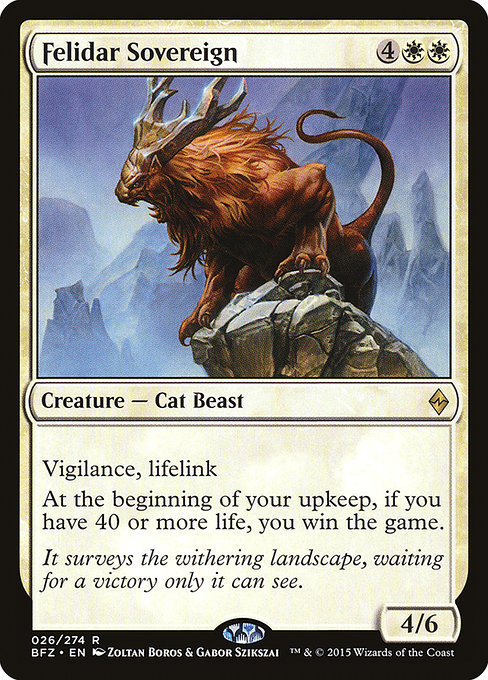
And some decks run a win-the-game payoff — a card that simply wins if your life is high enough. Felidar Sovereign and Test of Endurance both check for a high life total (trivial to reach in a dedicated deck, especially from 40 in Commander) and end the game outright. They're a clean, combat-free way to close, though savvy opponents will try to remove them or burn you down in response, so protect them.
On infinite combos generally: lifegain is famous for them — the Sanguine Bond loop above, or pieces like Heliod paired with Walking Ballista. They're effective but they're a different power level. If a combo finish appeals, our budget combo win conditions guide covers options; if it doesn't, the payoffs above win plenty of games on their own.
Colors, Commanders & Building
Lifegain's heartland is black-white (Orzhov): white supplies the Soul Sisters, lifelink, and board payoffs; black supplies the drain effects that make it lethal. White-only decks lean on board growth and win-cons; adding black unlocks the drain plan. (Blue doesn't interact with lifegain directly, but it tutors for the colorless payoff artifacts.) A few commanders that anchor the strategy:
- Karlov of the Ghost Council (Orzhov). Grows with every lifegain trigger and can exile creatures — a payoff and removal engine in the command zone. The classic "lifegain matters" anchor.
- Oloro, Ageless Ascetic (Esper). Passively gains life each upkeep and pays you off for a high life total — a grindy, value-heavy commander that wants the card-advantage and drain payoffs.
- Kambal & the drain commanders. Commanders like Kambal punish opponents' actions with drain, leaning the deck toward the life-loss plan from turn one. Great if you want lifegain that's purely an attack.
As for proportions, the build follows the roles: a healthy base of cheap repeatable lifegain sources, a spread of payoffs across the four types (so you always have a way to convert), a doubler or two, enough card draw to find your pieces, and removal to protect them. Decide your win — drain, Aetherflux, win-con, or board — and weight toward it.
Common Mistakes
Gaining life with no payoff.
The cardinal sin. A deck full of lifegain and no way to use it just loses slowly at a high life total. Every lifegain card should be feeding a payoff — build the payoffs first.
Big bursts over repeatable gains.
One spell that gains 15 life triggers a payoff once; a card that gains 1 life five times triggers it five times. For trigger-based payoffs, frequency beats size — prioritize cheap, repeatable sources.
One payoff, no redundancy.
If your whole deck hinges on a single Sanguine Bond or Aetherflux Reservoir, one removal spell ends your game plan. Run multiple payoffs across the four types so you always have a way to cash in.
Becoming the "do nothing" table threat.
Pillowforting up to a huge life total without a clock paints you as a durdle — opponents simply ignore you until they can deal with everyone, then you. Have a plan that actually pressures the table, or you'll win the "still alive" award and lose the game.
FAQ
- Is lifegain actually competitive? Built around payoffs, yes — at casual-to-mid power it's strong, and with drain or combo finishes it can punch higher. Built around the life total alone, no. The difference is entirely whether you convert the life into a win.
- What colors do I need? White is the core for sources and board payoffs; black adds the drain plan and is strongly recommended if you want lifegain to be lethal. Orzhov (black-white) is the classic, complete package. Many key payoffs are colorless artifacts, so even off-color decks can splash them.
- Do I need the infinite combo? No. The Sanguine Bond loop and similar are powerful but optional — they raise your power level and may not suit every pod. Drain payoffs, Aetherflux, board growth, and win-cons all close games without going infinite.
- How is this different from a +1/+1 counters deck? They overlap — board-growth lifegain (Archangel of Thune, Karlov) bleeds right into counters. The difference is the trigger: a counters deck cares about placing counters; a lifegain deck cares about gaining life, and uses that to do any of four things, of which growing a board is just one.
Quick Reference
- Core idea: life is a resource to spend, not a number to protect — build around payoffs.
- Sources: Soul Sisters (gain-on-ETB), lifelink, free repeatable triggers — favor frequency.
- Payoff 1 — Drain: Sanguine Bond / Vito turn your gains into their losses.
- Payoff 2 — Damage: Aetherflux Reservoir flings life at faces (the #1 finisher).
- Payoff 3 — Cards: Well of Lost Dreams draws off every gain.
- Payoff 4 — Board: Karlov, Archangel of Thune, Angelic Accord grow your team.
- Amplify & close: doublers (Rhox Faithmender); win-cons (Felidar Sovereign, Test of Endurance).
- Colors: Orzhov (black-white) is home; white sources, black drain.
Make Your Life Total Mean Something.
Lifegain is only "do nothing" when you stop at gaining life. Build the other way — pick how your life total wins (drain, damage, cards, or a growing board), then add cheap repeatable lifegain to fuel it — and the archetype transforms from a punching bag into a genuine threat. The number on your life total is just stored energy; the payoffs are how you spend it.
Gain with a purpose, and turn that big life total into a win.
© GEEKYDOMAIN.COM | Strategy Powered by Data