

Voltron: Building Around One Big Threat
Stack auras and equipment onto one creature until nothing in the format can stop it — then swing for 21. Here's how the Voltron archetype actually works in Commander, and how to build one that wins.
Voltron is the most cinematic archetype in Commander — you assemble a single warrior, piece by piece, until it can kill an opponent in three swings. The name comes from the animated robot built out of smaller machines, and it captures the strategy exactly: small pieces (auras, equipment, pump effects) stacked onto one creature (usually your commander) until that creature is an unstoppable threat. Then you swing, deal 21 commander damage, and win.
It's also one of the most misunderstood archetypes. New Voltron players tend to treat it as "tribal warriors with lots of equipment" and wonder why they keep losing the moment somebody points a removal spell at their commander. The actual Voltron skill is balancing three competing demands: getting your creature powerful enough to kill in a reasonable number of attacks, getting it through opposing blockers, and keeping it alive when the table inevitably tries to remove it. Miss any of the three and the strategy collapses.
This guide is about the archetype itself, not a specific decklist. We'll cover the three pillars, the math behind the "favorite numbers" (7, 11, and 21), the Aura-vs-Equipment fork, what every Voltron commander needs, the mistakes that quietly lose games, and how Voltron fits into the broader Commander metagame. If you want a specific build with cards and budget, our budget Wyleth Voltron guide is the natural companion to this piece.
The Short Version
Voltron builds around three pillars: Power (enough damage to kill in a few swings), Evasion (getting through blockers), and Protection (surviving removal). Most builds commit to Auras OR Equipment, not both. The favorite numbers are 7, 11, and 21 — the power thresholds that let you kill an opponent in 3, 2, or 1 swing. Your commander needs built-in evasion or hexproof ideally; you need tutors to find the right pieces; and you need backup plans because removal on your one creature is devastating. Watch out for protection-from-color (it strips your own auras and equipment), low board presence (you only have one threat), and table aggression (Voltron paints a target).
→ More MTG Guides
In This Guide
What Voltron Actually Is
Voltron is a Commander archetype with a single goal: build one creature — almost always your commander — into an unstoppable threat by stacking auras, equipment, and pump effects onto it, then kill an opponent with 21 commander damage. The name borrows from the animated series about a robot assembled from smaller machines, and it describes the gameplay loop perfectly. You're not deploying a board; you're assembling one champion.
Two structural features of Commander make Voltron uniquely viable. First, your commander is always available — if it dies, you recast it from the command zone, paying an escalating tax. Second, dealing 21 combat damage with a single commander wins the game outright, even at 40 life. That second rule is the entire reason Voltron exists as a coherent archetype: without commander damage as an alternate win condition, the strategy would be far less efficient.
The archetype's signature is also its greatest weakness. Because you're all-in on one creature, a single piece of well-timed removal can erase multiple turns of setup at once. Voltron lives and dies by the question of how do I keep this thing alive long enough to swing three times? Everything else — the equipment, the auras, the tutors, even the commander choice — is downstream of that question.
The Math: 7, 11, and 21
Three numbers govern Voltron's combat math, and learning to think in them makes the archetype dramatically clearer:
| Power | Attacks to kill | What it means in practice |
|---|---|---|
| 7 | 3 swings (7+7+7=21) | The baseline for "real" Voltron threat. Reachable on turn 3-4 with the right pieces. |
| 11 | 2 swings (11+11=22) | A real menace. Opponents can only stop you once; one mistake and they're dead. |
| 21 | 1 swing | The one-shot kill. Usually needs double strike or extra combat, often both. |
These thresholds reshape how you evaluate every card in your deck. A +1/+1 aura that nudges you from 6 to 7 power is genuinely better than one that nudges you from 8 to 9 — because crossing 7 removes an entire attack from your clock. Double strike effectively doubles your power for combat math, which is why Fireshrieker, Grappling Hook, and similar effects are Voltron staples: turning 11 power into 22 in one swing is a wholly different game state than 11 over two turns.
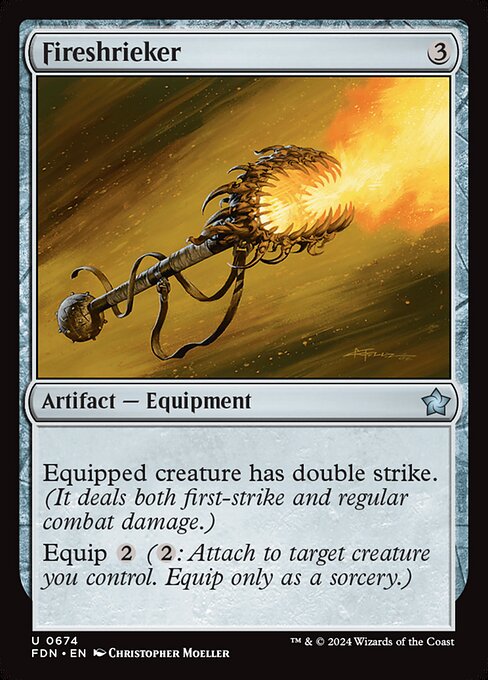
The other implication: extra combat steps and trample shape your clock as much as raw power does. An 8-power trampler swinging twice in one turn closes the game on Voltron's terms; the same 8-power creature blocked by a chump is wasted.
The Three Pillars
Every Voltron deck is built on three components — Power, Evasion, Protection. The deck that gets each pillar right is the deck that wins; the deck that overcommits to one and ignores the others is the deck that loses to the first removal spell.
| Pillar | What it does | Example cards |
|---|---|---|
| Power | Pushes you past 7/11/21 thresholds | Loxodon Warhammer, Blackblade Reforged, Ethereal Armor, Ancestral Mask |
| Evasion | Gets damage through blockers | Rancor (trample), Whispersilk Cloak (unblockable), flying auras, first strike |
| Protection | Keeps your creature alive through removal | Lightning Greaves, Swiftfoot Boots, indestructible effects, hexproof grants |
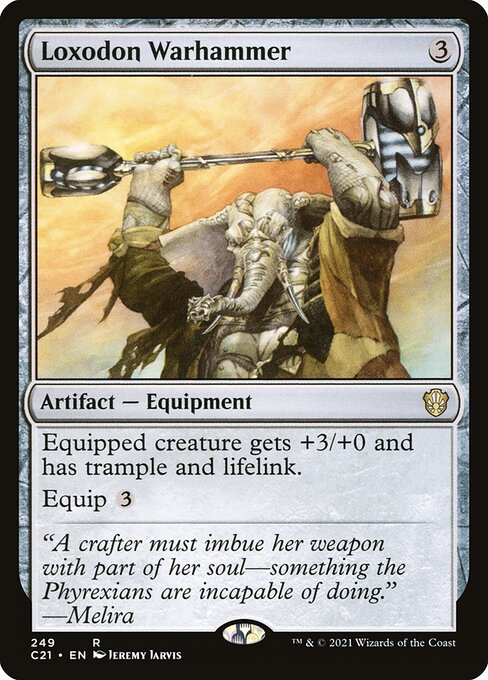
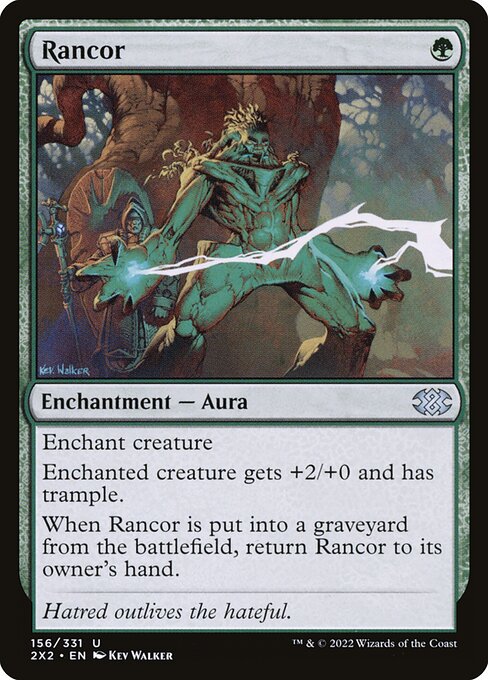

Power alone doesn't win games. A 30/30 commander that gets exiled, chumped, or blocked by a deathtoucher does nothing. The pillars are interdependent — the right question isn't "how much power can I stack?" but "how do I have all three in play when I attack?"
Practically, a healthy Voltron deck dedicates roughly equal nonland slots to each pillar. Heavily skewing toward power makes you a glass cannon; toward protection makes you a slow stalemate; toward evasion alone gives you a fast but fragile clock. Balance.
Auras vs. Equipment: The Fork
Most Voltron decks commit to one of two paths, because each rewards dedication. They have real, distinct strengths and risks:
| Auras | Equipment | |
|---|---|---|
| Strength | Cheap, powerful effects per mana | Survives the wearer dying |
| Weakness | All fall off when the creature dies | Equip costs slow you down |
| Scaling cards | Ethereal Armor, Ancestral Mask, Eidolon of Countless Battles | Blackblade Reforged, Umezawa's Jitte, Argentum Armor |
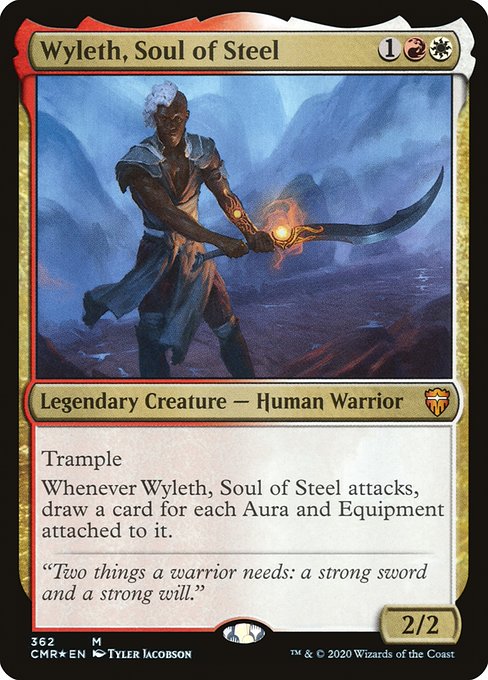
| Signature commanders | Uril the Miststalker, Sigarda Host of Herons, Killian Ink Duelist | Kemba Kha Regent, Wyleth Soul of Steel, Rafiq of the Many (hybrid) |
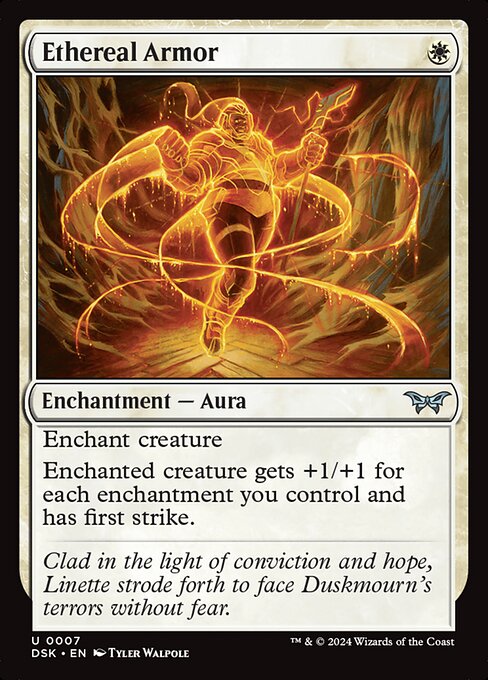
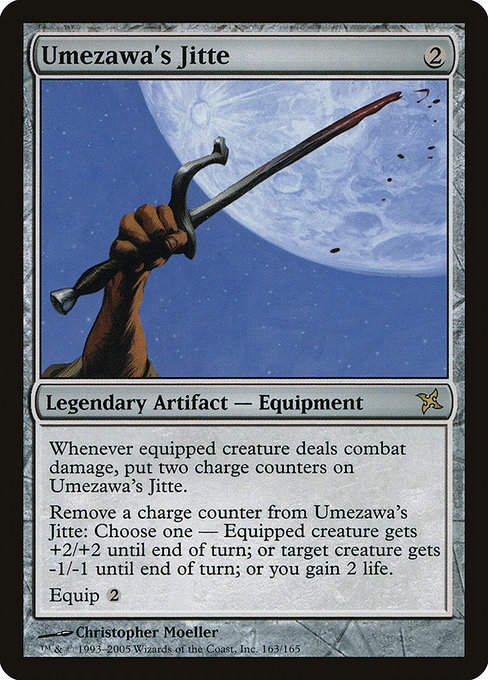
The single biggest practical difference: when your creature dies, every aura goes with it. Equipment stays. That's why aura-based Voltron leans so hard on hexproof or shroud commanders (Uril, Sigarda) — the commander has to not die to begin with, because rebuilding from scratch is brutal. Equipment-based Voltron can absorb a loss, recast the commander, and reattach the gear.
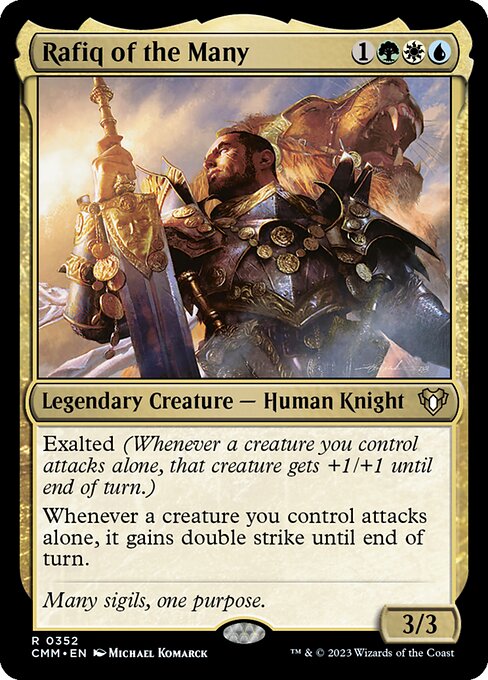
A handful of commanders — Rafiq of the Many is the classic example — happily run both. Most builds are better off committing fully to one and getting the synergy payoffs (Ethereal Armor scaling per enchantment for aura decks, Sigarda's Aid for equipment decks). The hybrid path is real but harder to optimize.
What Makes a Good Voltron Commander
Voltron commanders aren't interchangeable — the choice shapes the entire deck. The traits that matter, in order of importance:
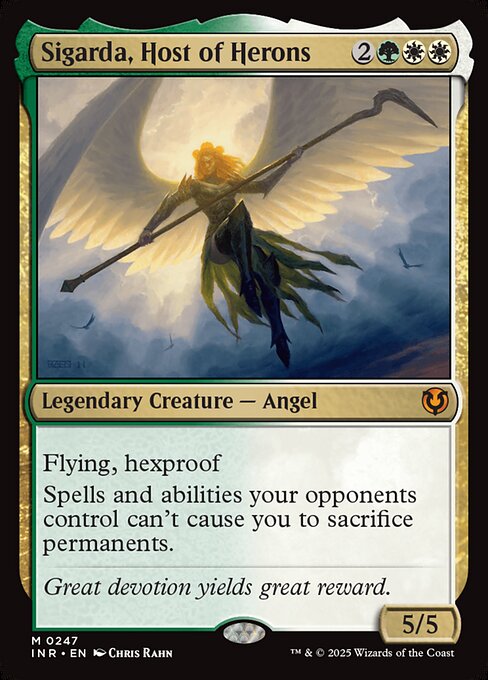
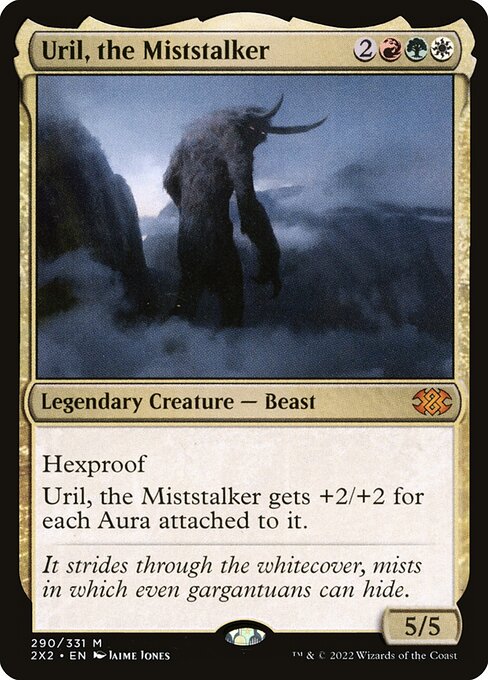
- Built-in protection. Hexproof, shroud, indestructible, or protection-from-something. Sigarda Host of Herons (hexproof) and Uril the Miststalker (can't be targeted by opponents) are pure-bred Voltron commanders for this reason — you save deck slots that would otherwise go to keeping them alive.
- Built-in evasion or combat advantage. Rafiq of the Many comes with exalted and double strike against single creatures — the math gets terrifying fast. A commander with native flying or trample saves you slots.
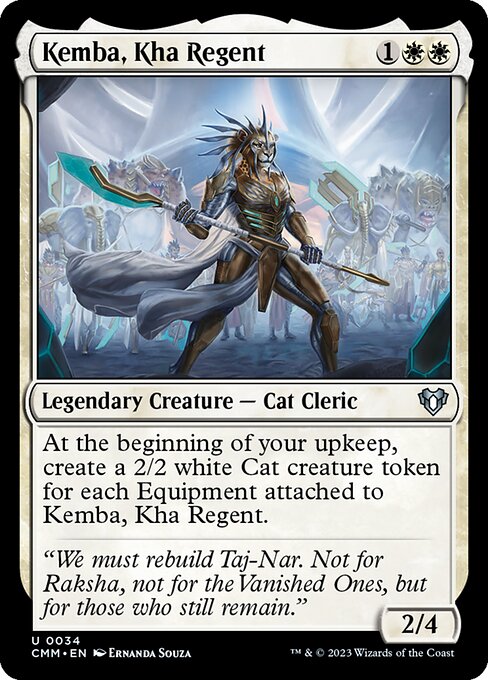
- An archetype-specific bonus. Killian Ink Duelist makes auras cheaper to cast — the entire build pivots on that. Kemba Kha Regent makes cat tokens when equipped — equipment becomes a board state. Wyleth, Soul of Steel draws cards equal to attached equipment when he attacks — refuels the strategy.
- A reasonable color identity for the strategy. White is the king of equipment support; green provides aura scaling and combat tricks; blue brings hexproof; black brings tutors and recursion; red brings haste and combat tricks. Two-color (Boros, Selesnya, Orzhov) is the sweet spot — three colors give you more tools but stretch your mana.
- A reasonable mana cost. If your commander costs six mana, you can't reliably play it on curve and protect it the same turn. Three- to five-mana commanders dominate the archetype.
A short list of frequently-played Voltron commanders, by color:
- Mono-white: Kemba Kha Regent (equipment + tokens), Isamaru Hound of Konda (cheap and fast), Nahiri the Lithomancer (planeswalker commander — makes Kor tokens, cheats equipment into play, and her ultimate creates a +5/+5 double-strike blade), Akiri Line-Slinger.
- Boros (R/W): Wyleth Soul of Steel (equipment + card draw), Akiri/Bruse Tarl (partners), Zurgo Helmsmasher (haste + indestructible on attack).
- Selesnya (G/W): Sigarda Host of Herons (hexproof, aura-friendly), Uril the Miststalker (3-color but anchored in a G/W aura aesthetic).
- Orzhov (W/B): Killian Ink Duelist (aura discount + lifelink) — one of the cleanest aura-Voltron commanders printed.
- Bant (G/W/U): Rafiq of the Many — exalted and double strike against single creatures, hybrid aura/equipment-friendly.
- Naya (R/G/W): Uril the Miststalker — can't be targeted by opponents, gets +2/+2 from each Aura, an aura-Voltron icon.
Tutors: The Hidden Pillar
A pillar most newer Voltron players overlook: consistency. The strategy has specific, must-have pieces — a haste effect like Lightning Greaves, a key tutor target, a finisher equipment — and a 100-card singleton format means you often draw the wrong piece at the wrong time. Tutors fix that.
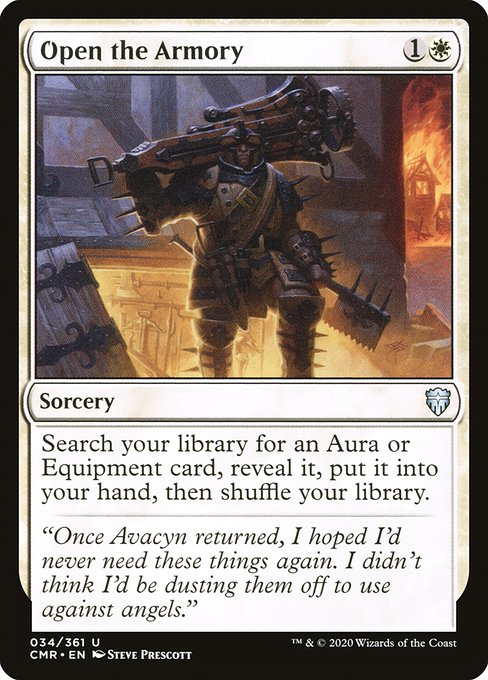
- Open the Armory — tutors any aura or equipment to hand. The flagship Voltron tutor and an auto-include in most builds.
- Steelshaper's Gift, Stoneforge Mystic — equipment-specific tutors; Stoneforge fetches and cheats one into play.
- Three Dreams, Idyllic Tutor, Plea for Guidance — aura/enchantment-specific tutors; Three Dreams grabs three at once, Plea for Guidance grabs two.
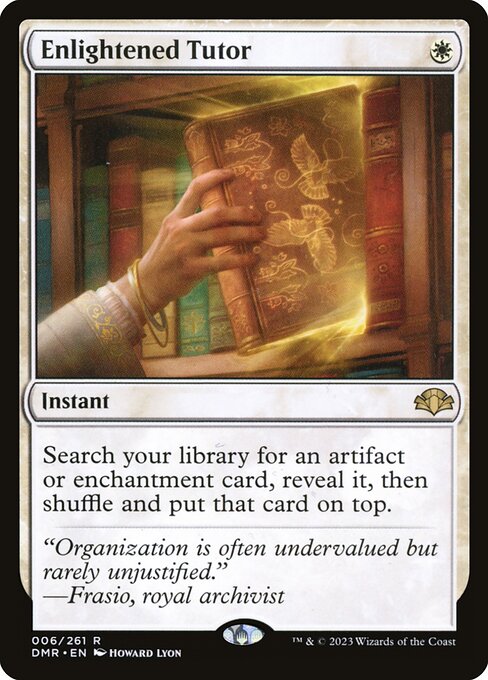
- Enlightened Tutor — one mana to find any artifact or enchantment and put it on top of your library. The premium aura/equipment tutor.
- Sram, Senior Edificer / Mesa Enchantress — not tutors, but card-draw engines that effectively dig you toward your pieces. Sram draws a card every time you cast an aura, equipment, or vehicle; the enchantress effects draw on every enchantment cast.
Without tutors and draw engines, Voltron decks brick on the wrong half of their hand often enough to lose games they should win. Treat the consistency package as a fourth pillar.
Backup Plans & Stax
Voltron's structural weakness is the table: three opponents, three sets of removal, three armies of creatures. A turn-five Voltron commander with no backup plan is on borrowed time. Two ways to buy yourself the breathing room you need:
Backup voltron targets. A few mid-sized creatures that can survive as a Plan B if your commander gets exiled or repeatedly removed. They don't need to be commanders — just resilient creatures (hexproof, indestructible, recursive) that can carry a few pieces of equipment if the table neutralizes your main threat. Equipment-based decks have an advantage here, since the gear is still on the battlefield ready to be re-equipped.
Backup Stax. Many Voltron decks run a small Stax package to slow opponents down while you assemble your threat. The classics:
- Silent Arbiter — limits all players to one attacker and one blocker per combat. Devastating against go-wide aggro, almost free for you (you only have one attacker anyway).
- Dueling Grounds — same effect on an enchantment. Stacks with Silent Arbiter for redundancy.
- Ghostly Prison, Propaganda, Sphere of Safety — tax effects that make attacking you expensive. Buys you the turns you need to assemble your kill.
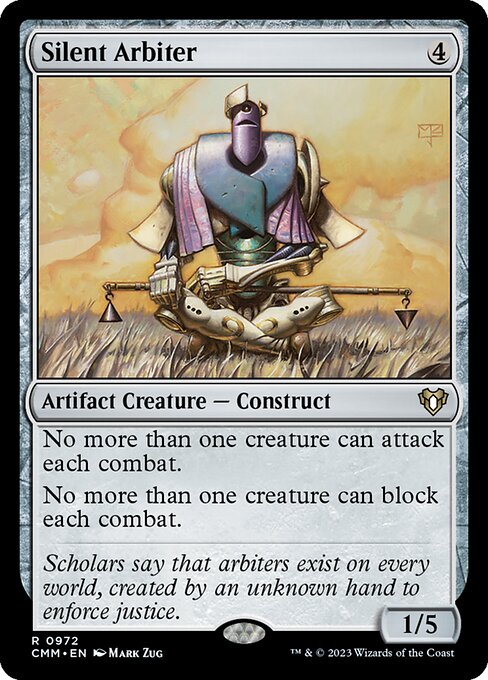
Why this matters: Voltron is one of the few archetypes where Stax pieces are nearly free — you only field one or two creatures, so "one attacker, one blocker" rules barely affect you while crippling go-wide opponents. If your meta has fast aggro, a Silent Arbiter alone can buy you the two turns you need to win.
Piloting Voltron
Voltron is one of the easier Commander archetypes to play well, because the decision tree is narrower than control or combo — but it has its own real skills:
- Don't commit the commander too early. Casting your commander naked into an open board invites removal that costs you nothing to lose. Wait until you can cast it and protect it — haste from Lightning Greaves, hexproof from Swiftfoot Boots, or a counterspell up.
- Don't overcommit to one creature. Stacking five auras onto your commander before you have hexproof is asking for a 5-for-1 from a single removal spell. Layer in protection between power pieces — one piece on, then a Lightning Greaves, then more.
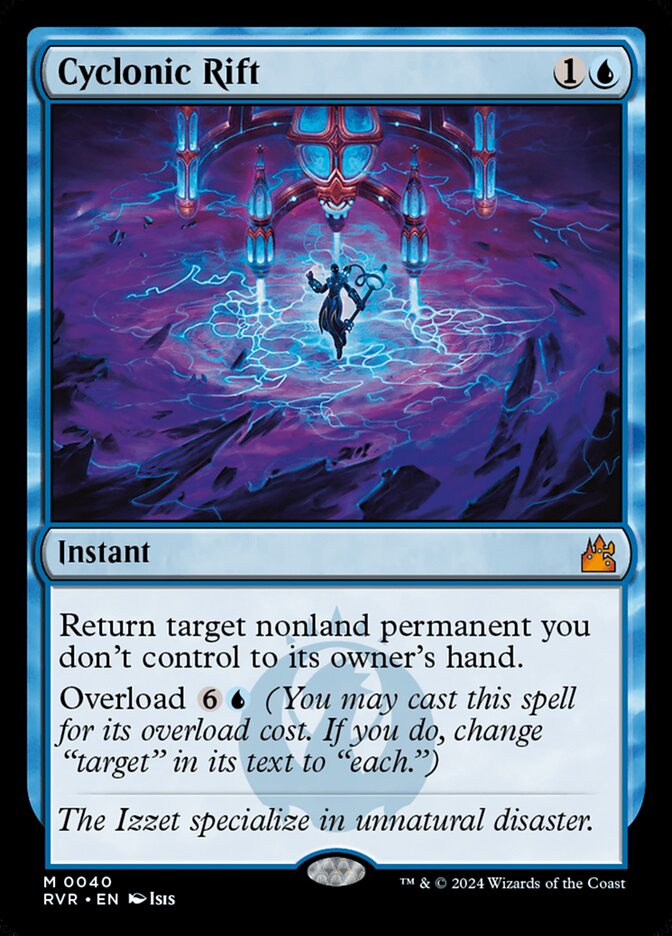
- Read the table. If a Cyclonic Rift player is at the table, you need bounce protection (or to kill them first). If a hard-control deck is up, you need a counterspell or a one-turn kill. Adjust your line.
- Pick the right target. You can only kill one opponent at a time with commander damage. Go for the deck that threatens to end the game soonest, or the player without removal in hand — not just the player you dislike.
- Be diplomatic. Voltron lights up the threat radar instantly. Don't deploy your commander on turn three and announce you're going to kill someone — you'll get teamed up on. Build quietly, frame yourself as the secondary threat for as long as you can, then close.

Where Voltron Players Misplay
Mistake #1: Chasing 21 too greedily.
Building a 22-power monster on turn five is impressive and irrelevant if it gets exiled before combat. Hitting 7 with protection and trample on turn four wins more games than building 21 with no defense on turn seven. The math thresholds matter, but evasion and protection matter more.
Mistake #2: No backup plan.
Building a deck that does literally nothing if the commander gets repeatedly removed. The command tax escalates fast (2, 4, 6, 8...) and a deck with zero alternative threats hands the game to the first dedicated removal player. Run a few backup creatures and consider some Stax to slow opponents while you rebuild.
Mistake #3: Overcommitting auras to one creature with no hexproof.
The single most expensive Voltron play: five auras on a creature with no hexproof or shroud, exiled by a one-mana Swords to Plowshares. That's a 6-for-1 in your opponent's favor. Get the protection down first, then commit power pieces. The order matters.

Mistake #4: Treating protection-from-color as pure upside.
Giving your commander protection from blue stops Counterspells — great. It also strips off every blue aura or equipment attached to it: a same-color Aura is put into the graveyard, and a same-color Equipment becomes unattached. Always check what you'd lose before casting protection-from-color effects on a loaded commander.
Mistake #5: Painting the target too early.
Voltron announces itself loudly — commander out, equipment going on, attack steps becoming threatening. Three opponents will notice and team up on you before you assemble your kill. The fix isn't being sneakier (you can't hide it); it's being a slower visible threat than someone else at the table until the turn you can actually win. Let another deck become the archenemy first.
FAQ
- Do I have to win with commander damage? No — that's just the cleanest win condition. A 22-power commander deals 22 damage to an opponent's life total too. But 21 commander damage is faster (40 life is a longer race than 21 commander damage), and the archetype is optimized for it.
- Is Voltron good in cEDH? Generally no — cEDH is a combo-and-stax format where combat damage strategies struggle to keep up with turn-three wins. Voltron is a casual/mid-power archetype where it shines. There are exceptions (some Voltron-cEDH hybrids exist), but it's not the default home.
- Auras or equipment for a first build? Equipment, in most cases. Equipment survives the wearer dying, which is the failure mode that bites new Voltron players hardest. Aura-Voltron is more powerful per mana when it works but punishes mistakes more brutally. Start with equipment, branch into auras when you understand the archetype.
- How many lands should a Voltron deck run? 36–38 lands, in line with most Commander decks — the archetype doesn't reliably ramp the way green decks do, so cutting lands is risky. For mulligan strategy on Voltron-style hands, our Commander mulligan guide walks through the keep/ship decisions.
- What's the most underrated Voltron card? Lightning Greaves. Two mana, free equip, gives your creature haste and shroud the turn you suit up your commander. It's the single best "I cast my commander and they can't immediately answer it" card in the archetype.
Quick Reference
Validate Before You Build
The cards named here are widely-played Voltron staples, but the best equipment and auras shift with new sets, and prices vary by printing. Build your list on a deckbuilder such as Moxfield or Archidekt, confirm legality and current prices, and tune your ratios to your commander before buying. For a specific build at a real budget, our Wyleth Voltron under $100 guide is the natural next step.
- The plan: assemble one creature into an unstoppable threat → deal 21 commander damage.
- Three pillars: Power, Evasion, Protection — all three or you lose.
- Favorite numbers: 7, 11, 21 — the power thresholds that define your clock.
- Fork: Auras (cheaper but die with the creature) or Equipment (survive death). Pick one.
- Commander wants: built-in protection, evasion, archetype-specific bonus, 3–5 mana.
- Always run: tutors (Open the Armory), Lightning Greaves, backup creatures, light Stax.
- Never: commit power before protection; chase 21 over speed; ignore the table; forget the protection-from-color trap.
Assemble. Protect. Swing.
Voltron is the most romantic archetype in Commander — one warrior, every piece chosen, built into something the table can't stop. Respect the three pillars, learn the math, layer protection before power, and have a backup plan. Done right, it's the cleanest kill in the format.
© GEEKYDOMAIN.COM | Strategy Powered by Data