

Gundam vs Fusion World vs One Piece: Which Anime TCG to Start
Three anime licenses, three genuinely different games under the hood. Here's how to pick the one that actually fits how you like to play, not just the show you like most.
The current wave of Bandai-published anime trading card games has put a real decision in front of new players: the Gundam Card Game, Dragon Ball Super Card Game: Fusion World, and One Piece Card Game are all active, well-supported, and drawing on genuinely beloved source material. Picking one isn't just a fandom question — the three games play meaningfully differently, and the right choice depends more on what kind of game you want than which anime you watch.
All three share a Bandai-style skeleton — Leader cards, a shared card frame language, similar rarity structures — which makes switching between them easier than jumping into an unrelated TCG later. But their combat systems, resource models, and pace of play diverge enough that a player who loves one can genuinely bounce off another.
This guide breaks down what actually differs mechanically, what each game rewards strategically, and how to weigh fandom against gameplay fit when you're choosing where to start.
| Gundam Card Game | DBS Fusion World | One Piece Card Game | |
|---|---|---|---|
| Core skill test | Combat math & damage calculation | Resource & tempo management | Efficient trading & card selection |
| Life system | Shields (with burst triggers) | Life area (draw on damage) | Life cards (draw on damage) |
| Resource system | Color-based unit deployment | Energy + Combo Power (layered) | Don!! (energy + power boost) |
| Key defensive keyword | Blocker, First Strike | Blocker, Barrier, Critical | Blocker |
| Rules complexity | Medium — shield/burst interactions add depth | Medium-high — multiple resource tracks | Low — leanest ruleset of the three |
| Onboarding speed | Moderate | Moderate | Fast — easiest on-ramp |
| Best for players who like | Tactics & precise combat decisions | Sequencing & optimization puzzles | Clean gameplay, fast decision-making |
| Tournament format | Swiss rounds | Swiss, Best of 1 | Swiss rounds |
→ Short Version
Gundam rewards board-state combat math — shields, Blocker, First Strike, and precise damage calculation define most decisions. Fusion World rewards resource and tempo management — Energy curves, Leader Awakening timing, and Combo Power sequencing are the core skill tests. One Piece rewards efficient trading and card selection within a leaner, more streamlined ruleset that's often cited as the easiest of the three to pick up quickly. All three share enough structural DNA that learning one meaningfully shortens the learning curve for the others later.
→ Related Reading
In This Guide
The Shared Bandai DNA
All three games are published by Bandai and share a family resemblance that makes them easier to move between than three completely unrelated TCGs would be. Each uses a Leader card as the centerpiece of your deck's identity, a color or type-based deckbuilding restriction, and a broadly similar rarity and set-release cadence (regular main sets plus periodic starter decks aimed at new players).
That shared structure means skills like reading a Leader's ability for deckbuilding direction, evaluating a card's efficiency relative to its cost, and understanding a rotating competitive card pool all transfer across the three games at a conceptual level, even though the specific rules differ meaningfully underneath.
Where they diverge is in what each game actually asks you to think about turn to turn — and that's the part that should drive your choice more than which anime license appeals to you most.
Gundam: Board-State Combat Math
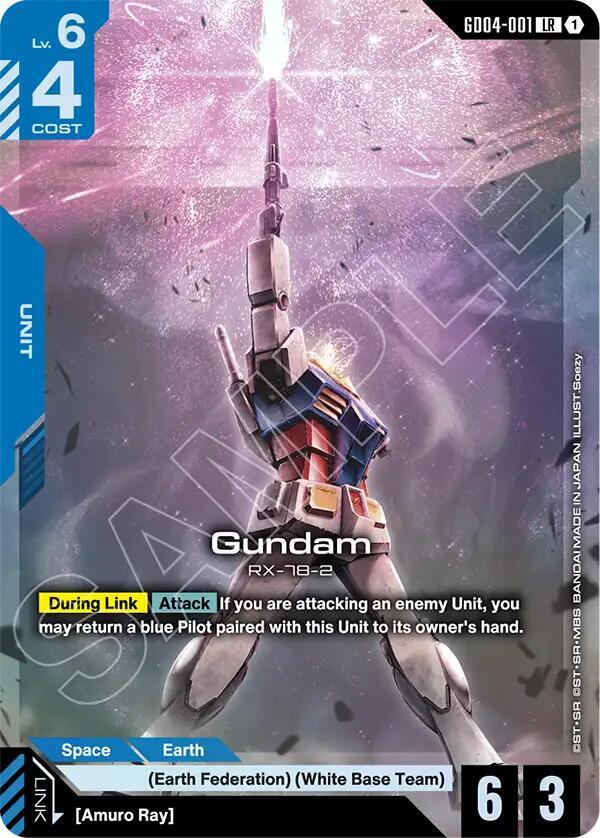
The Gundam Card Game centers on unit combat and precise damage calculation. Shields function as your life total and your first line of card advantage — attacks that get through can trigger burst effects off a destroyed shield, adding a layer of risk assessment to every attack and block decision. Keywords like Blocker, First Strike, Rush, and Breach interact with each other in combinations that reward players who enjoy working out exact combat math before committing to an attack.
If you enjoy games where the core tension is "can I win this specific combat exchange, and what does the board look like after," Gundam's combat-forward design is built for exactly that itch. Our beginner's guide covers the full rules if this sounds like your speed.
The shield system adds a layer of tension that's unique to Gundam among these three games. When an attack breaks through a shield, the shield card can trigger a burst effect that immediately swings the board state — meaning every successful attack carries a calculated risk that the defender might gain a free removal spell, a unit deployment, or another disruptive effect. This push-and-pull between aggression and shield risk gives Gundam's combat a gambling element that rewards players who can read when to push through shields aggressively and when to hold back. It also means Gundam games can have dramatic reversals in a way the other two games' life systems don't replicate as sharply.
Fusion World: Resource & Tempo Management
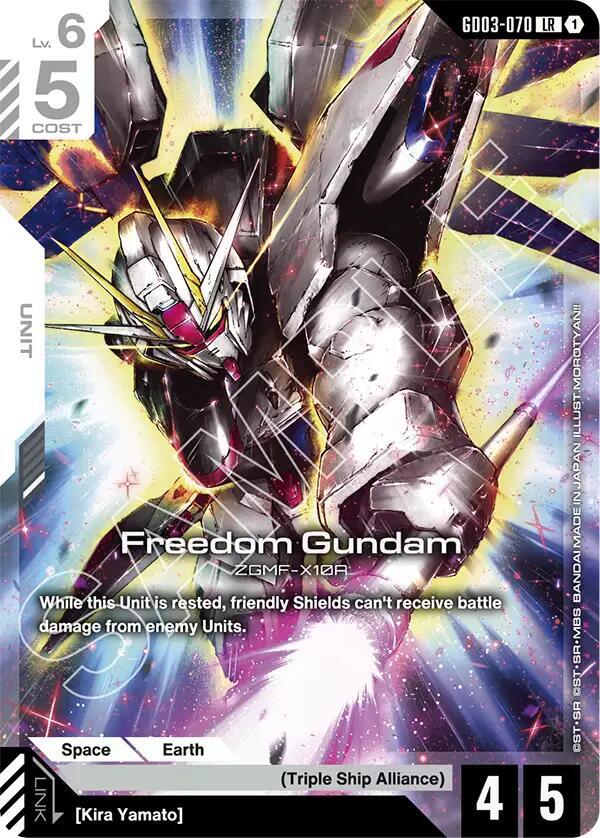
Dragon Ball Super Card Game: Fusion World leans harder into resource sequencing than pure combat math. Energy management, timing your Leader's Awakening condition, and reading the hidden Combo Power value on cards to sequence your turn efficiently are the core skills the game asks you to develop. The Life area doubling as both your clock and a source of card advantage when you take damage adds a push-and-pull element that rewards players who like managing multiple resource tracks at once.
If you enjoy the feeling of optimizing a turn's sequencing — what to play first, what to hold, when to commit your Energy — rather than primarily calculating combat outcomes, Fusion World rewards that instinct directly. Our how-to-play guide walks through the full system.
The Leader Awakening mechanic is another feature that sets Fusion World apart. Each Leader card has an Awakened side that flips under specific conditions — usually a life threshold — unlocking stronger abilities that can fundamentally shift the dynamics of a game in progress. This creates a unique strategic layer where both players need to track not just the current board state but the approaching transformation that will change what their opponent's Leader can do. Games in Fusion World often pivot around the exact turn a Leader Awakens, making the timing of aggression and defense more consequential than in the other two games where the Leader card is more static throughout the match.
One Piece: Streamlined Trading
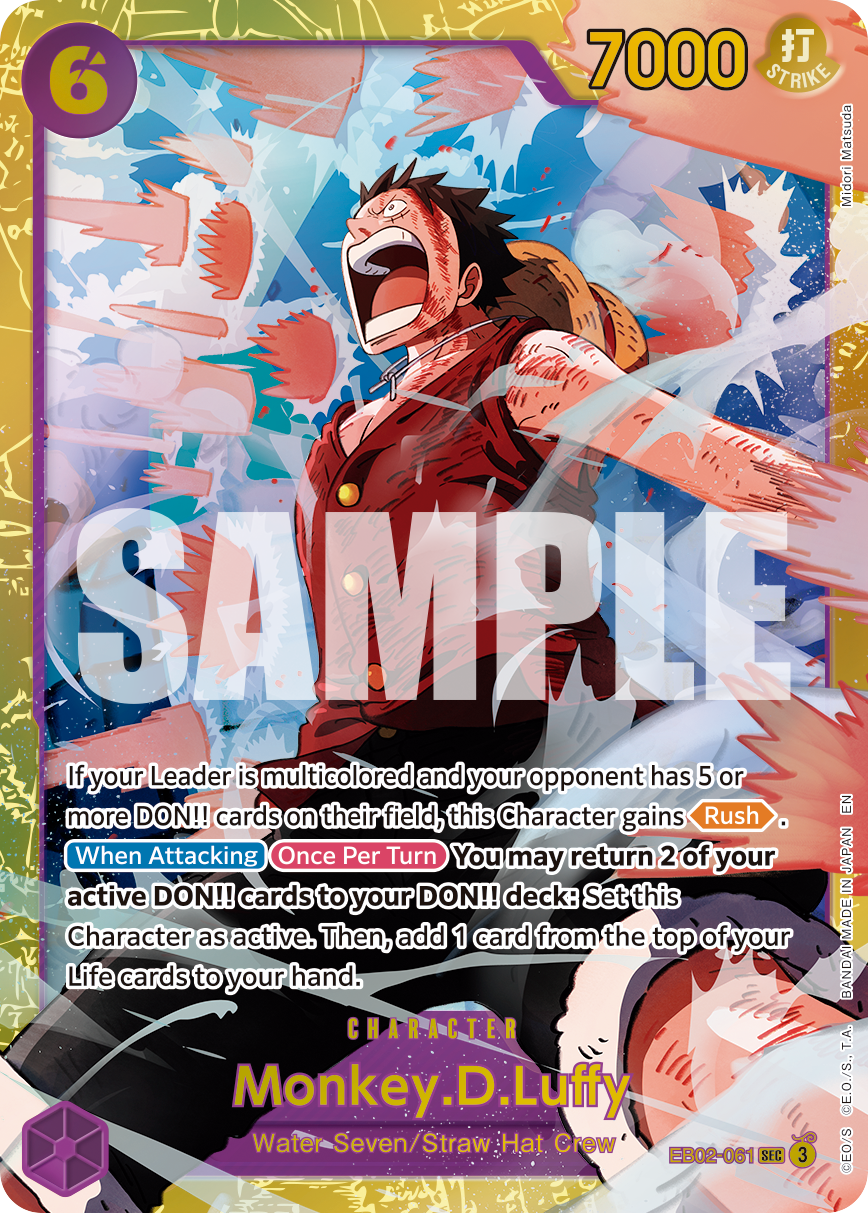
The One Piece Card Game is frequently cited by new players as the fastest of the three to pick up, thanks to a leaner overall ruleset with fewer overlapping subsystems to track. Its resource system — Don!!, which functions as both your energy to play cards and a temporary power boost you can attach to characters for the turn — is simpler to manage than Fusion World's Energy-plus-Combo layering or Gundam's shield-burst interactions. The core loop of playing characters, attacking, and using Life cards as both a defensive buffer and a source of card advantage is comparatively straightforward, which puts more of the game's skill expression into card selection, sequencing, and reading the board rather than juggling multiple concurrent mechanics.
If your priority is getting to meaningful decision-making fast without a long onboarding process, or you're looking for the game that's easiest to teach to a new group, One Piece's more streamlined design is generally the path of least resistance among the three.
Which One Actually Fits You
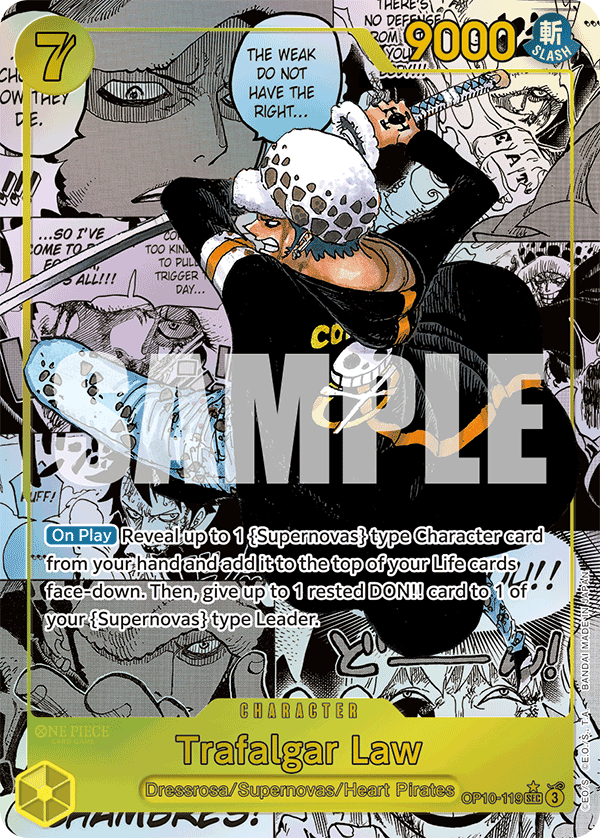
If you like games where you're constantly running combat math and weighing risk on every attack — think of it as the closest of the three to a pure tactics game — Gundam is the strongest fit. If you enjoy juggling several resource tracks at once and optimizing sequencing over raw combat calculation, Fusion World rewards that mindset more directly. If you want the fastest path to real decision-making with the least rules overhead, One Piece is generally the easiest on-ramp.
Fandom for the source material is a legitimate tiebreaker once the mechanical fit is roughly even — there's nothing wrong with picking the game tied to the anime you love most if two of the three genuinely appeal to you equally. But don't let fandom alone override a real mechanical mismatch; a Gundam fan who hates fiddly combat math will likely bounce off the game regardless of how much they love the source material.
Quick Decision Guide
- "I love crunching combat math and precise board-state decisions" → Gundam Card Game
- "I enjoy optimizing turn sequencing and managing multiple resource tracks" → Dragon Ball Super: Fusion World
- "I want the fastest path to real, meaningful decisions with minimal rules overhead" → One Piece Card Game
- "Honestly, I just want to play the one my local store runs events for" → Check your LGS calendar — local community > game preference for most players
Start With One Starter Deck
Whichever row you just landed on, the entry point is that game's own starter deck — one fixed, ready-to-play deck with its Leader, which is the cheapest way to find out whether the mechanics actually suit you. Amazon carries the current sealed decks for all three; earlier decks that have gone out of print now mostly turn up on eBay.
As an Amazon Associate, Geeky Domain earns from qualifying purchases. eBay links are affiliate links; Geeky Domain may earn a commission at no extra cost to you.

Can You Reasonably Play More Than One?
Yes, and the shared Bandai structure makes it more reasonable here than crossing into an unrelated TCG family. Players who start with one of the three often find the second and third genuinely faster to learn, since concepts like Leader-driven deckbuilding and rotating competitive card pools carry over conceptually even when the specific rules differ.
The practical constraint is usually budget and local playgroup support rather than the learning curve itself — pick the one with the strongest local community first if that's a factor, and treat the others as a lower-cost second game to pick up once you're established in the first.
One underrated advantage of playing multiple Bandai games is that the release calendars are staggered, so the new-set excitement and tournament seasons rarely overlap completely. When one game is in a quiet period between sets, another is often launching fresh product, which keeps the hobby active and interesting across the full calendar year rather than creating lulls between releases in a single game.
FAQ
- Which of the three is best for a new player with no TCG experience at all? One Piece is generally cited as the fastest on-ramp due to its more streamlined ruleset. That said, all three have accessible starter decks built specifically for new players, so the gap is a matter of degree rather than one being genuinely inaccessible.
- Does experience in one of these games transfer to the others? Conceptually, yes — Leader-driven deckbuilding, evaluating card efficiency, and reading a rotating competitive card pool all transfer. The specific combat and resource rules do not transfer directly and need to be learned fresh for each game.
- Is one of these games meaningfully cheaper to start than the others? Entry cost fluctuates with each game's release cadence and market conditions rather than being a fixed structural difference — check current starter deck pricing and singles costs for each rather than assuming one is permanently cheaper.
- Should I pick based on the anime I like most? Fandom is a legitimate tiebreaker once the mechanical fit is roughly equal, but it shouldn't override a genuine mismatch between your playstyle preferences and how the underlying game actually plays.
Pick the Game, Not Just the Franchise.
Gundam, Fusion World, and One Piece share enough Bandai DNA that none of them is a wrong choice — but they genuinely reward different instincts. Gundam wants a combat mathematician. Fusion World wants a resource juggler. One Piece wants someone who values getting to real decisions fast. Match that to how you actually like to play, and the anime license you love becomes a bonus rather than the whole decision.
And if you fall for more than one, the shared structure means starting a second is a lot less daunting than it looks from the outside.
© GEEKYDOMAIN.COM | Strategy Powered by Data