

Forget the Disney IP for a moment. In the 2026 Lorcana market, cardboard only holds its premium if it actually wins games.
If you try to navigate the Disney Lorcana secondary market using a Pokémon collector’s mindset, you are going to misallocate your capital. While it is true that Lorcana features iconic Disney characters, the core economic engine of the game is not driven by binders and display cases. It is driven by tournament grinders.
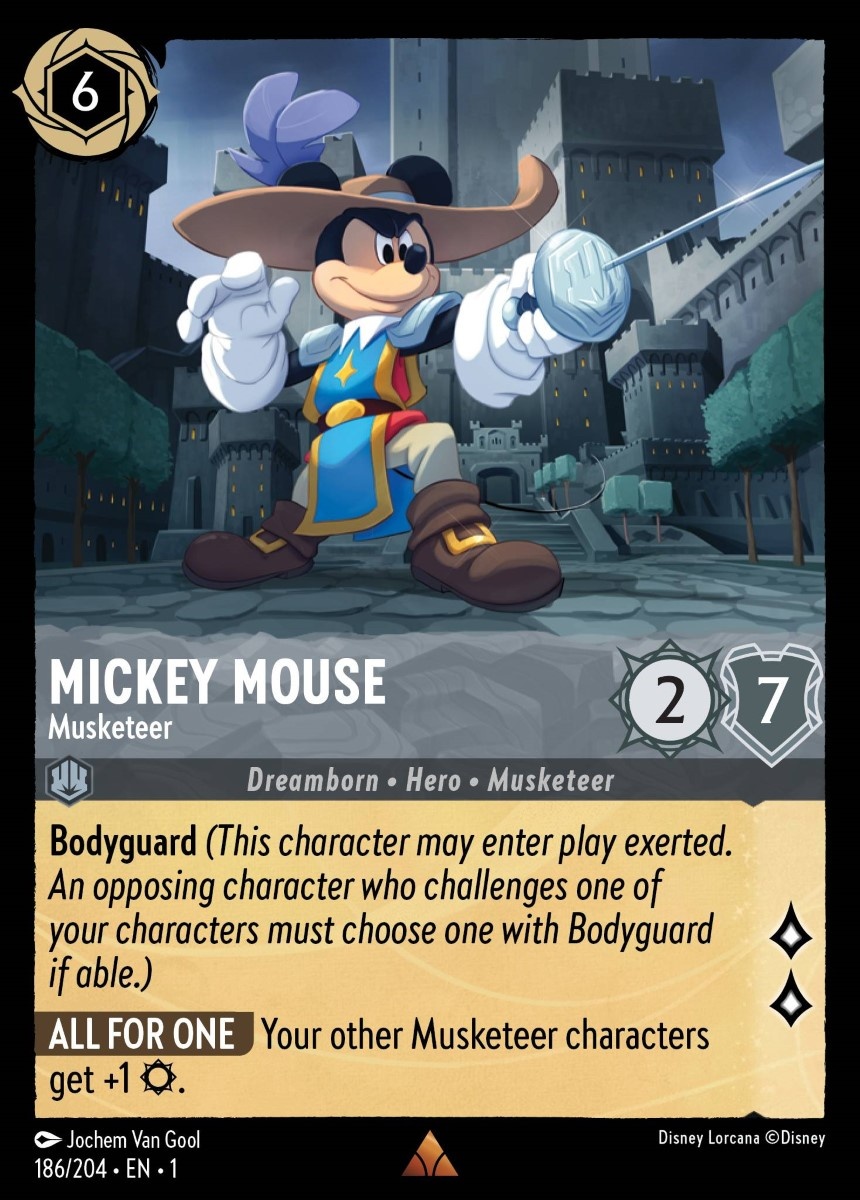
Lorcana is fundamentally a "Player-First" economy. The astronomical prices of non-foil, standard-art cards are dictated entirely by their utility in the current competitive meta. We call this the Playability Multiplier. A beautifully illustrated Mickey Mouse card with terrible gameplay stats will always be a $0.50 bulk rare. A completely uninteresting illustration of a generic Broom with a meta-defining ability will become a $15 staple.
→ Master the Current Meta
Want to know which cards are actually driving the market right now? Check out our budget competitive deck guides.
The Bottleneck: The Legendary Rarity Squeeze
To understand why a piece of Lorcana cardboard can spike from $10 to $45 overnight, you have to look at the deck-building rules. In Lorcana, you are allowed to run up to four copies of a single card in your 60-card deck. Crucially, there are no restrictions on rarity. You can run four copies of a "Legendary" card.
This creates a massive bottleneck in the market supply. If a new set drops and a specific Legendary card is identified as the best "finisher" in the game, competitive players do not just need one copy for their binder; they need a full playset of four to optimize their deck.
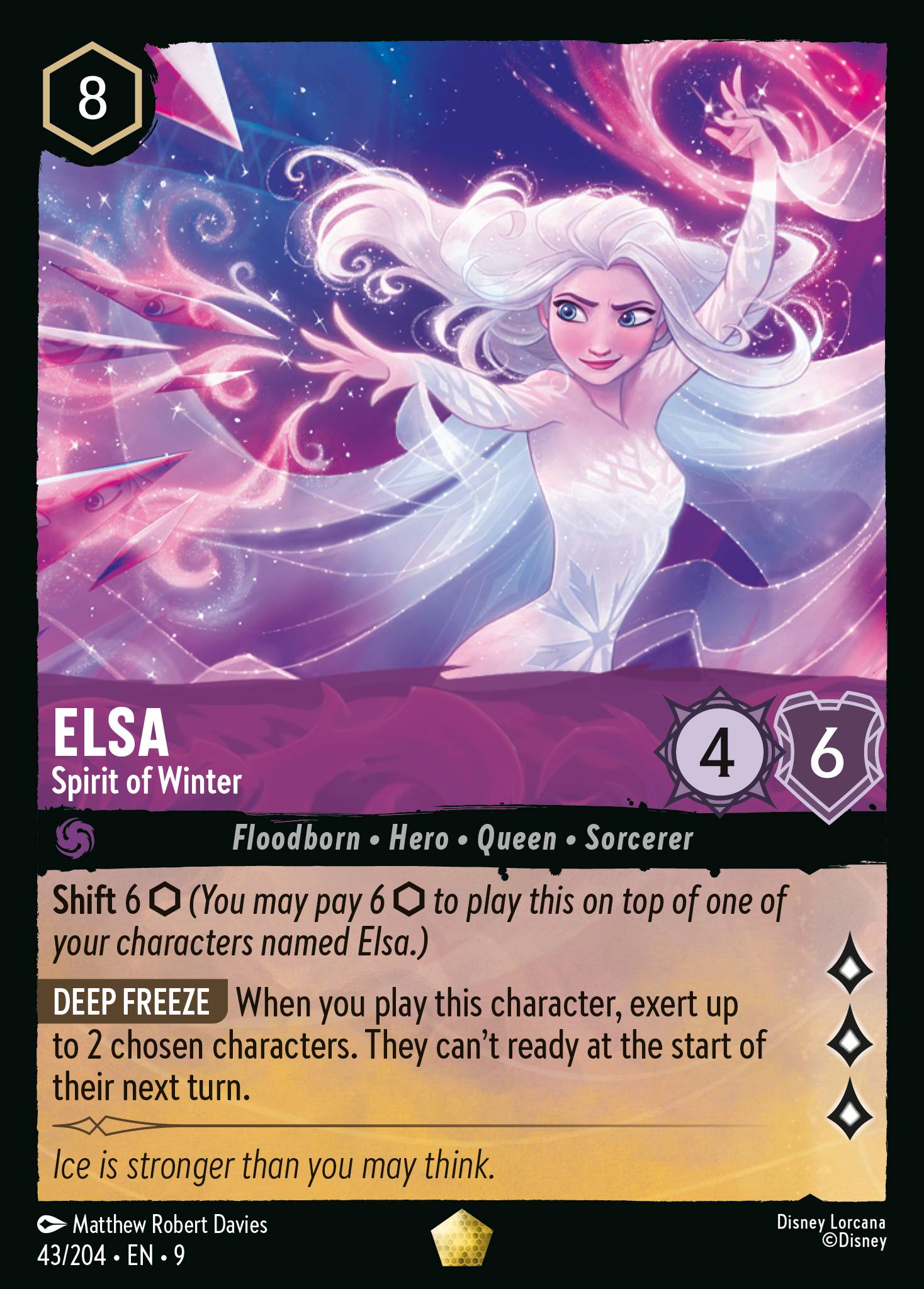
"In Lorcana finance, demand does not increase incrementally. It increases in multiples of four. When a Legendary card proves its worth on the tournament table, the available market inventory is instantly divided by four as players aggressively buy their playsets."
The Tournament Weekend: Anatomy of a Meta-Spike
Because Lorcana is tied so heavily to gameplay, price charts resemble the volatility of day-trading. The absolute most dangerous time to buy Lorcana singles is on a Monday morning following a major Disney Lorcana Challenge (DLC) weekend.
Here is the exact anatomy of the "Meta-Spike":
- Saturday (The Discovery): A massive tournament is being streamed online. An unknown player brings a rogue deck featuring a $2 "bulk" Rare card that perfectly counters the current meta. They go undefeated on Day 1.
- Sunday (The Buyout): The player makes the Top 8. The decklist is published online. Viewers immediately rush to TCGplayer and buy out every single copy of that $2 Rare, causing the algorithm to adjust the price to $15.
- Monday (The Trap): The general player base wakes up, sees the tournament results, and suffers from FOMO. They pay the newly inflated $15 price tag to build the "winning" deck.
Surviving the Meta-Spike: When to Buy
If a card spikes because of a tournament result, do you buy the new price floor, or do you wait? The answer depends entirely on your discipline and understanding of market cooling periods.
Not That: Buying the Monday FOMO
Never buy a card the week after it wins a major tournament. The Monday spike is artificially inflated by panic buying and a temporary lack of supply. Within 14 days, casual players and vendors will crack more packs, realize the card spiked, and flood the market with new listings, drastically undercutting the tournament weekend high.
Do This: The Pre-Release Gamble
The only way to consistently beat the Playability Multiplier is to buy cards before they are proven. Evaluate set spoilers analytically. If a new card clearly counters the best deck in the current format, buy your playset during the pre-release window when it is being undervalued as an untested gamble. Be the player selling on Monday, not buying.
Two Markets, One Set: The Enchanted Disconnect
While base-rarity Legendaries are entirely beholden to the Playability Multiplier, Lorcana contains a secondary, parallel economy within every box: the Enchanted rarity. Enchanted cards are borderless, cold-foil alternate arts with pull rates roughly equating to one in every four booster boxes (1 in 96 packs).
This creates a massive economic disconnect. You are essentially dealing with two entirely different demographics buying the exact same cardboard.
-
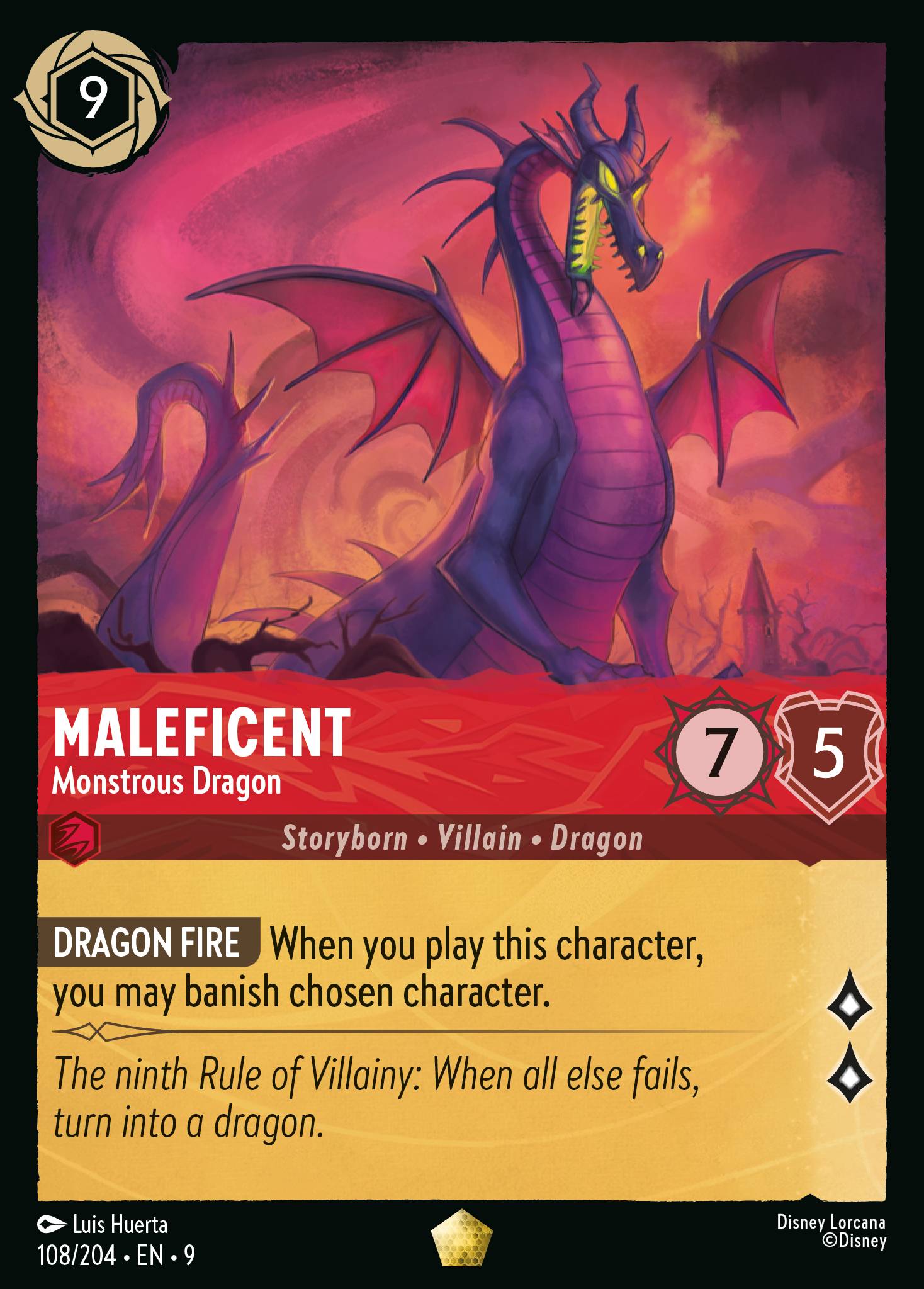
The Player Market (Base Cards): Driven by utility. A base Legendary Maleficent, Monstrous Dragon might sell for $40 because four copies are required to win a major tournament.
- The Collector Market (Enchanteds): Driven by scarcity and IP attachment. An Enchanted Tinker Bell might not see any competitive play, but will sell for $200 simply because Disney fans want the artwork for their graded slab collection.
The Invisible Crash: Meta Shift Obsolescence
Because Lorcana is a player-first economy, the absolute biggest threat to your portfolio is not a reprint—it is the release of a new set. Ravensburger (the publisher) meticulously designs new mechanics to disrupt the current top-tier decks. They do not want the same deck winning tournaments for a year straight.
If you invest $160 into a playset of a top-tier Legendary, you must accept that its value has a ticking clock. The moment a new set introduces an efficient "counter" card that neutralizes your Legendary, your deck falls out of Tier 1 status. The competitive player base will immediately dump their playsets to fund the new top deck.
The Rotation Reality
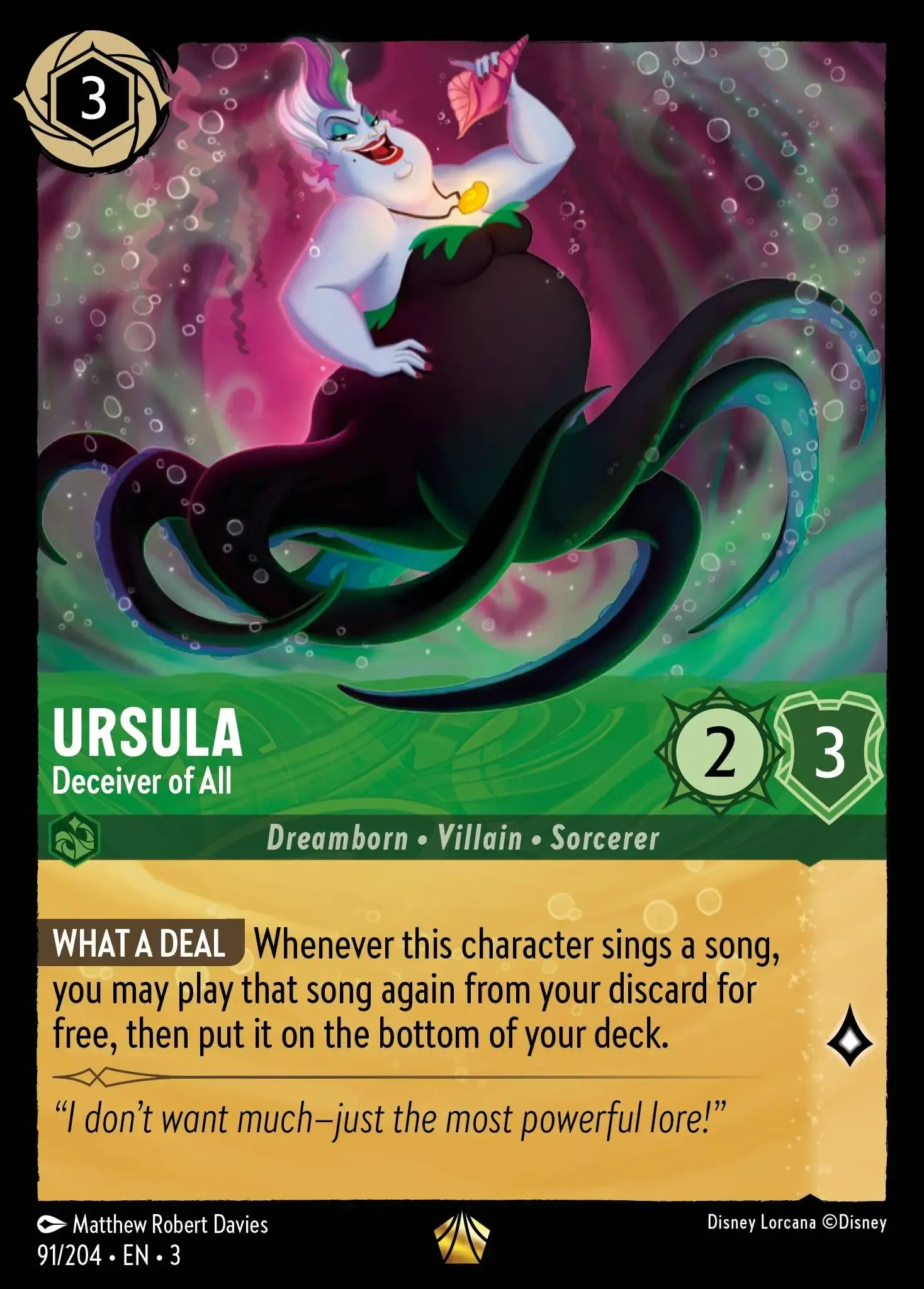
A $40 Lorcana staple can drop to $8 in a matter of weeks simply because it matches up poorly against a newly printed $1 Uncommon. You must actively track spoiler seasons. If you see a card that ruins your deck's strategy, liquidate your expensive staples before the new set officially releases.
The Disney Factor: Ravensburger's Reprint Engine
Unlike high-end collectible markets that promise artificial scarcity, Disney Lorcana is designed to be accessible to children, families, and massive tournament crowds. Ravensburger has publicly and aggressively stated that they will prioritize game accessibility over secondary market value.
If a base-art card becomes too expensive and prevents new players from entering the game, Ravensburger will not hesitate to flood the market with supply. They do this through extensive set reprints, targeted promotional boxes, and organized play rewards.
Do not treat standard, non-foil Lorcana cards as long-term financial holds. They are game pieces. Treat them as depreciating assets that you rent for the duration of a competitive season. Hold the Enchanteds; liquidate the base Legendaries once you stop actively playing them.
Capital Allocation: Ink Staples vs. Tech Cards
If you are going to spend capital on Lorcana game pieces, you must learn the difference between an "Ink Staple" and a "Tech Card." This distinction dictates which cards will survive a meta shift and which will crash to zero.
-
The Safe Bet: Ink Staples
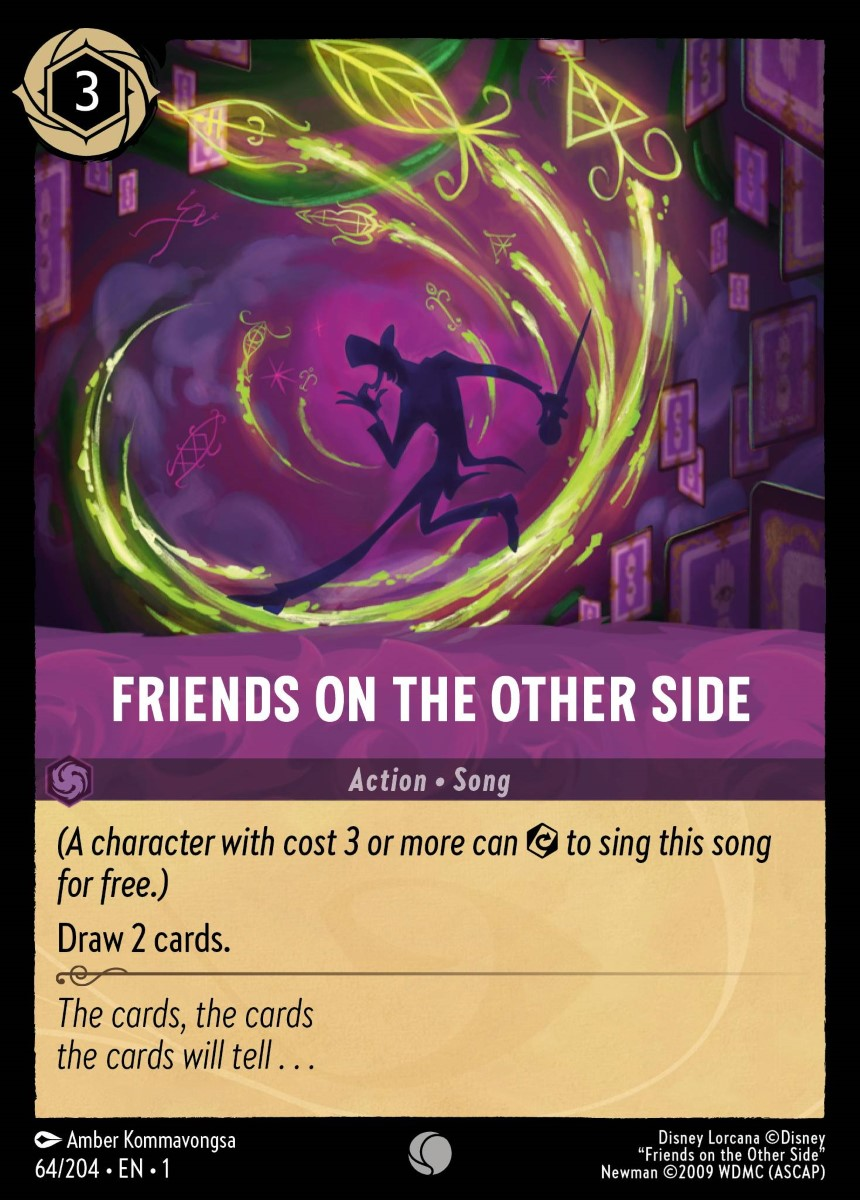
These are fundamental cards that provide massive generic value—like universal card draw or efficient uninkable removal. No matter what the meta looks like, if you are playing Amethyst, you are likely playing Friends on the Other Side. These cards retain value across multiple set releases.
- The High Risk: Tech Cards These are highly situational cards played exclusively to counter one specific opponent's deck. If a Tech card spikes to $10 because it shuts down the current best deck, sell it immediately. The moment the meta shifts and that deck is no longer popular, your Tech card loses all of its utility and crashes.
The Middle Child: The Foil Liquidity Trap
Between the highly liquid, player-driven base cards and the high-end, collector-driven Enchanteds sits the most dangerous asset in Lorcana finance: the standard Foil.
In many other TCGs, a foil version of a competitive staple commands a massive premium. In Lorcana, standard foils are often a liquidity trap. Tournament players actively avoid standard foils because the cold-foil printing process makes them notoriously prone to "curling" (bending due to humidity). A curled card in a tournament deck can result in a marked-card penalty from a judge.
Conversely, high-end collectors ignore standard foils because they only care about Enchanteds. This leaves the standard foil in a dead zone. You might pull a foil Legendary that TCGplayer says is worth $55, but you will find it incredibly difficult to actually sell it at that price. When evaluating your binder's equity, aggressively discount your standard foils, or trade them locally to casual players who value the aesthetics over tournament legality.
Macro-Timing: The Set Championship Sell-Off
While major tournament weekends cause micro-spikes in specific cards, the Lorcana calendar revolves around a much larger, predictable macro-cycle: Set Championships.
Towards the end of every set's lifecycle, local game stores host Set Championships featuring highly lucrative, exclusive promo cards and playmats for the top finishers. This is the absolute peak of competitive demand. Players who casually drafted for the first two months will suddenly panic-buy expensive playsets of Tier-1 Legendaries because they want to win the exclusive prizes.
The Liquidation Window
- The Peak: The two weeks leading up to Set Championships are the absolute highest prices standard Legendaries will ever reach.
- The Crash: The Monday following the final weekend of Set Championships, the competitive season effectively ends. The upcoming set is about to release, and players immediately dump their current decks to start testing the new cards.
- The Move: If you are not actively competing in a Set Championship, liquidate every single meta staple you own during that two-week peak. If you wait until the season ends, your portfolio will lose 40% of its value overnight.
The Geeky Domain Verdict
Respect the Players, Survive the Meta.
Lorcana is not a museum; it is a battlefield. The 2026 Lorcana market ruthlessly punishes speculators who try to treat standard base cards like long-term stock options. If a card does not have the word "Enchanted" at the bottom of it, its value is entirely temporary and dependent on its tournament utility.
To build a sustainable portfolio, you must decouple your attachment to the Disney IP and embrace the Playability Multiplier. Buy your playsets during the pre-release window, sell your Tech Cards into the Monday tournament spikes, and aggressively liquidate your entire competitive binder right before the Set Championship season ends. Treat your standard cards as rented game pieces, and consolidate your actual profits into Enchanteds or sealed booster boxes.
Master the Competitive Ecosystem:
© GEEKYDOMAIN.COM | Market Data Powered by Strategy