

A midrange masterclass from Lorcana's early meta — Amethyst's relentless card draw fused with Steel's surgical spread damage. Here's how the archetype works, and where it lives now.
In Disney Lorcana, deck archetypes generally fall into three categories: Aggro, Midrange, and Control. For much of Lorcana's first two years, the Amethyst / Steel Bounce deck was one of the defining midrange decks in the game — prized for being the most adaptable list in the room, capable of shifting its game plan based entirely on the opponent sitting across the table.
Against a fast Aggro deck, Amethyst/Steel plays the control role, using songs like Grab Your Sword to wipe out low-willpower characters. Against a slow Control deck, it becomes the aggressor, flooding the board with resilient characters and relentlessly drawing cards to outpace single-target removal.
This guide breaks down the synergy between Amethyst's bounce mechanics and Steel's "ping" damage, walks through a classic list, and points out the premium Enchanted versions of its signature cards. First, an important note on where this deck stands today.
A Note on Format — Read First
This is a classic archetype built on cards from Lorcana's first four sets. With the set rotation that began in late 2025, Sets 1–4 have rotated out of Core Constructed — so this exact list is no longer legal in current Core tournaments. It lives on in Infinity Constructed (Lorcana's eternal, all-cards format) and in casual play, where it remains a genuinely strong, satisfying midrange deck. If you're building for today's Core meta, start with our Rotation Survival Guide to see what's legal now.
→ Master the Meta Math
Curious why some staples hold value while others crater? Understand how playability drives the secondary market for Lorcana singles.
In This Guide
- → The Anvil: Steel's Spread Damage
- → The Centerpiece: Tinker Bell - Giant Fairy
- → The Loop: Weaponizing the Amethyst Bounce
- → The Fuel: The Merlin Advantage
- → The Nuke: A Whole New World
- → Board Clearance: Grab Your Sword
- → The Arsenal: A Classic 60
- → Premium Pulls: The Enchanted Chase Cards
- → The Geeky Domain Verdict
The Anvil: Steel's Spread Damage
The defining trait of the Steel ink color is its ability to deal direct damage to opposing characters outside of standard combat challenges — what players call "pinging" or "spread damage." It lets you soften up massive threats or outright banish smaller lore-gatherers without ever exerting your own characters.
The backbone of this strategy relies on highly efficient actions and songs.
The Action Suite: Ba-Boom! & Let the Storm Rage On
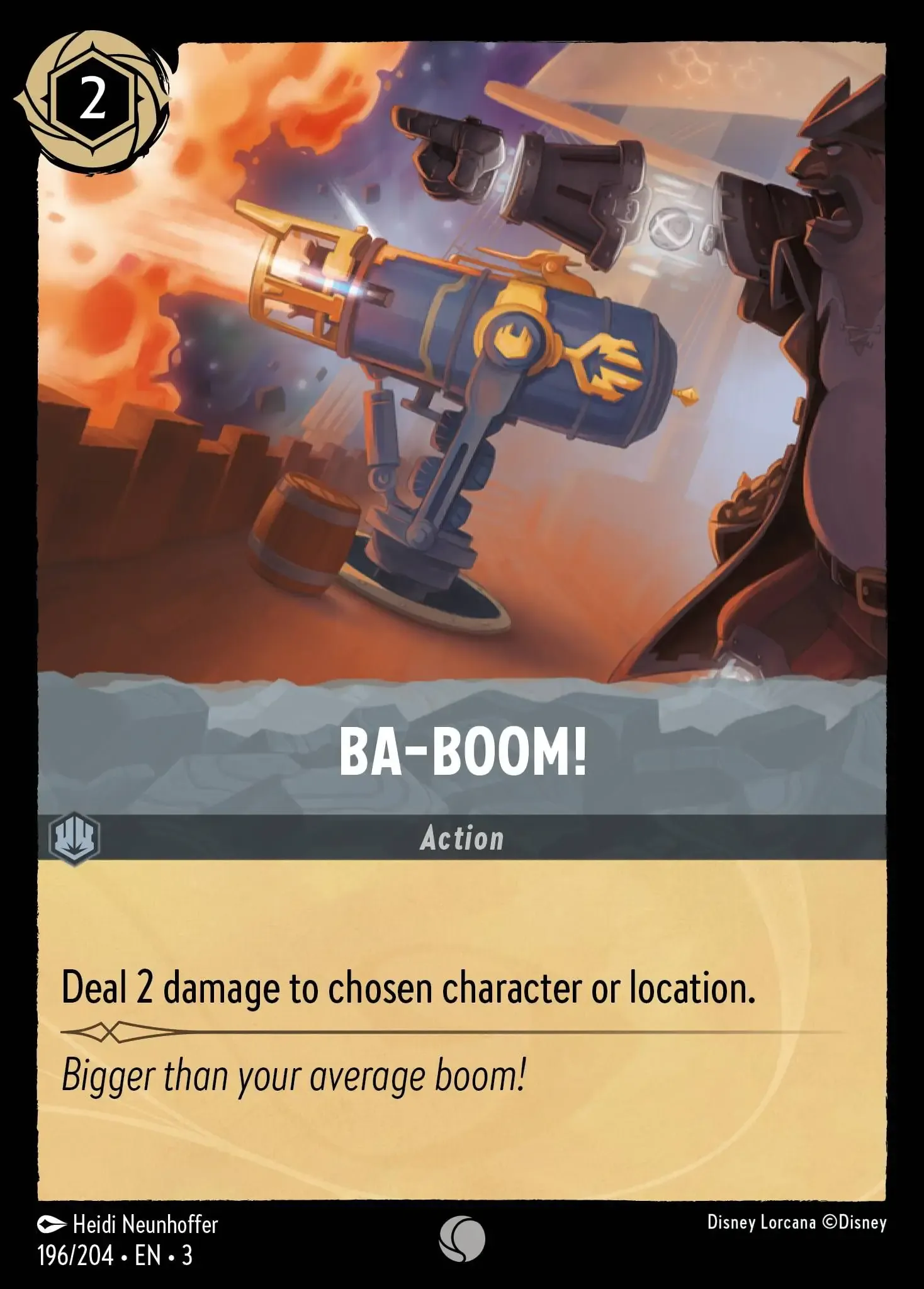
Ba-Boom! is a cheap, 2-cost action that deals 2 damage to a chosen character. It's your primary tool for removing early-game aggro threats before they can generate uncontrollable lore.
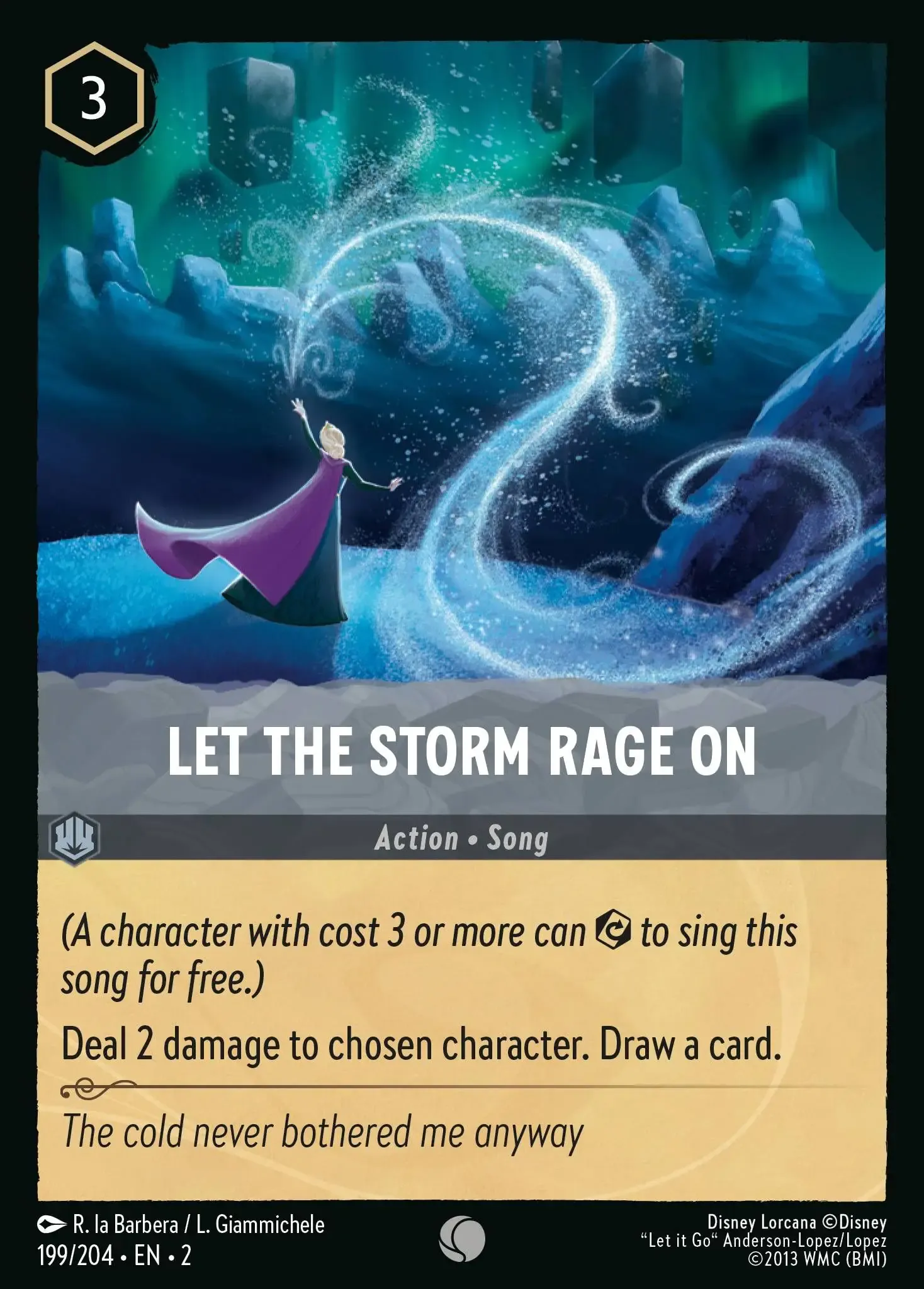
Let the Storm Rage On is the upgraded engine. For 3 ink, it also deals 2 damage, but it additionally lets you draw a card. Because it's a Song, you can exert a 3-cost character to sing it for free, effectively generating removal and a card draw simultaneously.
The Centerpiece: Tinker Bell - Giant Fairy
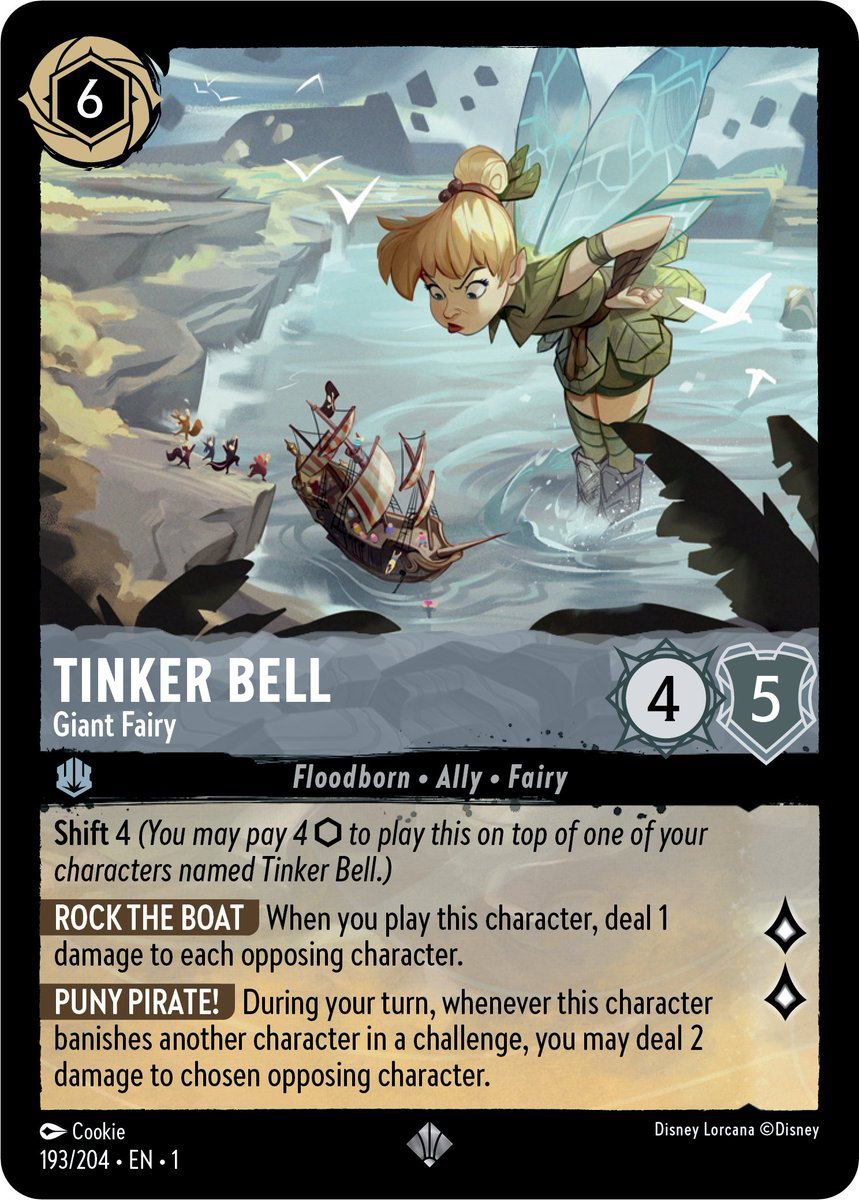
If Let the Storm Rage On is the tactical strike, Tinker Bell - Giant Fairy is the nuclear option. A 6-cost Steel character with Shift 4, she is the single most important card in the deck, and she dictates the flow of the entire mid-game.
-
Rock the Boat (the play effect):
When you play Tinker Bell, she instantly deals 1 damage to every character your opponent controls. Against an aggro deck, that alone can wipe out two or three small characters the moment she hits the table. -
Puny Pirate! (the banish trigger):
During your turn, whenever Tinker Bell banishes another character in a challenge, you may deal 2 damage to a different chosen opposing character. She effectively turns every combat victory into a two-for-one, systematically dismantling your opponent's board.
The Loop: Weaponizing the Amethyst Bounce
Steel's powerful play effects are normally one-and-done — you only get them once. This is where the Amethyst color identity breaks the game open. By pairing Steel with the Madam Mim "Bounce" package, you can trigger these effects multiple times per game.
Not That: Sacrificing Damage
In a pure Steel deck, if your Tinker Bell takes 4 damage from a challenge, she's badly hurt — one more hit banishes her. You're forced to leave her on the board, vulnerable, hoping to squeeze out one last bit of value before she's lost.
Do This: The Mim Rescue
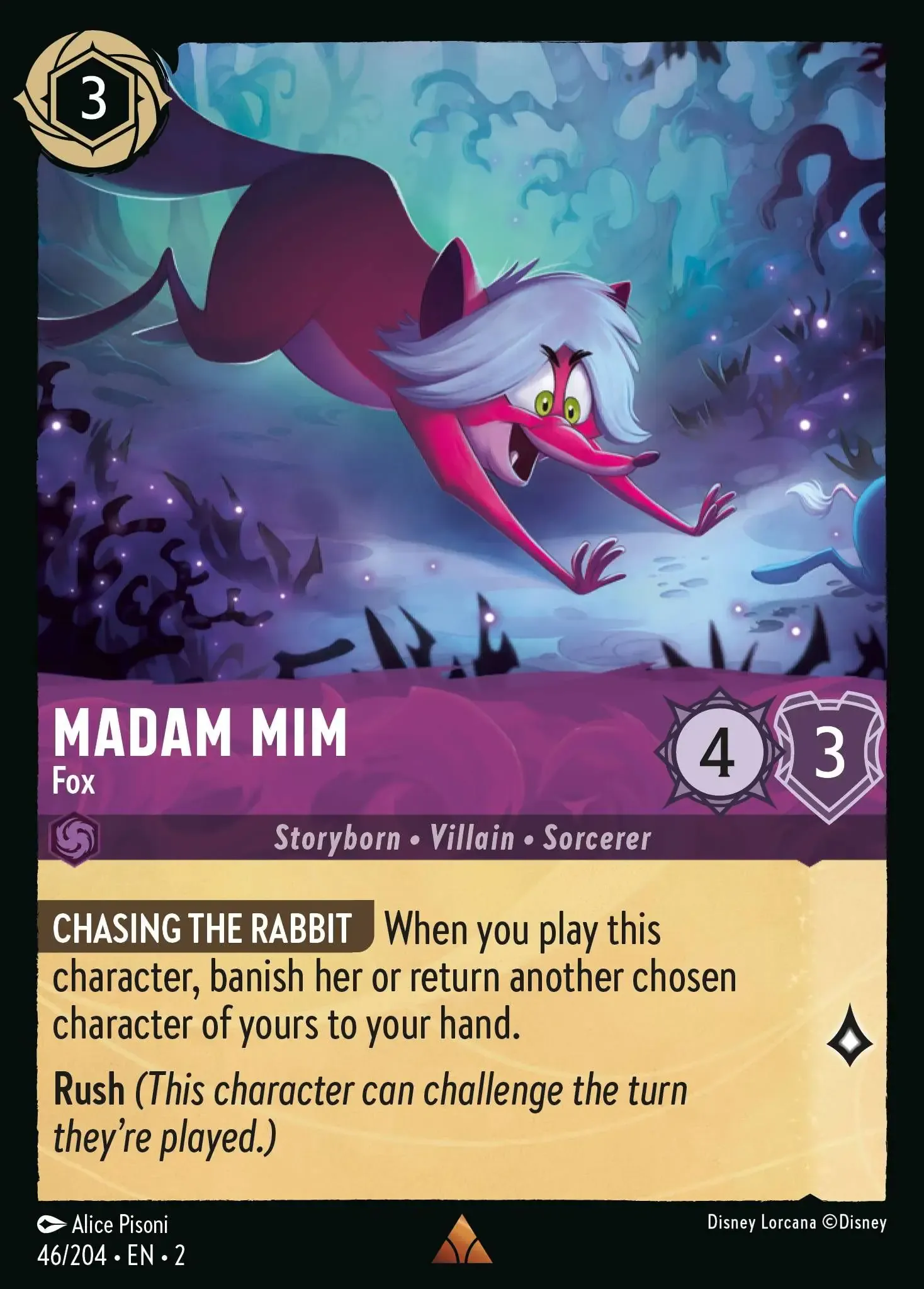
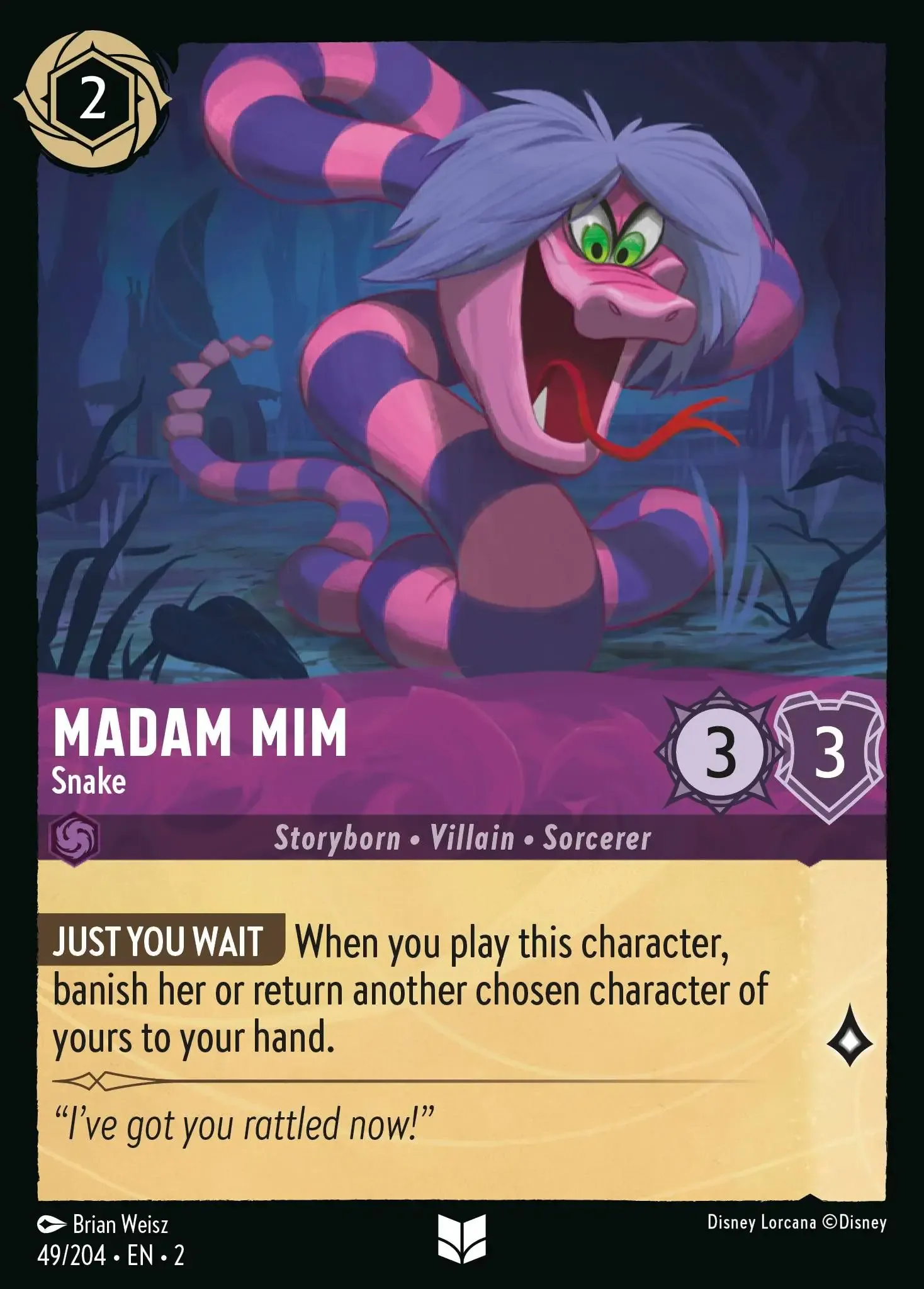
In Amethyst/Steel, when Tinker Bell is heavily damaged, you play Madam Mim - Fox. Her play effect makes you return one of your own characters to hand — so you bounce the damaged Tinker Bell back, refunding her entirely. You've healed your best card, added a 4/3 Rush body, and can replay Tinker Bell next turn to fire her board wipe all over again.
The Fuel: The Merlin Advantage
Steel provides the damage, but it lacks inherent card draw. If you're constantly spending actions to remove opposing characters, your hand empties quickly and you start top-decking for answers. Amethyst solves that through the Merlin package.
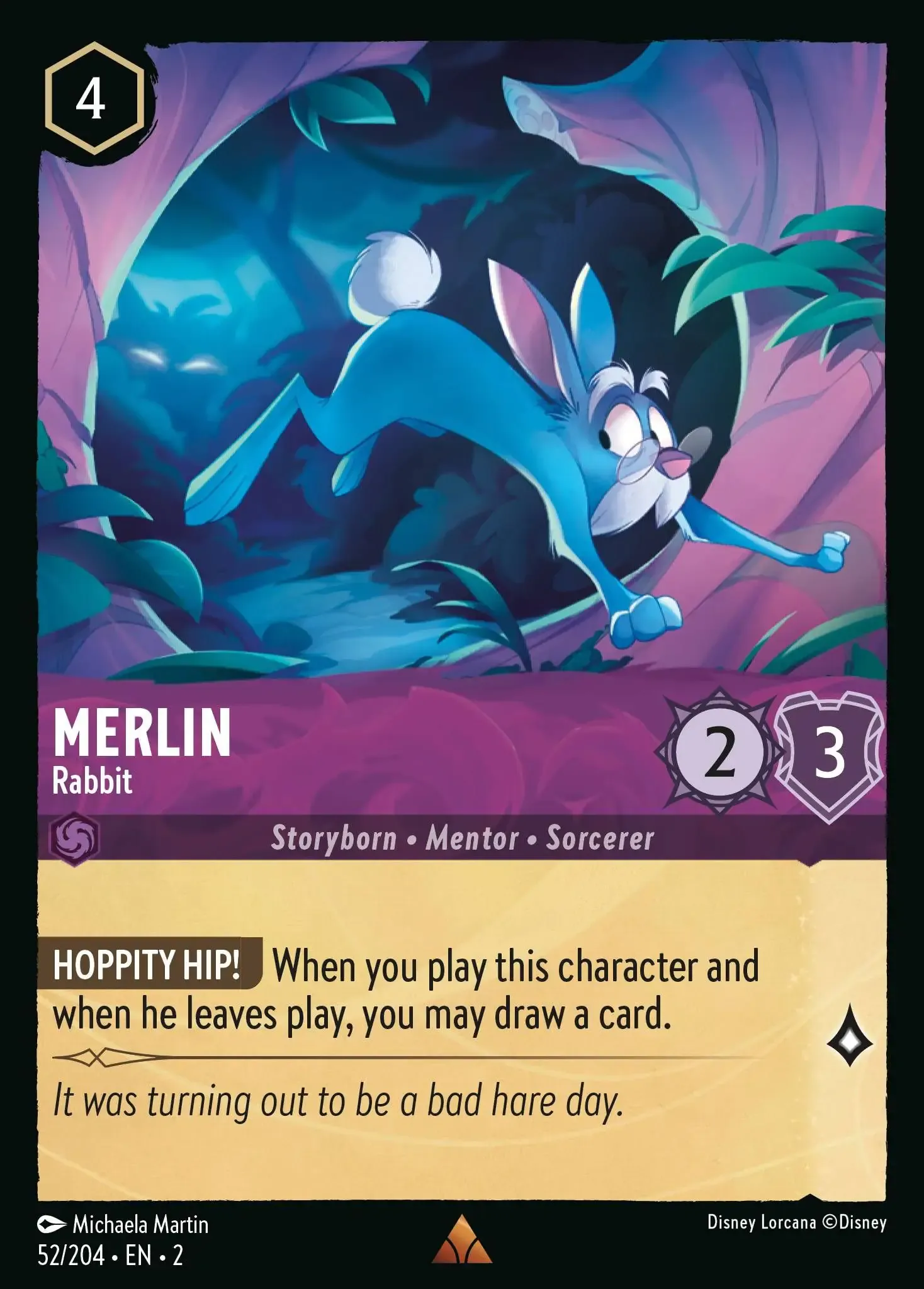
Just like in the Ruby/Amethyst control variant, Merlin - Rabbit is your primary source of fuel.
The Rabbit Loop
Merlin - Rabbit draws you a card when he enters play and another when he leaves play. By using Madam Mim - Snake or Madam Mim - Fox to bounce the Rabbit back to your hand, you guarantee a constant influx of cards — the leave trigger as he bounces, then the enter trigger when you replay him. A full hand keeps your combo pieces (a ping action plus a Tinker Bell challenge) flowing so you always have an answer.
The Nuke: A Whole New World
While the Merlin loop provides steady, incremental advantage, Amethyst/Steel also has access to one of the most explosive reset buttons in the game: A Whole New World, a 5-cost uninkable Steel song.
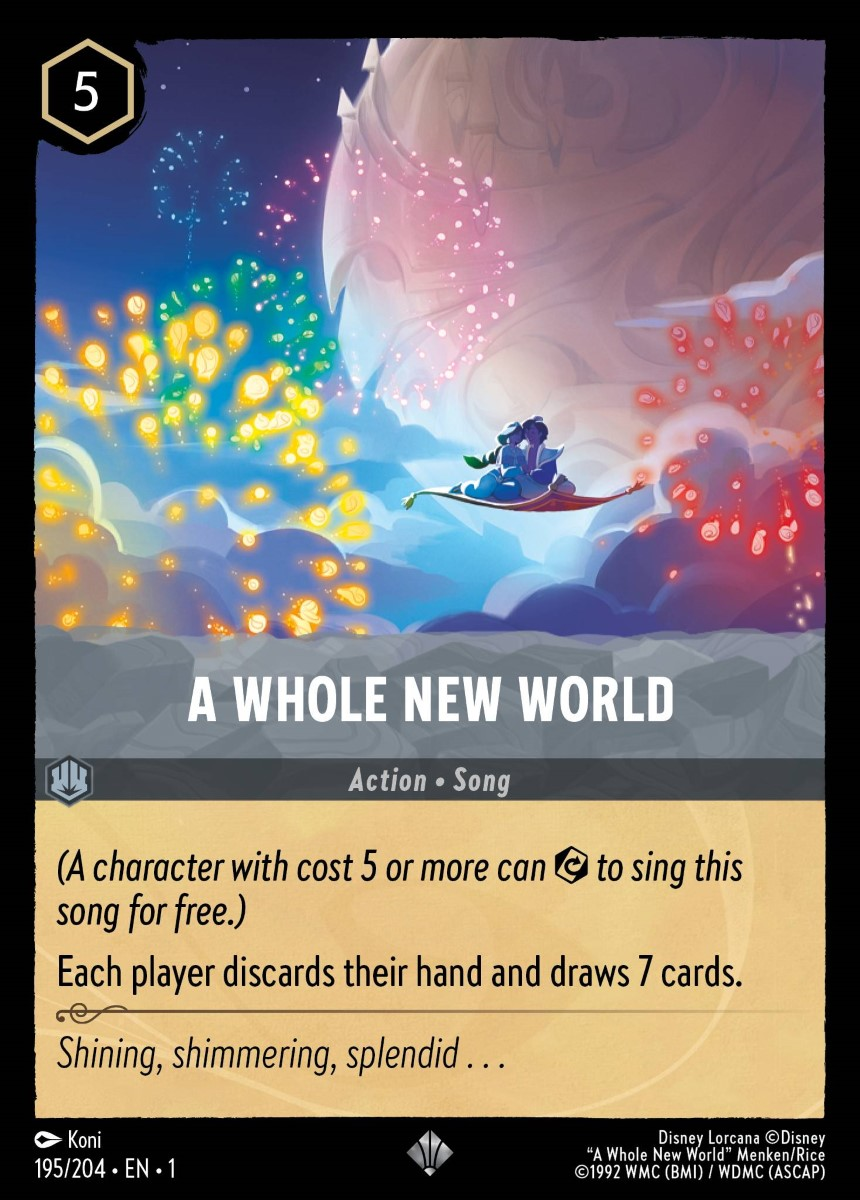
It forces both players to discard their entire hand and draw 7 fresh cards. In a vacuum, handing your opponent 7 new cards is dangerous. In this deck, it's a calculated execution.
-
The Hand-Dump Strategy:
Because this deck runs cheap 1- and 2-cost cards, you can empty your hand quickly. If your opponent is a slower Control deck holding 5 or 6 expensive cards for later, you sing A Whole New World — refilling your own empty hand to 7 while forcing them to throw their carefully sculpted late-game into the discard. -
Free Singing:
Because it's a Song, you don't pay the 5 ink. Exert a cost-5-or-more character — Tinker Bell - Giant Fairy herself qualifies at 6 ink — to sing it for free, leaving all your ink open to immediately play the cards you just drew.
Board Clearance: Grab Your Sword
When facing hyper-aggressive decks that flood the board with cheap 1- and 2-willpower characters, single-target removal isn't enough. You need widespread clearance to stabilize.
Grab Your Sword is your ultimate aggro eraser — a 5-cost Steel song that deals 2 damage to every character your opponent controls.
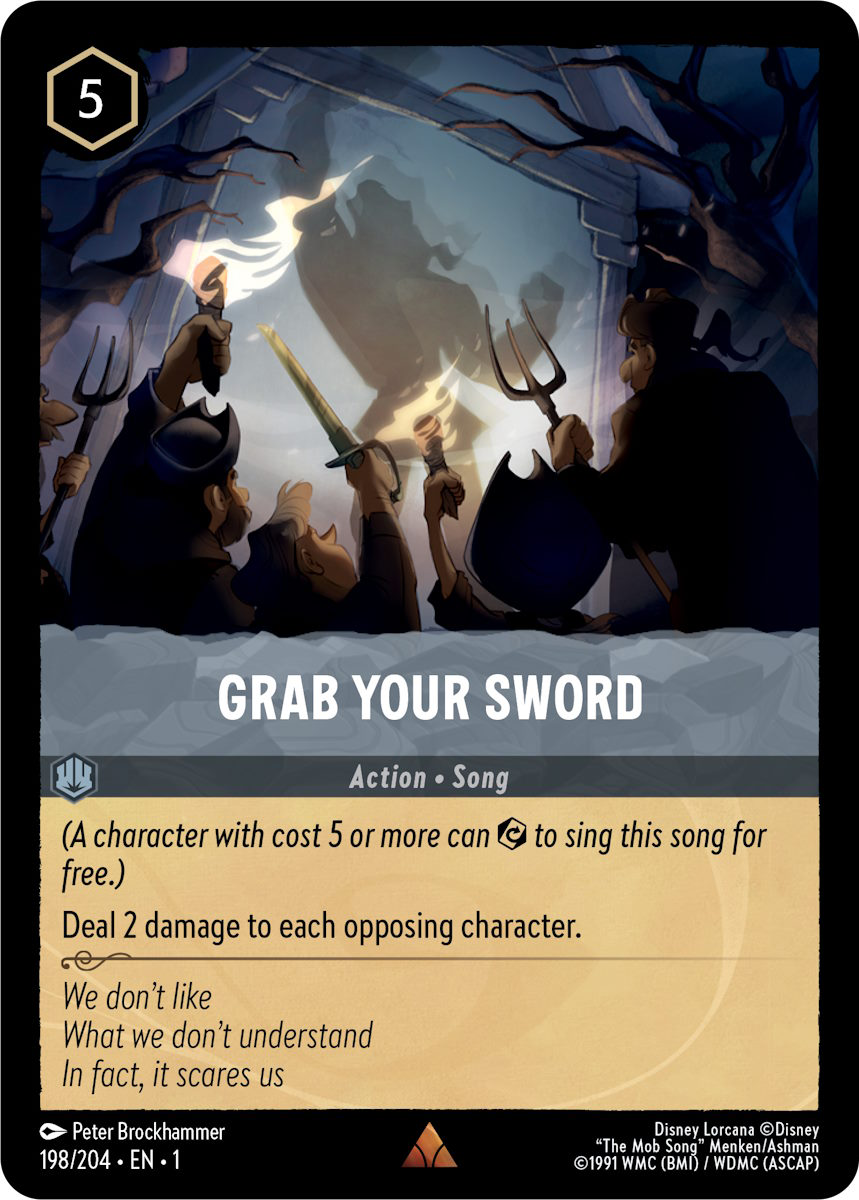
- The Tinker Bell Combo: Play Tinker Bell - Giant Fairy and she deals 1 damage to everything. The following turn, exert her (she's cost 6, so she can sing a 5-cost song) to sing Grab Your Sword for free, dealing another 2 to everything. That's 3 unpreventable damage spread across the opponent's entire board — enough to banish nearly every relevant aggro threat without ever risking your characters in a challenge.
The Arsenal: A Classic 60
This is a representative 60-card list for the Amethyst/Steel bounce archetype — the core engine that defined the deck. Treat the counts as a strong starting point rather than gospel, and adjust to your local field.
Amethyst Engine (30)
- 4x Chernabog's Followers - Creatures of Evil
- 4x Madam Mim - Snake
- 4x Madam Mim - Fox
- 4x Merlin - Rabbit
- 4x Merlin - Goat
- 3x Merlin - Crab
- 4x Friends on the Other Side
- 3x The Queen's Castle - Mirror Chamber
Steel Control Suite (30)
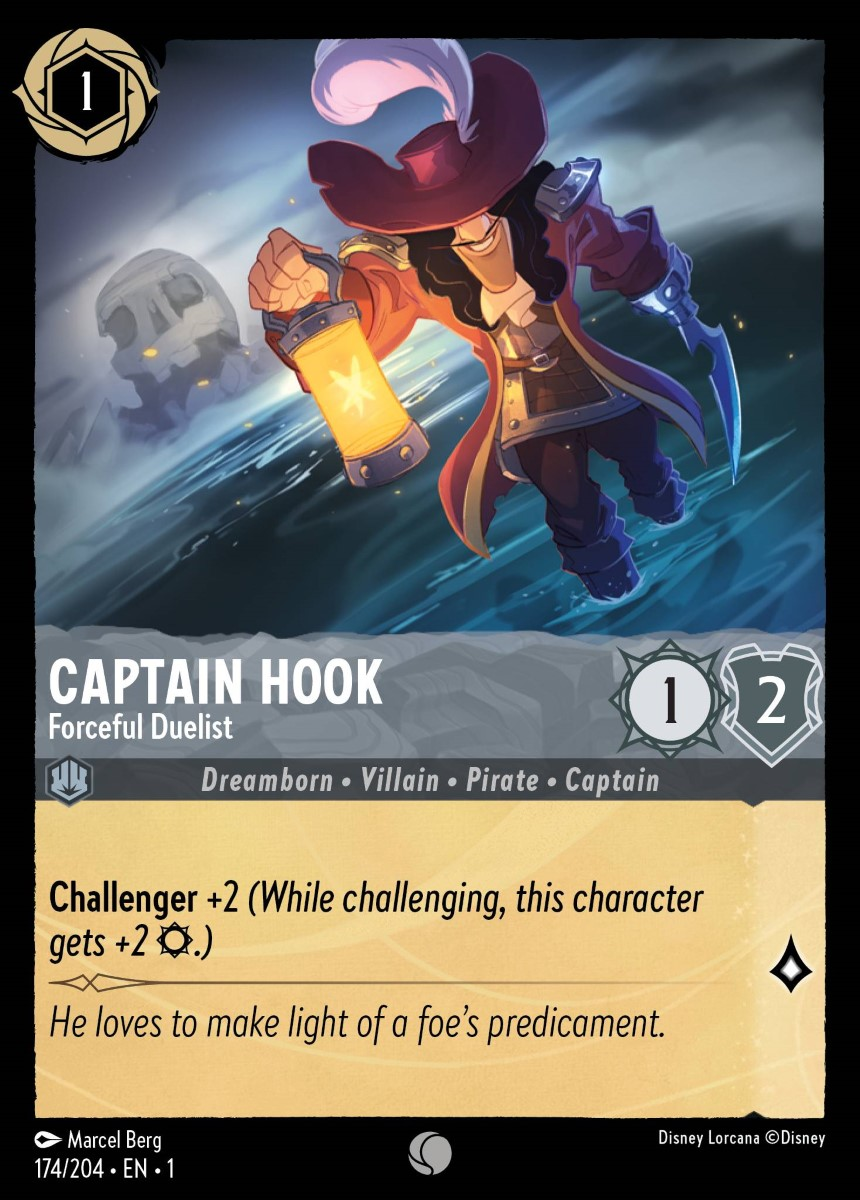
- 4x Captain Hook - Forceful Duelist
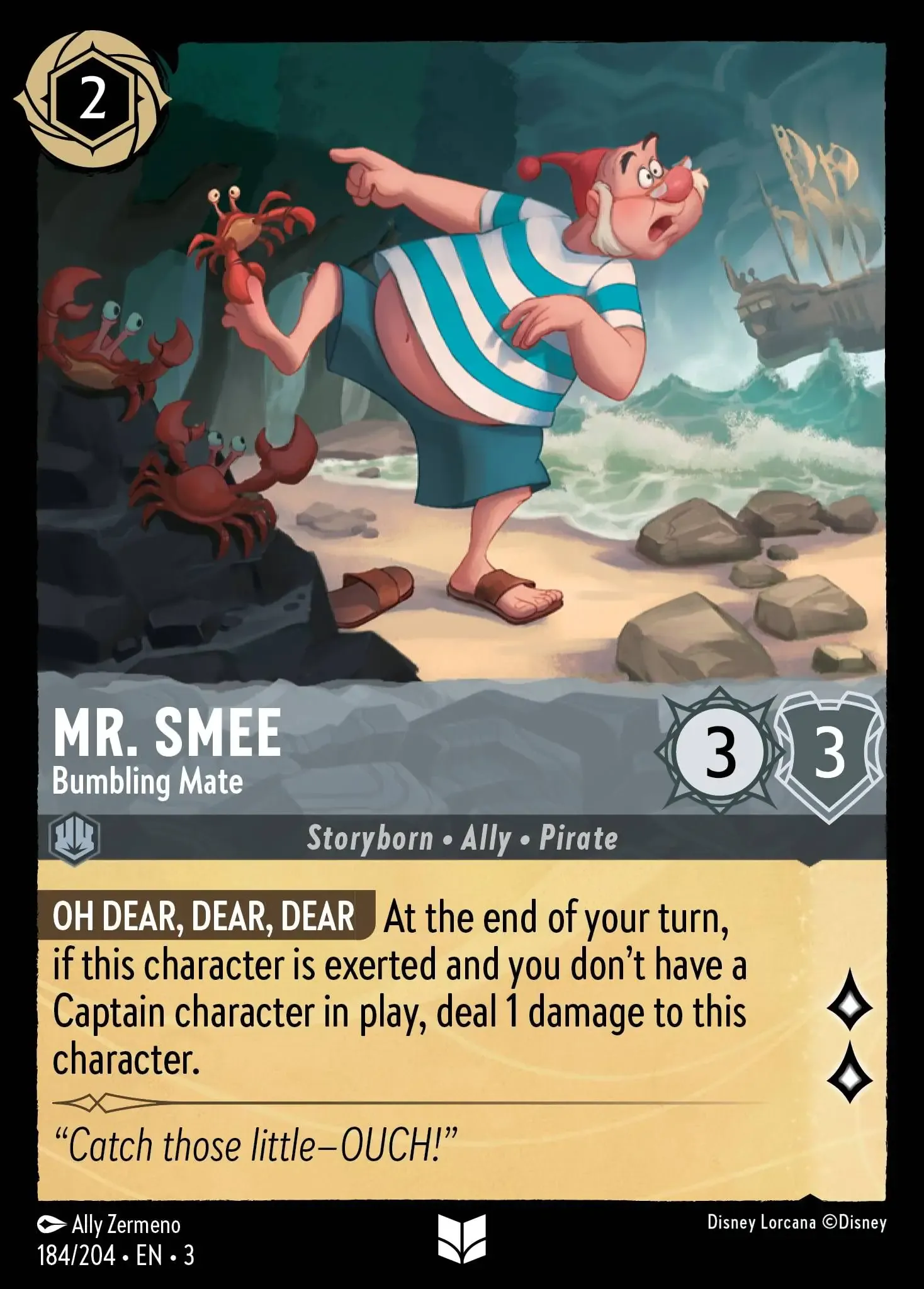
- 4x Mr. Smee - Bumbling Mate
- 4x Tinker Bell - Tiny Tactician
- 4x Tinker Bell - Giant Fairy
- 4x Ba-Boom!
- 4x Let the Storm Rage On
- 3x Grab Your Sword
- 3x A Whole New World
Note: Captain Hook keeps Mr. Smee alive (Smee damages himself at end of turn without a Captain in play), and the Mim bounce package fuels both the Merlin draw loop and the Tinker Bell re-plays. This is an Infinity / casual list today — see the format note above.
Premium Pulls: The Enchanted Chase Cards
If you love the deck and want to dress it up, the Enchanted versions of its signature cards are the premium chase pieces. A quick honesty check first: Enchanteds are collector showpieces, not playability upgrades — the card effect is identical to the common printing — so chase them for the art and the rarity, not as an "investment."
With that said, these two are the showpieces of the archetype:
Enchanted Tinker Bell - Giant Fairy
The Enchanted printing of the deck's signature card. As one of Steel's most iconic and recognizable cards, her Enchanted version has long been a sought-after chase piece — scarce, gorgeous, and consistently popular with collectors.
Enchanted A Whole New World
The Enchanted treatment of the hand-reset song. Enchanted action and song cards are rarer than character Enchanteds, which keeps pristine copies in demand among both nostalgic players and dedicated collectors.
If you do chase graded copies, know the trade-offs first — our Lorcana Grading Trap covers when a slab is worth it and when it isn't.
Sourcing the singles
Sets 1–4 are out of print, so the whole 60 is a secondary-market buy. TCGplayer is the cleaner route for the bulk of the list — standardised condition grading and one cart across multiple sellers, and the same searches cover Grab Your Sword and Merlin - Rabbit. For the two Enchanted printings and graded slabs, eBay has the deeper pool.
As an Amazon Associate, Geeky Domain earns from qualifying purchases. eBay links are affiliate links; Geeky Domain may earn a commission at no extra cost to you.


The Geeky Domain Verdict
Adapt and Destroy.
The Amethyst/Steel Bounce deck doesn't force a single game plan; it punishes your opponent for theirs. If they play fast, you become the control deck, wiping their board with Tinker Bell and Grab Your Sword. If they play slow, you flood the board, bounce your Merlin package to draw endless cards, and reset their carefully sculpted hand with A Whole New World.
To pilot it well, learn the damage thresholds of your opponent's threats — never waste a Ba-Boom! when a well-timed bounce loop could solve the problem for free. Assemble the classic 60, chase the Enchanted versions if the art calls to you, and master the midrange. Just remember it's an Infinity / casual deck today, not a Core Constructed list.
© GEEKYDOMAIN.COM | Strategy Powered by Data