

Budget Emerald/Steel Discard Under $50
One of Lorcana's most oppressive archetypes: strip the opponent's hand to nothing, control the board, and grind them into the dirt. Here's how it works — and how to build it on a budget.
Emerald/Steel Discard is the deck that makes opponents groan when they see your inks. It's a control-flavored resource-denial strategy that has been a fixture near the top of competitive Lorcana for seasons — famously piloted to a first-place finish at a Disney Lorcana Challenge against a field of nearly two thousand players. Its plan is simple to describe and miserable to play against: empty the opponent's hand, answer whatever they manage to play, and win at your leisure.
It's also a great budget archetype, because the engine that strips hands and controls the board is built largely from cheap songs, commons, and uncommons. The cost lives in a few premium payoffs you can trim, not in the core idea.
Two honest notes before we build. First, several of the discard deck's most iconic cards have rotated out of the Core Constructed format over time — they remain cheap and fully legal in casual and the Infinity format, which is where a budget version of this deck shines brightest. Second, this guide gives you the real strategy and a verified core to build around, not a fabricated "magic 60." Pick your format, validate the list and prices on a live deckbuilder, then sleeve up.
The Short Version
Emerald/Steel Discard wins by depleting the opponent's resources — forcing discards to empty their hand while generating value with card draw, controlling the board with Steel removal, and closing on lore (or simply decking them out). The engine is cheap: discard songs, the empty-hand payoffs, and removal carry the deck, with cost concentrated in a few premium cards you can trim. It's most budget-accessible in the Infinity format, where the classic discard pieces are legal and inexpensive. Build around the verified core below, decide your format, and validate legality and prices before buying.
→ Sharpen Your Lorcana Game
In This Guide
What the Discard Deck Wants to Do
The core strategy is resource denial: gain a lasting advantage by stripping the opponent's hand through discard effects while you generate value with card draw of your own. A player with no cards can't develop a board, can't defend, and can't answer your threats — so once you're ahead on resources, the game tends to spiral in your favor.
From there, you have multiple ways to actually close, and you pivot between them based on the matchup. You can quest for lore behind a controlled board, you can challenge down whatever they manage to deploy, and — crucially — you can simply deck them out. Remember that a player who can't draw a card when required loses the game, so against the right opponent, grinding their resources to zero is the win condition.
That flexibility is what makes the deck so strong and so satisfying. You're not locked into a single line; you're reading what your opponent needs and taking it away from them, then winning whichever way the game leaves open.
The Engine: Forcing Discards
The heart of the deck is the package of cards that force your opponent to throw away their hand. Emerald is Lorcana's premier disruption color, and its discard tools are both cheap and brutal:
- Cheap discard actions and songs — effects in the mold of Sudden Chill and Hypnotize that strip cards out of the opponent's hand for very little ink. Run at high counts, they keep the opponent perpetually empty.
- We Don't Talk About Bruno — a standout discard song that makes the opponent discard and bounces one of their cards back to hand. Because your engine empties hands so fast, that bounced card usually gets discarded next turn too, making it one of the strongest pieces of soft removal in the format.
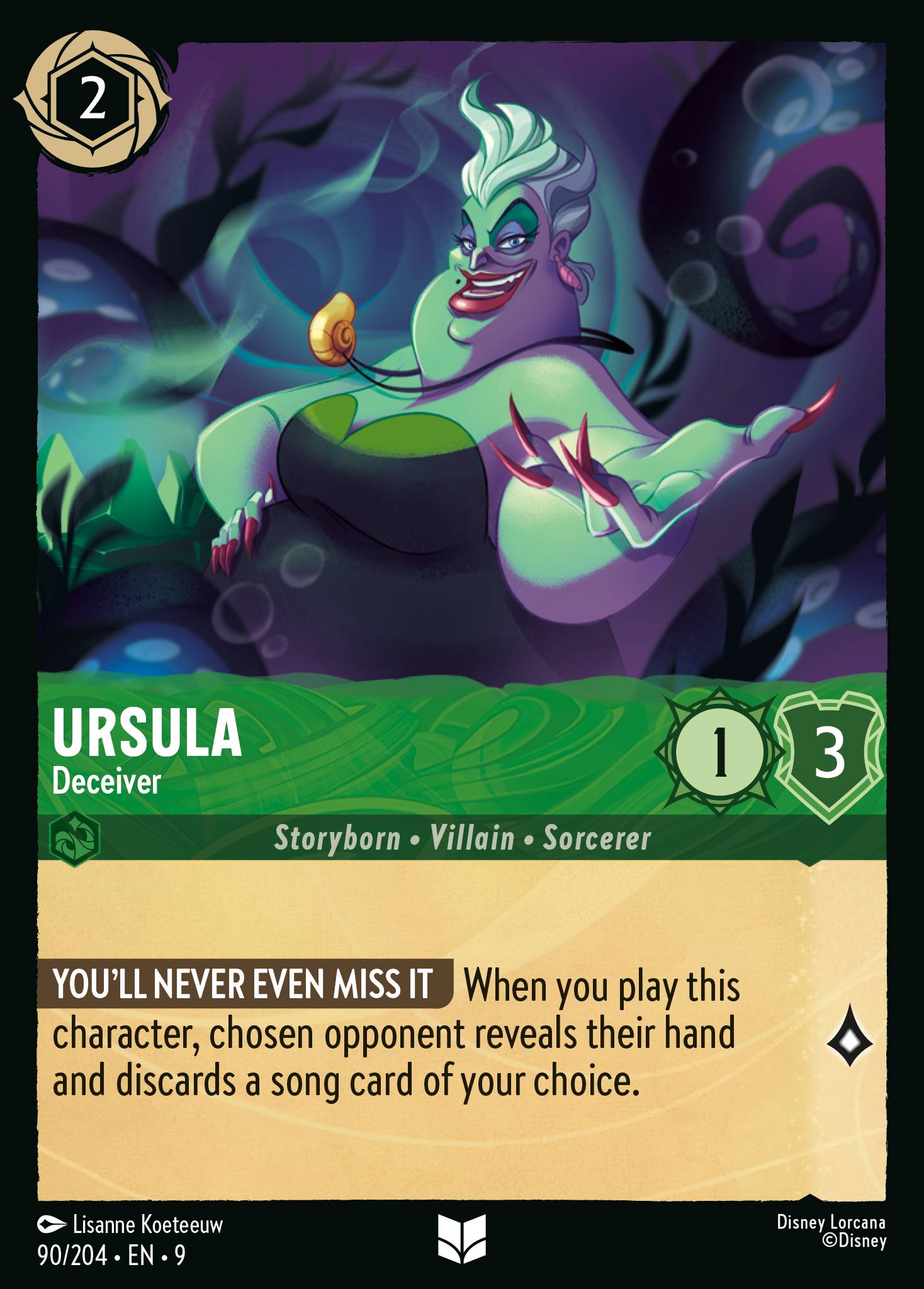
- Discard bodies — characters in the Ursula – Deceiver vein that strip a card from their hand the moment they enter play, so developing your board and attacking their hand are the same action.
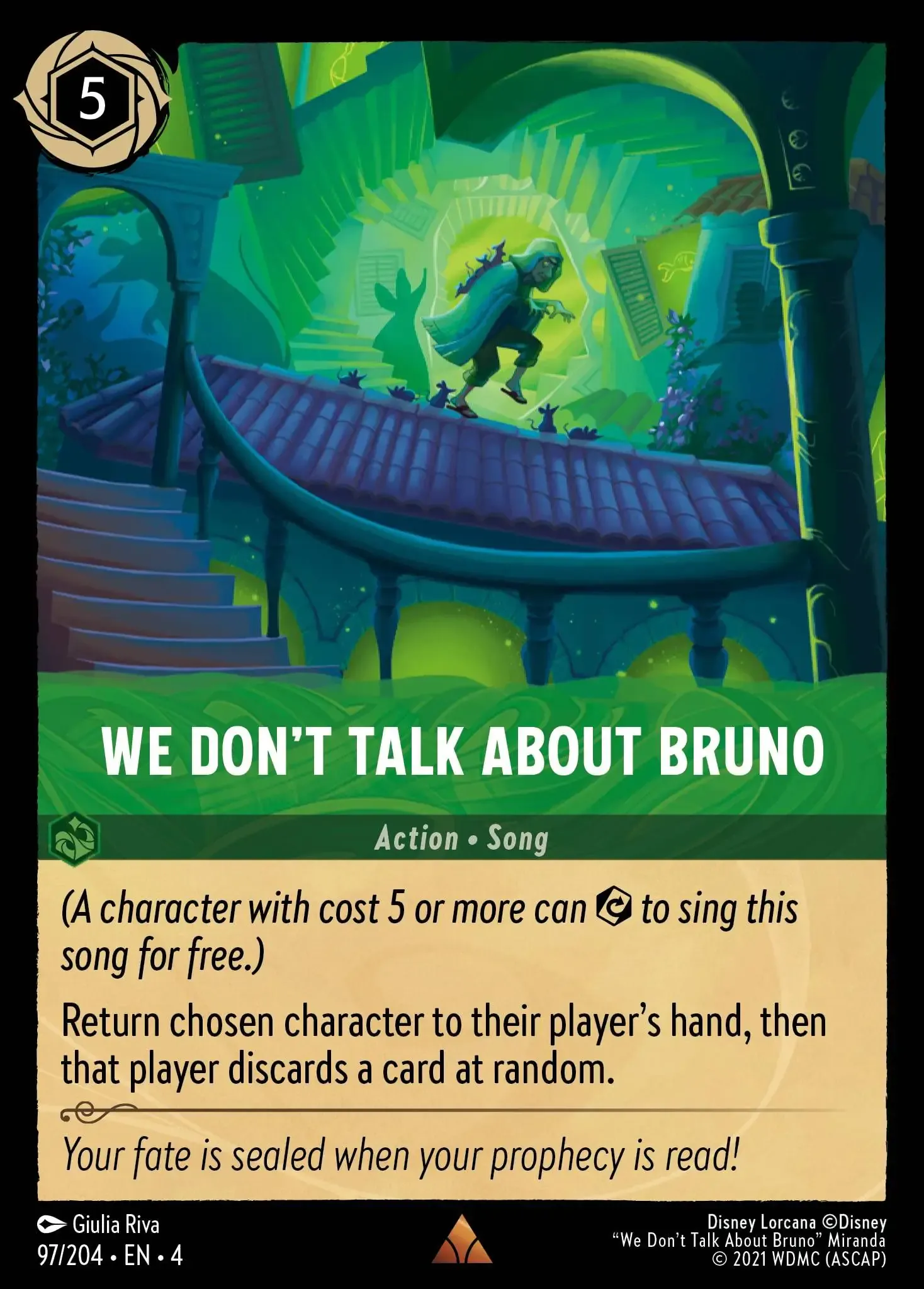
The goal across these is simple: make the opponent play off the top of their deck, one card at a time, while you operate from a full hand. A deck full of expensive answers and combos does nothing sitting in the discard pile.
The Payoffs: Punishing an Empty Hand
Emptying a hand is only half the plan; the deck also runs cards that turn the opponent's empty hand into a concrete advantage:
- Prince John – Greediest of All: Long regarded as the gold standard of the discard game — a payoff that punishes the opponent precisely for the empty hand your engine creates. He's the card the whole strategy is often built to support.
- Beast – Tragic Hero: A powerful body that rewards the discard-heavy game state, giving you an efficient threat that gets better exactly when your plan is working.
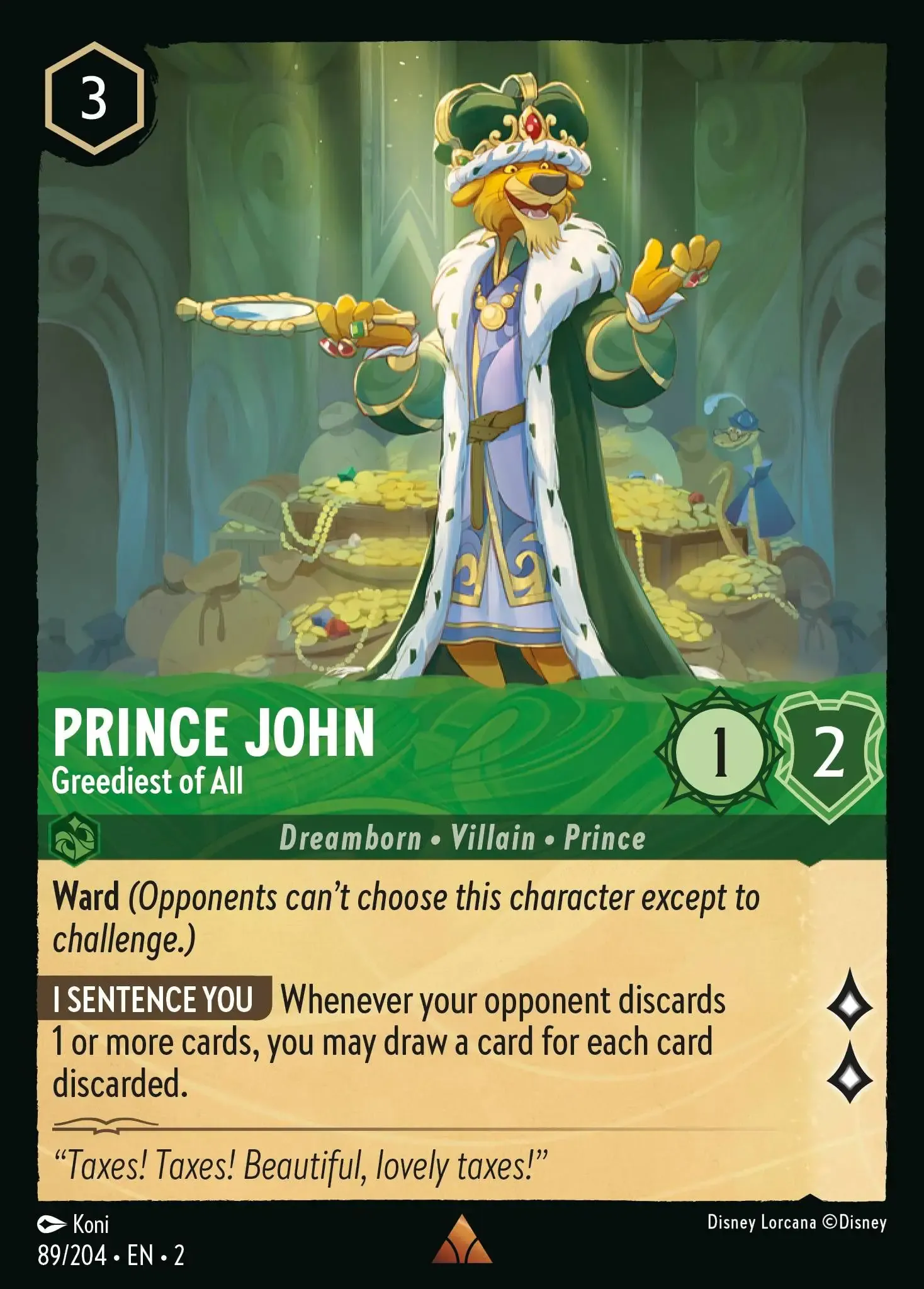
The synergy is the point: the discard package and the payoffs feed each other. Every card you strip from the opponent makes your payoffs better, and your payoffs give you a clock so the game doesn't drag forever.
Steel's Half: Removal & Value
Emerald supplies the disruption; Steel supplies the control and the staying power. This half of the deck does two jobs:
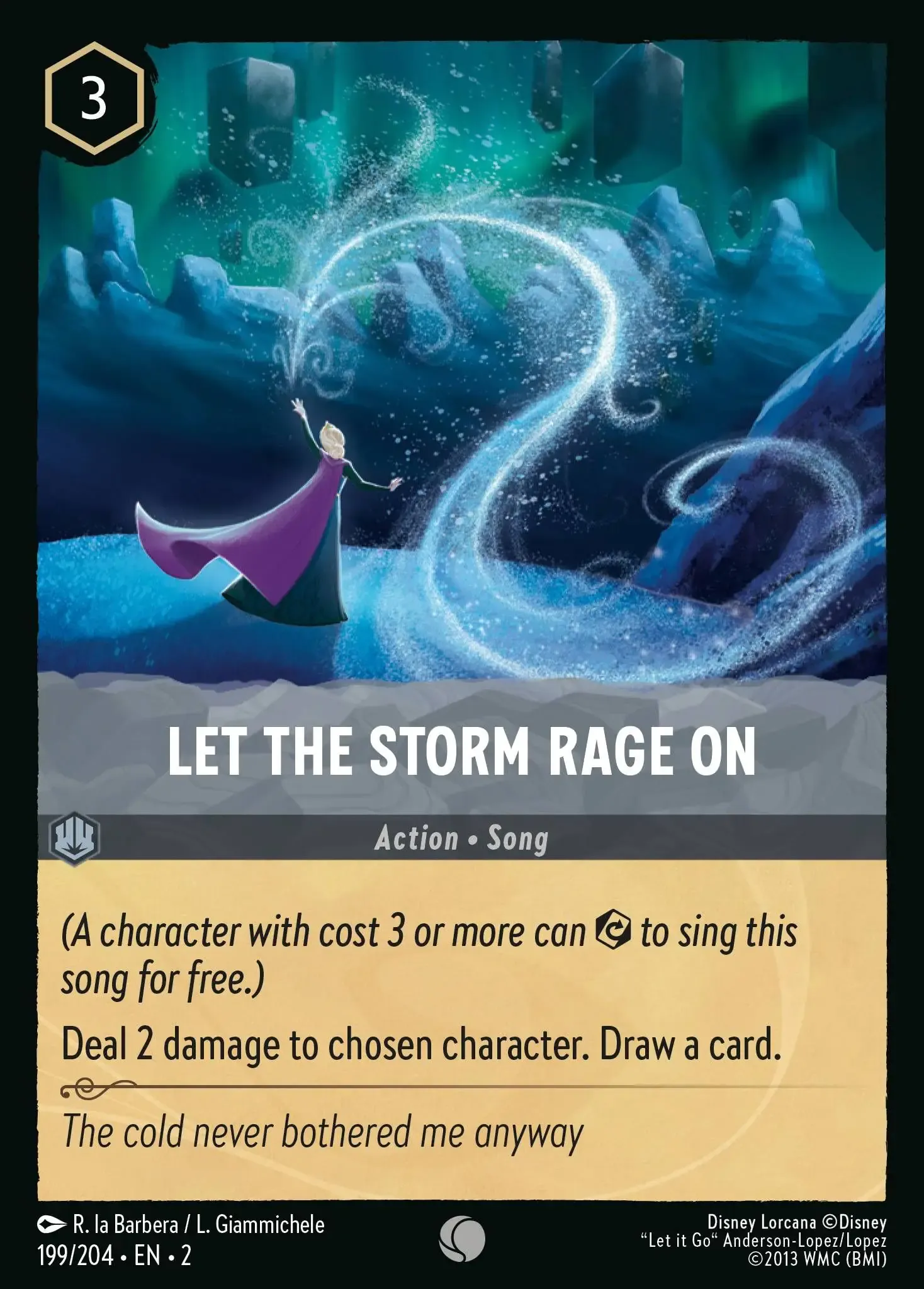
- Removal: Steel's damage songs and removal effects — in the family of Strength of a Raging Fire and Let the Storm Rage On — clear the few threats your opponent manages to land off the top of their deck. With their hand empty, a single removal spell often answers their entire turn.
- Card advantage: The "generate value" half of the plan — draw and selection pieces (in the role of the Diablo characters, Morph, The Muses, and a value location like Hidden Cove) keep your hand full while the opponent's stays empty. That growing card gap is the whole game.
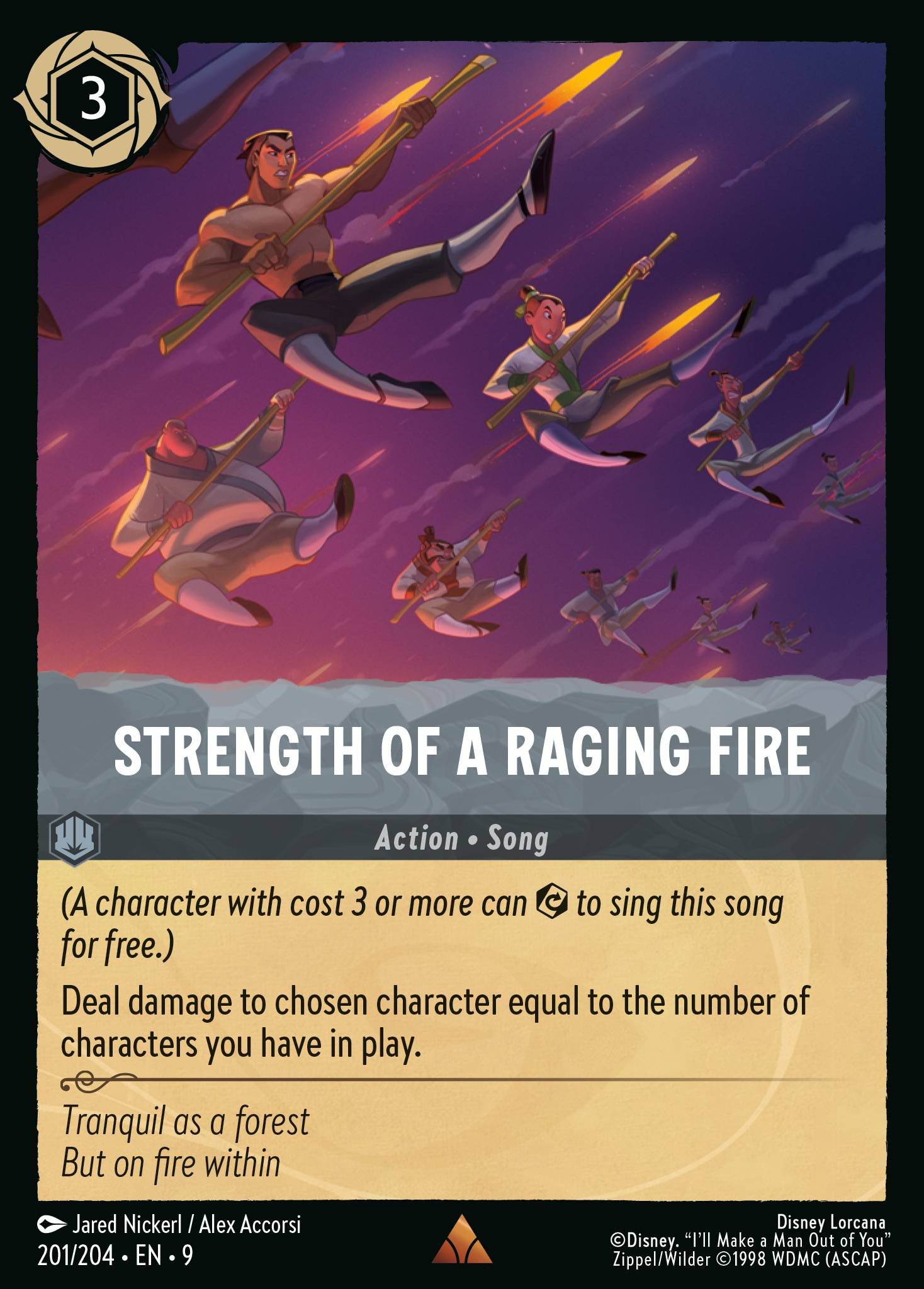
Played together, these two halves create a vice: they can't keep cards (Emerald strips them), and they can't keep a board (Steel removes it), while you quietly out-resource them and march toward your win condition.
Building It on a Budget
Discard is friendly to a tight budget for the same reason Steelsong is: the cards doing the heavy lifting — discard songs and actions, cheap removal, and value commons — are inexpensive. The cost concentrates in a handful of premium payoffs and finishers, which is exactly what you trim for a sub-$50 build. Two decisions set the price:
- Pick your format first. Many of discard's iconic pieces have rotated out of Core Constructed but remain cheap and legal in casual and the Infinity format — which is where a budget discard deck is most accessible. If you're playing current Core, you'll lean on newer discard and removal tools, so confirm legality before you buy.
- Trim the premium payoffs. Keep the discard-and-removal core at full strength; cut down on the priciest payoffs and finishers, running extra copies of the cheap disruption and value cards instead. You lose a little ceiling, not the lock.
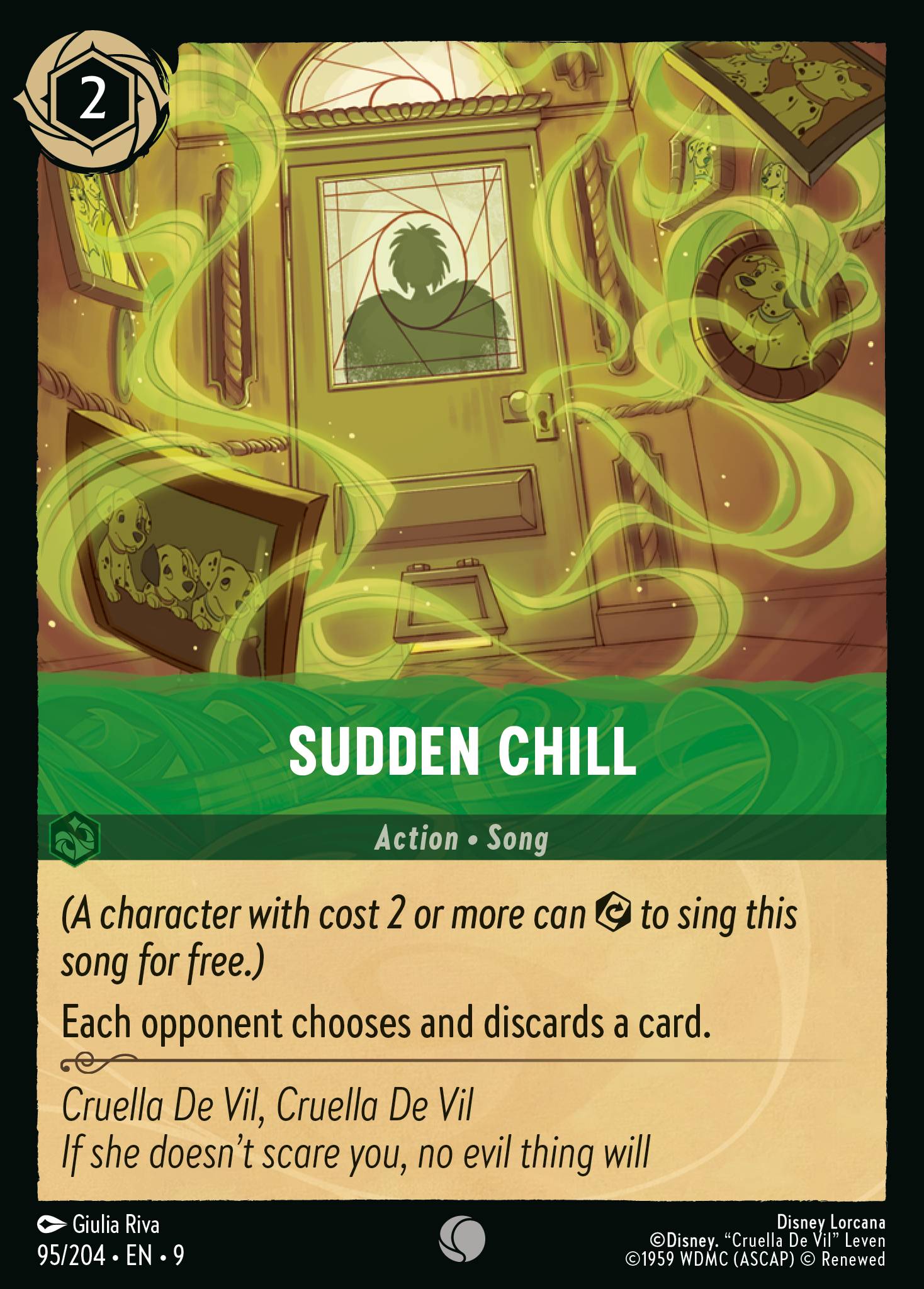
Validate Before You Sleeve
Card prices and Core legality both shift week to week, and this archetype has been rebuilt across rotations. Before buying anything, plug your list into a live deckbuilder (such as Dreamborn or inkDecks), confirm every card is legal in your chosen format, and price it against current market data. Treat any dollar figure — including "under $50" — as a target to verify, not a promise.
A Budget Core to Build Around
Rather than a fixed 60 that may be illegal or mispriced by the time you read this, here's the verified, role-based core the archetype is built on. Confirm legality and prices for your format, then fill the remaining slots to reach 60.
Discard Forcers (the engine)
Cheap discard actions and songs (Sudden Chill, Hypnotize) · We Don't Talk About Bruno · a repeatable discard body (Ursula – Deceiver)
Empty-Hand Payoffs
Prince John – Greediest of All · Beast – Tragic Hero
Steel Removal
Strength of a Raging Fire · Let the Storm Rage On (or your format's current damage/removal songs)
Card Advantage & Value
Diablo characters · Morph – Space Goo · The Muses · a value location such as Hidden Cove
Finisher / Closer
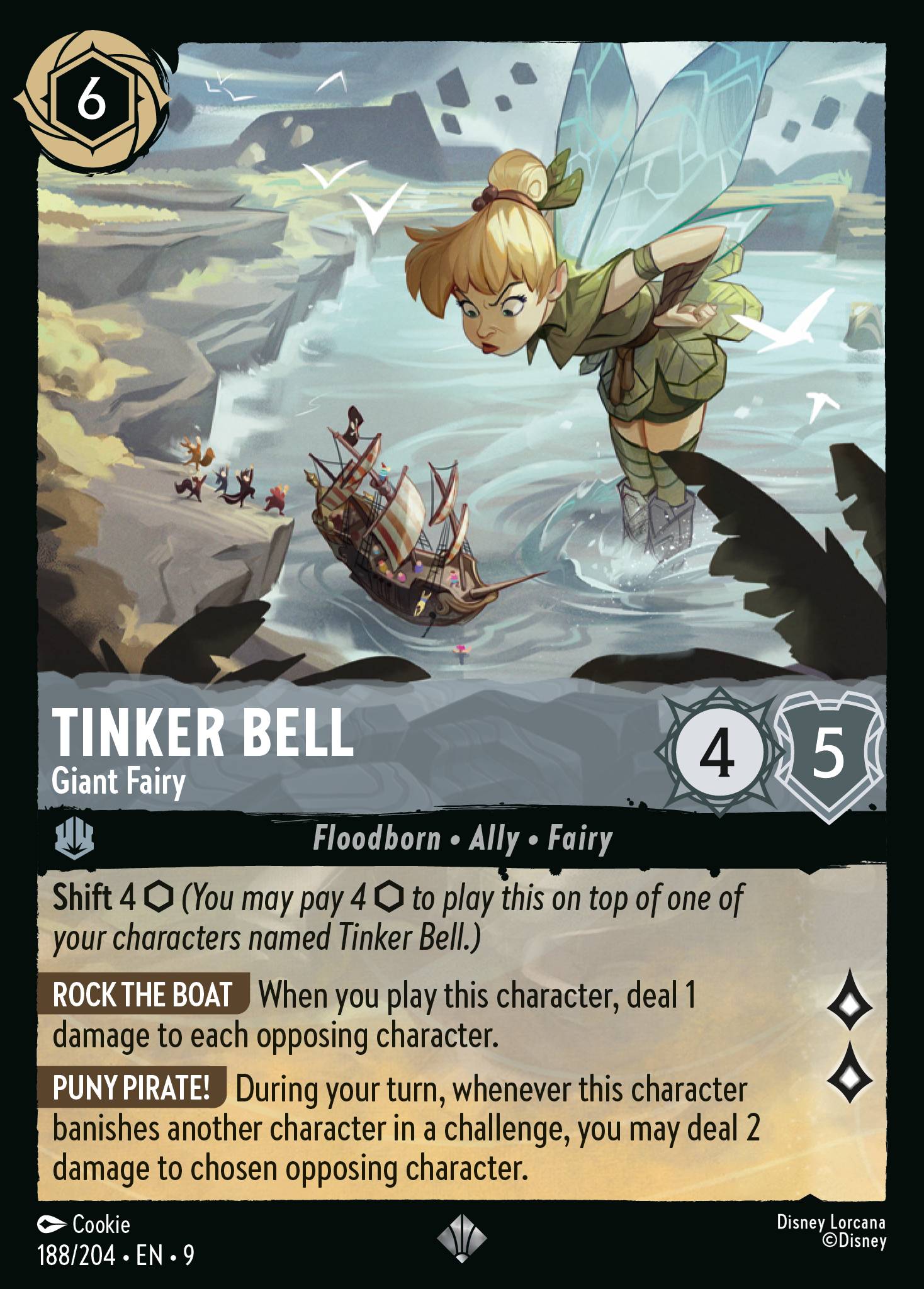
A resilient threat to convert your resource lead into lore (in the role of Tinker Bell – Giant Fairy)
*This is a verified core skeleton, not a complete tournament list. Build to 60 with curve-fillers and extra copies, validate every card's format legality, and price-check before buying.*
How to Pilot It
Discard rewards patient, deliberate play. A few habits separate a grinding win from a slow loss:
- Mulligan for disruption plus an answer. You want early discard and at least one piece of removal. A hand of only finishers does nothing against an opponent developing freely.
- Time your discards. Stripping a full hand early is high-value; ripping a single card when they're already empty is often a waste. Hit them when it hurts most — right before they'd untap into a big turn.
- Know your win route per matchup. Against aggro, prioritize stabilizing with removal before you grind. Against slow control, lean on the deck-out plan and strip their answers. Against value decks, win the long card war.
- Don't forget to actually close. Resource denial buys you control, but you still need to quest to 20 or run them out of cards. Once you're firmly ahead, start converting the lock into a finish rather than disrupting on autopilot.
Matchups: Picking Your Win Route
Discard's biggest strength is that it can win three different ways — on lore, on the board, or by deck-out — and the skill is choosing the right one for each opponent. Here's how to read the most common archetypes:
- vs. Aggro: Survival comes first. Lead with removal to stabilize the board rather than discarding into their pressure — an empty hand doesn't help if you're dead. Once their early rush is spent, pivot to discard to strip the reload, then grind them out. Your removal-heavy half is the favorite here.
- vs. Control: This is where deck-out shines. Strip their answers and card-draw before they can stabilize, attack their hand on their key turns, and let the long game run them out of cards. Patience wins; don't throw threats into open removal — let your disruption do the work.
- vs. Go-Wide & Midrange: Board control is your route. Your damage songs answer multiple characters at once, and discarding their refuel means they can't rebuild a board you've just cleared. Trade efficiently, then quest to 20 once they're tapped out of resources.
- vs. Value & the Mirror: Win the card war. Whoever ends up with more usable resources takes it, so prioritize your own card-advantage engine and time your discards to hit their biggest turns. In the mirror specifically, the empty-hand payoffs and a resilient finisher are usually what break the stall.
The common thread: figure out what your opponent relies on — early pressure, a stocked hand of answers, or a wide board — and take that specific thing away before you commit to closing.
Upgrade Path & Verdict
As your budget grows, the upgrades are the premium pieces you trimmed: the best payoff and finisher options, more consistent discard, and a value location or two to deepen the card-advantage engine. None of it changes the plan — it just makes the lock tighter and the closes faster.
Cruel, Cheap, and Effective.
Emerald/Steel Discard endures because its plan is so hard to fight: an opponent with no cards can't beat you. The disruption-and-removal core that powers it is inexpensive, the payoffs reward exactly the game state you create, and the deck teaches the resource-management and control fundamentals that make you better at every grindy matchup in the game.
Pick your format, build around the verified core, validate legality and prices, and fill out the rest as your collection grows. Few decks deliver this much oppression for so little money.
Buy the Core Cards
Five singles do most of the work here: Prince John – Greediest of All, We Don't Talk About Bruno, Sudden Chill, Ursula – Deceiver, and Strength of a Raging Fire. Check market prices on TCGplayer first, then compare eBay for played copies — and grab sleeves and a deck box for the finished 60. Confirm each card is legal in your format before you order.
As an Amazon Associate, Geeky Domain earns from qualifying purchases. eBay links are affiliate links; Geeky Domain may earn a commission at no extra cost to you.

Build Your Discard Deck:
- → Price-check the core cards above before you buy
- → Budget Amber/Steel "Steelsong" Guide
- → Return to the Lorcana Hub
© GEEKYDOMAIN.COM | Strategy Powered by Data