

How to Spot Counterfeit MTG Cards
Fakes are better than ever in 2026 — but they still fail the same tests. Here's a complete, layered authentication guide for Magic: The Gathering, from a phone flashlight to a jeweler's loupe.
Magic: The Gathering created the secondary card market, and with valuable singles regularly trading for tens or hundreds of dollars, counterfeiting has become a real business. The fakes have improved year over year — the days of an obvious off-color reproduction are largely gone, and "super fakes" now replicate the card stock, the weight, and even the security stamp closely enough to fool a quick glance.
The good news: genuine Magic cards carry several built-in authentication features that counterfeiters consistently struggle to reproduce perfectly. You don't need expensive equipment to catch the vast majority of fakes — a phone flashlight and an inexpensive jeweler's loupe cover almost everything.
This guide walks through every reliable test, in the order you should run them, with an honest read on how well each one holds up against modern counterfeits. The single most important principle: never rely on one test alone, and always compare against a card you know is genuine.
The Short Version
Authentic MTG cards have a blue paper core visible under a flashlight, a four-red-dot "L" inside the green mana symbol on the back, and crisp rosette printing where black text sits cleanly above the colored dots. The holofoil stamp on rares and mythics helps but is no longer foolproof — modern fakes replicate it. Run at least three tests, always compare to a known-genuine card from the same set, and never use the bend or rip test. For high-value cards, a 20-30x loupe is the standard tool.
→ More Collecting & Trust Guides
In This Guide
Proxy vs. Counterfeit — Know the Difference
Before getting into tests, a distinction that shapes how you react to what you find. Not every non-genuine card is malicious.
- A proxy — an unofficial stand-in used transparently in casual play, often clearly labeled or visually distinct. Using one in a game you've agreed to isn't dishonest; it depends entirely on context and disclosure.
- A counterfeit — an unauthorized reproduction designed to pass as genuine, whether sold as real or sleeved into a deck to cheat. This is what you're protecting against.
The tests below identify both. The distinction matters because finding a proxy in a friend's casual deck is a very different situation from finding one in a card you paid $300 for on the secondary market.
The Golden Rule: Layer Your Tests
The single most important authentication principle, especially in 2026: no one test is sufficient. Counterfeit quality has climbed year over year, and the arms race is real — tests that reliably caught fakes five years ago are no longer guarantees. Sophisticated counterfeits now replicate the blue core, fake the holofoil stamp, and approximate the rosette pattern closely enough to survive a casual glance.
The only reliable approach is to run at least three tests and compare against a known-genuine card from the same set. A card that passes one or two tests but fails a third is suspect; a card that passes all three is almost certainly real. And for any high-value card — a $50+ rare, a collectible foil — a jeweler's loupe (20-30x magnification) isn't optional. It's the standard tool, and it reveals what the naked eye misses.
Tests at a Glance
Every test in this guide, what you need for it, and how well it holds up against modern fakes:
| Test | What you need | Reliability | Notes |
|---|---|---|---|
| Light test | Phone flashlight | High for basic fakes; moderate vs. super fakes | Less reliable on foils; always compare to a real card |
| Green dot test | Loupe (20-30x) | Very high — most reliable single test | Nearly foolproof; fakes almost always get it wrong |
| Rosette test | Loupe (20-30x) | Very high | Crisp black text is the tell; needs same-set comparison |
| Holofoil stamp | Naked eye / loupe | Moderate — stamp alone no longer sufficient | Rares/mythics only (since M15); fakes can replicate it |
| Texture / feel | Your hands | Good for obvious fakes; weak vs. refined ones | Develops with experience; never standalone |
| Bend / rip test | — | Not recommended | Damages real cards; unreliable vs. modern fakes |
The Light Test (Blue Core)
Magic cards are a paper sandwich, and the middle layer has a blue tint — a deliberate manufacturing choice that doubles as a built-in authentication feature. Shine a phone flashlight through a real card in a dim room and you'll see:
- A bluish glow — a good amount of light passes through with a noticeable blue hue.
- Faint legibility — you can make out the printed surface on the far side, dimly but clearly.
- A blue edge — inspecting the card's edge reveals the blue layer in cross-section.
How fakes fail it:
- Opaque, black core — the most common failure. No light passes through. Black core belongs to poker cards, not Magic — opacity alone is strong evidence of a fake.
- Too thin, washed out — cheaper fakes let too much light through, looking bleached rather than faintly blue.
Important caveat: Foil cards naturally block more light, so the light test is less reliable on foils, and a few older sets have minor print variations. Always compare your suspect card to a known-genuine card from the same set, rarity, and color — that comparison is the context the test needs to mean anything.
The Green Dot Test (The Most Reliable Check)
This is the single most reliable test for MTG authenticity, and the one counterfeiters most consistently fail. You need a jeweler's loupe at 20-30x. What you're looking for:
On the back of every Magic card, inside the green mana symbol, there's a small yellowish area. Within it, four tiny red dots form a distinct, upside-down "L" shape.
That pattern is a fingerprint of Wizards of the Coast's genuine printing process. Fakes almost always get it wrong in one of three ways:
- No dots at all — the most common failure.
- A random spray of dots — with no discernible "L."
- The wrong arrangement — not four dots, not an L, or in the wrong spot.
If the four-dot L is crisp and correctly placed, you have a very strong authenticity signal. If it's absent or wrong, the card is almost certainly counterfeit. For high-value cards, this is the test to run first with a loupe.
The Rosette Print Test
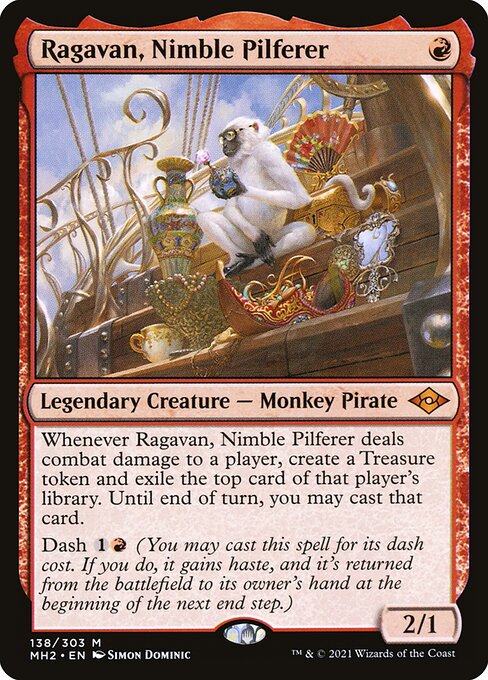
Real Magic cards use offset printing, which builds images from tiny dots arranged in a flower-like (rosette) pattern. Under a loupe this produces a tell that fakes reliably fail:
On a genuine card, the black elements — name, rules text, mana symbols, borders — are printed in a final, separate pass. That solid black ink sits cleanly and crisply on top of the colored rosette background. Black and dots are clearly distinct.
On a counterfeit, the black text is typically built from the same mixed-color dot layer as the art, so under magnification:
- Fuzzy text edges — rather than crisp, sharp lines.
- Bleeding dots — the colored dots run into the black areas instead of sitting beneath them.
- Soft, chaotic print — the overall pattern looks indistinct rather than sharp and layered.
Compare against a known genuine card from the same set at the same magnification. Once you've seen real and fake rosette quality side by side, the difference is immediately obvious.
The Holofoil Stamp
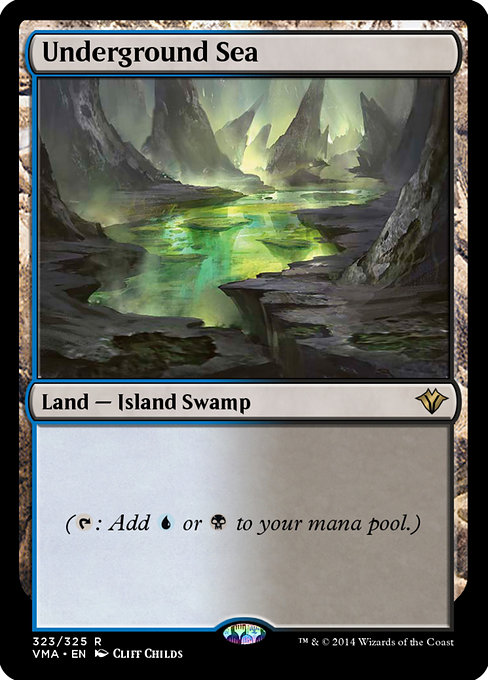
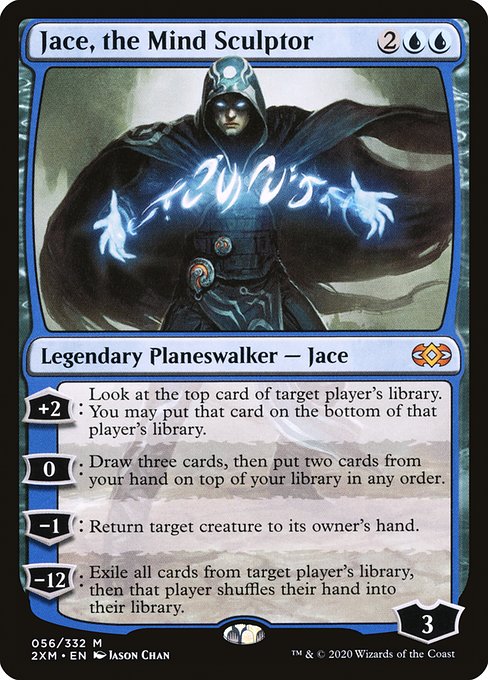
Since Magic 2015 (2014), all rares and mythic rares carry a small oval holofoil stamp at the bottom center. The shape varies by product — oval for standard sets, triangle for Universes Beyond, circle for Signature Spellbooks, acorn for non-tournament-legal cards. It's a deliberate authentication feature.
A genuine stamp:
- Sits flush — seamlessly embedded in the surface, not raised or sticker-like.
- Has micro-printed mana symbols — visible under a loupe.
- Is cleanly cut — consistent shape, clean edges.
The honest 2026 warning: the stamp alone is no longer sufficient. Sophisticated counterfeits now replicate it — sometimes with "WIZARDS WIZARDS" text in place of mana symbols, sometimes with stamps nearly indistinguishable from genuine until close loupe inspection. Treat a real-looking stamp as a positive signal that reduces concern, not as confirmation. Run the green dot and rosette tests regardless.
Remember too that commons and uncommons never carry the stamp, so its absence on a non-rare is completely normal and proves nothing either way.
Texture & Feel
Genuine Magic cards have a matte, slightly textured finish that players who handle a lot of cards recognize instantly. Counterfeits often feel different:
- Waxy or glossy — common in cheaper fakes; feels like a playing card or laminated paper.
- Plastic-like — a slightly stiff, synthetic feel.
- Too slick — real cards have a slight grain; some fakes are unnaturally smooth.
The caveat: feel is subjective, develops with experience, and is weakest against high-quality fakes that have learned to mimic real stock. Never use texture as a standalone verdict — make it one input in a layered check, and compare directly to a verified card when in doubt.
A Complete Check Sequence
The practical order to run tests on a suspected card — quickest first, most definitive last:
- Step 1 — Grab a comparison card. A confirmed-genuine card from the same set, rarity, and color. Every test that follows relies on comparison, not memory.
- Step 2 — Texture check. Handle both. Does the suspect card feel notably glossier, waxier, or more plastic? Flag it, but keep going.
- Step 3 — Light test. In a dim room, shine a flashlight through both. Same light, same bluish tint? Fully opaque or washed-out both fail.
- Step 4 — Holofoil check (rares/mythics). Does the stamp sit flush, with a clean, consistent shape? Raised, sticker-like, or miscut is a red flag — but a good stamp doesn't clear the card alone.
- Step 5 — Rosette test (loupe). At 20-30x, check the black text and borders. Crisp and distinct from the dots beneath = good. Fuzzy black = major red flag.
- Step 6 — Green dot test (loupe). On the back, in the green mana symbol's yellowish area, find the four red dots in an upside-down "L." Absent or wrong = almost certainly fake. Correct = very strong authenticity signal.
The bottom line: A card that clears all six steps against a genuine comparison is almost certainly real. A card that fails any one of steps 3, 5, or 6 should be treated as suspect — don't buy or trade it at face value.
Buying Safely
The best authentication is prevention. Most counterfeit exposure happens at predictable chokepoints:
- Buy from reputable sellers. Established local game stores, major online retailers with buyer protection, and sellers with long positive feedback. Risk spikes most with private-party sales of high-value singles.
- Be suspicious of "deals." A $200 card listed at $60 is a major red flag. Counterfeits frequently masquerade as bargains.
- Inspect before paying in person. For any significant purchase, examine the card first. A seller who refuses is one to walk away from.
- Use buyer protection online. Buy through platforms with return/dispute policies, and examine the card immediately on arrival.
- Know the market value. Check live prices before any significant buy — TCGplayer's market price and eBay's sold listings both show what the card actually trades for.

Get the Loupe, Then Buy Safely
The green dot and rosette tests — the two most reliable checks in this guide — both need a 20-30x jeweler's loupe, which costs a few dollars and fits in a deck box. For sourcing, TCGplayer puts seller feedback and a live market price on every listing, and a graded slab has already been authenticated by PSA, BGS or CGC before it reaches you.
As an Amazon Associate, Geeky Domain earns from qualifying purchases. eBay links are affiliate links; Geeky Domain may earn a commission at no extra cost to you.
Common Authentication Mistakes
Mistake #1: Relying on a single test.
One test passing doesn't clear a card. Modern fakes are engineered to pass the most commonly known checks — the light test, the holofoil, even some rosette patterns are being replicated. Running only one test lets sophisticated fakes through.
Mistake #2: Testing without a comparison card.
Running the light or rosette test in isolation is unreliable — print properties vary by set and color. You need a confirmed real card from the same set beside it to know whether what you're seeing is normal or suspicious.
Mistake #3: The bend or rip test.
These older tests — bending to check flex, or ripping to see the blue core — are explicitly advised against by current authentication sources. They damage real cards and don't reliably catch high-quality fakes. There's a better, non-destructive option for every scenario where you'd consider them.
Mistake #4: Trusting the holofoil stamp alone.
A reliable shortcut until a few years ago — not anymore. Fakes with convincing stamps exist, some with "WIZARDS WIZARDS" text under the loupe instead of mana symbols. A real-looking stamp reduces suspicion; it doesn't eliminate it. Always follow with the green dot and rosette tests.
FAQ & Quick Reference
- What's the single best test to run? The green dot test — the four-red-dot "L" in the green mana symbol on the back, under a loupe. Fakes almost always fail it. Run it alongside the rosette test and the two together are close to definitive.
- Do I need a jeweler's loupe? For casual checks of low-value cards, no. For anything significant — a $20+ rare, a competitive staple, a collectible foil — a 20-30x loupe is the standard tool. It's cheap, pocket-sized, and unlocks the two most reliable tests. If you buy secondary-market cards regularly, own one.
- Is the light test still useful? Yes, especially for catching obvious black-core fakes. It's weaker against high-quality counterfeits and foils, so treat it as a screening test, not a verdict. Failing it means very likely fake; passing it still needs the loupe tests.
- What if I already bought a fake? If you bought through a platform with buyer protection, file a dispute immediately and document with photos. For private-party sales without recourse, contact your local game store — many have processes for counterfeit disputes, and reporting helps the community track bad actors.
- Are proxies the same as counterfeits? No. A proxy is a transparent casual stand-in; a counterfeit is designed to deceive. The tests here identify both, but the right response depends entirely on context.
When in Doubt, Compare
Almost every test in this guide depends on a side-by-side with a known-genuine card from the same set. No single test is foolproof against modern fakes — but layering three of them against a real comparison card is. For high-value purchases, a loupe and a few minutes are cheap insurance against an expensive mistake.
- Light test: blue glow + faint legibility = real; opaque or washed-out = fake.
- Green dot: four red dots in an upside-down "L" inside the green symbol — the most reliable check.
- Rosette: crisp black text sitting cleanly on the dot pattern = real; fuzzy black = fake.
- Holofoil: flush, micro-printed, clean — but no longer sufficient on its own.
- Always: layer 3+ tests, compare to a known real card, never bend or rip.
- High value: use a 20-30x loupe and buy from reputable sellers.
Buy With Confidence.
Counterfeits are better than ever, but they still trip on the same details — the blue core, the four-dot L, the crisp black print. Layer your tests, compare to a real card, keep a loupe in your bag for anything valuable, and buy from sellers who stand behind what they sell.
Keep Collecting Smart:
© GEEKYDOMAIN.COM | Strategy Powered by Data